
The Epstein Files: Power, Secrets, and the Questions That Remain
How Power, Silence, and Influence Protected a Global Criminal Network

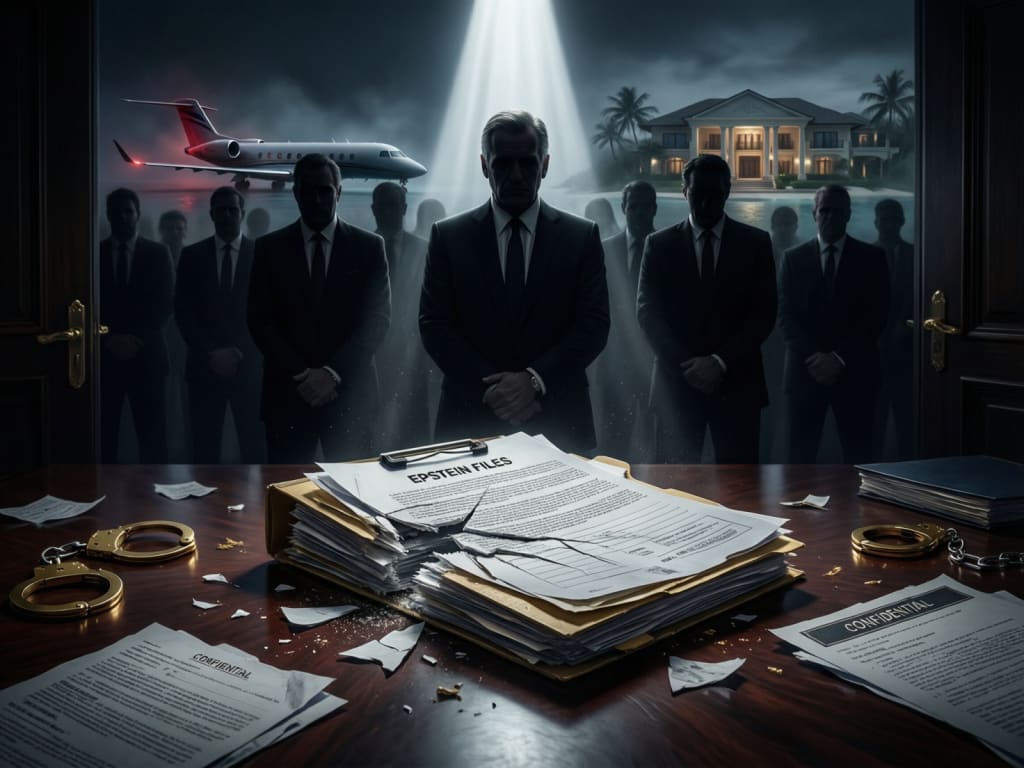
The Epstein Files: Power, Secrets, and the Questions That Remain
The name Jeffrey Epstein has become one of the most disturbing symbols of power, secrecy, and unanswered questions in modern history. What began as a criminal case involving sexual abuse and trafficking soon turned into a global scandal that touched politics, finance, intelligence agencies, and elite social circles. Even years after Epstein’s death, the so-called “Epstein files” continue to raise serious concerns about justice, accountability, and how powerful people are protected.
Jeffrey Epstein was a wealthy financier with strong connections to influential figures across the world. He moved easily among politicians, business leaders, academics, and celebrities. For many years, his wealth and connections allowed him to avoid serious consequences, even after accusations of abuse surfaced. This alone raised alarms about how the justice system treats powerful individuals differently from ordinary citizens.
The term “Epstein files” refers to court documents, flight logs, emails, witness testimonies, and sealed records connected to Epstein and his network. These files are important because they may reveal who knew about the crimes, who enabled them, and who benefited from silence. Many of these documents were hidden for years, sealed by courts or protected through legal settlements.
One of the most controversial aspects of the case is Epstein’s 2008 plea deal. Despite serious accusations involving minors, he received a lenient sentence that allowed him to spend much of his time outside jail. Later investigations showed that federal prosecutors were pressured into this deal and that victims were not properly informed. This moment is often cited as a major failure of the justice system.
When Epstein was arrested again in 2019 on federal charges, many believed the truth would finally come out. However, his death in jail—officially ruled a suicide—only deepened suspicion. The circumstances surrounding his death, including broken cameras, inattentive guards, and procedural failures, fueled public doubt. For many, the question remains: was this negligence, or something more?
The release of parts of the Epstein files has revealed names of people who associated with him, traveled on his private jet, or visited his properties. It is important to note that being named in documents does not automatically mean criminal guilt. However, the lack of full transparency has damaged public trust. People want clear answers about who was involved and who should be investigated.
The Epstein case also highlights the role of power networks. Epstein did not operate alone. He had lawyers, financial advisers, security staff, and social connections that helped protect him. Some analysts believe his influence may have extended into intelligence or political circles, though no official proof has confirmed this. Still, the pattern of protection raises concerns about how elites shield each other.
Another major issue is the treatment of victims. Many survivors have spoken about being ignored, threatened, or silenced. Legal settlements often included confidentiality clauses, preventing victims from speaking publicly. While some compensation was later provided through victim funds, many argue that money cannot replace justice or accountability.
The Epstein files matter because they represent more than one man’s crimes. They expose weaknesses in legal systems, media silence, and political courage. When powerful individuals are not held accountable, it sends a dangerous message: that status can protect wrongdoing.
Internationally, the case has damaged trust in institutions. Governments claim to defend human rights, yet cases like Epstein suggest selective enforcement. This contradiction fuels public anger and conspiracy theories, making it harder for societies to agree on basic truths.
Calls for full declassification of the Epstein files continue. Transparency, many argue, is the only way to restore confidence. Without it, doubts will persist, and justice will feel incomplete.
In the end, the Epstein files are not just about the past. They are a warning for the future. They show what happens when wealth, secrecy, and power combine without accountability. Whether the full truth is ever known remains uncertain—but the demand for it is stronger than ever.
About the Creator
Wings of Time
I'm Wings of Time—a storyteller from Swat, Pakistan. I write immersive, researched tales of war, aviation, and history that bring the past roaring back to life
Keep reading
More stories from Wings of Time and writers in Criminal and other communities.
The New Battlefield: Sovereignty in the Age of Secrets
The New Battlefield: Sovereignty in the Age of Secrets As we look deeper into modern global conflicts, it becomes clear that the battlefield has changed. Wars are no longer fought mainly on physical borders or traditional frontlines. Instead, the real fight now happens inside a nation itself, within its financial systems, digital networks, infrastructure, and even public thinking. This internal structure can be compared to a human nervous system. If it is damaged, the entire body becomes weak, even if no physical attack takes place.
By Wings of Time 3 days ago in Criminal
The Sole Survivor: A Silent Scream in the Face of Death
The most heart-wrenching stories often begin in places where safety should be guaranteed: at home. In 1987, the lives of Saye Rivazfar, her younger sister Sara, and their brother Arash took a dark turn following the divorce of their parents, Patricia and Ahmad. While their father, of Iranian descent, settled in New York, the three children remained with their mother in Pensacola, Florida.
By Mayar Younesabout 4 hours ago in Criminal
The Last Confession
M Mehran The police file labeled Case 417-B had gathered dust for seven years. No arrests. No suspects. Just one body and a city full of silence. Until tonight. Detective Aaron Cole stared at the man sitting across the interrogation table. Thin. Pale. Calm in a way that made the room feel colder. His name was Elliot Moore, a night-shift janitor at St. Vincent Hospital. Elliot had walked into the police station at 2:13 a.m. and said only one sentence: “I killed Daniel Harper.” Daniel Harper’s murder was the most disturbing unsolved crime the city had ever known. Aaron pressed the recorder button. “Start from the beginning,” he said. Elliot smiled faintly. “That’s where it gets complicated.” A Crime That Shook the City Seven years ago, Daniel Harper—a respected journalist known for exposing corruption—was found dead in his apartment. No forced entry. No weapon. No fingerprints except his own. The autopsy revealed poisoning, but the toxin was rare, expensive, and untraceable. The media called it The Perfect Crime. Aaron had been a rookie detective back then. The case haunted him. It had ruined careers. It had ended marriages. And now, suddenly, a confession appeared out of nowhere. Too perfect. The Janitor No One Noticed Elliot described his life in careful detail. Invisible. Ignored. He cleaned hospital floors while saving lives walked past him every day. “No one looks at janitors,” he said. “That’s why I was perfect.” Aaron frowned. “Perfect for what?” “For watching.” Elliot explained that Daniel Harper had been visiting the hospital frequently before his death—always late at night, always nervous. Elliot overheard phone calls. Arguments. Names that didn’t belong in public conversations. Politicians. Judges. CEOs. Daniel wasn’t just exposing corruption. He was about to publish something that would destroy powerful people. “And they noticed,” Elliot whispered. The Twist No One Expected Aaron leaned forward. “So you killed him?” Elliot shook his head slowly. “No. They did.” The room went silent. “I just made sure they couldn’t get away with it.” Elliot explained that he had followed Daniel one night, out of curiosity. He saw him meet someone in a parking garage—someone Elliot recognized from the news. A senator. Elliot watched as Daniel was handed a drink. Watched as his hands began to shake. Watched as the senator walked away calmly, leaving Daniel to die on the cold concrete floor. “I didn’t stop it,” Elliot said, his voice cracking for the first time. “I was scared.” A Crime Within a Crime Instead of calling the police, Elliot made a decision that would change everything. He dragged Daniel’s body back to his apartment. Cleaned the scene. Removed evidence. Made the murder look like a mystery. “Why?” Aaron demanded. “Because I knew the truth would never survive,” Elliot replied. “Power protects itself.” Elliot spent years collecting proof—audio recordings, documents, hidden files Daniel had given him in his final moments. “They thought they committed the perfect crime,” Elliot said. “I gave them one.” Seven Years of Silence Elliot waited. He watched elections come and go. Promotions. Awards. Smiles on television. Meanwhile, Daniel Harper’s name faded into a footnote. Until tonight. “I’m dying,” Elliot said quietly. “Cancer. Stage four.” Aaron’s chest tightened. “So I came here,” Elliot continued. “Because I don’t need justice for myself. I need truth for him.” He slid a flash drive across the table. “Everything is there.” The Real Criminals Forensic analysis confirmed the files were authentic. Recordings of bribes. Emails ordering Daniel’s murder. Bank transfers tied to offshore accounts. Within forty-eight hours, arrests shook the nation. A senator. A judge. A corporate tycoon. The headlines exploded. THE PERFECT CRIME WAS NEVER PERFECT JANITOR EXPOSES MURDER COVER-UP Elliot Moore pleaded guilty—not to murder, but to obstruction of justice. He accepted his sentence without protest. “I did what I had to,” he told Aaron during their last meeting. “History needed time to be ready.” The Final Confession Elliot died six months later in prison medical care. On his grave, someone left a simple note: Truth doesn’t need power. It needs patience. Aaron visited that grave every year. Because some criminals wear suits. Some wear uniforms. And some carry mops, waiting quietly for the world to notice. Why This Story Matters The city still talks about Daniel Harper. But Aaron knows the real story belongs to the man no one ever saw. The janitor who turned a perfect crime into a perfect confession. Keywords (SEO-friendly): criminal story, true crime style fiction, crime short story, murder mystery, psychological crime, unsolved murder, criminal justice, suspense story, Vocal Media crime
By Muhammad Mehran7 days ago in Criminal
Stories Before a Wedding, or The Happily Ever After of Cinderella
Cinderella had always dreamt of marrying a prince. She had dreamt of nothing else since she was a small girl. Now, however, as the Prince’s wife of three days, she had to admit that the reality was not as she had dreamt it to be.
By Dionearia Red2 days ago in Fiction




Comments
There are no comments for this story
Be the first to respond and start the conversation.