
Why the Epstein Network Was Never Fully Exposed
Fear, Power, and the System That Protects Itself


Why the Epstein Network Was Never Fully Exposed
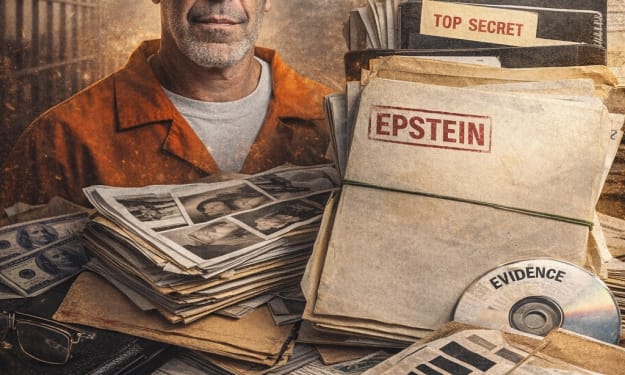
The most haunting question after the Jeffrey Epstein case is not what he did, but why so much remains hidden. Despite arrests, court documents, and years of investigation, the full network surrounding Epstein has never been completely exposed. This failure is not accidental. It reveals how modern power systems are designed to protect themselves, even when serious crimes are involved.
One major reason the Epstein network remained partially hidden is institutional self-protection. Governments, intelligence agencies, and legal systems are not just tools of justice; they are also organizations that seek stability and control. When a case threatens to expose failures within these institutions—or implicate people connected to them—the system often responds by limiting damage rather than revealing the full truth. In Epstein’s case, multiple agencies failed at different times. Fully exposing the network would have required admitting decades of negligence.
Another key factor is elite interconnection. Powerful individuals do not operate in isolation. They sit on boards together, fund the same political campaigns, attend the same events, and influence the same media outlets. This creates an unspoken rule: exposing one can endanger many. In such environments, silence becomes a form of mutual insurance. Even without direct coordination, people understand the cost of speaking out.
Legal complexity also played a critical role. Many of Epstein’s alleged activities occurred across multiple countries, involving international travel, private aircraft, offshore finances, and foreign jurisdictions. Investigating such crimes requires cooperation between governments that may not trust one another or may have political reasons to avoid full transparency. Jurisdictional confusion often works in favor of the accused, slowing investigations and weakening prosecutions.
Media influence cannot be ignored. While investigative journalism eventually brought Epstein back into public attention, for many years major outlets avoided the story or treated it cautiously. Defamation laws, pressure from powerful lawyers, and fear of legal retaliation made editors hesitant. Some journalists later admitted that stories were softened, delayed, or dropped entirely. When the media hesitates, public pressure weakens, and accountability fades.
Fear is another powerful tool. Victims, witnesses, and even investigators often face intimidation—sometimes subtle, sometimes direct. This can include legal threats, character attacks, financial pressure, or social isolation. In cases involving powerful figures, fear does not need to be openly stated; it is understood. Many victims remained silent for years not because they lacked courage, but because they believed the system would not protect them.
Epstein’s death marked a turning point—but also a closure. Whether intentional or not, it permanently ended the possibility of courtroom testimony that could have revealed names, methods, and structures. Trials are where evidence is tested publicly. Without one, much of the truth remains locked in sealed documents, private settlements, and classified files. His death transformed a legal case into a mystery, allowing speculation to replace accountability.
Another reason the network was never fully exposed is the prioritization of political stability over justice. Governments often fear that exposing elite criminal networks could lead to public outrage, loss of trust, or geopolitical consequences. In this calculation, transparency is seen as risky. The belief—right or wrong—is that revealing everything could destabilize institutions more than it would help victims.
Finally, there is the uncomfortable reality that justice systems are reactive, not proactive. They often move only when forced by public pressure. While Epstein’s case sparked outrage, attention eventually shifted to new crises. Without sustained demand for transparency, investigations lose momentum. Silence returns, not because the truth no longer matters, but because the system waits for society to forget.
The Epstein network was not fully exposed because it existed within a structure designed to resist exposure. Power shields itself through complexity, fear, legal barriers, and selective transparency. This does not mean the truth is gone forever—but it does mean uncovering it requires persistence far beyond one arrest or one headline.
The real lesson of the Epstein case is not just about one criminal network. It is about how modern societies must choose between comfort and accountability. Without sustained public demand, even the darkest truths can remain hidden in plain sight.
About the Creator
Wings of Time
I'm Wings of Time—a storyteller from Swat, Pakistan. I write immersive, researched tales of war, aviation, and history that bring the past roaring back to life
Keep reading
More stories from Wings of Time and writers in Criminal and other communities.
The Epstein Files: Power, Secrets, and the Questions That Remain
The Epstein Files: Power, Secrets, and the Questions That Remain The name Jeffrey Epstein has become one of the most disturbing symbols of power, secrecy, and unanswered questions in modern history. What began as a criminal case involving sexual abuse and trafficking soon turned into a global scandal that touched politics, finance, intelligence agencies, and elite social circles. Even years after Epstein’s death, the so-called “Epstein files” continue to raise serious concerns about justice, accountability, and how powerful people are protected.
By Wings of Time about 11 hours ago in Criminal
The Epstein Files: A Detailed and Professional Overview
The Epstein Files: A Detailed and Professional Overview The Epstein files refer to a vast collection of documents connected to Jeffrey Epstein, the disgraced financier whose criminal activities shocked the world and exposed serious questions about power, influence, and justice. These files include investigative records, legal documents, interviews, images, and internal reports gathered over many years by law enforcement and judicial authorities. Together, they provide a broad picture of Epstein’s activities, his connections, the crimes he was accused of, and the institutional responses to those crimes. The renewed attention to these files has made them a central topic in public discussion, media coverage, and political debate.
By America today 7 days ago in Criminal



Comments
There are no comments for this story
Be the first to respond and start the conversation.