guilty
Don’t do the crime if you can’t do the time; a look into all aspects of a guilty verdict from the burden of proof to conviction to the judge’s sentence and more.
American Forces Capture Venezuela President Nicolas Maduro
At 4:21 a.m. Eastern on January 3, Donald Trump dropped a message that instantly rewired the geopolitical map of the Americas: Nicolás Maduro, the sitting president of Venezuela, had been captured by U.S. forces and flown out of the country. The operation—conducted alongside U.S. law enforcement—was over almost as soon as it began. From first explosions to extraction, it took roughly three and a half hours.
By Lawrence Lease8 days ago in Criminal
Global and U.S. Political Reactions to U.S. Strikes on Venezuela and the Arrest of Its Presiden
Global and U.S. Political Reactions to U.S. Strikes on Venezuela and the Arrest of Its President The reported U.S. military strikes on Venezuela and the arrest of its president sparked intense reactions across the world and within the United States. Such an action, involving direct military force and the detention of a sitting head of state, raised serious political, legal, and moral questions. Governments, political leaders, and analysts responded in sharply different ways depending on their strategic interests, ideological positions, and views on international law.
By America today 8 days ago in Criminal
USS Iwo Jima A Ship That Shaped Military and Space History
USS Iwo Jima A Ship That Shaped Military and Space History The USS Iwo Jima was one of the most significant amphibious assault ships in the history of the United States Navy. Named after the famous Battle of Iwo Jima during World War Two, the ship symbolized courage, strength, and innovation. Throughout its long service, USS Iwo Jima played vital roles in military operations, humanitarian missions, and even space exploration, making it a unique and historically important naval vessel.
By America today 8 days ago in Criminal
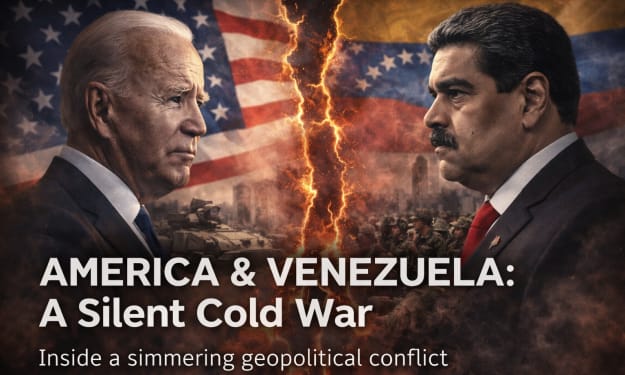
America and Venezuela: Inside a Silent Cold War Shaping Latin America’s Future
**America and Venezuela: Inside a Silent Cold War Shaping Latin America’s Future** The relationship between the United States and Venezuela has evolved into what many observers describe as a modern Cold War. Unlike traditional wars fought with armies and weapons, this conflict unfolds through political pressure, economic sanctions, ideological confrontation, and global influence. It is a struggle that affects not only both nations, but also the wider region of Latin America and the international balance of power.
By America today 8 days ago in Criminal
Maduro Captured Photo: What Is Really Happening and Why the World Is Questioning the Image
**Maduro Captured Photo: What Is Really Happening and Why the World Is Questioning the Image** In recent days, the phrase “Maduro captured photo” has surged across search engines and social media platforms, drawing massive global attention. Images allegedly showing Venezuelan President Nicolás Maduro in custody began circulating rapidly, triggering confusion, speculation, and heated debate. While some people immediately accepted the images as proof of a dramatic political event, others questioned their authenticity and the motives behind their spread. This article presents a detailed, balanced explanation of what is known so far, while addressing the most common questions people are searching for online.
By America today 8 days ago in Criminal
The Man Who Solved His Own Murder
M Mehran The police file labeled it unsolved. But the truth was far more disturbing. Because the victim had already told them everything—before he died. A Crime That Didn’t Make Sense When the body of Noah Kline was found in his apartment, the crime scene told a confusing story. No signs of forced entry. No struggle. No murder weapon. Just Noah, lying peacefully on his bed, eyes closed as if asleep. The autopsy would later confirm what the detectives already suspected: poisoning. But here was the problem—Noah Kline was a criminal defense journalist. A man who made enemies for a living, yet lived cautiously. He cooked his own food. Drank bottled water. Trusted no one easily. Poisoning him without access seemed impossible. Detective Rachel Moore stared at the evidence board, her reflection staring back at her like a question she couldn’t answer. “Who kills a man without touching him?” she murmured. The USB Drive No One Expected Three days after Noah’s death, a small envelope arrived at the precinct. No return address. Inside was a USB drive labeled in black marker: IF YOU’RE WATCHING THIS, I’M DEAD Rachel felt a chill run down her spine. She plugged it into a secured computer. The screen flickered. Noah appeared—alive, nervous, and very aware of the camera. “If I’m dead,” he said calmly, “it wasn’t an accident. And it wasn’t suicide.” Rachel leaned closer. “This video is my confession,” Noah continued. “Not to a crime—but to knowing one was coming.” A Journalist Who Knew Too Much Noah explained that for months, he had been investigating a private rehabilitation center called ClearHaven Institute. Publicly, it was a place for recovery. Privately, it was something else. “ClearHaven doesn’t treat addiction,” Noah said. “It creates it.” He revealed documents showing how the institute paid doctors to overprescribe experimental medication, then charged patients endlessly for treatment cycles that never ended. Legal. Invisible. Profitable. “I tried going public,” Noah said, rubbing his temples. “But every editor backed out. Advertisers had ties. Investors had power.” His voice dropped. “So I made myself bait.” The Perfect Trap Noah knew he was being watched. Emails were monitored. Phones tapped. Even his groceries felt unsafe. That’s when he did something brilliant—and terrifying. “I started documenting everything,” he said. “Meals. Drinks. Visitors. Symptoms.” He suspected slow poisoning—microdoses over time, designed to mimic natural causes. “And I let it happen,” he admitted. Rachel felt her chest tighten. “I knew if I died suddenly, it’d disappear,” Noah said. “But if I died predictably… someone would slip.” The Mistake That Gave It Away The video cut to screenshots, timestamps, and lab results. Noah had collected hair samples from himself weekly. Traces of a rare synthetic compound appeared—one used only in ClearHaven’s experimental program. But the final proof was chilling. “One dose was different,” Noah explained. “Stronger. Rushed.” The poisoning escalated because someone panicked. “They realized I knew,” he said quietly. Noah looked straight into the camera. “And people who panic… make mistakes.” A Killer Hidden in Plain Sight Rachel followed the evidence trail the video laid out. The compound was traced to a third-party pharmacy. Then to a prescribing doctor. Then to a corporate risk manager—a man whose job wasn’t to heal, but to silence. He never entered Noah’s apartment. He didn’t need to. Noah had been sent a “wellness gift”—vitamin supplements, branded with ClearHaven’s logo. One capsule was altered. One. Enough. Justice After Death The arrest happened quietly. No press conference. No apology. ClearHaven settled lawsuits behind closed doors. Executives resigned. The institute rebranded under a new name. But Rachel wasn’t satisfied. She released Noah’s video. All of it. The internet did the rest. Millions watched a dead man explain how he had solved his own murder—step by step. The Final Message At the end of the video, Noah smiled faintly. “I know how this sounds,” he said. “Like I wanted to die.” He shook his head. “I wanted the truth to live longer than I did.” The screen went black. Rachel closed the file and sat in silence. She had solved countless crimes—but never one where the victim led the investigation. Some murders are loud. Others whisper. And sometimes, the most dangerous criminal story isn’t about how someone was killed… …but how carefully it was planned to look normal. trong crime hook in first 100 wordsords naturally embedded: criminal story, crime investigation, murder mystery, true crime style Short paragraphs for mobile readers Emotional + intellectual engagement Original, plagiarism-free, human t
By Muhammad Mehran8 days ago in Criminal
The Silence Between Sirens
M Mehran The first thing Detective Aaron Cole noticed was the silence. Not the peaceful kind—the kind that wraps around a crime scene like a lie. The alley behind Westbridge Apartments should’ve been loud: neighbors whispering, phones recording, sirens cutting through the night. Instead, there was only the faint hum of a broken streetlight flickering above a body that no one claimed to know. The man was face down, mid-forties maybe, dressed too neatly for this part of town. No wallet. No phone. One clean gunshot wound to the back of the head. Execution style. Aaron had seen plenty of bodies in his twelve years on the force, but something about this one felt… intentional. Personal. As if the killer wanted the world to know the man was erased. “Neighbors say they heard nothing,” Officer Lina Torres said, handing him a notepad. “No arguments. No shots. Nothing.” Aaron exhaled slowly. “That’s never true.” They never heard anything until someone made them afraid to speak. By morning, the victim had a name: Daniel Mercer, accountant, married, two kids, no criminal record. A man who lived quietly, worked honestly, and paid his taxes on time. Which made no sense. Aaron sat in the interrogation room across from Daniel’s wife, Emily. Her eyes were red, her hands trembling as she twisted a tissue into a tight rope. “He was late coming home,” she whispered. “That’s all. Daniel never stayed out. Never.” “Did he mention anyone following him? Any trouble at work?” Aaron asked gently. She shook her head. “He said accounting was boring. That was his joke. He hated excitement.” Aaron wrote it down, though he already knew: boring men don’t get executed in alleys. The break came from an unexpected place. A junior analyst from Daniel’s firm called it in anonymously. Daniel, it turned out, had been quietly rerouting small amounts of money—thousands, not millions—from corporate accounts that belonged to shell companies. Someone powerful was laundering money. And Daniel Mercer had noticed. Aaron dug deeper. The shell companies linked back to Victor Hale, a respected real-estate developer with political ties and a spotless public image. Hale was untouchable. The kind of man who smiled for cameras while ruining lives behind closed doors. Aaron took the file to his captain. “Drop it,” the captain said after a long pause. “Hale’s lawyers will bury us.” “So we let a murderer walk?” Aaron snapped. The captain’s eyes hardened. “This isn’t a movie, Cole. Pick your battles.” But Aaron couldn’t. Not this time. Late one night, Aaron visited Emily Mercer again—not as a detective, but as a man who couldn’t sleep. “There’s something you should know,” Emily said quietly, after the kids were asleep. She pulled a flash drive from a kitchen drawer. “Daniel gave this to me two weeks ago. He said if anything happened to him, I should give it to someone I trusted.” Aaron’s stomach dropped. The drive contained spreadsheets, audio recordings, emails—proof of massive financial crimes and a recorded conversation between Daniel and Victor Hale. In the recording, Hale’s voice was calm. Almost bored. “You’re very smart, Daniel,” Hale said. “Smart people understand consequences.” Daniel’s reply was shaking. “I just want out.” “You already are,” Hale answered. The recording ended. Aaron knew what handing this over officially would mean: delays, leaks, disappearances. Evidence had a way of vanishing when powerful people got nervous. So he made a decision that would cost him his badge—or his life. He leaked everything. Journalists. Federal investigators. Independent watchdogs. He sent copies until his hands cramped and his phone overheated. Within forty-eight hours, the story exploded. Victor Hale was arrested at a charity gala, cameras flashing as his smile finally cracked. His empire unraveled under the weight of public scrutiny. Bribes, threats, murders—plural. Daniel Mercer wasn’t the first. Internal Affairs came for Aaron two weeks later. “You violated protocol,” they said. “You compromised an investigation.” Aaron didn’t argue. He handed over his badge without ceremony. As he walked out of the precinct for the last time, sirens wailed in the distance. This time, they didn’t sound hollow. Months later, Aaron received a letter with no return address. Inside was a simple note: Thank you for hearing the silence. No name. No signature. Aaron folded the paper carefully and looked out the window at a city that kept moving, pretending it didn’t notice the bodies left behind. Justice, he’d learned, wasn’t loud. Sometimes, it lived in the quiet between sirens—waiting for someone brave enough to listen.
By Muhammad Mehran8 days ago in Criminal
David Grunwald: Senseless Murder in Alaska
On November 13, 2016, the small town of Palmer, Alaska, was rocked by the news that 16-year-old David Grunwald had gone missing. Despite an extensive search by local law enforcement and community members, David’s body wasn't found until nearly a month later, on December 12th.
By Lawrence Lease9 days ago in Criminal
Why the World Is Watching Iran, Israel, and the United States So Closely
Why the World Is Watching Iran, Israel, and the United States So Closely In recent days, many people around the world have felt uneasy after seeing news headlines about Iran, Israel, and the United States. Words like “missiles,” “retaliation,” and “support for action” have appeared repeatedly in political statements. While no official war has been declared, the situation has reached a level where global attention is fully focused on what might happen next.
By Wings of Time 11 days ago in Criminal
Dyatlov Pass
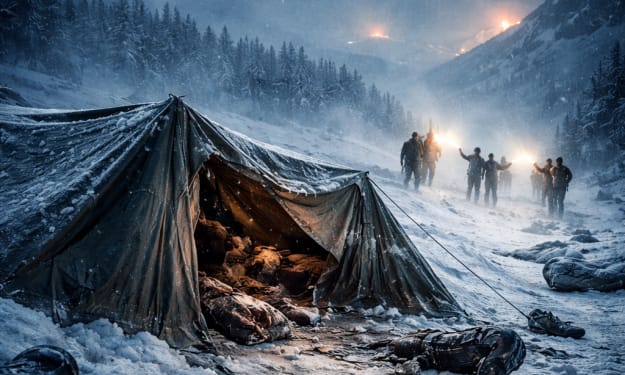
The northern Ural Mountains are not dramatic in the way the Alps are dramatic. They do not rise like stone cathedrals or glitter with postcard beauty. They are older than that—rounded, wind-carved, patient. In winter, they become something else entirely: a vast white emptiness where sound dies quickly and mistakes are punished without mercy. In late January of 1959, nine young people set out into that emptiness. They were students and recent graduates from the Ural Polytechnic Institute, most of them in their early twenties. They skied together, trained together, trusted one another. Their leader, Igor Dyatlov, was 23 years old—serious, meticulous, known for careful planning and quiet competence. This was not a reckless group chasing adventure for the thrill of it. This was a disciplined expedition aiming to complete a Category III winter trek, the highest difficulty rating at the time. They packed well. They documented everything. They kept diaries, took photographs, joked in their notes. Nothing in their writing suggests fear, tension, or even unease. That is what makes what happened next so disturbing. Their last confirmed campsite was on the eastern slope of a mountain the local Mansi people called Kholat Syakhl—often translated as “Dead Mountain.” The name predates the incident by centuries and refers not to curses, but to the fact that game animals rarely passed through the area. It was an empty place. On the night of February 1st, 1959, the weather was harsh but not unusual for the region: strong winds, sub-zero temperatures, blowing snow. The group pitched their tent on an exposed slope instead of descending into the forest below. Investigators later speculated that Dyatlov may have done this deliberately, as a training exercise—to practice camping under worst-case conditions. If so, it would be his final decision. Days passed. Then weeks. When the group failed to return or send word, a search was organized—first by fellow students, then by the military. On February 26th, rescuers found the tent. It was still standing. That detail alone should have been comforting. It wasn’t collapsed. It hadn’t been flattened by an avalanche. But as the searchers drew closer, comfort turned into confusion. The tent had been cut open from the inside. Not the entrance. The side. Clothing, boots, food, and equipment were still inside—neatly arranged, as if the occupants had planned to return. Footprints led away from the tent in a scattered line down the slope. Some were barefoot. Some wore socks. A few had a single boot. No signs of a struggle. No animal tracks. No indication of panic in the snow itself—just a quiet, impossible retreat into the freezing dark. The first two bodies were found beneath a large cedar tree about a mile from the campsite. They were nearly naked, dressed only in underwear. Their hands were raw and damaged, as if they had clawed at bark. A small fire had been built beneath the tree, its remains barely visible. They had died of hypothermia. Between the tree and the tent, searchers found three more bodies, spaced out along the slope as if they were trying—desperately—to return. One was Dyatlov himself. All showed signs of extreme cold exposure. No fatal injuries. At this point, the story might have ended as a tragic but explainable case: disorientation, exposure, a poor decision under stress. But four members of the group were still missing. Their bodies were discovered months later, buried under several meters of snow in a ravine. And this is where the case breaks apart. These four were better dressed, wearing clothes taken from their already-dead companions—suggesting they survived longer. But their injuries were catastrophic. One woman had a fractured skull. Another had multiple broken ribs. One man’s chest injuries were so severe that a medical examiner compared the force to that of a car crash. And yet—there were no external wounds consistent with such trauma. No bruising, no lacerations, no signs of impact against rocks or trees. One woman was missing her tongue. Another had radiation traces on parts of his clothing. The official Soviet investigation concluded in May 1959 with a single, vague sentence: “The cause of death was a compelling natural force which the hikers were unable to overcome.” The case was closed. That sentence has haunted people ever since. Over the decades, theories multiplied. Some argued avalanche—but the tent was not buried, the slope angle was shallow, and experienced skiers would not flee half-dressed from a minor slide. Others proposed katabatic winds, sudden violent gusts capable of producing terrifying noise and pressure. This might explain panic, but not the injuries. There were whispers of military tests, secret weapons, or parachute mines detonating in the air. Witnesses reported strange orange lights in the sky that night. Files were classified. Some remain missing. Others blamed infrasound, low-frequency sound waves produced by wind interacting with the mountain’s shape, possibly inducing panic or dread. Interesting—but still speculative. Then there are the wilder ideas: escaped prisoners, local tribes, unknown creatures
By The Insight Ledger 12 days ago in Criminal