
Global and U.S. Political Reactions to U.S. Strikes on Venezuela and the Arrest of Its Presiden
Venezuela

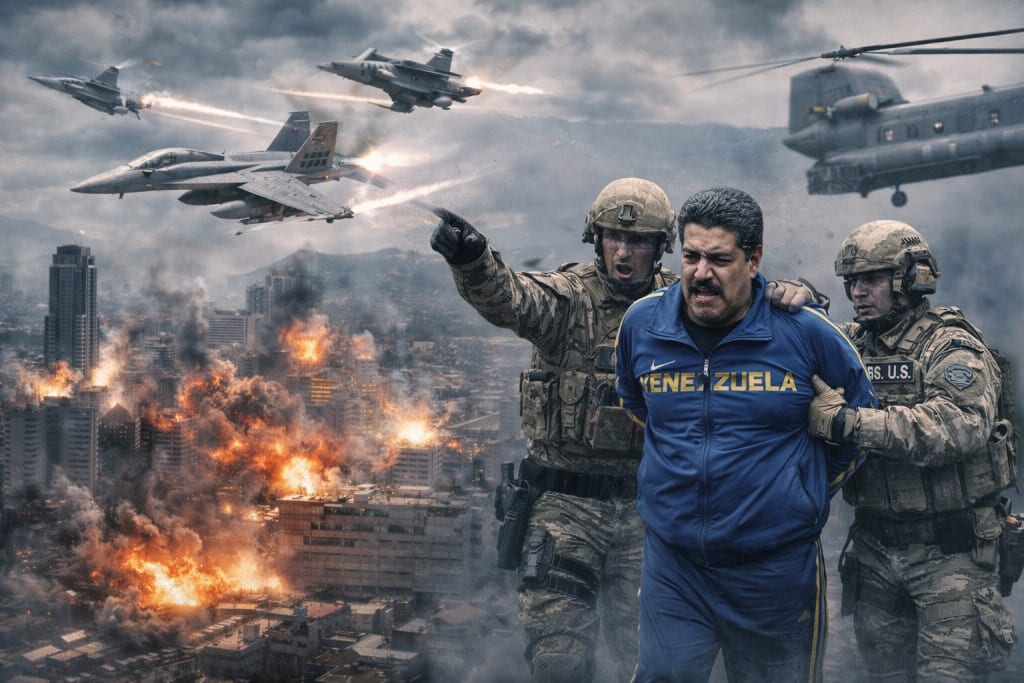
Global and U.S. Political Reactions to U.S. Strikes on Venezuela and the Arrest of Its President
The reported U.S. military strikes on Venezuela and the arrest of its president sparked intense reactions across the world and within the United States. Such an action, involving direct military force and the detention of a sitting head of state, raised serious political, legal, and moral questions. Governments, political leaders, and analysts responded in sharply different ways depending on their strategic interests, ideological positions, and views on international law.
In the United States, reactions among political leaders were deeply divided. Supporters of the operation, mainly from conservative political circles, argued that the strikes were a necessary response to years of authoritarian rule, corruption, and alleged criminal activities linked to the Venezuelan leadership. They claimed that the action was justified on national security grounds and described it as a decisive move to combat drug trafficking and regional instability. According to this view, the arrest of the Venezuelan president was seen as an enforcement of justice rather than an act of aggression, and some American politicians described the operation as a turning point for democracy in Venezuela.
On the other hand, many U.S. lawmakers strongly criticized the operation. Several Democratic politicians and independent voices argued that the strikes were unconstitutional and carried out without proper approval from Congress. They warned that using military force in this manner could weaken democratic oversight and set a dangerous precedent. Critics also expressed concern that the arrest of a foreign president by U.S. forces could damage America’s international credibility and undermine global legal norms. Some called for investigations and hearings to clarify the legal basis of the operation and to limit executive military powers in the future.
International reactions were equally divided, though many governments expressed alarm. Major global powers such as China and Russia strongly condemned the U.S. action, describing it as a violation of Venezuela’s sovereignty. They emphasized that no country has the right to remove another nation’s leader by force and warned that such actions threaten global stability. These countries called for respect for international law and urged diplomatic solutions rather than military intervention.
In Latin America, reactions reflected regional sensitivities to foreign intervention. Several governments criticized the strikes and the arrest, stating that Venezuela’s crisis should be resolved by Venezuelans themselves through dialogue and political processes. Leaders in the region expressed fears that the operation could lead to wider instability, refugee flows, and economic disruption. Some Latin American countries called for emergency international meetings to address the crisis and prevent further escalation.
However, not all international responses were negative. A number of governments and political figures welcomed the removal of the Venezuelan president, arguing that his leadership had caused severe economic collapse, human rights abuses, and mass migration. These leaders viewed the U.S. action as an opportunity for Venezuela to begin a political transition and rebuild its institutions. Venezuelan opposition figures also reacted positively, describing the arrest as the end of a long period of repression and mismanagement.
European countries generally adopted a more cautious tone. While many expressed concern over the use of military force, they also acknowledged the seriousness of Venezuela’s political and humanitarian crisis. European leaders emphasized the importance of avoiding further violence and encouraged international cooperation to support a peaceful transition. Calls for mediation, humanitarian access, and respect for international norms were common in European statements.
Public debate also focused on key questions people were asking worldwide. Was the operation legal under international law. Would it lead to democracy or further chaos in Venezuela. Could this action increase tensions between major global powers. Analysts noted that the answers to these questions depend largely on what follows the operation. If the situation leads to stability and political reform, supporters may feel justified. If it results in prolonged conflict or regional instability, critics’ warnings may prove accurate.
In conclusion, the reported U.S. strikes on Venezuela and the arrest of its president triggered one of the most controversial international reactions in recent history. The event exposed deep divisions over sovereignty, military intervention, and the role of powerful nations in shaping global politics. As the situation continues to evolve, the long term consequences of these actions remain uncertain, but their impact on international relations is already significant.
About the Creator
America today
Welcome to American News Sport, your premier source for American sports news. We bring you the latest news, reports, and analysis on various American sports, including football, basketball, baseball, hockey, and more. Follow us
Keep reading
More stories from America today and writers in Criminal and other communities.
USS Iwo Jima A Ship That Shaped Military and Space History
USS Iwo Jima A Ship That Shaped Military and Space History The USS Iwo Jima was one of the most significant amphibious assault ships in the history of the United States Navy. Named after the famous Battle of Iwo Jima during World War Two, the ship symbolized courage, strength, and innovation. Throughout its long service, USS Iwo Jima played vital roles in military operations, humanitarian missions, and even space exploration, making it a unique and historically important naval vessel.
By America today 7 days ago in Criminal
The Last Customer
The bookstore had survived longer than most promises. Tucked between two modern buildings that constantly changed owners, the shop remained unchanged—dusty wooden shelves, warm yellow lights, and a bell above the door that rang like it had something important to announce. Sameer believed the shop existed outside of time. Everything else moved forward. The bookstore waited.
By shakir hamid7 days ago in Criminal
The Silence After the Verdict
The courtroom had emptied, but the silence remained, thick and suffocating, hanging in the air like smoke from a fire that had burned out hours ago. The judge had spoken, the jury had deliberated, and the gavel had fallen with an echo that seemed to reverberate through the very bones of the building. The verdict was delivered: guilty. Or was it not guilty? It didn’t matter now. The silence was the only truth left.
By Jhon smith7 days ago in Criminal


Comments
There are no comments for this story
Be the first to respond and start the conversation.