
Why the World Is Watching Iran, Israel, and the United States So Closely
Understanding the warnings, military pressure, and diplomacy behind today’s rising global anxiety

Why the World Is Watching Iran, Israel, and the United States So Closely
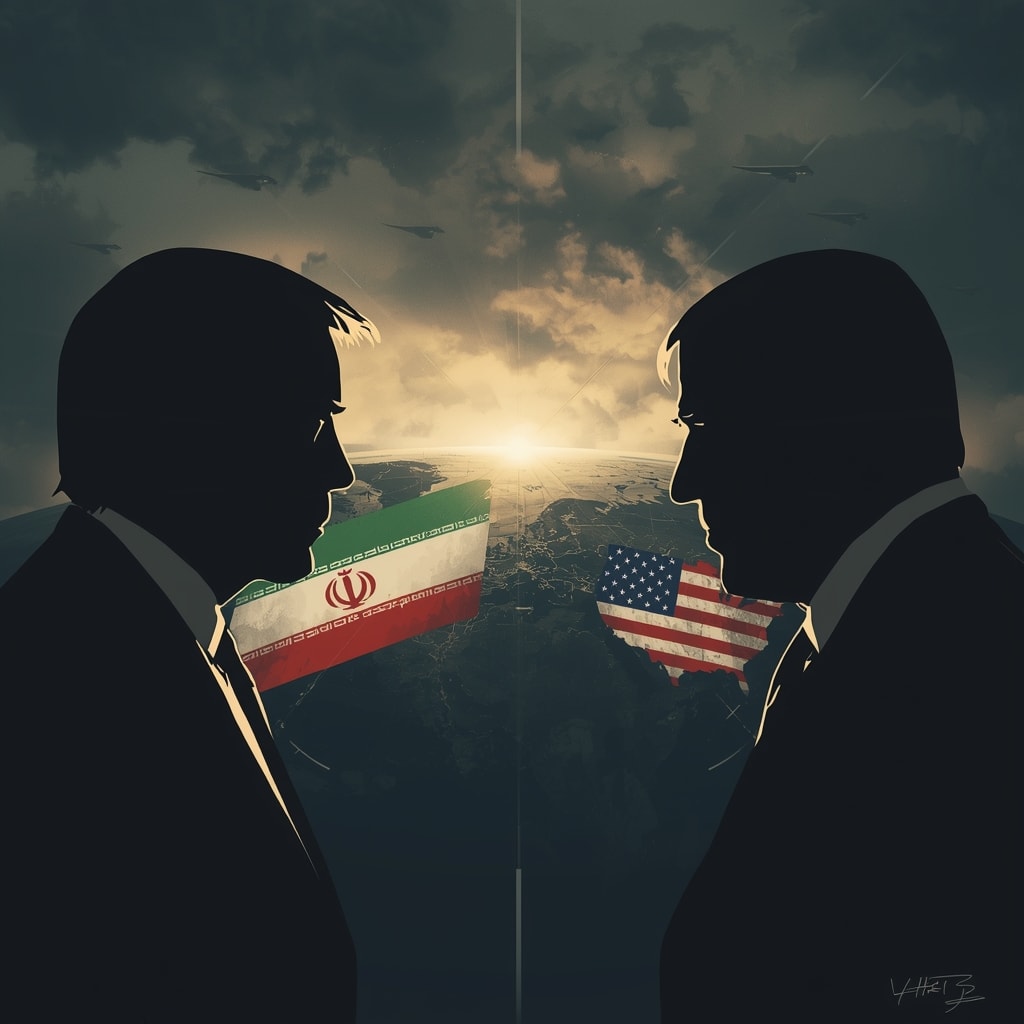
In recent days, many people around the world have felt uneasy after seeing news headlines about Iran, Israel, and the United States. Words like “missiles,” “retaliation,” and “support for action” have appeared repeatedly in political statements. While no official war has been declared, the situation has reached a level where global attention is fully focused on what might happen next.
This tension did not appear suddenly. It is the result of years of mistrust, warnings, and unresolved disputes. Iran’s missile and nuclear programs have long been a concern for Israel and the United States. Israeli leaders believe that Iran’s growing military capabilities could threaten Israel’s security. Iran, on the other hand, says it has the right to defend itself and develop its technology.
Recently, discussions between Israeli leadership and U.S. political figures brought these concerns back into the spotlight. Strong language was used to signal that Iran’s missile development would not be ignored. Such statements matter because when powerful countries speak publicly about military options, the entire world listens.

At the same time, Iran has issued its own warnings. Iranian officials have stated that any attack on their territory would be met with a strong response. This exchange of warnings does not mean war has begun, but it shows how quickly words can raise fear and uncertainty. History has shown that conflicts often start not with a single attack, but with repeated threats and rising pressure.
One major reason this situation worries experts is the nature of modern warfare. Unlike conflicts of the past, today’s wars can involve advanced missiles, drones, cyber attacks, and long-range weapons. A single strike could affect multiple countries within hours. This is why even the possibility of conflict between Iran, Israel, and the United States creates concern far beyond the Middle East.
Another important factor is alliances. Israel is a close ally of the United States, and Iran has regional partners of its own. If fighting were to begin, it might not stay limited to one area. Energy markets, shipping routes, and global trade could all be affected. This is why governments around the world are urging restraint and diplomacy.
Despite the tense atmosphere, it is important to understand what has not happened. There has been no confirmed missile attack between these countries in the past few days. There has been no official declaration of war. What exists instead is pressure — political, military, and psychological.
Diplomacy still plays a role. Behind closed doors, negotiations, warnings, and messages continue through official and unofficial channels. Sanctions, inspections, and international agreements remain tools that many leaders prefer over direct conflict. War is always the last option, not the first, because its cost is human life.
For ordinary people, this situation can feel frightening. Social media often spreads dramatic claims faster than verified information. Some posts predict global war or immediate disaster, even when facts do not support those claims. This is why responsible reporting matters. Understanding the difference between tension and war helps reduce panic.
The current moment teaches an important lesson about leadership and language. When leaders choose aggressive words, they increase fear. When they choose calm and careful communication, they leave space for peace. History shows that wars often begin when communication fails and pride replaces reason.
The world today is deeply connected. A conflict in one region affects food prices, fuel costs, and political stability everywhere. That is why global citizens, not just governments, have a stake in what happens next. Awareness, patience, and demand for peaceful solutions are more powerful than panic.
In the end, the situation between Iran, Israel, and the United States is serious — but not yet irreversible. The path forward depends on decisions made by leaders, guided either by force or by diplomacy. The world hopes for the latter, because once war begins, no one truly wins.
About the Creator
Wings of Time
I'm Wings of Time—a storyteller from Swat, Pakistan. I write immersive, researched tales of war, aviation, and history that bring the past roaring back to life
Keep reading
More stories from Wings of Time and writers in Criminal and other communities.
The Last Train from Lahore
M Mehran On a fog-drenched winter night in Lahore, the last train pulled away from the platform with a tired metallic scream. Vendors packed up their tea stalls. Porters stretched their aching backs. The city exhaled. But in coach C-7, a crime was already in motion. His name was Hamza Iqbal. To his neighbors, he was polite. To his mother, devoted. To the law, invisible. And to the passengers on that train, he was about to become a nightmare. A Criminal Who Studied People, Not Locks Hamza wasn’t the kind of criminal who relied on force. He relied on observation. For months, he had studied human behavior at railway stations—who traveled alone, who carried expensive gadgets, who looked distracted, who trusted too easily. He learned patterns. Businessmen guarded briefcases but ignored backpacks. Students protected phones but forgot wallets in jacket pockets. Families assumed safety in numbers. Hamza didn’t steal randomly. He selected with precision. But what made him different from petty thieves was his long game. He wasn’t after wallets. He was after identities. The Perfect Setup Inside coach C-7, Hamza smiled warmly at an elderly couple struggling with luggage. “Let me help,” he offered. They thanked him. Trust was built in seconds. Across the aisle, a young tech entrepreneur tapped away on his laptop. Hamza noticed the company logo on his bag. Startup founder. Likely successful. Likely careless. As the train rolled into darkness, Hamza moved like a shadow. He didn’t snatch. He didn’t threaten. He cloned. With a small wireless device hidden inside his power bank, he skimmed unsecured data from nearby phones and laptops connected to the train’s public Wi-Fi. Passwords. Banking apps. Email logins. Most passengers never realized their digital doors had been left open. By the time the train reached Karachi, Hamza had stolen more than cash could ever buy. He had stolen access. When Theft Becomes Destruction Within days, bank accounts were drained. Cryptocurrency wallets vanished. Confidential business proposals leaked online. Victims filed complaints, confused and ashamed. No one remembered being robbed. No physical evidence. No witnesses. Cybercrime units suspected phishing scams. Malware. International hacking rings. But Hamza worked alone. He operated from a modest apartment, using public networks and temporary devices. After each operation, he destroyed hardware. Burned SIM cards. Wiped drives. He believed himself untouchable. And for a while, he was. The Investigator Who Refused to Guess Enter Detective Ayesha Khan of the Federal Investigation Agency. Unlike others, Ayesha didn’t begin with technology. She began with geography. She mapped every victim’s travel history. One connection stood out: each had taken the Lahore–Karachi night train within the same three-month window. Coincidence? Criminal investigations rarely reward coincidence. Ayesha rode the train herself. She watched. Listened. Waited. And she noticed something subtle—one passenger who never seemed to sleep, never seemed to panic, never seemed to disconnect from the public Wi-Fi. Hamza. The Psychology of a Criminal Criminal profiling suggests that repeat offenders develop rituals. Habits. Comfort zones. Hamza always chose coach C-7. Always boarded last. Always offered help to elderly passengers to avoid suspicion. It wasn’t greed that motivated him. It was superiority. He believed he was smarter than the system. Smarter than his victims. That belief would become his weakness. The Trap On her third undercover ride, Ayesha deliberately connected a decoy laptop to the train’s Wi-Fi. It contained traceable bait—fake financial credentials monitored by cyber forensic teams. Within minutes, the system detected an intrusion attempt. The signal originated only meters away. Ayesha felt her pulse steady, not race. Criminal apprehension isn’t about adrenaline. It’s about timing. When the train slowed near Hyderabad, officers in plain clothes quietly surrounded Hamza. He tried to remain calm. But calm cracks under certainty. Inside his backpack, they found modified signal boosters, portable data skimmers, and encrypted storage drives containing hundreds of stolen identities. The silent thief of the rails was finally visible. In the Interrogation Room “Why?” Ayesha asked him. Hamza shrugged. “Because they made it easy.” It wasn’t poverty. It wasn’t desperation. It was opportunity. He saw society’s dependence on technology and recognized its vulnerability. Public Wi-Fi networks. Weak passwords. Blind trust. He didn’t see faces. He saw access points. Psychologists later described him as a high-functioning cybercriminal driven by intellectual thrill rather than necessity. But thrill fades. Consequences don’t. The Impact of Modern Crime Hamza’s arrest exposed more than one man’s wrongdoing. It revealed a larger truth about modern criminal activity: Digital theft can be more damaging than physical robbery. Cybercrime leaves victims confused and self-blaming. Public networks are fertile ground for exploitation. News outlets across Pakistan covered the case extensively. Security experts warned travelers to avoid unsecured Wi-Fi. Banks strengthened authentication systems. The Lahore–Karachi train added cybersecurity advisories to ticket confirmations. Crime had evolved. And so had fear. The Sentence In court, Hamza showed little emotion as charges were read: identity theft, cyber fraud, illegal data interception, financial crimes. He was sentenced to fifteen years. Some called it harsh. Others called it justice. For the entrepreneur who lost his startup funding overnight, it was closure. For the elderly couple whose savings disappeared, it was relief. For Detective Ayesha Khan, it was a reminder: Criminals adapt. So must those who chase them. The Moral Behind the Crime Story This criminal story isn’t just about one man on a train. It’s about vulnerability in a connected world. It’s about how trust, convenience, and technology can become weapons in the wrong hands. Hamza didn’t wear a mask. He wore normalcy. And that is what makes modern criminals so dangerous—they blend in. The next time you connect to public Wi-Fi, glance around. The quiet passenger helping with luggage. The man who never seems to sleep. The stranger who smiles too easily. Crime no longer needs a gun. Sometimes, it only needs a signal. And somewhere, on another train slicing through the night, someone may already be watching the bars of your connection rise—waiting for them to fall.
By Muhammad Mehranabout 10 hours ago in Criminal
It's 2026. Songs Turning 10 This Year
In 2016, we saw the rise of short form videos and what would lead to the birth of TikTok. We cannot forget the Snapchat filters no matter how cringe worthy some of them might have been. It was also the year in which the hit series Stranger Things debuted.
By Jasmine Aguilar6 days ago in Beat


Comments
There are no comments for this story
Be the first to respond and start the conversation.