Science
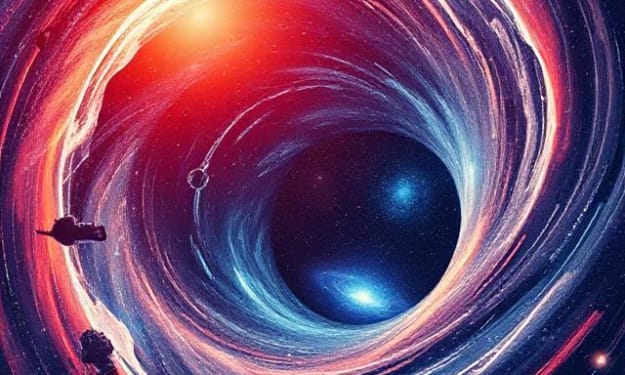
Wormholes and Free Will
Introduction Physicists and fans of science fiction alike have long been intrigued by the concept of wormholes—hypothetical tunnels connecting various points in spacetime. If they exist and are traversable, they could serve as shortcuts across the vast cosmos. Even more intriguing is the possibility that they permit time travel. However, if time travel is feasible, does it conflict with the idea of free will? Could someone use a wormhole to change the past, and if so, what happens to personal agency and causality? The implications of such a scenario touch upon deep philosophical and scientific questions, questioning whether our choices truly shape reality or if we are bound by an unalterable destiny.
By MD Ariful Islam10 months ago in Chapters
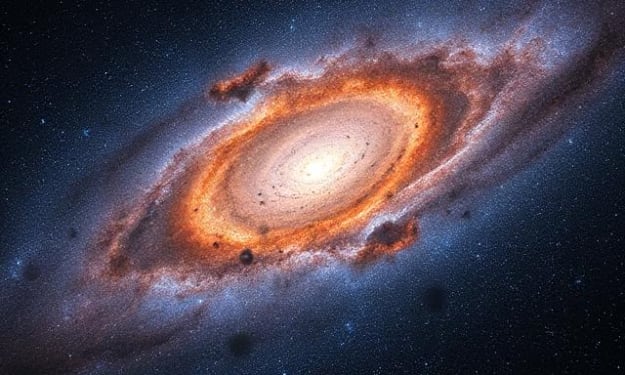
Exploring Our Universe
Our universe is vast, mysterious, and awe-inspiring—a cosmic expanse that stretches beyond what the human mind can fully comprehend. From the tiniest subatomic particles to the largest galaxies, the universe is filled with an incredible array of phenomena that challenge our understanding and fuel our curiosity. The more we learn, the more we realize how little we truly know about the cosmos, sparking a deep desire to understand the very fabric of existence.
By MD Ariful Islam10 months ago in Chapters
The Rise of AI in Everyday Life
In the not-so-distant past, the term "artificial intelligence" (AI) conjured up images of science fiction—machines that think, reason, and perhaps even outsmart their human creators. AI is now more than just a futuristic concept; it is a living, breathing aspect of our everyday lives. From the way we shop online to the way we work, AI has quietly woven itself into the fabric of modern society, influencing everything from personal assistants to healthcare solutions. As the role of AI continues to expand, it is shaping the way we live, work, and think about the future.
By MD Ariful Islam10 months ago in Chapters
The Dual Nature of Light
Unraveling the Quantum Mysteries of Illumination: Light and Photons For centuries, people have been interested in light, a fundamental component of our everyday lives. Light has been studied from a variety of angles, from ancient philosophers to modern scientists. Our understanding of light, on the other hand, has only become significantly more mysterious and profound over the past century. The idea of the photon—an elementary particle that is the foundation of light itself—is at the center of this comprehension. To truly appreciate the nature of light, we must explore both the concept of light and the role photons play in shaping the world around us.
By MD Ariful Islam10 months ago in Chapters
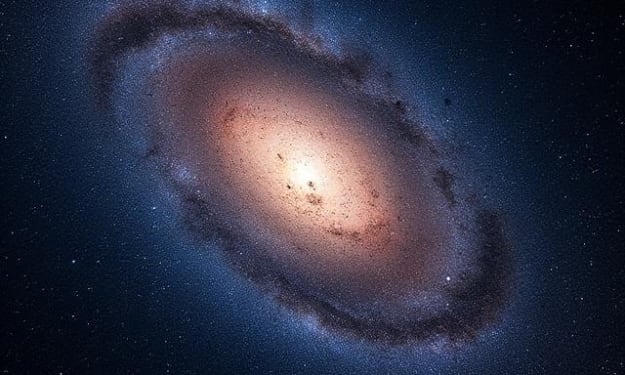
Exploring the Milky Way
The Milky Way is the galaxy that we call home. It is an enormous, whirling collection of dark matter, gas, dust, and stars that spans an unimaginable distance. The Milky Way, one of the billions of galaxies in the universe, is not just a random collection of celestial objects; rather, it is a dynamic system with intricate structures and intriguing mysteries that continue to captivate astronomers and scientists.
By MD Ariful Islam10 months ago in Chapters
The Mysteries of Black Holes
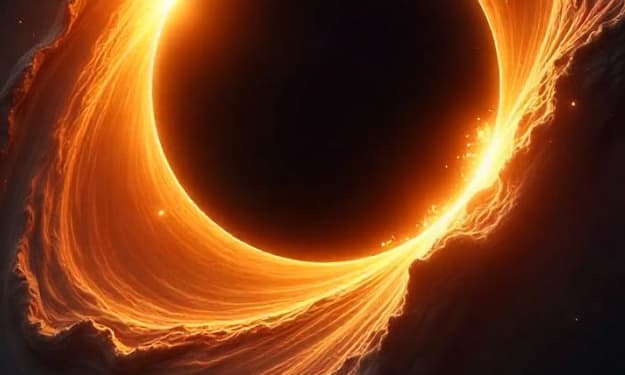
A black hole is a type of cosmic object that contains such a vast amount of matter and energy that its gravitational force is so intense that nothing, not even light, can escape from it. John Michell, a British astronomer, first proposed the idea of a black hole in 1783. However, Albert Einstein's theory of general relativity gave it a lot of attention in the modern era. Black holes have been the subject of ongoing investigation ever since, and numerous observations and experiments have established their existence. A Black Hole's Structure and Characteristics The immense density and gravitational force of a black hole are its most fundamental characteristics. A singularity is a point at which the curvature of space-time becomes infinite and the mass or density reaches an unimaginable level at the center of a black hole. A boundary known as the "event horizon" surrounds this singularity and serves as a point of no return. Once something crosses the event horizon, it cannot escape the black hole, not even light. This is why black holes are often referred to as "cosmic voids" or "cosmic prisons" because nothing can escape from them.
By MD Ariful Islam10 months ago in Chapters
The Rise of Artificial Intelligence
Artificial Intelligence (AI) has evolved from a niche concept in science fiction to a cornerstone of modern technology, influencing various aspects of daily life and industry. Its capabilities, ranging from simple automation to complex problem-solving, have sparked both excitement and concern as society grapples with the profound changes it brings. This article delves into the origins, current applications, ethical considerations, and future prospects of AI.
By Gustavo Woltmann10 months ago in Chapters
Unraveling the Complexities of Climate Change
In recent decades, climate change has emerged as one of the most pressing issues facing humanity. Its impacts are far-reaching, affecting everything from the stability of ecosystems to the livelihoods of communities worldwide. As we grapple with the consequences of a warming planet, it becomes increasingly evident that urgent action is needed to mitigate its effects and secure a sustainable future for generations to come.
By Gus Woltmann10 months ago in Chapters