
Trump & KSA: Power, Oil, and Politics
"Exploring the high-stakes alliance between Donald Trump and Saudi Arabia—where diplomacy meets oil, arms, and global influence."

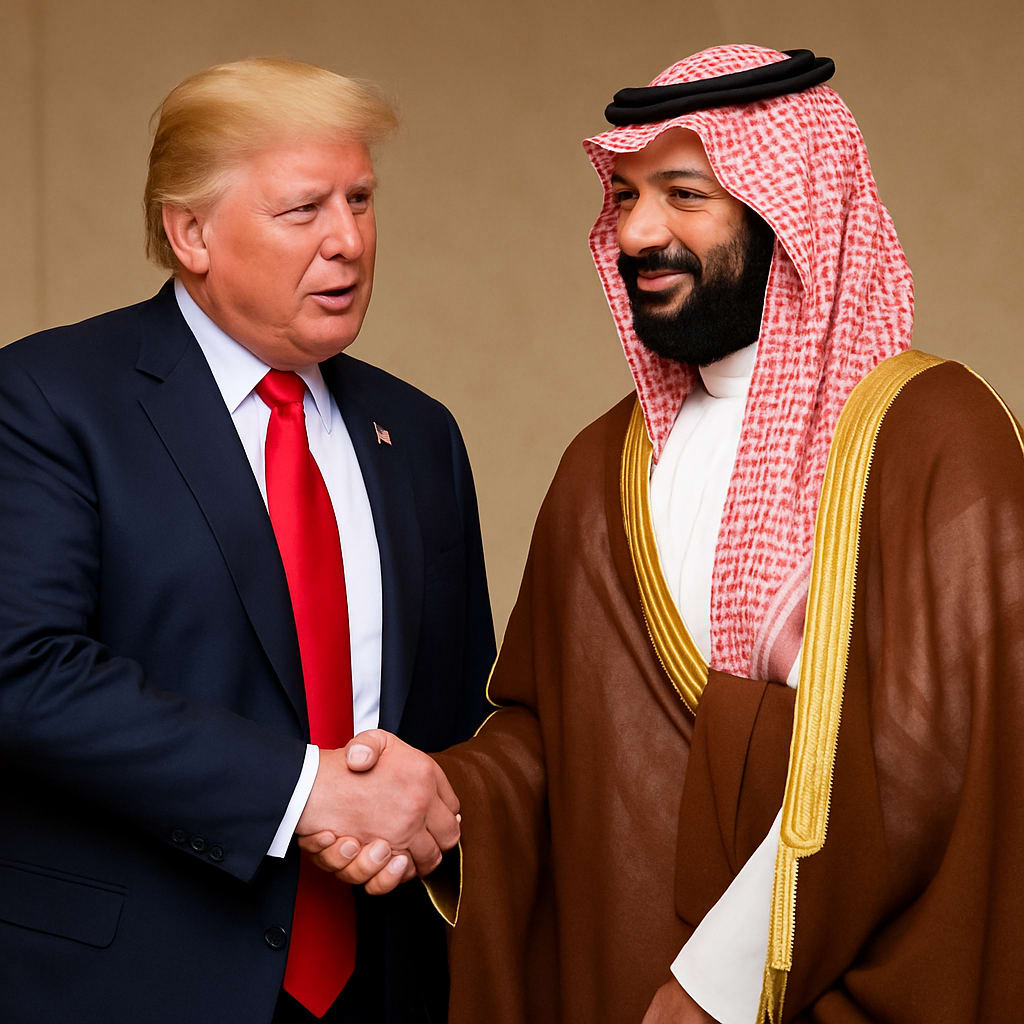
Trump & KSA: Power, Oil, and Politics
Few alliances in modern geopolitics have generated as much intrigue, criticism, and speculation as that between former U.S. President Donald J. Trump and the Kingdom of Saudi Arabia. It is a relationship built not merely on diplomacy, but on towering stakes: oil, arms, influence, and ideology. From lavish state receptions in Riyadh to controversial arms deals and mutual interests in regional security, the Trump-KSA connection became one of the defining features of his foreign policy. As Trump reenters the global stage with renewed political ambitions, the echoes of his engagement with Saudi Arabia continue to shape the narrative of U.S. involvement in the Middle East—and may once again become central in his potential return to power.
During his presidency, Trump made Saudi Arabia the destination of his first official foreign trip in 2017—an unprecedented move that signaled how central the kingdom would be to his foreign strategy. This decision wasn’t just symbolic; it underlined a transactional, interest-first approach that marked his administration’s broader international policy. Trump emphasized strong economic ties, counterterrorism cooperation, and containing Iran’s influence in the region. His warm relationship with Saudi Crown Prince Mohammed bin Salman (MBS) was seen as a departure from the more cautious stance of previous administrations.
One of the cornerstones of the Trump-KSA alliance was oil. As the world’s largest oil exporter, Saudi Arabia plays a pivotal role in global energy markets. Trump's administration worked closely with Riyadh to maintain stable oil prices, especially during times of crisis, such as the COVID-19 pandemic's impact on global demand. In return, Trump supported Saudi Arabia’s position within OPEC and often acted as a mediator in oil production negotiations between the Kingdom and Russia.
But the Trump-KSA dynamic wasn’t limited to energy. Arms sales to Saudi Arabia skyrocketed under Trump’s presidency, with deals worth over $110 billion announced in 2017 alone. While critics accused the administration of enabling human rights abuses and contributing to the humanitarian crisis in Yemen, Trump defended the deals as essential for American jobs and strategic alliances. He repeatedly emphasized the economic benefits of maintaining strong ties with Riyadh, calling the Kingdom a “tremendous purchaser” of U.S. weapons and technology.
The relationship wasn’t without controversy. The assassination of journalist Jamal Khashoggi in the Saudi consulate in Istanbul in 2018 triggered global outrage. While U.S. intelligence concluded that MBS had likely approved the operation, Trump stopped short of condemning the crown prince, citing strategic and economic priorities. This decision drew harsh criticism from human rights organizations, members of Congress, and international observers, who saw it as a glaring example of putting politics and profit over principles.
Trump’s handling of the situation, however, highlighted his broader foreign policy philosophy: prioritize national interest, avoid unnecessary conflicts, and deal with partners on a transactional basis. To many in Washington, this was a cynical approach; to others, it was refreshingly pragmatic.
As Trump teases a political comeback, observers are once again analyzing his past foreign policy moves for clues to his future intentions. Will he seek to rekindle the same level of engagement with Saudi Arabia? Will the dynamics of oil markets, now increasingly shaped by renewable energy debates and climate policy, alter that relationship? How will the shifting balance of power in the Middle East—from normalization deals with Israel to growing Chinese influence—affect a future Trump-KSA equation?
One thing remains clear: Trump’s legacy in the Middle East is deeply entwined with his rapport with Saudi Arabia. For Riyadh, the Trump years represented a period of unparalleled access and influence in Washington. For Trump, Saudi Arabia offered a bold stage to project strength, strike deals, and redefine America’s role in the region.
As the global geopolitical landscape continues to evolve, the partnership between Trump and the Saudi leadership remains a powerful case study in how personal diplomacy, strategic interests, and economic pragmatism can converge to reshape international relations.
Whether viewed as a model of realpolitik or a troubling example of unchecked power dynamics, the Trump-KSA relationship will remain a subject of debate—and possibly a blueprint for his next chapter in global affairs.
About the Creator
World politics
shares simple and clear updates on global news, leaders, and events. We cover politics, conflicts, and international stories that shape the world. Stay informed and learn something new every day.
Keep reading
More stories from World politics and writers in The Swamp and other communities.
Inside the CIA: America’s Secret Intelligence Agency
From Cold War Tactics to Cyber Wars: The CIA’s Global Reach In the shadows of global politics, where nations maneuver not through diplomacy alone but through secrecy, deception, and surveillance, the Central Intelligence Agency (CIA) stands as one of the most powerful and enigmatic institutions in the world. Born from the ashes of World War II and raised during the height of the Cold War, the CIA has evolved from traditional espionage operations to become a digital-age intelligence giant. Its reach extends across borders, ideologies, and technologies—operating in a world where knowledge is power and information can change the fate of nations. As threats have shifted from Soviet missiles to cyberterrorism and AI warfare, so too has the CIA adapted, making it not only a historical cornerstone of American security but also a critical player in today’s global power struggle.
By World politics 8 months ago in The Swamp
Blair and Rubio Among Key Names on Gaza’s ‘Board of Peace’
The announcement of a proposed “Board of Peace” for Gaza, reportedly featuring high-profile figures such as former UK Prime Minister Tony Blair and US Senator Marco Rubio, has sparked intense debate across political, diplomatic, and humanitarian circles. Supporters describe the initiative as a bold attempt to stabilize and rebuild Gaza after years of devastation, while critics see it as another example of powerful outsiders shaping the future of a besieged population without meaningful local representation.
By Ayesha Lashari2 days ago in The Swamp



Comments
There are no comments for this story
Be the first to respond and start the conversation.