Stories (47)
Filter by community
Reducing Carbon Footprint in Construction
The construction industry is a significant contributor to global carbon emissions, accounting for approximately 40% of the total CO₂ emissions. However, innovative solutions like biochar production are emerging as viable options to mitigate the environmental impact of building and infrastructure development. Biochar, a carbon-rich material produced through the pyrolysis of organic waste, offers multiple pathways to reduce the carbon footprint of the construction sector.
By Wayne Shen10 months ago in Earth
Catalyzing Energy Transition Through Plastic Pyrolysis Recycling
The intensifying global demand for alternative energy sources has positioned plastic pyrolysis at the forefront of the energy transformation narrative. As plastic waste accumulates at unsustainable rates, pyrolysis offers a dual-benefit solution—mitigating environmental degradation while generating hydrocarbon-rich fuels. This waste-to-energy process, particularly plastic to oil conversion, underscores a viable pathway toward a diversified and circular energy economy.
By Wayne Shen10 months ago in Earth
Microscopic Transformations in Biomass Pyrolysis
Biomass pyrolysis, a thermochemical process involving the decomposition of organic materials in the absence of oxygen, induces profound material changes on a microscopic scale. The process is essential for producing biofuels, biochar, and other valuable by-products. Understanding the microscopic transformations that occur during biomass pyrolysis is critical for optimizing the efficiency and yield of these processes. The molecular and structural alterations during pyrolysis not only influence the characteristics of the final products but also have a direct impact on the environmental footprint and economic feasibility of biomass conversion technologies.
By Wayne Shen11 months ago in Earth
Exploring the Versatility of Plastic Pyrolysis Fuel
The global issue of plastic waste management has led to innovative technologies that transform discarded plastic materials into valuable resources. One such method is plastic pyrolysis, a process that breaks down plastics at high temperatures in the absence of oxygen to produce a range of by-products, including plastic pyrolysis fuel. This fuel has emerged as a viable alternative to conventional energy sources, offering diverse applications across various industries. The potential of plastic pyrolysis fuel extends far beyond waste management, presenting economic and environmental advantages in energy production and industrial processes.
By Wayne Shen12 months ago in Earth
Pyrolysis as a Decarbonization Strategy for the Oil Industry
The oil industry remains one of the largest contributors to global carbon emissions, driven by crude extraction, refining, and downstream consumption. As the sector faces increasing pressure to decarbonize, alternative technologies are gaining traction to mitigate its environmental impact. Pyrolysis, a thermochemical decomposition process that converts hydrocarbon-based waste into reusable energy sources, offers a viable pathway to reducing emissions while valorizing waste streams.
By Wayne Shenabout a year ago in Earth
How Steel Mill Achieve Sustainability Production
In the pursuit of sustainability, industries worldwide are exploring alternative solutions to reduce their carbon footprints. For steel mills, which rely heavily on fossil fuels for metal smelting, transitioning to renewable energy sources is crucial for aligning with global sustainability targets. One promising alternative is the use of charcoal in place of traditional fossil fuels in steel production. By integrating charcoal into metal smelting operations, steel mills can significantly reduce emissions while contributing to the broader goals of sustainable development.
By Wayne Shenabout a year ago in Earth
The Environmental Toll of Straw Burning
Straw burning, a practice commonly used by farmers to clear fields after harvest, has become a significant environmental concern. While it offers an immediate solution for disposing of crop residue, the ecological consequences are severe and far-reaching. This practice, which remains prevalent in many regions, contributes to air pollution, soil degradation, and the release of greenhouse gases, aggravating the global ecological crisis. It is crucial to understand the broader impacts of straw burning and explore alternative solutions, such as biochar production, to mitigate its effects.
By Wayne Shenabout a year ago in Earth
Benefits of Biochar Production from Forest Management Waste
Biochar production from forest management waste offers a sustainable solution to some of the most pressing environmental and ecological challenges today. By converting forest residues, such as deadwood, branches, and leaves, into biochar, a high-value material, this process presents an array of benefits ranging from improved fire prevention strategies to contributing to global sustainability goals (SDGs). The multifaceted advantages of biochar production extend beyond waste management, addressing key issues related to forest carbon sinks, soil health, and climate change mitigation.
By Wayne Shenabout a year ago in Earth
The Role of Sustainable Plastic Recycling in a Circular Economy
The growing environmental impact of plastic waste has become a major concern for industries, governments, and environmentalists worldwide. As plastic pollution continues to dominate landfills, oceans, and ecosystems, sustainable plastic recycling has emerged as a critical solution. One of the more promising developments in this field is the transformation of waste plastic into valuable resources, such as fuel. Through advanced methods like pyrolysis, plastic waste can be repurposed into a range of energy products, driving both environmental and economic benefits.
By Wayne Shenabout a year ago in Earth
Exploring the Role of Biochar in the Livestock Industry
Biochar, a stable form of carbon produced through the pyrolysis of organic material, is gaining attention for its diverse applications across various sectors. In the livestock industry, the use of biochar has emerged as a sustainable solution for improving animal health, enhancing feed quality, and addressing environmental concerns, such as methane emissions and waste management. As the industry faces increasing pressure to reduce its carbon footprint and mitigate climate change, biochar presents a compelling opportunity to integrate sustainability with economic benefits.
By Wayne Shenabout a year ago in Earth
Biomass's Full Life Cycle Carbon Footprint
Biomass, derived from organic materials like wood, agricultural residues, and waste, is widely considered a renewable energy source. While it holds promise for reducing reliance on fossil fuels, it is crucial to assess its environmental impact comprehensively. One of the most significant aspects of this evaluation is the carbon footprint, which measures the total amount of greenhouse gases emitted throughout the entire life cycle of biomass, from production to disposal. Understanding the carbon footprint of biomass involves considering various factors, including the methods of waste treatment such as incineration, natural decomposition, composting, and pyrolysis.
By Wayne Shenabout a year ago in Earth
Closed-Loop Management of Forestry Waste Biomass
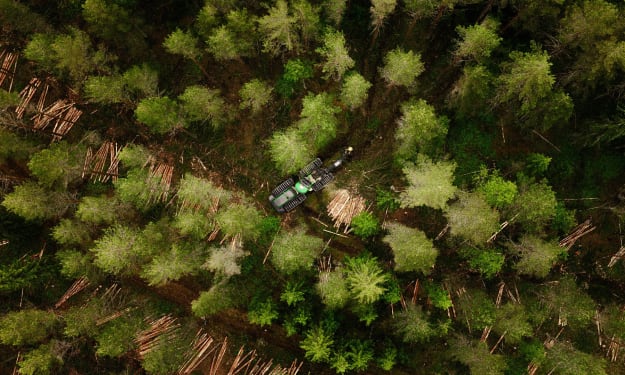
Forestry activities produce significant volumes of biomass waste, including branches, bark, and leaves left after timber harvesting. Traditionally, this waste is either burned or left to decompose, releasing carbon dioxide and methane into the atmosphere. A more sustainable approach is the closed-loop management of forestry waste biomass through biochar production. This process transforms biomass into a stable form of carbon, offering numerous environmental and economic benefits.
By Wayne Shenabout a year ago in Earth