
Exploring the Role of Biochar in the Livestock Industry
Environmental and Economic Benefits of Biochar in Livestock Farming


Biochar, a stable form of carbon produced through the pyrolysis of organic material, is gaining attention for its diverse applications across various sectors. In the livestock industry, the use of biochar has emerged as a sustainable solution for improving animal health, enhancing feed quality, and addressing environmental concerns, such as methane emissions and waste management. As the industry faces increasing pressure to reduce its carbon footprint and mitigate climate change, biochar presents a compelling opportunity to integrate sustainability with economic benefits.
Enhancing Animal Health and Productivity
Incorporating biochar into livestock feed has demonstrated positive effects on animal health and productivity. Biochar's porous structure provides a surface area that promotes the growth of beneficial microorganisms in the digestive system of animals. These microorganisms help to break down nutrients in feed more efficiently, improving the absorption of essential vitamins and minerals. As a result, animals exhibit better growth rates, improved feed conversion efficiency, and enhanced overall health.
Moreover, biochar's detoxifying properties play a crucial role in mitigating the impact of harmful toxins present in livestock feed, such as mycotoxins. These toxins, produced by mold growth on feed, can compromise animal health, leading to decreased productivity and increased veterinary costs. Biochar can adsorb and neutralize these toxins, thus promoting better feed quality and reducing the risk of diseases associated with toxic contamination.

Methane Emissions Reduction
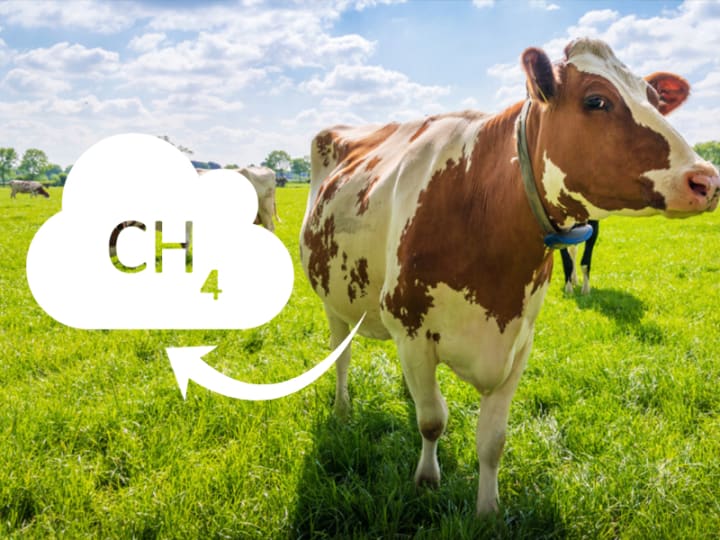
One of the most significant environmental challenges in the livestock industry is the release of methane, a potent greenhouse gas (GHG) primarily emitted by ruminant animals such as cows. Methane is produced during the digestive process in animals, particularly through enteric fermentation in the stomach. The reduction of methane emissions from livestock is critical to meeting global climate targets, as methane has a far greater warming potential than carbon dioxide in the short term.
Research has shown that biochar can help mitigate methane emissions in two ways. First, when included in animal feed, biochar has been found to reduce the amount of methane produced during digestion. This is attributed to biochar's ability to alter the microbial activity in the rumen, favoring the growth of microorganisms that produce less methane during fermentation. As a result, livestock emitting lower levels of methane contribute to reduced environmental impact and improved sustainability in the sector.
Second, biochar can be used in manure management systems to reduce methane emissions from waste. When biochar is added to manure or used as bedding material, it absorbs moisture and organic compounds, preventing the conditions that facilitate methane-producing bacteria. This application not only reduces GHG emissions but also helps manage manure more effectively, minimizing odors and enhancing its potential as a soil amendment.
Carbon Credit and Economic Incentives
The livestock industry is under increasing pressure to reduce its environmental impact, and biochar offers a potential solution to help mitigate some of the industry's most significant challenges. One of the economic incentives for using biochar in livestock operations is the opportunity to earn carbon credits. By adopting biochar technologies to reduce methane emissions and enhance sustainability, farmers and livestock operators can earn carbon credits, which can then be sold in carbon markets.
Carbon credits are a part of global efforts to combat climate change by placing a monetary value on carbon sequestration. Since biochar is a form of stable carbon, it can be stored in the soil for hundreds to thousands of years, effectively locking away carbon and preventing its release into the atmosphere. This long-term carbon sequestration qualifies biochar applications for participation in carbon credit programs, offering an additional revenue stream for livestock producers who adopt sustainable practices.
In regions where livestock farming is heavily taxed for its environmental impact, such as the introduction of "cow tax" aimed at curbing methane emissions, biochar applications can serve as a strategy to offset emissions and reduce associated costs. By integrating biochar into feeding programs and manure management, livestock farmers may lower their tax liabilities and demonstrate their commitment to sustainability.
Soil Fertility and Waste Management
Beyond its role in animal health and methane mitigation, biochar offers significant benefits for soil fertility and waste management in the livestock industry. When used as a soil amendment, biochar improves soil structure, increases water retention, and enhances nutrient availability. These improvements lead to better soil health and productivity, which can benefit pasturelands and crop production on farms that integrate livestock and crop operations.
Additionally, biochar plays an important role in manure management. By incorporating biochar into composting processes or directly applying it to manure, farmers can accelerate the decomposition of organic waste. This not only reduces the environmental impact of manure but also converts waste into a valuable resource that can be used to enrich soil, promoting circular farming practices.
Conclusion
Biochar offers a multifaceted solution for the livestock industry, addressing key challenges related to animal health, environmental impact, and waste management. Its role in reducing methane emissions, enhancing feed quality, and improving soil fertility provides clear economic and ecological benefits. Moreover, the potential for earning carbon credits further strengthens the case for biochar as a valuable tool in the pursuit of sustainable livestock farming.
As the industry continues to evolve and face growing environmental pressures, adopting biochar-based solutions could help livestock farmers meet regulatory requirements, reduce their environmental footprint, and improve their bottom line.
About the Creator
Keep reading
More stories from Wayne Shen and writers in Earth and other communities.
Biomass's Full Life Cycle Carbon Footprint
Biomass, derived from organic materials like wood, agricultural residues, and waste, is widely considered a renewable energy source. While it holds promise for reducing reliance on fossil fuels, it is crucial to assess its environmental impact comprehensively. One of the most significant aspects of this evaluation is the carbon footprint, which measures the total amount of greenhouse gases emitted throughout the entire life cycle of biomass, from production to disposal. Understanding the carbon footprint of biomass involves considering various factors, including the methods of waste treatment such as incineration, natural decomposition, composting, and pyrolysis.
By Wayne Shenabout a year ago in Earth
When the Stars Whispered
The Night Sky Like Never Before I had always been fascinated by astronomy, spending countless nights in my backyard with a modest telescope, charting constellations, tracking planets, and occasionally glimpsing distant galaxies as faint smudges of light against the infinite darkness. But on one crisp night in March 2026, something extraordinary occurred that defied both expectation and explanation, a cosmic phenomenon that no scientific journal could easily classify, and yet it felt intimately personal, as if the universe itself were reaching out to communicate. The sky was unusually clear, the stars sharp and luminous like diamonds scattered across black velvet, and the Milky Way stretched overhead in a ribbon of silvery light that seemed to pulse ever so slightly, a rhythm I hadn’t noticed before.
By The Curious Writer4 days ago in Earth


Comments
There are no comments for this story
Be the first to respond and start the conversation.