Muhammad Saad
Stories (465)
Filter by community
"Heart of the Deep: Unleashing the Power of the Pacific"
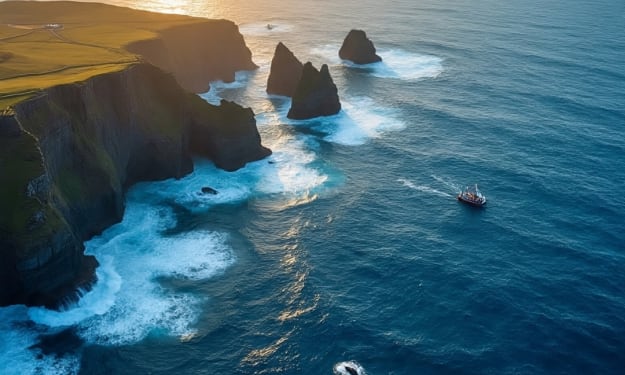
Heart of the Deep: Unleashing the Power of the Pacific Stretching across more than 63 million square miles, the Pacific Ocean is the largest and most powerful body of water on Earth. From its deep trenches to its towering waves, from tropical islands to icy northern shores, the Pacific isn’t just vast — it’s alive. Its moods, movements, and mysteries shape not only coastlines but climates, cultures, and life itself. This is the story of the Pacific Ocean: the heart of our planet’s blue soul. The name “Pacific” means peaceful, a title given by Portuguese explorer Ferdinand Magellan in 1521. But the ocean’s surface calm was deceptive. Beneath its tranquil waves, immense forces churn. The Pacific is home to the Ring of Fire — a horseshoe-shaped zone of frequent earthquakes and volcanic eruptions — making it one of the most geologically active regions in the world. Along its seafloor lies the Mariana Trench, the deepest point on Earth, plunging nearly 36,000 feet. It’s a realm darker than night, where strange creatures live under crushing pressure and scientists are only beginning to explore its secrets. But the Pacific’s influence reaches far beyond its depths. Its waters regulate the Earth’s climate through powerful systems like the El Niño and La Niña cycles, which can bring droughts, floods, and temperature shifts to continents thousands of miles away. The ocean’s currents act like conveyor belts, distributing heat and nutrients across the globe, influencing everything from hurricane formation to fisheries. The Pacific is also a cultural cradle. For thousands of years, it has been home to civilizations whose lives are deeply intertwined with the ocean. The Polynesians, among the greatest navigators in human history, traveled thousands of miles across the Pacific using only the stars, ocean swells, and bird patterns to guide them. They settled the scattered islands of Hawaii, Easter Island, and New Zealand long before European ships ever set sail. To the people of the Pacific, the ocean is not a barrier, but a bridge. It’s a provider, a protector, and a living ancestor. Indigenous traditions speak of the ocean’s spirit, its songs, and its teachings. Even today, communities rely on it for food, transport, and spiritual connection — fishing in its waters, surfing its waves, and honoring it in ceremonies passed down for generations. Ecologically, the Pacific is a jewel of biodiversity. It hosts the Great Barrier Reef, the largest coral reef system on Earth, teeming with thousands of species. Migrating whales sing through its vastness, giant squids lurk in its depths, and remote atolls buzz with seabirds and turtles. Yet, like many natural wonders, the Pacific faces modern threats. Plastic pollution, overfishing, coral bleaching, and rising sea levels caused by climate change are challenging its resilience. Island nations, some of the most vulnerable to climate impacts, are raising their voices on the global stage. Places like Kiribati and Tuvalu, with average elevations of just a few meters, are experiencing rising tides that eat away at homes and history. Despite their small size, these nations are leading calls for action, reminding the world that the Pacific’s future is tied to all of ours. But hope still flows through its currents. Across the region, scientists, activists, and Indigenous leaders are working together to protect marine habitats, restore coral reefs, and create vast marine sanctuaries. Traditional knowledge is being paired with modern science to better understand how to care for the ocean’s delicate balance. One such effort is the creation of the Pacific Ocean Peace Park — a network of marine protected areas spanning several countries and cultures. It’s a symbol of unity, resilience, and a shared commitment to preserving the ocean’s health for future generations. Standing on a cliff overlooking the Pacific, it’s easy to feel small. The wind smells of salt and endless space. Waves crash below, timeless and tireless. Yet, in that moment, one also feels part of something much larger — a vast, breathing system that connects continents, cultures, and all living things. The Pacific Ocean is not just water. It’s movement, memory, and mystery. It’s a force that sculpts the Earth and sings to the stars. It holds the past in its depths and the future in its tide. And as we learn to listen, protect, and respect this mighty ocean, we might just discover that the heartbeat of the planet begins in its waves.
By Muhammad Saad 7 months ago in Earth
Majestic Blue: The Reign of the Pacific
Majestic Blue: The Reign of the Pacific Discover the Wonders, Power, and Global Importance of the World's Greatest Ocean The Pacific Ocean is more than just the largest body of water on Earth — it is a vast, living force that shapes weather, supports countless species, and connects cultures across continents. Covering more than 63 million square miles, the Pacific is larger than all the landmasses on Earth combined. Its name, given by Portuguese explorer Ferdinand Magellan in the 16th century, means “peaceful,” and yet this ocean is anything but quiet. It is teeming with energy, biodiversity, and ancient stories waiting to be discovered. From the gentle shores of the South Pacific islands to the thunderous waves of Hawaii’s north shore, the Pacific Ocean is home to some of the most stunning natural beauty in the world. Coral reefs like the Great Barrier Reef in Australia or the vibrant reefs of Palau are just a small part of its underwater wonders. These ecosystems support thousands of marine species, many of which are found nowhere else on Earth. Sea turtles, manta rays, reef sharks, and schools of colorful fish all find shelter and sustenance in its warm, clear waters. Above the surface, the Pacific is equally alive. It borders more than 50 countries, including giants like the United States, China, Australia, and Chile. For thousands of years, it has served as a highway for trade, migration, and exploration. Indigenous Polynesian navigators once sailed across thousands of miles using only the stars, ocean currents, and the flight patterns of birds. Their journeys tell a powerful story of human resilience and a deep connection with nature. Today, the Pacific still plays a vital role in human life. It regulates the Earth’s climate by absorbing vast amounts of heat and carbon dioxide. Weather patterns like El Niño and La Niña—originating in the Pacific—can affect rainfall, crop production, and even the strength of hurricanes around the globe. Scientists closely monitor the Pacific for early signs of these climate shifts, knowing that this one ocean can influence the world’s ecosystems, economies, and societies. But the Pacific is not just a force of nature; it is also a place of peace and inspiration. Along its rim lies the “Ring of Fire,” a zone known for frequent earthquakes and volcanoes. While these events can be dangerous, they also remind us of the Earth’s dynamic energy. They create new islands, shape coastlines, and offer rare glimpses into the Earth’s inner workings. In Hawaii, lava meets sea in a powerful show of creation — a reminder that the Pacific is always evolving. Despite its immensity, the Pacific faces growing challenges. Plastic pollution, overfishing, and rising sea temperatures threaten the delicate balance of its ecosystems. Tiny island nations like Tuvalu and Kiribati are already feeling the impact of sea-level rise, their very existence at risk. These environmental concerns highlight the need for global cooperation to protect the Pacific and the people who depend on it. Fortunately, efforts are being made. Marine protected areas are being expanded, coastal communities are embracing sustainable fishing practices, and scientists are working together across borders to better understand and safeguard this vast ocean. Indigenous knowledge is also gaining recognition in conservation efforts, bringing ancient wisdom into modern environmental strategies. One shining example of this harmony between tradition and science is the story of the Hōkūleʻa — a replica of an ancient Polynesian voyaging canoe. In recent years, it completed a worldwide voyage using only traditional navigation methods. Along the way, it spread a powerful message of mālama honua — to care for our Earth. The Hōkūleʻa reminds us that our connection to the Pacific is not just physical, but spiritual and cultural as well. The Pacific Ocean is more than just water. It is a world unto itself — rich in life, mystery, and promise. It feeds billions, inspires artists and explorers, and teaches us humility in the face of nature’s vastness. It is both a protector and a provider, a source of wonder and warning. As we move into the future, the story of the Pacific is still being written. Each wave carries the echo of ancient journeys, each tide brings new hope, and each effort to preserve it is a gift to generations to come. By understanding and respecting this majestic blue realm, we not only protect a vital part of our planet — we honor the very heart of life on Earth.
By Muhammad Saad 7 months ago in Earth
Exploring the World's Most Popular Seas
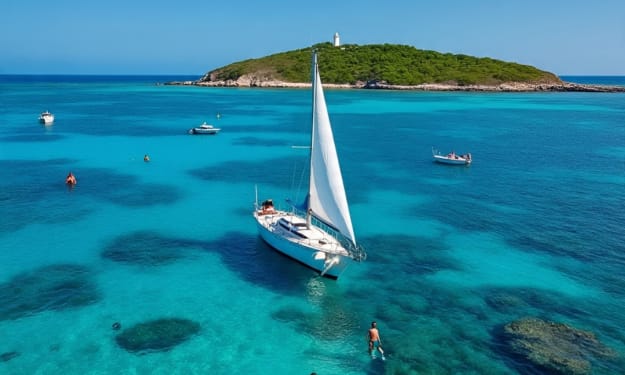
Exploring the World's Most Popular Seas A Journey Through the Oceans' Most Treasured and Visited Waterways The world’s seas have long captured the imagination of explorers, travelers, and dreamers. These vast, endless expanses of water are not only the cradle of life but also the arteries that connect distant lands, cultures, and histories. In the modern age, these seas have transformed into the most visited, treasured, and revered bodies of water, each offering a unique blend of beauty, adventure, and mystery. Join us as we embark on a journey through the world's most popular seas—those that have captivated the hearts and minds of countless voyagers throughout history. The Mediterranean Sea: Crossroads of Civilizations Our journey begins in the warm, sun-drenched waters of the Mediterranean Sea, which stretches between three continents—Europe, Asia, and Africa. For millennia, this ancient sea has been a crossroads of civilizations. From the rise of the ancient Egyptians to the grandeur of Rome, the Mediterranean has seen the birth of empires, the spread of ideas, and the flourishing of trade. Today, it remains one of the most visited seas in the world, a favorite for travelers seeking a blend of culture, history, and natural beauty. The Mediterranean coastline is lined with iconic cities such as Barcelona, Athens, and Istanbul, each offering a vibrant tapestry of history and modernity. The azure waters lap against the rugged cliffs of the Amalfi Coast, while the islands of Greece and Italy offer pristine beaches, quaint villages, and ancient ruins. Cruising the Mediterranean has become a rite of passage for many. Whether sailing past the volcanic landscapes of Santorini or visiting the historic fortress of Dubrovnik, there is no shortage of awe-inspiring sights along its shores. The Mediterranean Sea is more than just a body of water—it’s a timeless symbol of human connection, where cultures have met, mingled, and left their indelible mark on the world. The Caribbean Sea: Paradise of the Americas Next, we set our course for the sparkling, turquoise waters of the Caribbean Sea. Known for its idyllic islands, warm waters, and gentle trade winds, the Caribbean is the epitome of tropical paradise. The sea stretches from the Gulf of Mexico to the Atlantic Ocean, encompassing over 700 islands, cays, and islets, each more enchanting than the last. For travelers seeking a relaxing escape or thrilling water activities, the Caribbean has something for everyone. The Bahamas, with its pristine white-sand beaches and crystal-clear waters, offers the perfect retreat for those looking to unwind. The islands of Jamaica and the Dominican Republic are famous for their lively music, vibrant culture, and all-inclusive resorts that cater to every need. But the Caribbean is not just about relaxation. Beneath its surface lies a world of underwater wonder, with vibrant coral reefs and rich marine life that attract divers from across the globe. The Great Blue Hole off the coast of Belize is one of the world’s most famous dive sites, a sinkhole that plunges over 400 feet into the depths of the ocean. The Caribbean Sea has been the setting for countless stories of pirates, explorers, and seafarers. Its waters have witnessed both conflict and camaraderie, from the infamous battles between Spanish conquistadors to the flourishing trade routes that shaped the modern world. Today, it remains a sanctuary for those seeking an escape from the pressures of modern life, offering a chance to reconnect with nature and the sea. The Red Sea: The Jewel of the Middle East From the tropical waters of the Caribbean, we journey eastward to the vibrant Red Sea, a narrow body of water that separates the Arabian Peninsula from the African continent. The Red Sea is known for its rich biodiversity, striking coral reefs, and historical significance. It has long been a vital trade route, connecting Europe, Asia, and Africa for centuries. The sea’s warm waters and crystal-clear visibility make it a diver’s paradise. The coral reefs of Egypt and Sudan are some of the most famous in the world, home to an astonishing variety of marine species, including colorful fish, sea turtles, and even the occasional shark. The underwater world here is so rich that divers can spend days exploring without ever seeing the same thing twice. The Red Sea also boasts historical significance. Ancient civilizations once navigated its waters to trade valuable spices, incense, and precious stones. In modern times, the sea continues to serve as a vital route for shipping and commerce. Beyond its beauty and history, the Red Sea offers a gateway to some of the Middle East's most intriguing destinations, including the ancient city of Petra in Jordan and the holy city of Mecca in Saudi Arabia. The South China Sea: An Ocean of Mystery and Debate Our final stop on this oceanic adventure takes us to the mysterious waters of the South China Sea, one of the most strategically important and disputed bodies of water in the world. Spanning more than 3.5 million square kilometers, the South China Sea is bordered by several countries, each with competing territorial claims. Despite its contentious nature, the South China Sea is a vital trade route, with over one-third of global maritime trade passing through its waters. Its significance is not just geopolitical—it is also ecologically vital, home to a rich diversity of marine life, including coral reefs, sea turtles, and various species of fish. For travelers, the South China Sea offers access to some of the most stunning coastlines in Southeast Asia. The Philippines’ Palawan Island, often cited as one of the most beautiful islands in the world, boasts dramatic limestone cliffs, hidden lagoons, and crystal-clear waters. Vietnam’s Ha Long Bay is another iconic destination, with thousands of limestone karsts rising out of the sea like ancient sentinels. The South China Sea’s allure is undeniable, with its combination of natural beauty, cultural richness, and political intrigue. It is a sea that has shaped the course of history, and its future remains a subject of great significance on the global stage. A World of Waterways From the Mediterranean to the South China Sea, the world’s most popular seas are not just bodies of water; they are the lifeblood of our planet, fostering connections between people, cultures, and ecosystems. These seas offer an invitation to explore, discover, and marvel at the wonders of the natural world. They are living, breathing reminders of the power of the ocean and the unbreakable bond between humanity and the waters that sustain us.
By Muhammad Saad 7 months ago in Earth
The Ocean's Wonders: A Journey Beneath the Waves
The Ocean's Wonders: A Journey Beneath the Waves The ocean has always been a source of awe and mystery for humankind. It covers more than 70% of the Earth's surface, yet its depths remain largely unexplored. We know more about the surface of the Moon than we do about the depths of the oceans, a testament to just how much remains hidden beneath the waves. But every now and then, explorers and scientists have the privilege of venturing into this vast, enigmatic world. This is one such journey.
By Muhammad Saad 7 months ago in Earth
The Rise of Tomorrow: How Modern Technology is Shaping Our Future
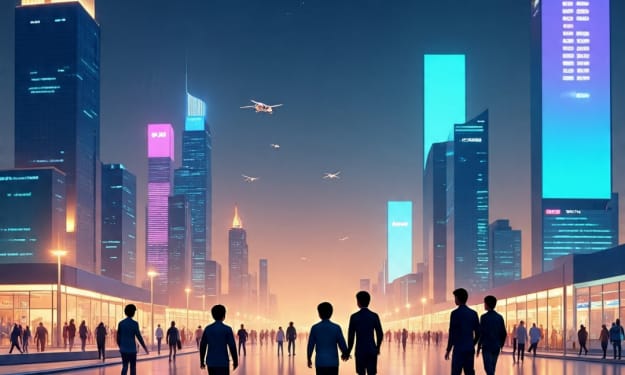
The Rise of Tomorrow: How Modern Technology is Shaping Our Future It’s a crisp autumn morning in 2035, and the city is alive with the hum of innovation. The streets are bustling, but not with the chaos of honking cars and crowded sidewalks. Instead, the air is filled with a sense of calm efficiency. People walk briskly along smart pathways that adjust their lighting and temperature to match the time of day, while self-driving cars glide silently by. Drones buzz overhead, delivering packages in seconds. The world is quieter now, not because people have stopped moving, but because the machines that drive them are working with precision. The transformation hasn’t been sudden; it’s been gradual, but relentless. In just two decades, technology has radically reshaped the way we live, work, and interact. Gone are the days when our lives were dominated by screens, clunky interfaces, and disconnected systems. Now, we live in a world that anticipates our needs before we even voice them, a world where innovation is not just about faster or smarter machines, but about a seamless integration of technology into the very fabric of our daily lives. The Smart City: A Model of Tomorrow Take a stroll down any major boulevard in a smart city, and you’ll see a testament to human ingenuity. Buildings are not just structures of concrete and steel anymore; they’re living, breathing entities. They are energy-efficient, powered by solar panels and wind turbines, and designed to adapt to changing weather conditions. Smart glass windows tint automatically to keep interiors cool in the summer and warm during winter. The entire city grid operates like a well-coordinated brain, constantly optimizing traffic flow, energy consumption, and even waste management. One of the most remarkable features of the smart city is the ubiquitous presence of artificial intelligence (AI). AI has long moved beyond the realm of science fiction, now embedded in nearly every aspect of urban life. From the traffic lights that adjust to real-time conditions to the digital assistants that help with everything from making appointments to managing your health, AI is everywhere. These systems are so intuitive that most people don’t even notice them working—they simply become part of the background of their daily routines. Take Emma, for example. She’s a software engineer, but she doesn’t spend her days in front of a screen anymore. Instead, her life is guided by a network of intelligent devices and services. Her morning begins when her smart bed gently wakes her up, simulating the rising sun to help her body wake naturally. The smart mirror in her bathroom analyzes her health stats—sleep patterns, heart rate, even stress levels—and suggests a yoga session or a light workout if needed. As Emma prepares breakfast, her fridge scans the contents of her pantry and suggests a healthy meal based on her nutritional goals for the day. Meanwhile, the self-cleaning floor in her kitchen whirs to life, sweeping away crumbs before she even notices them. In her hand, she carries a wristband that monitors her vital signs and keeps track of her activity levels. It’s no longer a matter of remembering to stay healthy; her tech takes care of the details for her. The Age of Personalized Technology But the smart city isn’t just about convenience—it’s about personalization. Modern technology has given rise to an era of hyper-individualized experiences. The notion of a one-size-fits-all solution is rapidly becoming obsolete. In the world of 2035, every piece of technology is designed to adapt to the user’s unique preferences and needs. Emma’s day continues with a virtual meeting with her colleagues, but this isn’t just any conference call. Thanks to augmented reality (AR), she’s able to collaborate in a shared virtual space, using 3D models and interactive tools to build and refine software in real-time. The technology allows her to work with teams scattered across the globe, seamlessly bridging geographical boundaries. Later, Emma decides to visit a local park. Instead of wandering through a maze of information, her AR glasses provide contextual information about the environment around her. She can learn about the trees, the wildlife, or even historical landmarks without having to search for the information manually. It’s an enriching experience that blends the digital world with the physical one, enhancing every moment of her day. The Global Impact of Technology The influence of modern technology extends far beyond the city limits. In rural areas and remote regions, the accessibility of the internet and mobile networks has changed lives in profound ways. Agricultural practices have evolved with the help of drones and AI, optimizing crop yields and minimizing waste. In education, personalized learning platforms powered by AI ensure that every student receives an education tailored to their pace and interests. In healthcare, breakthroughs in genomics and AI have made personalized medicine the standard. People no longer have to wait weeks for test results; AI-driven diagnostics provide immediate feedback, helping doctors make better-informed decisions. The advancements have led to a dramatic increase in life expectancy, as diseases that once plagued humanity are now easily managed or eradicated. Perhaps the most profound impact of modern technology, though, is the way it has brought people together. With advanced translation services powered by real-time AI, language barriers are no longer an issue. People from different corners of the globe can now communicate effortlessly, fostering a sense of global unity that has never been possible before. Looking to the Future As the sun sets on this typical day in 2035, it’s easy to feel a sense of awe. What was once the realm of science fiction is now the foundation of our reality. But this is just the beginning. With breakthroughs in quantum computing, sustainable energy, and bioengineering, the next few decades promise to bring even more radical changes. The future is, without a doubt, filled with uncertainty—but one thing is clear: technology will continue to be the driving force behind humanity’s evolution. And as we venture into this new era, we can rest assured that the possibilities are endless. The rise of tomorrow has only just begun.
By Muhammad Saad 7 months ago in Earth
"The Digital Revolution: How Today's Technology is Shaping Tomorrow"
The Digital Revolution: How Today's Technology is Shaping Tomorrow Exploring Innovations, Breakthroughs, and the Impact of Modern Tech on Our Future The world is changing at a pace never seen before. What was once the stuff of imagination is now embedded in our everyday lives. The digital revolution, powered by innovations in technology, is not only reshaping the present but also rewriting the blueprint for the future. With each new breakthrough, we inch closer to a world where possibilities once thought impossible are no longer distant dreams but emerging realities. From artificial intelligence to quantum computing, today’s tech is crafting the landscape of tomorrow. The AI Surge Artificial Intelligence (AI) has quickly gone from a niche field of study to an indispensable part of modern life. In 2015, AI was still largely confined to robotics and basic algorithms. Fast-forward to today, and AI is deeply woven into our digital fabric. It powers voice assistants, self-driving cars, and personalized recommendations on platforms like Netflix and Amazon. But these are just the tip of the iceberg. AI is beginning to shape more complex areas of life, including medicine, law, and even creative industries. AI’s ability to analyze massive data sets and detect patterns is revolutionizing healthcare. Machine learning algorithms now diagnose diseases like cancer and diabetes faster and more accurately than human doctors. In some cases, AI can predict a patient’s likelihood of developing conditions years before symptoms appear. This precision offers the potential to save millions of lives and prevent global health crises before they escalate. On the flip side, AI's rapid advancement raises ethical questions. How do we ensure fairness in AI’s decision-making? What happens when algorithms are trained on biased data? And, most crucially, as AI takes over more tasks, what will happen to employment? The digital revolution promises a future of convenience and efficiency, but it also demands we carefully navigate the social implications of automation. The Rise of Quantum Computing While AI dominates headlines today, quantum computing represents the next frontier in the digital revolution. Though still in its infancy, quantum computing has the potential to solve problems that classical computers simply cannot handle. Unlike traditional binary systems, quantum computers leverage the strange properties of quantum mechanics to process information in ways that seem almost magical. They exist in multiple states at once, thanks to the phenomena of superposition and entanglement, allowing them to perform calculations exponentially faster. For industries like finance, energy, and pharmaceuticals, this breakthrough could be transformative. Imagine a quantum computer solving complex mathematical models to simulate the behavior of molecules, dramatically speeding up drug discovery. Or consider a quantum algorithm able to predict stock market movements with an accuracy that far surpasses anything currently achievable. Quantum computing could revolutionize industries, but the road ahead is fraught with challenges. Researchers still need to overcome the limitations of building stable quantum computers and making them commercially viable. Despite these hurdles, major tech giants like IBM, Google, and Microsoft are making significant strides, and it’s likely that within the next few decades, quantum computers will become a central part of technological infrastructure. This shift will not only affect industries but will also challenge our understanding of information security. With their unparalleled computational power, quantum computers could break current encryption methods, forcing a complete overhaul of cybersecurity protocols. The Internet of Everything We are also witnessing the rise of the Internet of Things (IoT)—a network of interconnected devices that communicate with each other over the internet. From smart refrigerators that remind you to buy milk to wearable fitness trackers that monitor your heart rate, IoT is becoming the backbone of everyday life. In smart cities, IoT is helping optimize traffic flow, reduce energy consumption, and improve public services by gathering real-time data. But the true potential of IoT lies in its ability to create a seamlessly integrated world. Soon, our homes, workplaces, and even entire cities could function as smart ecosystems, where technology anticipates our needs before we even express them. In healthcare, for example, IoT devices could monitor patients continuously, sending vital health data to doctors in real-time and alerting them to any dangerous changes. In agriculture, sensors embedded in fields could monitor soil health and weather conditions, allowing farmers to optimize crop yields with precision agriculture. Yet, as the IoT expands, so does the volume of data being generated. With every device collecting information, ensuring privacy and security will become a major challenge. How do we protect personal data in a world where everything is connected? Who owns this data, and how can we prevent it from falling into the wrong hands? The Impact on Society As technology continues to advance, its impact on society is profound. One of the most pressing concerns is the digital divide. While urban areas and developed nations race ahead, rural communities and underdeveloped countries are at risk of being left behind. Access to education, healthcare, and technology is increasingly dictated by geography and socioeconomic status. The gap between the digitally empowered and the digitally disenfranchised could widen, creating new inequalities in a world that is supposed to be more connected than ever. At the same time, the digital revolution is giving rise to new forms of social interaction and collaboration. Crowdsourcing, social media, and digital platforms have transformed the way we work, communicate, and build communities. The ability to work remotely has opened new possibilities for global collaboration, offering opportunities to people in locations that were once overlooked by traditional industries. Online learning platforms are democratizing access to education, giving individuals the tools to shape their own futures. However, these changes also bring challenges in terms of identity, privacy, and the way we relate to each other. As virtual worlds like augmented reality (AR) and virtual reality (VR) continue to develop, questions arise about how these technologies will shape our perceptions of reality and alter the way we engage with the world around us. Are we losing touch with the physical world in our pursuit of digital advancement? Tomorrow, Today The digital revolution is not some distant event in the future; it is unfolding before our eyes. Every new innovation, from AI and quantum computing to IoT and AR, is shaping the world of tomorrow. These technologies hold the promise of a more efficient, connected, and intelligent future, but they also raise questions about our values, our security, and our humanity. As we move into the future, we must carefully consider how we design and implement these technologies. Will we allow them to divide us, or will we use them to bring us closer together? The digital revolution is shaping tomorrow—but it’s up to us to decide what that tomorrow will look like.
By Muhammad Saad 7 months ago in Humans
The lion and the lamb
In the golden heart of a vast savannah, where the wind whispered secrets through tall grass and the sun watched with an ever-watchful eye, there lived a lion named Baran. His mane was dark as midnight, and his roar rolled over the plains like distant thunder. All animals feared him—not just because he was a hunter, but because he was alone, proud, and fierce.
By Muhammad Saad 7 months ago in Families
Threads of Hope: The Story of Us
Threads of Hope: The Story of Us How Compassion, Curiosity, and Connection Continue to Shape the Human Journey From the beginning, we were wanderers under the stars. Tens of thousands of years ago, we stood barefoot on the edge of the world, staring out across open plains and restless oceans. We didn’t yet have cities or satellites. We didn’t have maps or machines. But we had something more powerful: a desire to understand, to connect, to survive—together. That spark has never gone out. Across deserts and frozen tundras, up towering mountains, and into dense forests, humanity moved forward. With fire in our hands and stories in our hearts, we built homes and raised families, discovered new lands and ideas. Each generation carried the thread of the last—sometimes frayed, sometimes bright, always unbroken. In ancient times, we painted stories on cave walls—not just to record what we saw, but to say, “We were here. We felt. We imagined.” Later, we built libraries that held the knowledge of centuries, and cathedrals that echoed with songs of wonder. We gazed at the stars not only with awe, but with ambition. We dreamed of flying, of healing, of understanding the mysteries of life itself. We failed often. We fought, we feared, we faltered. History remembers the shadows: wars, injustices, the dark days when it seemed humanity might lose itself. But look closer, and you’ll see that even in the bleakest moments, something endured—someone lit a candle, shared a meal, wrote a letter of hope, built something instead of tearing it down. We created not just tools and temples, but trust. When disaster struck, strangers reached out across borders. When injustice rose, voices joined in unison—not always in victory, but always in hope. We invented languages to communicate, then music to say what words could not. We built bridges—stone, steel, and symbolic—that turned enemies into neighbors and neighbors into friends. And always, we learned. We learned to split atoms, not just for destruction, but to power cities. We mapped the human genome, not to manipulate life, but to save it. We landed on the moon not to conquer it, but to show what was possible when we dared to dream together. Technology surged ahead, but so did empathy. Doctors crossed continents to heal. Teachers in remote villages lit sparks in the minds of children who would one day shape nations. Artists painted the human spirit in colors no machine could replicate. Farmers, engineers, poets, builders—all added their stitch to the vast, growing tapestry of our shared story. And now, here we are. In a world filled with both incredible challenges and unimaginable beauty, we stand on the shoulders of all who came before us. Climate change, inequality, and conflict test our courage. But so too do moments of extraordinary unity: a global response to a crisis, a child from one country solving a problem that helps another, a song sung in multiple languages reminding us that the heart beats the same across continents. This is the true story of us—not a tale of perfection, but of perseverance. Every handshake across difference, every invention sparked by curiosity, every act of kindness in a world that sometimes forgets to be kind—these are the threads that weave our shared human cloth. You are part of it. Right now. Whether you're raising a child, designing a better engine, planting a tree, writing a book, caring for a loved one, or simply listening deeply to someone else's pain—you’re continuing the story. Every choice to build instead of break, to question instead of judge, to include rather than exclude—adds to the legacy of who we are becoming. Not a perfect species. But a hopeful one. The future is unwritten, but it is not unimagined. It lives in our ideas, our communities, our courage. It’s being shaped by millions of hands, hearts, and minds—each one carrying a thread. So we continue. Together, in all our complexity and wonder, we move forward. Eyes on the stars. Feet on the ground. Hands extended to one another. The story of us is far from over. In fact, it’s just beginning.
By Muhammad Saad 7 months ago in Humans
The Wonders of the Sea: Exploring Nature's Endless Depths
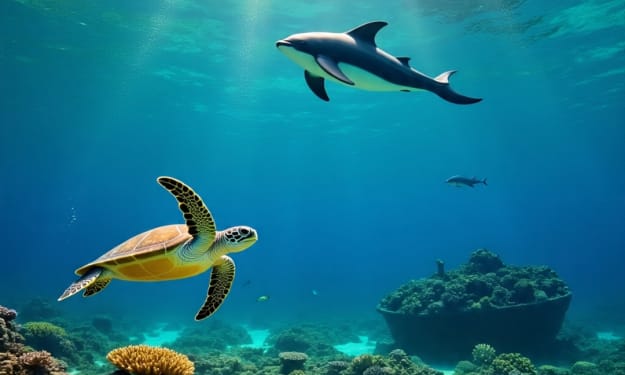
The Heart of the Ocean The sea had always called to her. From the moment Isla had set foot on the beach at the age of five, she'd felt the pull—a deep, unspoken connection to the vastness of the waters. As she grew older, her fascination only deepened, turning into a passion that would shape her future. By the time she was a young woman, she had dedicated her life to understanding the ocean’s secrets, to unveiling the mysteries hidden beneath its surface. Isla’s mission was simple: to explore, document, and protect the marine ecosystems that were rapidly disappearing due to human activity. But her most important goal, one that had become her personal quest, was to find the Heart of the Ocean, a legendary underwater location that was rumored to hold an untouched paradise of marine life—a place untouched by pollution and overfishing. No one had ever found it, but the stories persisted. The Heart was said to be an underwater oasis, a place where the ocean was in perfect harmony. The creatures there lived in balance, the corals flourished in vibrant hues, and the water was as clear as glass. The Heart was more than a myth to Isla; it was a symbol of what the ocean could be if humanity could just learn to respect it. It was early in the morning when Isla and her team set out from the small coastal village they called home. The boat rocked gently as they motored through the calm waters, leaving behind the shore and entering the open sea. Ahead, the horizon stretched endlessly, the sky meeting the ocean in a perfect line. The only sound was the hum of the engine, and the occasional call of a distant seabird. Isla stood at the bow, scanning the water ahead. Her heart raced in anticipation, though she had no reason to believe today would be the day she found the Heart. It had been months of searching, and they hadn’t come any closer. Still, the thought of what they might uncover kept her going. "Everything set?" she called to the crew, who were busy preparing the dive equipment. "All systems go, Captain," said Liam, the lead diver, adjusting his mask. "We’ll be ready to dive in a few minutes." The boat slowed as they reached their destination—a small, uncharted island surrounded by shallow waters. Isla pulled out a worn map, tracing her finger over the lines that indicated their potential entry point into the deeper ocean. According to her research, this area had been unexplored by scientists. No one knew what lay beneath the surface. "Ready?" Isla asked, locking eyes with Liam. He nodded, and one by one, they suited up and jumped into the water. The cold rush of the ocean swallowed them, and Isla’s breath caught as she descended into the depths. The world above vanished, replaced by a world of stillness and wonder. Shafts of sunlight filtered down through the water, casting an ethereal glow. Fish of all shapes and sizes darted in and out of sight, their colors a striking contrast against the deep blue. The deeper they went, the more Isla felt her connection to the ocean. It was as if the very water around her was alive, breathing, pulsing with energy. She could feel the heartbeat of the ocean in the swaying kelp, the shifting sands, and the movement of the creatures below. But then, something unusual caught her eye. In the distance, a faint glow shimmered through the water, a soft, golden light. It was unlike anything Isla had ever seen—no bioluminescent organisms could create a light so warm, so inviting. Her heart quickened as she motioned for Liam to follow her. They swam toward the glow, their bodies slicing through the water with practiced ease. As they approached, the light grew stronger, brighter, until they were surrounded by an aura of pure gold. And there, before them, lay an enormous coral reef—unlike any Isla had ever seen. The corals were vibrant, their colors so rich and intense that they seemed to pulse with life. Fish swam through the branches of the reef, their scales shimmering in the golden light. But it wasn’t just the reef that stunned Isla. It was the sheer sense of peace that radiated from this place. There was no pollution here, no signs of destruction, no overfishing. It was an untouched paradise. Isla and Liam moved through the reef, their movements slow and reverent. As they explored, they encountered creatures they had only heard about in stories: giant manta rays gliding gracefully through the water, sea turtles weaving in and out of the coral, and schools of brightly colored fish that seemed to form a living rainbow. But what struck Isla the most were the dolphins. A pod of dolphins appeared, circling around them, as if to welcome them into their world. Isla felt a sense of awe as one of the dolphins swam up to her, its eyes intelligent and knowing. For a moment, they locked eyes, and Isla felt a deep, wordless communication pass between them. She understood. This was the Heart of the Ocean. It was real. It existed. But as she swam deeper into the reef, she realized that this paradise, this perfect ecosystem, was fragile. The beauty she saw before her could not survive if the world above continued its assault on the oceans. The Heart of the Ocean was a reminder of what could be, but also of what might be lost forever. When they surfaced hours later, Isla’s heart was heavy. She had found what she was looking for, but now she knew what she had to do. She had to fight for the Heart of the Ocean—for all the oceans. As the boat made its way back to shore, Isla gazed out over the water. The sea had shown her its wonders, its magic, and its power. It was her turn to protect it.
By Muhammad Saad 7 months ago in Earth
Making Waves: The Power of Swimming
Making Waves: The Power of Swimming How One Sport Builds Strength, Confidence, and Lifelong Skills in and out of the Water When Mia first dipped her toes into the water at age eight, she clung to the pool’s edge with wide eyes and a pounding heart. She wasn’t afraid of water exactly—but the idea of letting go, floating, and trusting herself in something so vast was overwhelming. Fast-forward six years, and Mia now swims laps with confidence, helping teach younger kids during summer swim camp. What changed? A lot—but mostly, swimming itself. Swimming is more than just a way to cool off on hot days. It’s a skill that builds resilience, improves health, and opens doors to personal growth. Whether you're learning at five or fifty, it offers powerful benefits—both physically and mentally. The Physical Power of Swimming From the outside, swimming might look like graceful strokes and splashes. But under the surface, it’s one of the most complete full-body workouts available. Nearly every muscle group is engaged—arms, legs, back, and core. Plus, because water provides resistance without impact, it’s ideal for people of all fitness levels. According to the Centers for Disease Control and Prevention (CDC), swimming can improve heart health, build endurance, tone muscles, and help maintain a healthy weight. It’s also one of the few physical activities that people with injuries or disabilities can safely do with minimal stress on joints. “My doctor recommended swimming after my knee surgery,” says Jordan, 42. “I started just to recover, but I fell in love with how it made me feel—stronger, calmer, and more in control of my body.” Mental Benefits Beneath the Surface But swimming isn’t just about physical health—it has surprising mental health benefits too. Being in water can trigger a calming, almost meditative state, especially during steady lap swimming. The rhythmic motion, steady breathing, and gentle sound of splashing can quiet the mind and relieve anxiety. Studies have shown that swimming can help reduce symptoms of depression, improve mood, and even sharpen focus. Many people say swimming is their “reset button” after a stressful day. “I call it my therapy,” says Priya, a college student who swims three times a week. “The pool is the only place where I can really disconnect from everything—phones, deadlines, distractions—and just be present.” Building Confidence and Life Skills Learning to swim is also a huge confidence booster, especially for kids. It teaches persistence, trust in oneself, and how to overcome fear—a lesson that sticks. “It’s about more than swimming,” says Coach Luis, a swim instructor of 20 years. “When kids conquer the deep end, they feel like they can conquer anything.” Swimming also teaches responsibility, discipline, and goal setting—especially for those who join swim teams or take lessons regularly. From setting personal best times to simply mastering a new stroke, swimmers constantly push themselves to improve. For young swimmers, these lessons often ripple into other areas of life—school, friendships, and even future careers. A Lifesaving Skill for Everyone Perhaps most importantly, swimming is a vital life skill that everyone should learn. According to the World Health Organization, drowning is one of the leading causes of unintentional injury deaths worldwide. Learning to swim—no matter your age—can literally save lives. “I didn’t learn until I was 35,” says Elena, a mother of two. “But once I did, I made sure both my kids were in swim lessons as soon as possible. It gives me peace of mind, especially during summer.” Many community centers and schools now offer affordable or free swim programs, aiming to make lessons accessible to all. Initiatives like “Swim Safe” and “Everyone In the Pool” are working to close the gap and bring water safety education to underserved areas. Making a Splash That Lasts a Lifetime Back at the pool, Mia lines up with a group of younger swimmers, showing them how to streamline their bodies for a strong push-off. She’s calm, confident, and clearly having fun. “Swimming helped me find my voice,” she says. “It taught me not just how to swim, but how to believe in myself.” That’s the power of swimming—it’s not just about moving through water. It’s about finding strength, calm, and courage you didn’t know you had. Whether you're diving in for the first time or returning to the pool after years away, it’s never too late to make waves.
By Muhammad Saad 7 months ago in Earth
Whispers of the Wild: Life Within the Swamp
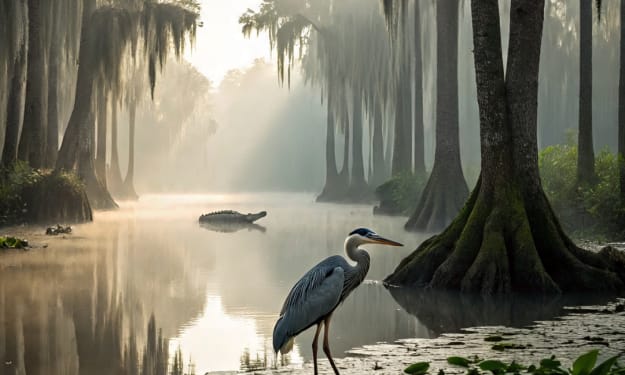
Whispers of the Wild: Life Within the Swamp An Immersive Journey into the Hidden Wonders and Vital Role of Wetland Ecosystems The sun rose slowly over the swamp, painting streaks of gold across the still, dark waters. Spanish moss hung like drapes from ancient cypress trees, swaying gently in the morning breeze. Mist curled above the surface, blurring the line between water and sky. At first glance, the swamp seemed silent—motionless, even—but within its depths, life was teeming. For many, the word swamp brings to mind muddy waters, buzzing insects, and eerie stillness. But for those who take the time to look closer, swamps are rich, vibrant ecosystems that play a vital role in the health of our planet. They are not wastelands, as once thought, but sanctuaries of biodiversity and natural balance. A great blue heron stood motionless in the shallows, its eyes fixed on the water below. In a flash, it struck—plunging its beak and pulling out a small fish. With practiced grace, it swallowed its catch and resumed its quiet watch. Above, a chorus of tree frogs sang their morning songs, blending with the low croaks of bullfrogs and the distant call of a barred owl. Swamps like this one—located in the southeastern United States—are often referred to as wetlands, and they are among the most productive ecosystems on Earth. They act as natural filters, trapping pollutants and sediment from runoff before it reaches rivers, lakes, or oceans. Their spongy soils absorb excess rainwater, reducing the risk of floods and helping to replenish underground aquifers. Beneath the water's surface, a hidden world thrives. Small fish dart between tangled roots, while turtles bask on logs warmed by the sun. Dragonflies skim the water, their wings shimmering like stained glass. Even the infamous alligator, often misunderstood, plays a crucial role here—keeping prey populations in balance and maintaining open water channels by creating “gator holes.” As the day warms, the swamp comes fully to life. Insects buzz through the air, pollinating wetland plants like pickerelweed and swamp milkweed. A raccoon pads silently along the bank, foraging for crayfish beneath overturned leaves. Overhead, a bald eagle circles, scanning the water for its next meal. What makes swamps particularly fascinating is their delicate balance. Every plant, insect, bird, and predator has a purpose. The dense mats of vegetation provide nesting grounds for countless species of birds. Decomposing plant matter feeds countless microorganisms, which in turn feed insects and fish. This intricate web of life is both resilient and fragile—capable of withstanding storms, yet vulnerable to pollution, drainage, and human development. In fact, much of the world’s wetlands have already been lost—drained for agriculture, filled for housing, or polluted beyond repair. This destruction not only endangers the species that call the swamp home, but also removes the vital benefits wetlands provide to humans. Without these natural buffers, coastal areas become more vulnerable to hurricanes, and freshwater sources become more easily contaminated. Yet there is hope. In recent decades, conservationists, scientists, and communities have begun to recognize the value of wetlands and work to protect them. Restoration projects are reviving lost swamps, reintroducing native species, and teaching future generations to appreciate what was once dismissed as useless land. Take the Okefenokee Swamp in Georgia and Florida, for example—one of the largest intact freshwater ecosystems in North America. Thanks to decades of protection and advocacy, it remains a sanctuary not only for wildlife, but for people seeking to reconnect with the natural world. Visitors can paddle through its labyrinthine channels, watch sandhill cranes in flight, or simply sit in quiet awe of its mysterious beauty. Back in the heart of the swamp, the light begins to fade, and shadows lengthen under the trees. Fireflies blink on like scattered stars. The air cools, and the sounds shift—frogs take over the melody, and a splash hints at an unseen creature moving through the water. The swamp, always alive, simply changes rhythm with the setting sun. In this magical, misunderstood world, nature speaks in whispers—in the rustle of reeds, the flick of a tail, the ripple of water. And if we listen closely, the swamp has much to teach us: about balance, resilience, and the power of even the quietest places.
By Muhammad Saad 7 months ago in The Swamp
Secrets of the Swamp: Nature's Hidden Paradise
Secrets of the Swamp: Nature’s Hidden Paradise Most people pass by swamps with little more than a glance, often imagining them as dark, muddy, mosquito-filled wastelands. But step into the heart of a healthy wetland, and a whole new world unfolds—one that hums, buzzes, and blooms with more life than you might ever expect. It was just after dawn when I first set foot into Cypress Hollow Swamp, a protected wetland in the southeastern United States. The air was thick with the earthy scent of damp leaves and still water. Spanish moss draped over towering cypress trees like silver lace, swaying gently in the morning breeze. Mist curled along the water’s surface, glowing golden in the rising sun. It was quiet—but not silent. A symphony of birds, frogs, and insects welcomed the day. Our guide, a local naturalist named Carla, motioned for us to pause. “This swamp,” she said softly, “is more than meets the eye. It’s a water purifier, a nursery for wildlife, and one of the richest ecosystems on Earth.” She wasn’t exaggerating. As we continued on the boardwalk trail, we spotted life at every turn. A bright green tree frog clung to the bark of a cypress trunk. Dragonflies darted over the water like living jewels, their wings shimmering with every color of the rainbow. A white egret stood poised like a statue, one leg lifted, waiting for just the right moment to strike at an unsuspecting fish. “Swamps filter water naturally,” Carla explained. “All those plants—reeds, grasses, trees—trap pollutants and sediments. By the time water passes through, it’s much cleaner. Nature’s own filtration system.” What struck me most wasn’t just the abundance of life, but the balance of it. Alligators basked lazily on logs, turtles sunned beside them, and songbirds darted overhead. It was wild and untamed, yet harmonious. Swamps like this one are home to hundreds of species, from tiny insects to large mammals, each playing its role in the web of life. But swamps aren’t just biological wonderlands—they’re also buffers against climate change and natural disasters. Carla pointed out that during heavy rains and hurricanes, swamps act like giant sponges, soaking up excess water and preventing floods downstream. “They’re protectors,” she said. “But they’re often misunderstood and undervalued.” Historically, swamps were drained for farmland or development, seen as useless or dangerous. Over the last century, nearly half of the world’s wetlands have disappeared. But attitudes are beginning to shift. People are recognizing the value of preserving these unique environments—not just for the animals, but for ourselves. As the sun rose higher, the swamp seemed to come alive even more. We watched a group of otters playing in a shaded pool, tumbling and splashing with infectious energy. Nearby, a pileated woodpecker hammered at a dead tree, searching for insects. Everywhere I looked, there was motion, color, and purpose. One of the most surprising moments came when we reached a quieter section of the swamp. A gentle ripple in the water caught our eye. Carla hushed us and pointed. Just beneath the surface, the snout of an alligator glided by, smooth as silk. It was close—closer than I expected—but not threatening. It reminded me that the swamp is not ours. We’re guests here. As our walk came to an end, I found myself reluctant to leave. The swamp had cast its spell: a place once dismissed in my mind as murky and monotonous had revealed itself to be vibrant, essential, and breathtakingly beautiful. “Most people think of swamps as dead zones,” Carla said, “but they’re the opposite. They’re full of life, full of stories. You just have to slow down and look.” She was right. Swamps aren’t places to rush through or avoid—they’re places to explore, to respect, and most of all, to protect. --- Author’s Note: Next time you see a swamp on a map or in a nature documentary, don’t dismiss it. Think of the ancient cypress trees, the chorus of frogs at dusk, the elegant dance of egrets above still waters. Think of nature’s filters, nurseries, and climate defenders. Swamps are more than mud and mystery—they’re miracles in slow motion.
By Muhammad Saad 7 months ago in The Swamp