
The Rise of Tomorrow: How Modern Technology is Shaping Our Future
"Exploring the Innovations Transforming Every Aspect of Our Lives and Paving the Way for a Smarter World"
The Rise of Tomorrow: How Modern Technology is Shaping Our Future
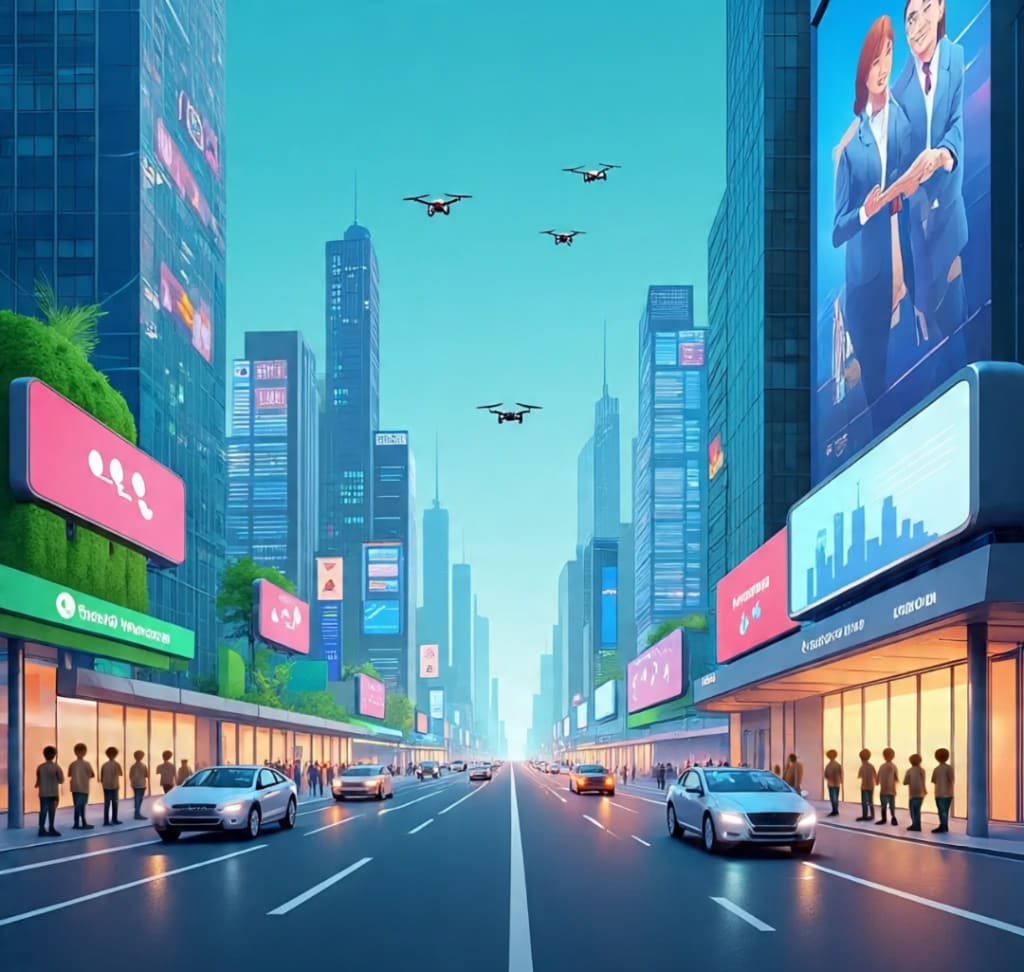
It’s a crisp autumn morning in 2035, and the city is alive with the hum of innovation. The streets are bustling, but not with the chaos of honking cars and crowded sidewalks. Instead, the air is filled with a sense of calm efficiency. People walk briskly along smart pathways that adjust their lighting and temperature to match the time of day, while self-driving cars glide silently by. Drones buzz overhead, delivering packages in seconds. The world is quieter now, not because people have stopped moving, but because the machines that drive them are working with precision.
The transformation hasn’t been sudden; it’s been gradual, but relentless. In just two decades, technology has radically reshaped the way we live, work, and interact. Gone are the days when our lives were dominated by screens, clunky interfaces, and disconnected systems. Now, we live in a world that anticipates our needs before we even voice them, a world where innovation is not just about faster or smarter machines, but about a seamless integration of technology into the very fabric of our daily lives.
The Smart City: A Model of Tomorrow
Take a stroll down any major boulevard in a smart city, and you’ll see a testament to human ingenuity. Buildings are not just structures of concrete and steel anymore; they’re living, breathing entities. They are energy-efficient, powered by solar panels and wind turbines, and designed to adapt to changing weather conditions. Smart glass windows tint automatically to keep interiors cool in the summer and warm during winter. The entire city grid operates like a well-coordinated brain, constantly optimizing traffic flow, energy consumption, and even waste management.
One of the most remarkable features of the smart city is the ubiquitous presence of artificial intelligence (AI). AI has long moved beyond the realm of science fiction, now embedded in nearly every aspect of urban life. From the traffic lights that adjust to real-time conditions to the digital assistants that help with everything from making appointments to managing your health, AI is everywhere. These systems are so intuitive that most people don’t even notice them working—they simply become part of the background of their daily routines.
Take Emma, for example. She’s a software engineer, but she doesn’t spend her days in front of a screen anymore. Instead, her life is guided by a network of intelligent devices and services. Her morning begins when her smart bed gently wakes her up, simulating the rising sun to help her body wake naturally. The smart mirror in her bathroom analyzes her health stats—sleep patterns, heart rate, even stress levels—and suggests a yoga session or a light workout if needed.
As Emma prepares breakfast, her fridge scans the contents of her pantry and suggests a healthy meal based on her nutritional goals for the day. Meanwhile, the self-cleaning floor in her kitchen whirs to life, sweeping away crumbs before she even notices them. In her hand, she carries a wristband that monitors her vital signs and keeps track of her activity levels. It’s no longer a matter of remembering to stay healthy; her tech takes care of the details for her.
The Age of Personalized Technology
But the smart city isn’t just about convenience—it’s about personalization. Modern technology has given rise to an era of hyper-individualized experiences. The notion of a one-size-fits-all solution is rapidly becoming obsolete. In the world of 2035, every piece of technology is designed to adapt to the user’s unique preferences and needs.
Emma’s day continues with a virtual meeting with her colleagues, but this isn’t just any conference call. Thanks to augmented reality (AR), she’s able to collaborate in a shared virtual space, using 3D models and interactive tools to build and refine software in real-time. The technology allows her to work with teams scattered across the globe, seamlessly bridging geographical boundaries.
Later, Emma decides to visit a local park. Instead of wandering through a maze of information, her AR glasses provide contextual information about the environment around her. She can learn about the trees, the wildlife, or even historical landmarks without having to search for the information manually. It’s an enriching experience that blends the digital world with the physical one, enhancing every moment of her day.
The Global Impact of Technology
The influence of modern technology extends far beyond the city limits. In rural areas and remote regions, the accessibility of the internet and mobile networks has changed lives in profound ways. Agricultural practices have evolved with the help of drones and AI, optimizing crop yields and minimizing waste. In education, personalized learning platforms powered by AI ensure that every student receives an education tailored to their pace and interests.
In healthcare, breakthroughs in genomics and AI have made personalized medicine the standard. People no longer have to wait weeks for test results; AI-driven diagnostics provide immediate feedback, helping doctors make better-informed decisions. The advancements have led to a dramatic increase in life expectancy, as diseases that once plagued humanity are now easily managed or eradicated.
Perhaps the most profound impact of modern technology, though, is the way it has brought people together. With advanced translation services powered by real-time AI, language barriers are no longer an issue. People from different corners of the globe can now communicate effortlessly, fostering a sense of global unity that has never been possible before.
Looking to the Future
As the sun sets on this typical day in 2035, it’s easy to feel a sense of awe. What was once the realm of science fiction is now the foundation of our reality. But this is just the beginning. With breakthroughs in quantum computing, sustainable energy, and bioengineering, the next few decades promise to bring even more radical changes.
The future is, without a doubt, filled with uncertainty—but one thing is clear: technology will continue to be the driving force behind humanity’s evolution. And as we venture into this new era, we can rest assured that the possibilities are endless. The rise of tomorrow has only just begun.
About the Creator
Keep reading
More stories from Muhammad Saad and writers in Earth and other communities.
The Wonders of the Sea: Exploring Nature's Endless Depths
The Heart of the Ocean The sea had always called to her. From the moment Isla had set foot on the beach at the age of five, she'd felt the pull—a deep, unspoken connection to the vastness of the waters. As she grew older, her fascination only deepened, turning into a passion that would shape her future. By the time she was a young woman, she had dedicated her life to understanding the ocean’s secrets, to unveiling the mysteries hidden beneath its surface. Isla’s mission was simple: to explore, document, and protect the marine ecosystems that were rapidly disappearing due to human activity. But her most important goal, one that had become her personal quest, was to find the Heart of the Ocean, a legendary underwater location that was rumored to hold an untouched paradise of marine life—a place untouched by pollution and overfishing. No one had ever found it, but the stories persisted. The Heart was said to be an underwater oasis, a place where the ocean was in perfect harmony. The creatures there lived in balance, the corals flourished in vibrant hues, and the water was as clear as glass. The Heart was more than a myth to Isla; it was a symbol of what the ocean could be if humanity could just learn to respect it. It was early in the morning when Isla and her team set out from the small coastal village they called home. The boat rocked gently as they motored through the calm waters, leaving behind the shore and entering the open sea. Ahead, the horizon stretched endlessly, the sky meeting the ocean in a perfect line. The only sound was the hum of the engine, and the occasional call of a distant seabird. Isla stood at the bow, scanning the water ahead. Her heart raced in anticipation, though she had no reason to believe today would be the day she found the Heart. It had been months of searching, and they hadn’t come any closer. Still, the thought of what they might uncover kept her going. "Everything set?" she called to the crew, who were busy preparing the dive equipment. "All systems go, Captain," said Liam, the lead diver, adjusting his mask. "We’ll be ready to dive in a few minutes." The boat slowed as they reached their destination—a small, uncharted island surrounded by shallow waters. Isla pulled out a worn map, tracing her finger over the lines that indicated their potential entry point into the deeper ocean. According to her research, this area had been unexplored by scientists. No one knew what lay beneath the surface. "Ready?" Isla asked, locking eyes with Liam. He nodded, and one by one, they suited up and jumped into the water. The cold rush of the ocean swallowed them, and Isla’s breath caught as she descended into the depths. The world above vanished, replaced by a world of stillness and wonder. Shafts of sunlight filtered down through the water, casting an ethereal glow. Fish of all shapes and sizes darted in and out of sight, their colors a striking contrast against the deep blue. The deeper they went, the more Isla felt her connection to the ocean. It was as if the very water around her was alive, breathing, pulsing with energy. She could feel the heartbeat of the ocean in the swaying kelp, the shifting sands, and the movement of the creatures below. But then, something unusual caught her eye. In the distance, a faint glow shimmered through the water, a soft, golden light. It was unlike anything Isla had ever seen—no bioluminescent organisms could create a light so warm, so inviting. Her heart quickened as she motioned for Liam to follow her. They swam toward the glow, their bodies slicing through the water with practiced ease. As they approached, the light grew stronger, brighter, until they were surrounded by an aura of pure gold. And there, before them, lay an enormous coral reef—unlike any Isla had ever seen. The corals were vibrant, their colors so rich and intense that they seemed to pulse with life. Fish swam through the branches of the reef, their scales shimmering in the golden light. But it wasn’t just the reef that stunned Isla. It was the sheer sense of peace that radiated from this place. There was no pollution here, no signs of destruction, no overfishing. It was an untouched paradise. Isla and Liam moved through the reef, their movements slow and reverent. As they explored, they encountered creatures they had only heard about in stories: giant manta rays gliding gracefully through the water, sea turtles weaving in and out of the coral, and schools of brightly colored fish that seemed to form a living rainbow. But what struck Isla the most were the dolphins. A pod of dolphins appeared, circling around them, as if to welcome them into their world. Isla felt a sense of awe as one of the dolphins swam up to her, its eyes intelligent and knowing. For a moment, they locked eyes, and Isla felt a deep, wordless communication pass between them. She understood. This was the Heart of the Ocean. It was real. It existed. But as she swam deeper into the reef, she realized that this paradise, this perfect ecosystem, was fragile. The beauty she saw before her could not survive if the world above continued its assault on the oceans. The Heart of the Ocean was a reminder of what could be, but also of what might be lost forever. When they surfaced hours later, Isla’s heart was heavy. She had found what she was looking for, but now she knew what she had to do. She had to fight for the Heart of the Ocean—for all the oceans. As the boat made its way back to shore, Isla gazed out over the water. The sea had shown her its wonders, its magic, and its power. It was her turn to protect it.
By Muhammad Saad 7 months ago in Earth
Major Scientific Milestones of 2017
The year 2017 was an extraordinary period for scientific progress. Researchers across the world achieved remarkable breakthroughs in space exploration, medicine, technology, and environmental science. These discoveries not only expanded human knowledge but also opened new possibilities for the future. From observing gravitational waves to advances in gene editing and artificial intelligence, 2017 demonstrated the powerful role science plays in shaping modern society.
By Irshad Abbasi 7 days ago in Earth


Comments (1)
Let's support each other