
"Heart of the Deep: Unleashing the Power of the Pacific"
Discover How the World’s Mightiest Ocean Shapes Climate, Culture, and Life on Earth
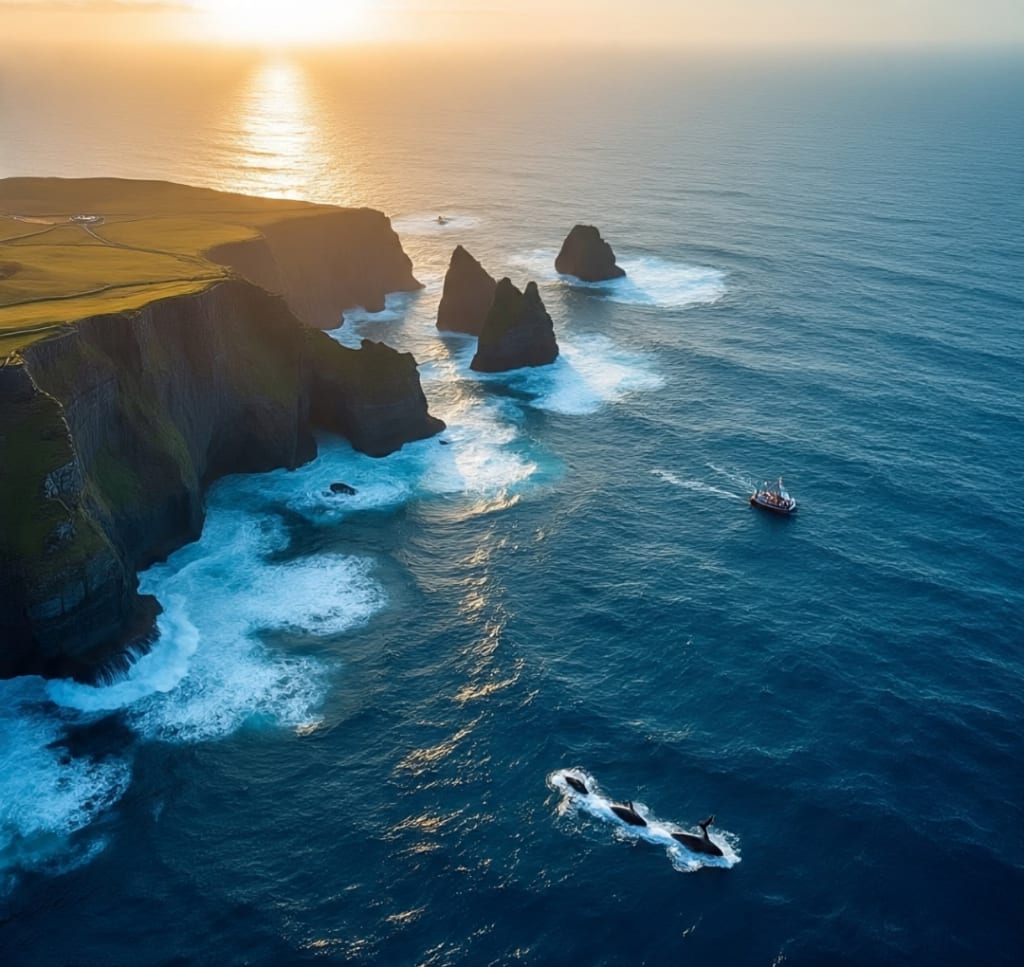
Heart of the Deep: Unleashing the Power of the Pacific
Stretching across more than 63 million square miles, the Pacific Ocean is the largest and most powerful body of water on Earth. From its deep trenches to its towering waves, from tropical islands to icy northern shores, the Pacific isn’t just vast — it’s alive. Its moods, movements, and mysteries shape not only coastlines but climates, cultures, and life itself. This is the story of the Pacific Ocean: the heart of our planet’s blue soul.
The name “Pacific” means peaceful, a title given by Portuguese explorer Ferdinand Magellan in 1521. But the ocean’s surface calm was deceptive. Beneath its tranquil waves, immense forces churn. The Pacific is home to the Ring of Fire — a horseshoe-shaped zone of frequent earthquakes and volcanic eruptions — making it one of the most geologically active regions in the world. Along its seafloor lies the Mariana Trench, the deepest point on Earth, plunging nearly 36,000 feet. It’s a realm darker than night, where strange creatures live under crushing pressure and scientists are only beginning to explore its secrets.
But the Pacific’s influence reaches far beyond its depths. Its waters regulate the Earth’s climate through powerful systems like the El Niño and La Niña cycles, which can bring droughts, floods, and temperature shifts to continents thousands of miles away. The ocean’s currents act like conveyor belts, distributing heat and nutrients across the globe, influencing everything from hurricane formation to fisheries.
The Pacific is also a cultural cradle. For thousands of years, it has been home to civilizations whose lives are deeply intertwined with the ocean. The Polynesians, among the greatest navigators in human history, traveled thousands of miles across the Pacific using only the stars, ocean swells, and bird patterns to guide them. They settled the scattered islands of Hawaii, Easter Island, and New Zealand long before European ships ever set sail.
To the people of the Pacific, the ocean is not a barrier, but a bridge. It’s a provider, a protector, and a living ancestor. Indigenous traditions speak of the ocean’s spirit, its songs, and its teachings. Even today, communities rely on it for food, transport, and spiritual connection — fishing in its waters, surfing its waves, and honoring it in ceremonies passed down for generations.
Ecologically, the Pacific is a jewel of biodiversity. It hosts the Great Barrier Reef, the largest coral reef system on Earth, teeming with thousands of species. Migrating whales sing through its vastness, giant squids lurk in its depths, and remote atolls buzz with seabirds and turtles. Yet, like many natural wonders, the Pacific faces modern threats. Plastic pollution, overfishing, coral bleaching, and rising sea levels caused by climate change are challenging its resilience.
Island nations, some of the most vulnerable to climate impacts, are raising their voices on the global stage. Places like Kiribati and Tuvalu, with average elevations of just a few meters, are experiencing rising tides that eat away at homes and history. Despite their small size, these nations are leading calls for action, reminding the world that the Pacific’s future is tied to all of ours.
But hope still flows through its currents. Across the region, scientists, activists, and Indigenous leaders are working together to protect marine habitats, restore coral reefs, and create vast marine sanctuaries. Traditional knowledge is being paired with modern science to better understand how to care for the ocean’s delicate balance.
One such effort is the creation of the Pacific Ocean Peace Park — a network of marine protected areas spanning several countries and cultures. It’s a symbol of unity, resilience, and a shared commitment to preserving the ocean’s health for future generations.
Standing on a cliff overlooking the Pacific, it’s easy to feel small. The wind smells of salt and endless space. Waves crash below, timeless and tireless. Yet, in that moment, one also feels part of something much larger — a vast, breathing system that connects continents, cultures, and all living things.
The Pacific Ocean is not just water. It’s movement, memory, and mystery. It’s a force that sculpts the Earth and sings to the stars. It holds the past in its depths and the future in its tide. And as we learn to listen, protect, and respect this mighty ocean, we might just discover that the heartbeat of the planet begins in its waves.
About the Creator
Keep reading
More stories from Muhammad Saad and writers in Earth and other communities.
Majestic Blue: The Reign of the Pacific
Majestic Blue: The Reign of the Pacific Discover the Wonders, Power, and Global Importance of the World's Greatest Ocean The Pacific Ocean is more than just the largest body of water on Earth — it is a vast, living force that shapes weather, supports countless species, and connects cultures across continents. Covering more than 63 million square miles, the Pacific is larger than all the landmasses on Earth combined. Its name, given by Portuguese explorer Ferdinand Magellan in the 16th century, means “peaceful,” and yet this ocean is anything but quiet. It is teeming with energy, biodiversity, and ancient stories waiting to be discovered. From the gentle shores of the South Pacific islands to the thunderous waves of Hawaii’s north shore, the Pacific Ocean is home to some of the most stunning natural beauty in the world. Coral reefs like the Great Barrier Reef in Australia or the vibrant reefs of Palau are just a small part of its underwater wonders. These ecosystems support thousands of marine species, many of which are found nowhere else on Earth. Sea turtles, manta rays, reef sharks, and schools of colorful fish all find shelter and sustenance in its warm, clear waters. Above the surface, the Pacific is equally alive. It borders more than 50 countries, including giants like the United States, China, Australia, and Chile. For thousands of years, it has served as a highway for trade, migration, and exploration. Indigenous Polynesian navigators once sailed across thousands of miles using only the stars, ocean currents, and the flight patterns of birds. Their journeys tell a powerful story of human resilience and a deep connection with nature. Today, the Pacific still plays a vital role in human life. It regulates the Earth’s climate by absorbing vast amounts of heat and carbon dioxide. Weather patterns like El Niño and La Niña—originating in the Pacific—can affect rainfall, crop production, and even the strength of hurricanes around the globe. Scientists closely monitor the Pacific for early signs of these climate shifts, knowing that this one ocean can influence the world’s ecosystems, economies, and societies. But the Pacific is not just a force of nature; it is also a place of peace and inspiration. Along its rim lies the “Ring of Fire,” a zone known for frequent earthquakes and volcanoes. While these events can be dangerous, they also remind us of the Earth’s dynamic energy. They create new islands, shape coastlines, and offer rare glimpses into the Earth’s inner workings. In Hawaii, lava meets sea in a powerful show of creation — a reminder that the Pacific is always evolving. Despite its immensity, the Pacific faces growing challenges. Plastic pollution, overfishing, and rising sea temperatures threaten the delicate balance of its ecosystems. Tiny island nations like Tuvalu and Kiribati are already feeling the impact of sea-level rise, their very existence at risk. These environmental concerns highlight the need for global cooperation to protect the Pacific and the people who depend on it. Fortunately, efforts are being made. Marine protected areas are being expanded, coastal communities are embracing sustainable fishing practices, and scientists are working together across borders to better understand and safeguard this vast ocean. Indigenous knowledge is also gaining recognition in conservation efforts, bringing ancient wisdom into modern environmental strategies. One shining example of this harmony between tradition and science is the story of the Hōkūleʻa — a replica of an ancient Polynesian voyaging canoe. In recent years, it completed a worldwide voyage using only traditional navigation methods. Along the way, it spread a powerful message of mālama honua — to care for our Earth. The Hōkūleʻa reminds us that our connection to the Pacific is not just physical, but spiritual and cultural as well. The Pacific Ocean is more than just water. It is a world unto itself — rich in life, mystery, and promise. It feeds billions, inspires artists and explorers, and teaches us humility in the face of nature’s vastness. It is both a protector and a provider, a source of wonder and warning. As we move into the future, the story of the Pacific is still being written. Each wave carries the echo of ancient journeys, each tide brings new hope, and each effort to preserve it is a gift to generations to come. By understanding and respecting this majestic blue realm, we not only protect a vital part of our planet — we honor the very heart of life on Earth.
By Muhammad Saad 6 months ago in Earth



Comments
There are no comments for this story
Be the first to respond and start the conversation.