Fiaz Ahmed
Bio
I am Fiaz Ahmed. I am a passionate writer. I love covering trending topics and breaking news. With a sharp eye for what’s happening around the world, and crafts timely and engaging stories that keep readers informed and updated.
Stories (1479)
Filter by community
Balochistan on High Alert After Simultaneous Militant Attacks Leave 58 Dead. AI-Generated.
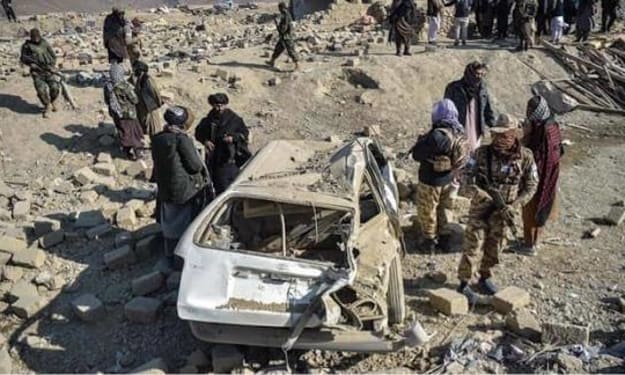
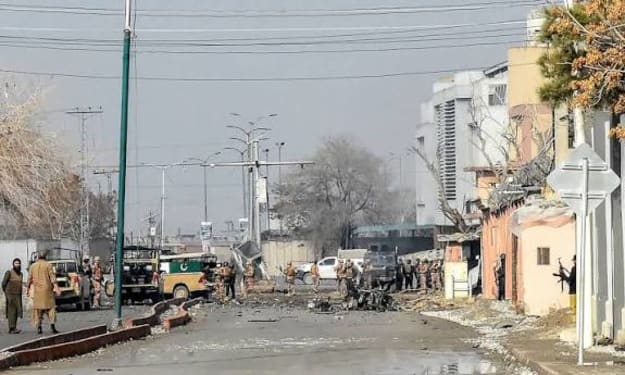
Balochistan has been placed on high alert following a wave of simultaneous militant attacks across multiple districts that resulted in the deaths of at least 58 militants after fierce clashes with security forces. The coordinated nature of the assaults has raised serious concerns about the evolving tactics of extremist groups and the ongoing security challenges facing Pakistan’s largest province. According to official sources, the attacks were launched almost at the same time in several locations, targeting security checkpoints, government facilities, and key transportation routes. The sudden outbreak of violence created panic among local communities, with residents reporting heavy gunfire and explosions lasting for hours. In response, security forces quickly sealed off affected areas and launched large-scale counterterrorism operations to neutralize the attackers and prevent further damage. Authorities stated that the militants attempted to overwhelm security positions through synchronized strikes, but their efforts were foiled due to the swift and coordinated response by law enforcement agencies. Ground troops, supported by aerial surveillance, engaged the attackers in intense skirmishes. Several militant hideouts were destroyed, and large quantities of weapons, ammunition, and explosives were recovered during search and clearance operations. A senior security official confirmed that at least 58 militants were killed in the clashes, while operations are still ongoing in remote and mountainous areas where some suspects managed to flee. “Our forces are conducting comprehensive clearance missions to ensure that no militant elements remain active. The situation is under control, but vigilance remains high,” the official said. Balochistan’s strategic location and rugged terrain have long made it vulnerable to militant and insurgent activity. The province shares borders with Afghanistan and Iran, and its vast, sparsely populated areas have often been exploited by extremist groups to establish bases and movement corridors. Analysts believe the latest attacks reflect an attempt by these groups to reassert their presence and challenge the state’s authority through high-impact operations. The provincial government strongly condemned the attacks, calling them an assault on peace and stability. In a statement, the Chief Minister praised the courage of security personnel and expressed solidarity with the families affected by the violence. “These cowardly acts will not weaken our resolve. We will continue our efforts to eradicate terrorism and restore lasting peace in Balochistan,” the statement read. Medical facilities across Quetta and nearby districts were placed on emergency alert to handle casualties. While most of the reported deaths were militants, several security personnel were injured in the line of duty and shifted to hospitals for treatment. Authorities have not disclosed the exact number of injured officers, citing security reasons and the ongoing nature of the operations. The federal government also took notice of the situation, convening high-level security meetings to assess the threat and coordinate intelligence-sharing among agencies. Officials emphasized the need for stronger surveillance and preventive measures to stop similar attacks in the future. “This incident highlights the importance of proactive intelligence and close coordination between federal and provincial institutions,” a spokesperson for the interior ministry said. For civilians, the violence caused temporary disruption to daily life. Markets in some districts were closed as a precaution, and traffic along major highways was restricted due to security checkpoints and roadblocks. Educational institutions in certain areas suspended classes, while residents were advised to avoid unnecessary travel. Many expressed fear over the return of large-scale violence after a period of relative calm in parts of the province. Security experts argue that while such operations are necessary to counter immediate threats, long-term peace in Balochistan requires addressing deeper social and economic issues. Lack of development, unemployment, and political grievances have often been cited as factors that contribute to instability. “Military action alone cannot resolve the conflict. Sustainable peace depends on investment in education, healthcare, and infrastructure, along with political dialogue,” said a security analyst based in Islamabad. Investigations are currently underway to determine the origins of the coordinated attacks and whether they were linked to cross-border movements or external support networks. Intelligence agencies are tracing communication and financial channels used by the militants to dismantle their networks and prevent future incidents. As security forces maintain a high state of alert and continue clearance operations, the situation in Balochistan remains tense but largely under control. Additional checkpoints have been established in sensitive areas, and patrols have been increased to ensure public safety. The coordinated nature of the attacks serves as a reminder of the persistent threat posed by militant groups and the need for constant vigilance. With at least 58 militants killed and several networks disrupted, the recent operation marks a significant blow to extremist activity in the province. However, authorities acknowledge that sustained efforts will be required to ensure lasting stability. The events underscore the fragile security environment in Balochistan and the importance of a comprehensive strategy combining security, intelligence, and development to prevent future violence and protect the lives of citizens.
By Fiaz Ahmed about a month ago in The Swamp
At Least 58 Terrorists Killed in Balochistan as Security Forces Repel Coordinated Attacks at 12 Locations. AI-Generated.
Balochistan witnessed one of its most intense security operations in recent months after militants launched coordinated attacks at 12 different locations across the province. The synchronized assaults targeted security checkpoints, government installations, and key transportation routes, prompting an immediate and large-scale response from Pakistani security forces. According to official sources, at least 58 terrorists were killed in the ensuing clashes, while search and clearance operations are still underway in several sensitive districts. The attacks were carried out almost simultaneously, indicating a high level of planning and coordination among militant groups. Authorities stated that the objective of the attackers appeared to be creating panic, disrupting law and order, and demonstrating their operational reach. Residents in affected areas reported hearing heavy gunfire and explosions for several hours, forcing many families to stay indoors and suspend daily activities. Security forces reacted swiftly by sealing off the targeted zones and deploying reinforcements. Ground troops, supported by aerial surveillance, launched counteroffensive operations to neutralize the attackers and prevent further damage. Officials confirmed that multiple militant hideouts were destroyed during the operations and large quantities of weapons, ammunition, and explosives were recovered. Communication equipment and documents believed to be linked to militant networks were also seized for further investigation. A senior security official, speaking on condition of anonymity, said that the death toll could rise as operations continue in remote and mountainous areas. “Our forces are conducting thorough clearance missions to ensure that no militant elements remain in the region. The coordinated attacks were an attempt to destabilize the province, but they have been effectively repelled,” the official said. Balochistan has long faced complex security challenges due to its vast geography, porous borders, and long-standing political and economic grievances. Militant and separatist groups have exploited these factors over the years to establish networks in remote areas. Analysts believe the recent attacks reflect a renewed effort by extremist factions to regain influence and challenge the authority of the state. The provincial government strongly condemned the attacks and praised the bravery of security personnel involved in the operation. In an official statement, the Chief Minister described the militants as enemies of peace and assured the public that the government would not allow such elements to disrupt stability. “The sacrifices of our security forces will not go in vain. We are committed to eliminating terrorism and restoring lasting peace in Balochistan,” the statement read. Hospitals in Quetta and nearby districts were placed on emergency alert following the clashes. While most of the casualties were reported among militants, several security personnel sustained injuries during the operations and were shifted to medical facilities for treatment. Authorities have not released detailed figures regarding the wounded, citing operational sensitivity and ongoing missions. The federal government also convened high-level security meetings to review the situation and strengthen coordination among intelligence and law enforcement agencies. Officials emphasized the need for enhanced intelligence-sharing to prevent future coordinated attacks. “This incident highlights the evolving tactics of militant groups and the importance of remaining vigilant,” a federal interior ministry spokesperson said. For local communities, the violence caused temporary disruption to daily life. Markets in some districts were closed, and transport services along major highways were suspended due to security checkpoints and roadblocks. Educational institutions in certain areas announced temporary closures as a precautionary measure. Despite these challenges, many residents expressed relief that security forces were able to quickly regain control and prevent a larger tragedy. Security experts stress that while military operations are necessary to counter immediate threats, long-term peace in Balochistan requires addressing deeper socio-economic and political issues. Development initiatives, improved access to education and healthcare, and greater political inclusion are seen as essential for reducing the appeal of militancy. “A comprehensive approach that combines security measures with development is crucial for sustainable stability,” said a security analyst based in Islamabad. Investigations are currently underway to determine the origins of the coordinated attacks and whether they were linked to cross-border movements or external support networks. Intelligence agencies are tracing the financial and logistical channels used by the attackers to prevent similar incidents in the future. As security forces continue clearance operations and maintain a high state of alert, the situation in Balochistan remains tense but largely under control. The coordinated nature of the attacks underscores the persistent threat posed by militant groups, while the swift response of security forces highlights the state’s determination to protect its citizens. With at least 58 terrorists killed and several networks dismantled, the recent operation marks a significant blow to militant activity in the province. However, authorities acknowledge that sustained efforts will be required to ensure lasting peace and prevent future attempts to destabilize the region. The events serve as a reminder of the fragile security environment and the ongoing struggle against extremism in Balochistan.
By Fiaz Ahmed about a month ago in The Swamp
Ukraine Sees Quieter Night as Trump Says Putin Will Not Attack Its Cities. AI-Generated.
Ceasefires, calm periods, and political statements highlight ongoing uncertainty in Ukraine Ukraine experienced a relatively quiet night on the front lines, with reports indicating fewer missile strikes and artillery attacks across several regions. This temporary lull comes amid high tension and international attention, as former U.S. President Donald Trump claimed that Russian President Vladimir Putin will not attack Ukrainian cities directly. While the news of reduced activity offers momentary relief for civilians and troops, experts caution that the situation remains fragile, and political statements do not necessarily reflect military strategy on the ground. The Quiet Night in Ukraine Reports from Ukrainian authorities and local media suggested that several cities and towns, including Kyiv, Kharkiv, and Zaporizhzhia, saw fewer air raids and shelling incidents than usual. Some points from the night include: Reduced missile activity: Air defense systems intercepted several projectiles, but the overall number of attacks dropped compared to previous nights. Civilian response: Residents reported feeling safer, with fewer sirens and explosions disturbing the night. Many returned to normal routines after temporary shelters had been used. Military vigilance: Ukrainian forces remain on high alert, continuing defensive operations and monitoring border areas for potential escalations. Military analysts caution that short periods of calm are common in ongoing conflicts and do not necessarily indicate a long-term reduction in hostilities. Donald Trump’s Statement Former U.S. President Donald Trump recently stated that he believes Vladimir Putin will not order attacks on Ukrainian cities directly. He added that: Russia is likely to focus on military targets rather than civilian areas. Diplomatic negotiations and international pressure could influence Putin’s strategy. The war could continue for some time, but direct strikes on urban centers may be avoided. Trump’s comments have sparked debate among political analysts, journalists, and international observers, with opinions divided on whether his predictions reflect reality or political optimism. International Reactions The international community has responded to both the quiet period in Ukraine and Trump’s remarks: U.S. officials: Current administration spokespeople emphasized that any prediction about Russian strategy is speculative, and the U.S. continues to support Ukraine with intelligence, defense systems, and economic aid. European Union: Brussels continues to monitor the situation closely, stressing that Russia’s previous behavior makes it difficult to rely on assurances. NATO: Alliance officials reiterated that defensive measures must remain in place, highlighting the importance of air defense systems and troop readiness. Observers stress that political statements, while influential, cannot replace concrete military and humanitarian measures. Civilians and Daily Life For Ukrainians, even a brief lull in fighting can have significant impacts: Daily routines: Shops, schools, and public services temporarily operate more normally when missile alerts are reduced. Psychological relief: Mental health experts note that periods of calm help civilians recover from stress and trauma, even if temporary. Preparedness: Despite the quieter night, residents continue to maintain safety measures, such as bomb shelters, emergency supplies, and evacuation plans. This shows that, while the quiet night is welcome, uncertainty remains the dominant factor in daily life. Military Implications For Ukrainian forces, a quieter night offers: Opportunity for regrouping: Troops can rest, replenish supplies, and perform maintenance on equipment. Strategic reassessment: Commanders may analyze recent attacks to adjust defensive tactics and anticipate potential escalations. Surveillance and intelligence gathering: Drones and reconnaissance units continue to monitor Russian troop movements, even during quieter periods. Analysts caution that these calm moments are often used by opposing forces to reposition or prepare for future offensives. Political and Media Impact Trump’s comments have stirred discussion across multiple platforms: Social media reactions: Many users debated the validity of his statements, weighing them against recent Russian attacks and intelligence reports. Media coverage: International news outlets have emphasized that predicting enemy behavior is challenging, and periods of calm can be misleading. Diplomatic messaging: Leaders in Kyiv, Washington, and Europe continue to communicate with the public and allies about ongoing threats and security measures. Experts agree that political statements influence perception, but they cannot guarantee actual safety on the ground. Looking Ahead While the quiet night is encouraging, several uncertainties remain: Russian strategy: Analysts warn that Russia could resume intense attacks at any moment, particularly in contested regions. Humanitarian concerns: Even brief lulls cannot fully alleviate the ongoing humanitarian crisis, including displaced persons, damaged infrastructure, and shortages of essential goods. International support: Continued aid from NATO, the U.S., and the EU will remain critical in ensuring Ukraine’s defensive capabilities and civilian safety. The combination of a temporary calm and public political statements underscores the fragility of peace in the conflict zone. Conclusion Ukraine’s recent quieter night provides a short-lived respite for civilians and troops alike. However, the situation remains tense and unpredictable, with Russian military actions still a looming threat. Former President Donald Trump’s statement that Putin will not attack Ukrainian cities adds political commentary to the discourse, but military analysts caution that such remarks cannot replace vigilance and preparedness. As Ukraine navigates these uncertainties, both residents and international partners continue to watch closely, hoping for periods of calm while preparing for the possibility of renewed hostilities.
By Fiaz Ahmed about a month ago in The Swamp
British American Tobacco Accused of Helping North Korea Fund Terrorism in Lawsuit. AI-Generated.
Legal action alleges tobacco giant’s business deals indirectly supported Pyongyang’s illicit activities British American Tobacco (BAT), one of the world’s largest tobacco companies, is facing a lawsuit accusing it of indirectly helping North Korea fund terrorism. The case has drawn attention from legal experts, human rights organizations, and international policymakers, raising serious questions about corporate responsibility, international sanctions, and global finance.
By Fiaz Ahmed about a month ago in The Swamp
Hungary Doubles Down on Opposition to Ukraine’s EU Accession as Zelenskyy Aims for 2027. AI-Generated.
Budapest resists Kyiv’s EU ambitions while President Zelenskyy sets sights on 2027 membership Hungary has reaffirmed its strong opposition to Ukraine’s bid to join the European Union, even as President Volodymyr Zelenskyy signals an ambitious goal of achieving membership by 2027. The move highlights growing tensions within the EU over expansion and raises questions about the bloc’s ability to maintain unity while addressing geopolitical challenges. The dispute comes amid ongoing war and reconstruction efforts in Ukraine, as the country continues to recover from the Russian invasion that began in 2022. Kyiv’s EU aspirations are seen as a key component of its long-term strategy to strengthen security, economy, and democratic institutions. Hungary’s Position Hungarian officials have consistently expressed skepticism about Ukraine’s readiness for EU membership. Key points include: Language and minority concerns: Hungary has voiced complaints about the treatment of the Hungarian minority in western Ukraine. Officials claim that Kyiv’s policies could harm cultural and linguistic rights. Political leverage: By opposing Ukraine’s EU accession, Hungary strengthens its bargaining position within the European Union, ensuring that its concerns cannot be overlooked. Regional influence: Budapest’s stance reflects a broader strategy to maintain influence over Central and Eastern European politics, especially in matters of EU enlargement. Prime Minister Viktor Orbán has repeatedly emphasized that Hungary will not support Ukraine’s accession until its demands regarding minority rights and education policies are addressed. Zelenskyy’s Ambitious Timeline President Zelenskyy has set a target for Ukraine to join the EU by 2027, a timeline seen as bold given the country’s ongoing recovery from war and economic challenges. Zelenskyy argues that EU membership would: Strengthen Ukraine’s democracy and ensure alignment with European norms. Boost economic growth through access to European markets and investment. Provide security guarantees, reducing the likelihood of future aggression from Russia. In interviews and speeches, Zelenskyy has stressed that Ukraine’s reforms and international cooperation demonstrate readiness for EU integration, though he acknowledges that internal EU politics will shape the process. Reactions Within the European Union The EU itself has a mixed response to Ukraine’s accession ambitions: Supportive members: Countries such as Poland, the Baltic states, and others have expressed solidarity with Ukraine, emphasizing that EU membership would strengthen the bloc politically and economically. Skeptical members: Hungary, along with some other EU countries, have raised concerns about the speed of enlargement and the resources required to integrate a country recovering from conflict. Commission’s role: The European Commission has stressed that Ukraine must meet the Copenhagen criteria, including democracy, rule of law, and economic stability, before accession negotiations can advance. This divide within the EU illustrates the complex balance between solidarity with Ukraine and internal political concerns. Implications for Ukraine Hungary’s opposition presents practical and symbolic challenges for Kyiv: Delays in accession talks: Even if Ukraine meets technical criteria, Hungary’s veto power as a member state could slow down the accession process. Negotiation leverage: Kyiv may need to engage in diplomatic negotiations to address Budapest’s concerns while maintaining momentum toward EU membership. Regional dynamics: The dispute highlights tensions between Central European and Eastern European priorities, particularly regarding minority rights and national sovereignty. Analysts warn that unless Hungary’s concerns are resolved, 2027 membership may remain aspirational rather than guaranteed. Why Hungary is Doubling Down Now Experts note several factors influencing Hungary’s current stance: Domestic politics: Orbán’s government has used EU negotiations to strengthen national political support, portraying itself as a defender of Hungarian identity. EU enlargement fatigue: Some EU members are concerned about the financial and administrative burden of adding new members, especially a country recovering from war. Geopolitical signaling: Hungary’s opposition may also serve as a signal to Russia and other regional actors, showing that EU decisions are not automatic and that member states retain influence. Potential Paths Forward Despite Hungary’s resistance, several options remain for Ukraine: Diplomatic engagement: Kyiv can negotiate with Budapest to address minority rights and policy concerns, potentially paving the way for eventual approval. EU conditional support: Other EU members could offer conditional accession packages, providing incentives for Hungary to back Ukraine’s membership. Incremental integration: Ukraine may pursue gradual alignment with EU standards, demonstrating progress while keeping the accession goal in focus. Ultimately, Ukraine’s path to the EU will require careful diplomacy, domestic reforms, and coalition-building within the European Union. Conclusion Hungary’s firm opposition to Ukraine’s EU accession underscores the complexity of European politics, where strategic, cultural, and domestic interests intersect. While President Zelenskyy aims for a 2027 membership, Budapest’s stance highlights the challenges of EU expansion amid geopolitical tension. For Ukraine, achieving EU membership will not only require meeting technical criteria but also navigating the political landscape of member states. As Europe watches, the outcome of this dispute will influence regional stability, EU cohesion, and the future of Ukraine’s integration with the West.
By Fiaz Ahmed about a month ago in The Swamp
Glen Rosa Ferry Costs Rise by £12.5m After Latest Six-Month Delay. AI-Generated.
Project delays and cost increases continue to challenge Scotland’s new ferry initiative The Glen Rosa ferry project, a key part of Scotland’s ambitious plan to modernize its maritime transport, has experienced another setback. Officials have announced that costs have increased by £12.5 million following a six-month delay in construction and delivery. The project, designed to serve routes around Arran and other western isles, has already faced scrutiny for repeated delays and budget overruns.
By Fiaz Ahmed about a month ago in The Swamp
Iron Fist Active Protection System for Armor Can Shoot Down Drones. AI-Generated.
Next-generation technology enhances armored vehicle defense against modern threats In today’s rapidly evolving battlefield, armored vehicles face a variety of threats, from rockets and missiles to unmanned aerial vehicles (UAVs). To counter these dangers, defense companies are developing advanced Active Protection Systems (APS) that can detect, track, and neutralize incoming attacks. One of the most notable systems is the Iron Fist APS, which now demonstrates the ability to shoot down drones, adding a critical layer of protection to modern armored units.
By Fiaz Ahmed about a month ago in Journal
Trump Nominates Federal Reserve Critic Kevin Warsh to Run US Central Bank. AI-Generated.
Controversial pick sparks debate over the future of monetary policy and independence of the Fed Former President Donald Trump has nominated Kevin Warsh, a known critic of the Federal Reserve, to lead the United States central bank. The nomination has drawn attention from economists, policymakers, and financial markets, raising questions about the future direction of U.S. monetary policy, inflation control, and the Fed’s independence.
By Fiaz Ahmed about a month ago in The Swamp
Jeff Landry Is Trump’s Envoy to Greenland. He Wants to Celebrate Gumbo.. AI-Generated.
A Louisiana governor’s unusual diplomatic role sparks culture, controversy, and questions about U.S.–Greenland relations Louisiana’s Governor Jeff Landry has found himself in an unexpected spot: he’s now the United States’ special envoy to Greenland. Appointed by President Donald Trump late last year, Landry’s new role has drawn attention for its unusual mix of diplomacy, culture, and controversy — including his plan to introduce Greenlanders to Louisiana’s famous gumbo.
By Fiaz Ahmed about a month ago in The Swamp
Russia to Pause Attacks on Ukraine as Temperatures Plummet. AI-Generated.
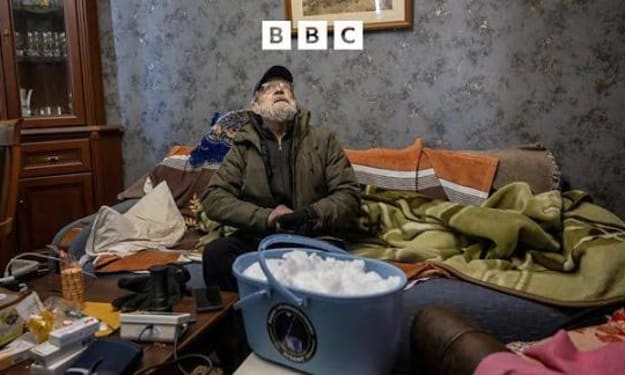
Extreme cold leads to temporary reduction in hostilities, but challenges remain on both sides As temperatures across Ukraine plummet to record lows, reports indicate that Russian forces are temporarily pausing offensive operations in some areas. The extreme winter conditions have created difficult logistical and operational challenges, affecting both Russian troops and Ukrainian defenders. While this pause may offer temporary relief to civilians and frontline forces, experts caution that the broader conflict remains unresolved, and fighting could resume once conditions improve. Why the Pause Is Happening Military analysts point to several factors influencing Russia’s temporary halt: Severe cold: Temperatures in eastern Ukraine have dropped well below freezing, making movement of troops and vehicles difficult. Winter conditions also increase the risk of frostbite, hypothermia, and mechanical failures in military equipment. Supply chain difficulties: Extreme cold affects fuel, ammunition, and food supply lines, forcing militaries to slow operations or suspend attacks temporarily. Safety of personnel: Even experienced troops face increased risk during prolonged exposure to severe winter conditions. Commanders may pause offensives to preserve manpower. Ukrainian forces are also adjusting their strategies, using the pause to reinforce positions, repair equipment, and provide aid to civilians affected by the cold. Impact on Civilians For civilians living in conflict zones, the pause in Russian attacks is a mixed blessing: Immediate safety: Reduced shelling and airstrikes provide a temporary window for families to seek shelter, evacuate, or access humanitarian aid. Continued hardship: Many communities remain without electricity, heat, or running water due to damaged infrastructure. Cold temperatures exacerbate the humanitarian crisis, especially for elderly and vulnerable populations. Relief efforts: NGOs and government agencies are attempting to deliver food, medical supplies, and winter clothing, but access remains challenging in contested areas. Experts emphasize that even with reduced attacks, civilians cannot assume a lasting end to hostilities, as military operations could resume once the weather improves. Military Consequences The pause in operations has strategic implications: Opportunity for Ukrainian forces: Ukrainian troops may use the lull to fortify defensive positions, reposition troops, and resupply frontline units. Russian military planning: Russia may use this time to repair equipment, replenish stockpiles, and prepare for renewed offensives once winter conditions ease. Shift in tactics: Analysts predict that both sides may adjust strategies to account for seasonal limitations, including potential reliance on drones, long-range artillery, and smaller-scale operations during extreme cold. While the pause is temporary, it provides both sides an opportunity to assess capabilities and plan next moves. International Observations Global leaders and analysts are closely monitoring the situation. Some key points include: Diplomatic pressure: International calls for ceasefires often intensify during winter months, particularly when civilian populations face life-threatening conditions. Humanitarian coordination: Organizations like the United Nations and Red Cross are attempting to leverage the pause to deliver aid and assess needs on the ground. Media coverage: The temporary reduction in attacks has prompted discussions about the human cost of winter warfare and the broader trajectory of the conflict. While the pause may create a temporary reprieve, observers warn that long-term resolution remains uncertain, and renewed violence could occur without warning. Historical Context Winter conditions have historically influenced military campaigns in Ukraine and other northern regions: During World War II, both German and Soviet forces faced severe setbacks due to winter, including frozen rivers, stalled vehicles, and frost-related casualties. Modern warfare still faces similar challenges, as extreme cold affects mobility, communications, and medical support. Military historians emphasize that weather often plays a decisive role in the timing and intensity of offensives. What’s Next? Experts suggest that while the pause may temporarily reduce the immediate human toll, the conflict remains unresolved: Continued monitoring: Both Russian and Ukrainian forces are likely using this period to reassess positions and strengthen defenses. Humanitarian preparation: Relief organizations must act quickly to deliver supplies before renewed fighting disrupts aid routes. Strategic planning: Analysts predict that as temperatures rise and conditions improve, Russia may resume targeted attacks, while Ukraine prepares to counter them with improved strategies. The pause is not a ceasefire, but rather a tactical adjustment to extreme weather conditions. Civilians, soldiers, and international observers remain on high alert. Conclusion The announcement that Russia is pausing attacks in Ukraine due to plummeting temperatures provides a temporary break for frontline communities. It highlights the challenges of conducting military operations in extreme winter conditions and the human costs of prolonged conflict. While the cold offers a brief respite, experts emphasize that the strategic situation remains fragile. Both sides may resume offensive operations once weather conditions improve, and civilians continue to bear the brunt of the conflict. In the meantime, the pause serves as a reminder that nature itself can influence the course of modern warfare, offering fleeting relief and creating opportunities for both humanitarian and military planning.
By Fiaz Ahmed about a month ago in The Swamp
Palau Lawmakers Vote to Block Controversial Trump Deal to Resettle Migrants from the US. AI-Generated.
Pacific nation rejects plan amid concerns over sovereignty, resources, and ethics In a decisive move, lawmakers in Palau, a small island nation in the western Pacific, voted to block a controversial agreement that would have allowed the United States to resettle migrants on the islands. The decision marks a significant moment for Palau, highlighting the challenges that small nations face when negotiating agreements with global powers and raising questions about immigration policy and ethics.
By Fiaz Ahmed about a month ago in The Swamp
Iran Prepares for War as US Military ‘Armada’ Approaches. AI-Generated.
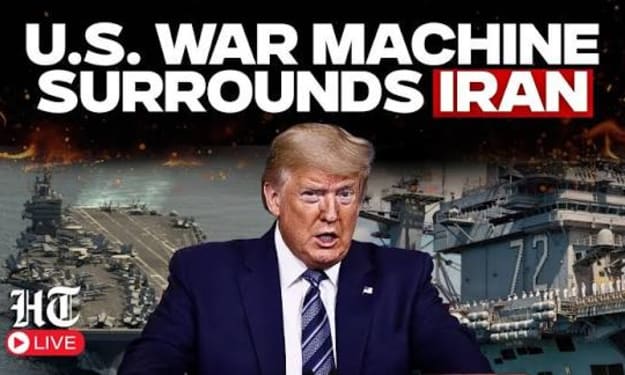
Rising tensions, strategic signals, and the risk of miscalculation in the Middle East Tensions between Iran and the United States have entered a dangerous phase as reports of a large U.S. naval presence moving closer to the region spark alarm in Tehran. Iranian officials and state media have framed the deployment as a direct threat, while Washington describes it as a defensive move meant to deter aggression and protect allies. As military posturing increases on both sides, the world watches closely. The situation raises urgent questions: Is war becoming more likely, or is this a familiar cycle of pressure and signaling? And what would conflict mean for an already unstable region? Why the US Military Presence Matters The United States maintains a strong military footprint across the Middle East, including aircraft carriers, destroyers, submarines, and air bases. When these forces move closer to Iranian waters, they send a powerful message. From Washington’s perspective, such deployments are meant to: Deter attacks on U.S. personnel and allies Secure key shipping lanes Respond quickly to regional threats From Tehran’s point of view, however, a large U.S. naval buildup looks like preparation for possible strikes. Iranian leaders often describe these movements as intimidation tactics designed to weaken Iran politically and economically. This difference in interpretation is what makes the situation so volatile. Iran’s Response: Readiness and Resistance Iran has responded with a clear message of readiness. Military drills, public statements from commanders, and increased air defense activity all point to a country preparing for worst-case scenarios. Iranian officials have emphasized several points: Iran will defend its territory and interests Any attack will be met with retaliation Regional allies will not remain neutral Iran’s military strategy relies less on matching U.S. firepower and more on asymmetric warfare, including missiles, drones, cyber capabilities, and influence through allied groups across the region. This approach allows Iran to project power while avoiding direct, large-scale confrontation—at least in theory. The Role of Regional Allies and Proxies One of the biggest risks in any Iran–US confrontation is regional spillover. Iran has close ties with armed groups and political movements in countries such as Lebanon, Iraq, Syria, and Yemen. These groups could become involved even if Tehran and Washington avoid direct clashes. Similarly, U.S. allies in the region, including Israel and Gulf states, are deeply concerned about Iran’s military intentions. Any escalation could quickly draw multiple actors into the conflict, making it far harder to control. This interconnected web of alliances means that a single incident—such as a drone strike or naval encounter—could trigger a wider crisis. Economic Pressure and Sanctions Military tension does not exist in isolation. Iran continues to face heavy U.S. and international sanctions, which have strained its economy and limited access to global markets. For Tehran, military readiness is also a way to signal that pressure alone will not force compliance. Iranian leaders often argue that showing strength is necessary to gain leverage in any future negotiations. At the same time, economic hardship has increased public frustration inside Iran, adding another layer of pressure on decision-makers. For Washington, maintaining sanctions while projecting military strength is meant to keep Iran contained without crossing the line into open war. The Risk of Miscalculation Perhaps the greatest danger is not intentional war, but miscalculation. History shows that conflicts often begin not with clear decisions, but with misunderstandings: A naval incident misread as an attack A missile test seen as preparation for war A proxy action wrongly attributed to direct orders In a region crowded with weapons and rival forces, even small errors can have serious consequences. Both sides insist they do not want full-scale war. Yet their actions—military movements, sharp rhetoric, and shows of force—create conditions where accidents become more likely. International Reactions Global powers are watching closely. European nations have called for restraint, urging both sides to avoid escalation. Countries dependent on Middle Eastern energy supplies worry about disruptions if fighting breaks out. Oil markets are particularly sensitive to tension in the Persian Gulf, where a significant share of the world’s energy shipments pass through narrow waterways. Even the threat of conflict can raise prices and unsettle global economies. Diplomatic channels remain open, but trust is limited. Is War Inevitable? Despite the alarming headlines, war is not inevitable. The current situation fits a familiar pattern: pressure, signaling, and counter-signaling. Both Iran and the United States understand the costs of open conflict. However, avoiding war requires: Clear communication De-escalation mechanisms Willingness to step back from brinkmanship Without these, the margin for error remains dangerously thin. Conclusion: A Region on Edge As Iran prepares for potential conflict and the U.S. military increases its presence, the Middle East once again finds itself on edge. The situation reflects deeper issues—mistrust, unresolved disputes, and competing visions for regional power. For now, both sides appear focused on deterrence rather than direct confrontation. But history shows that prolonged tension can be just as dangerous as open hostility. The coming weeks will test whether diplomacy and caution can prevail—or whether the world will witness another chapter of conflict in a region already burdened by too much war.
By Fiaz Ahmed about a month ago in The Swamp