
Hungary Doubles Down on Opposition to Ukraine’s EU Accession as Zelenskyy Aims for 2027
Budapest resists Kyiv’s EU ambitions as Zelenskyy targets 2027 membership

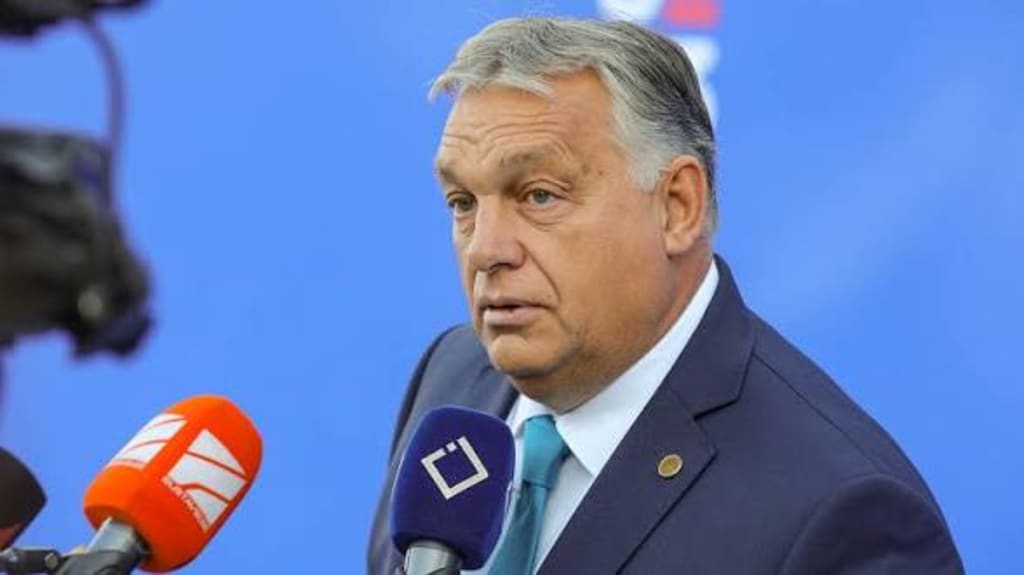
Budapest resists Kyiv’s EU ambitions while President Zelenskyy sets sights on 2027 membership
Hungary has reaffirmed its strong opposition to Ukraine’s bid to join the European Union, even as President Volodymyr Zelenskyy signals an ambitious goal of achieving membership by 2027. The move highlights growing tensions within the EU over expansion and raises questions about the bloc’s ability to maintain unity while addressing geopolitical challenges.
The dispute comes amid ongoing war and reconstruction efforts in Ukraine, as the country continues to recover from the Russian invasion that began in 2022. Kyiv’s EU aspirations are seen as a key component of its long-term strategy to strengthen security, economy, and democratic institutions.
Hungary’s Position
Hungarian officials have consistently expressed skepticism about Ukraine’s readiness for EU membership. Key points include:
Language and minority concerns: Hungary has voiced complaints about the treatment of the Hungarian minority in western Ukraine. Officials claim that Kyiv’s policies could harm cultural and linguistic rights.
Political leverage: By opposing Ukraine’s EU accession, Hungary strengthens its bargaining position within the European Union, ensuring that its concerns cannot be overlooked.
Regional influence: Budapest’s stance reflects a broader strategy to maintain influence over Central and Eastern European politics, especially in matters of EU enlargement.
Prime Minister Viktor Orbán has repeatedly emphasized that Hungary will not support Ukraine’s accession until its demands regarding minority rights and education policies are addressed.
Zelenskyy’s Ambitious Timeline
President Zelenskyy has set a target for Ukraine to join the EU by 2027, a timeline seen as bold given the country’s ongoing recovery from war and economic challenges.
Zelenskyy argues that EU membership would:
Strengthen Ukraine’s democracy and ensure alignment with European norms.
Boost economic growth through access to European markets and investment.
Provide security guarantees, reducing the likelihood of future aggression from Russia.
In interviews and speeches, Zelenskyy has stressed that Ukraine’s reforms and international cooperation demonstrate readiness for EU integration, though he acknowledges that internal EU politics will shape the process.
Reactions Within the European Union
The EU itself has a mixed response to Ukraine’s accession ambitions:
Supportive members: Countries such as Poland, the Baltic states, and others have expressed solidarity with Ukraine, emphasizing that EU membership would strengthen the bloc politically and economically.
Skeptical members: Hungary, along with some other EU countries, have raised concerns about the speed of enlargement and the resources required to integrate a country recovering from conflict.
Commission’s role: The European Commission has stressed that Ukraine must meet the Copenhagen criteria, including democracy, rule of law, and economic stability, before accession negotiations can advance.
This divide within the EU illustrates the complex balance between solidarity with Ukraine and internal political concerns.
Implications for Ukraine
Hungary’s opposition presents practical and symbolic challenges for Kyiv:
Delays in accession talks: Even if Ukraine meets technical criteria, Hungary’s veto power as a member state could slow down the accession process.
Negotiation leverage: Kyiv may need to engage in diplomatic negotiations to address Budapest’s concerns while maintaining momentum toward EU membership.
Regional dynamics: The dispute highlights tensions between Central European and Eastern European priorities, particularly regarding minority rights and national sovereignty.
Analysts warn that unless Hungary’s concerns are resolved, 2027 membership may remain aspirational rather than guaranteed.
Why Hungary is Doubling Down Now
Experts note several factors influencing Hungary’s current stance:
Domestic politics: Orbán’s government has used EU negotiations to strengthen national political support, portraying itself as a defender of Hungarian identity.
EU enlargement fatigue: Some EU members are concerned about the financial and administrative burden of adding new members, especially a country recovering from war.
Geopolitical signaling: Hungary’s opposition may also serve as a signal to Russia and other regional actors, showing that EU decisions are not automatic and that member states retain influence.
Potential Paths Forward
Despite Hungary’s resistance, several options remain for Ukraine:
Diplomatic engagement: Kyiv can negotiate with Budapest to address minority rights and policy concerns, potentially paving the way for eventual approval.
EU conditional support: Other EU members could offer conditional accession packages, providing incentives for Hungary to back Ukraine’s membership.
Incremental integration: Ukraine may pursue gradual alignment with EU standards, demonstrating progress while keeping the accession goal in focus.
Ultimately, Ukraine’s path to the EU will require careful diplomacy, domestic reforms, and coalition-building within the European Union.
Conclusion
Hungary’s firm opposition to Ukraine’s EU accession underscores the complexity of European politics, where strategic, cultural, and domestic interests intersect. While President Zelenskyy aims for a 2027 membership, Budapest’s stance highlights the challenges of EU expansion amid geopolitical tension.
For Ukraine, achieving EU membership will not only require meeting technical criteria but also navigating the political landscape of member states. As Europe watches, the outcome of this dispute will influence regional stability, EU cohesion, and the future of Ukraine’s integration with the West.
About the Creator
Fiaz Ahmed
I am Fiaz Ahmed. I am a passionate writer. I love covering trending topics and breaking news. With a sharp eye for what’s happening around the world, and crafts timely and engaging stories that keep readers informed and updated.
Keep reading
More stories from Fiaz Ahmed and writers in The Swamp and other communities.
Glen Rosa Ferry Costs Rise by £12.5m After Latest Six-Month Delay
Project delays and cost increases continue to challenge Scotland’s new ferry initiative The Glen Rosa ferry project, a key part of Scotland’s ambitious plan to modernize its maritime transport, has experienced another setback. Officials have announced that costs have increased by £12.5 million following a six-month delay in construction and delivery. The project, designed to serve routes around Arran and other western isles, has already faced scrutiny for repeated delays and budget overruns.
By Fiaz Ahmed a day ago in The Swamp
Huge Fire Rips Through 5-Star Hotel in Exclusive Courchevel 1850 Ski Resort in French Alps
A massive blaze tore through a luxury five-star hotel in Courchevel 1850, one of the most exclusive ski resorts in the French Alps, sending shockwaves through the international travel and winter sports community. The dramatic fire, which broke out in the early hours, transformed a symbol of alpine luxury into a scene of chaos, smoke, and flashing emergency lights.
By Aarif Lashari4 days ago in The Swamp


Comments
There are no comments for this story
Be the first to respond and start the conversation.