
Iran Prepares for War as US Military ‘Armada’ Approaches
Rising military tensions raise fears of escalation in the Middle East

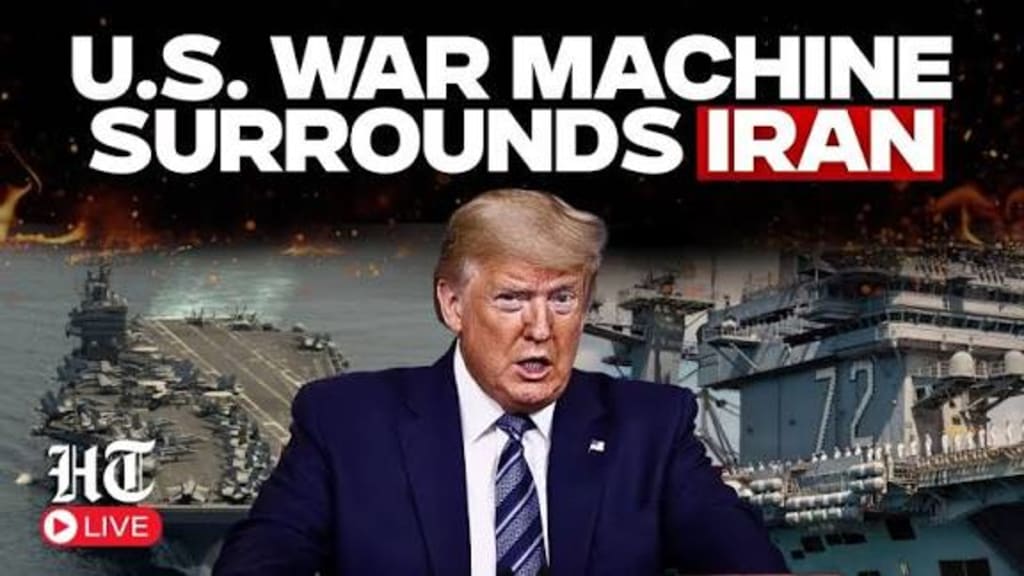
Rising tensions, strategic signals, and the risk of miscalculation in the Middle East
Tensions between Iran and the United States have entered a dangerous phase as reports of a large U.S. naval presence moving closer to the region spark alarm in Tehran. Iranian officials and state media have framed the deployment as a direct threat, while Washington describes it as a defensive move meant to deter aggression and protect allies.
As military posturing increases on both sides, the world watches closely. The situation raises urgent questions: Is war becoming more likely, or is this a familiar cycle of pressure and signaling? And what would conflict mean for an already unstable region?
Why the US Military Presence Matters
The United States maintains a strong military footprint across the Middle East, including aircraft carriers, destroyers, submarines, and air bases. When these forces move closer to Iranian waters, they send a powerful message.
From Washington’s perspective, such deployments are meant to:
Deter attacks on U.S. personnel and allies
Secure key shipping lanes
Respond quickly to regional threats
From Tehran’s point of view, however, a large U.S. naval buildup looks like preparation for possible strikes. Iranian leaders often describe these movements as intimidation tactics designed to weaken Iran politically and economically.
This difference in interpretation is what makes the situation so volatile.
Iran’s Response: Readiness and Resistance
Iran has responded with a clear message of readiness. Military drills, public statements from commanders, and increased air defense activity all point to a country preparing for worst-case scenarios.
Iranian officials have emphasized several points:
Iran will defend its territory and interests
Any attack will be met with retaliation
Regional allies will not remain neutral
Iran’s military strategy relies less on matching U.S. firepower and more on asymmetric warfare, including missiles, drones, cyber capabilities, and influence through allied groups across the region.
This approach allows Iran to project power while avoiding direct, large-scale confrontation—at least in theory.
The Role of Regional Allies and Proxies
One of the biggest risks in any Iran–US confrontation is regional spillover. Iran has close ties with armed groups and political movements in countries such as Lebanon, Iraq, Syria, and Yemen. These groups could become involved even if Tehran and Washington avoid direct clashes.
Similarly, U.S. allies in the region, including Israel and Gulf states, are deeply concerned about Iran’s military intentions. Any escalation could quickly draw multiple actors into the conflict, making it far harder to control.
This interconnected web of alliances means that a single incident—such as a drone strike or naval encounter—could trigger a wider crisis.
Economic Pressure and Sanctions
Military tension does not exist in isolation. Iran continues to face heavy U.S. and international sanctions, which have strained its economy and limited access to global markets. For Tehran, military readiness is also a way to signal that pressure alone will not force compliance.
Iranian leaders often argue that showing strength is necessary to gain leverage in any future negotiations. At the same time, economic hardship has increased public frustration inside Iran, adding another layer of pressure on decision-makers.
For Washington, maintaining sanctions while projecting military strength is meant to keep Iran contained without crossing the line into open war.
The Risk of Miscalculation
Perhaps the greatest danger is not intentional war, but miscalculation.
History shows that conflicts often begin not with clear decisions, but with misunderstandings:
A naval incident misread as an attack
A missile test seen as preparation for war
A proxy action wrongly attributed to direct orders
In a region crowded with weapons and rival forces, even small errors can have serious consequences.
Both sides insist they do not want full-scale war. Yet their actions—military movements, sharp rhetoric, and shows of force—create conditions where accidents become more likely.
International Reactions
Global powers are watching closely. European nations have called for restraint, urging both sides to avoid escalation. Countries dependent on Middle Eastern energy supplies worry about disruptions if fighting breaks out.
Oil markets are particularly sensitive to tension in the Persian Gulf, where a significant share of the world’s energy shipments pass through narrow waterways. Even the threat of conflict can raise prices and unsettle global economies.
Diplomatic channels remain open, but trust is limited.
Is War Inevitable?
Despite the alarming headlines, war is not inevitable. The current situation fits a familiar pattern: pressure, signaling, and counter-signaling. Both Iran and the United States understand the costs of open conflict.
However, avoiding war requires:
Clear communication
De-escalation mechanisms
Willingness to step back from brinkmanship
Without these, the margin for error remains dangerously thin.
Conclusion: A Region on Edge
As Iran prepares for potential conflict and the U.S. military increases its presence, the Middle East once again finds itself on edge. The situation reflects deeper issues—mistrust, unresolved disputes, and competing visions for regional power.
For now, both sides appear focused on deterrence rather than direct confrontation. But history shows that prolonged tension can be just as dangerous as open hostility.
The coming weeks will test whether diplomacy and caution can prevail—or whether the world will witness another chapter of conflict in a region already burdened by too much war.
About the Creator
Fiaz Ahmed
I am Fiaz Ahmed. I am a passionate writer. I love covering trending topics and breaking news. With a sharp eye for what’s happening around the world, and crafts timely and engaging stories that keep readers informed and updated.
Keep reading
More stories from Fiaz Ahmed and writers in The Swamp and other communities.
Kremlin Says Trump Asked Russia to Pause Strikes on Kyiv
A claim that raises questions about diplomacy, influence, and the limits of power during wartime The Kremlin has claimed that former U.S. President Donald Trump asked Russia to pause its strikes on Kyiv, a statement that has quickly drawn global attention. The assertion, reported by Russian officials, adds another layer of complexity to the already tense and heavily scrutinized conflict between Russia and Ukraine.
By Fiaz Ahmed about 7 hours ago in The Swamp
Exchange Firm’s Licence Cancelled: What It Means for Investors and the Market
The cancellation of an exchange firm’s licence by financial authorities has sent ripples across the investment community, sparking uncertainty among investors and renewed debate about regulatory oversight. Such actions are not taken lightly and often signal serious compliance failures, governance issues, or risks to the broader financial system. For investors and market participants, the decision raises an urgent question: what happens next? This development highlights the fragile balance between innovation in financial markets and the need for strict regulation to protect investors. As authorities move to enforce rules, the implications extend far beyond a single firm, affecting confidence, liquidity, and the overall market environment. Why an Exchange Firm’s Licence Gets Cancelled Regulators typically revoke an exchange firm’s licence only after identifying significant violations. These may include failure to meet capital requirements, inadequate risk management systems, lack of transparency, or breaches of anti-money laundering (AML) and know-your-customer (KYC) regulations. In some cases, repeated warnings or fines precede the final decision. When corrective actions are ignored or deemed insufficient, authorities may conclude that the firm poses a risk to investors or market integrity. Licence cancellation is therefore both a punitive and preventive measure designed to stop further harm. For the public, such decisions often raise concerns about how long the problems existed and whether earlier intervention could have minimized losses. Immediate Impact on Investors For investors directly involved with the exchange firm, the licence cancellation can be deeply unsettling. Access to accounts may be restricted while regulators assess the situation, and withdrawals or trades could be temporarily frozen. This uncertainty often leads to anxiety, particularly for retail investors who rely on the platform to manage savings or active investments. Regulators usually work with administrators or trustees to safeguard client assets. However, the recovery process can be slow, and outcomes depend on how well customer funds were segregated from the firm’s operational accounts. Investors are often advised to stay informed through official regulatory updates and avoid relying on rumors or unverified sources. Market Reaction and Short-Term Volatility Beyond individual investors, the broader market can also feel the effects. News of a licence cancellation often triggers short-term volatility, especially if the firm had a significant market presence. Prices of related assets may fluctuate as traders react to uncertainty, and confidence in similar platforms can weaken. Other exchange firms may experience increased scrutiny, with investors reassessing where they place their funds. While this can initially disrupt trading volumes, it may also encourage a shift toward more transparent and well-regulated platforms. Market analysts note that while short-term reactions can be dramatic, long-term stability often improves when weak or non-compliant entities are removed from the system. What This Means for Market Trust Trust is a cornerstone of financial markets. When an exchange firm loses its licence, it can undermine confidence, especially among first-time or smaller investors. Many may begin to question whether regulatory bodies are doing enough to monitor firms proactively rather than reactively. At the same time, decisive regulatory action can also restore trust. By demonstrating that rules are enforced and misconduct has consequences, authorities send a message that investor protection is a priority. Over time, this can strengthen the market by encouraging higher standards across the industry. Regulatory Oversight and Its Broader Significance The licence cancellation underscores the critical role of regulators in maintaining market integrity. Financial authorities are tasked with balancing innovation and risk, ensuring that firms operate transparently while allowing markets to evolve. In recent years, regulators worldwide have tightened oversight, particularly in fast-growing sectors such as digital assets and alternative trading platforms. This case may prompt further reviews of licensing frameworks, compliance monitoring, and enforcement mechanisms. For firms still operating in the market, the message is clear: compliance is not optional. Strong governance, clear reporting, and adherence to regulations are essential for long-term survival. Lessons for Investors This incident offers several important lessons for investors: Due diligence matters: Investors should research exchange firms carefully, including their regulatory status and compliance history. Diversification reduces risk: Relying on a single platform increases exposure to operational and regulatory risks. Regulation provides protection: While regulation may seem restrictive, it plays a crucial role in safeguarding investor interests. Financial experts recommend that investors prioritize platforms with strong regulatory backing and transparent operational practices. Long-Term Implications for the Market In the long run, the removal of non-compliant exchange firms can lead to a healthier market environment. While disruptions are inevitable, stronger oversight can improve resilience and reduce systemic risk. The episode may also accelerate reforms, encouraging regulators to enhance monitoring tools and firms to adopt higher standards. For investors, this could mean greater confidence and more sustainable growth opportunities in the future. Conclusion The cancellation of an exchange firm’s licence is a significant event with far-reaching implications. For investors, it brings uncertainty and potential financial stress. For the market, it highlights vulnerabilities while reinforcing the importance of regulation and accountability. Although the immediate impact may be unsettling, decisive regulatory action can ultimately strengthen trust and stability. As the situation unfolds, investors and market participants alike will be watching closely, hoping that lessons learned lead to a safer and more transparent financial ecosystem.
By Aarif Lashari6 days ago in The Swamp
Weak Dollar Drives Gold Over $5,500 an Ounce for the First Time
Gold prices have surged to an unprecedented $5,500 per ounce, marking a historic milestone for the precious metal as a weakening US dollar, rising geopolitical tensions, and deepening fears of currency debasement send investors rushing toward safe-haven assets. The dramatic rally underscores growing unease in global markets and signals a potential shift in how investors protect wealth during periods of economic uncertainty.
By Aarif Lasharia day ago in The Swamp



Comments
There are no comments for this story
Be the first to respond and start the conversation.