Fiaz Ahmed
Bio
I am Fiaz Ahmed. I am a passionate writer. I love covering trending topics and breaking news. With a sharp eye for what’s happening around the world, and crafts timely and engaging stories that keep readers informed and updated.
Stories (1558)
Filter by community
At Least 31 Killed, 169 Injured in Suicide Bombing at Islamabad Imambargah. AI-Generated.
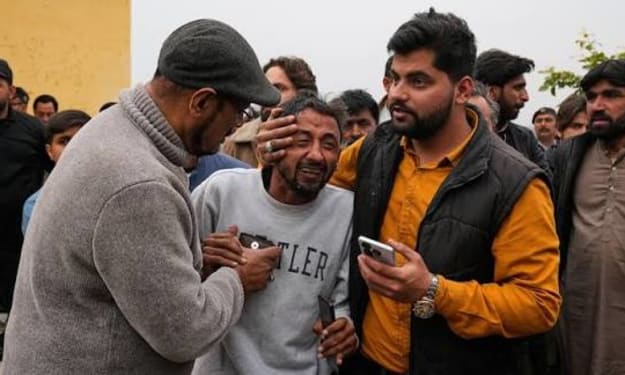
At least 31 people were killed and 169 others injured after a suicide bomber struck an imambargah in Islamabad on Sunday evening, in one of the deadliest attacks in the capital in recent years. The explosion occurred as worshippers gathered for evening prayers, sending shockwaves through nearby residential areas and triggering an immediate emergency response from police, medical teams, and security forces. Authorities said the attacker detonated explosives at the entrance of the religious complex just as crowds were entering the building. The blast caused significant structural damage to the front section of the imambargah and shattered windows of surrounding homes and shops. Rescue workers rushed to the scene within minutes, pulling survivors from debris and transporting the wounded to nearby hospitals. Hospitals across Islamabad declared an emergency, with doctors and nurses working through the night to treat the injured. Medical officials confirmed that many victims were in critical condition, raising fears that the death toll could still rise. Blood donation appeals were issued across the city as supplies ran low. Scene of Chaos and Fear Eyewitnesses described scenes of panic as people ran for safety following the explosion. “There was a loud blast and then smoke everywhere,” said one worshipper who had arrived moments before the attack. “We could hear people crying and calling for help. It felt like the ground shook beneath our feet.” Security forces cordoned off the area and launched a search operation to ensure there were no additional threats. Bomb disposal units conducted a sweep of the surroundings, while forensic teams began collecting evidence from the blast site. Authorities also shut down nearby roads and imposed temporary security restrictions across the capital. Interior Ministry officials said initial investigations confirmed it was a suicide bombing, though no group immediately claimed responsibility. Intelligence agencies are examining CCTV footage from the area and questioning witnesses to identify possible accomplices. Condemnation from Leadership The Prime Minister strongly condemned the attack, calling it a “cowardly act of terrorism” and expressing condolences to the families of those killed. In a statement, he said the government would not allow extremist violence to destabilize the country or target places of worship. “The attack on innocent worshippers is an attack on our shared humanity,” the statement read. “Those responsible will be brought to justice.” The President and other senior political leaders echoed the condemnation, urging unity and resilience in the face of violence. Religious scholars and community leaders also appealed for calm, emphasizing that such acts seek to divide society and provoke fear. Security Concerns Resurface The bombing has raised renewed concerns about security in the capital, which has generally been considered more stable than other parts of the country in recent years. Analysts say the attack highlights ongoing challenges in preventing extremist violence, particularly during religious gatherings that draw large crowds. Security experts note that religious sites remain symbolic and vulnerable targets. “Attacks on places of worship are designed to create maximum emotional impact and spark sectarian tension,” said one analyst. “The goal is not only physical destruction but psychological fear.” Authorities had increased security in Islamabad ahead of several religious events, but the attacker managed to breach safeguards. Investigators are now reviewing how the bomber reached the site and whether there were intelligence failures. Impact on the Community Local residents said the imambargah has long been a center for worship and community activities. Many families in the neighborhood attend services there regularly, making the attack deeply personal for those living nearby. “This was a peaceful place,” said a shopkeeper whose business was damaged by the blast. “People came here to pray, not to fight. We never imagined something like this would happen here.” Community volunteers joined rescue workers in helping the injured and clearing debris. Several mosques and community centers opened their doors to provide food, water, and temporary shelter to those affected. International Reaction Foreign governments and international organizations expressed condolences and solidarity with Pakistan. The United Nations issued a statement condemning the attack and reaffirming its support for efforts to combat terrorism. Several neighboring countries also offered assistance and medical support if needed. Diplomatic missions in Islamabad tightened security around their compounds and advised their citizens to avoid large public gatherings until further notice. Investigation Underway Police officials said a joint investigation team has been formed, including members from intelligence agencies and counterterrorism departments. Early findings suggest the bomber acted alone, but authorities are exploring possible links to militant networks operating in the region. Security has been heightened at other religious sites and sensitive locations across Islamabad and Rawalpindi. Additional patrols have been deployed, and checkpoints established at major entry and exit points of the city. The Interior Ministry urged citizens to remain vigilant and report any suspicious activity. “Public cooperation is critical in preventing further incidents,” a spokesperson said. A Nation in Mourning As night fell, prayers were offered for the victims, and candlelight vigils were held in several parts of the city. Social media filled with messages of grief and solidarity, with many calling for peace and unity. For families who lost loved ones, the tragedy has left deep scars. Funerals are expected to take place under heavy security in the coming days. The attack serves as a grim reminder that despite progress in counterterrorism efforts, the threat of violence has not been fully eliminated. Authorities now face pressure to reassure the public and prevent further attacks, while communities struggle to come to terms with another painful chapter of loss. As investigations continue, the nation watches closely, hoping that those responsible will be identified and that stronger measures will be taken to protect places of worship from future violence.
By Fiaz Ahmed about a month ago in The Swamp
Leaky Dams Being Installed to Manage Flooding. AI-Generated.
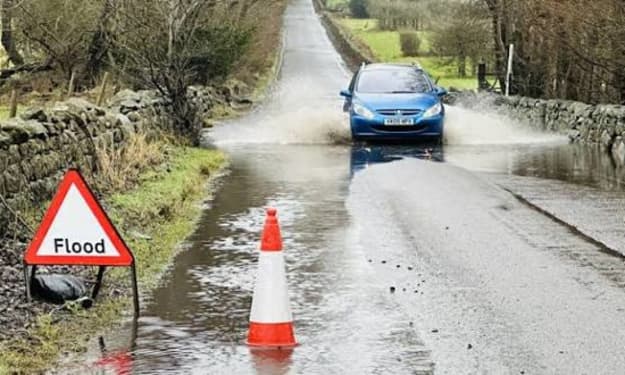
Leaky dams are increasingly being installed across flood-prone regions as part of a growing effort to manage rising flood risks through natural and sustainable solutions. These small-scale structures, made primarily from wood, stones, and natural materials, are designed to slow the flow of water in rivers and streams rather than block it completely. Authorities and environmental experts say leaky dams could play a vital role in protecting communities as climate change brings more intense rainfall and unpredictable weather patterns. Unlike traditional concrete flood defenses, leaky dams allow water to pass through gradually. This reduces the speed and volume of water rushing downstream during heavy rain, helping to prevent rivers from overflowing their banks. By holding back water temporarily, the dams give drainage systems more time to cope and lower the risk of flash flooding in towns and villages. A Natural Approach to Flood Control Leaky dams are part of a broader strategy known as Natural Flood Management (NFM). This approach works with the landscape rather than against it, using natural features to store and slow down rainwater. In addition to leaky dams, NFM projects include tree planting, restoring wetlands, and reconnecting rivers with their floodplains. Engineers and ecologists involved in the projects say the benefits go beyond flood prevention. The dams also help reduce soil erosion, improve water quality, and create new habitats for wildlife such as fish, insects, and birds. Over time, vegetation grows around the structures, strengthening them and blending them into the environment. “These are low-cost, low-impact solutions that can make a real difference,” said one flood management specialist. “Instead of forcing water into narrow channels, we allow it to spread and slow down naturally.” Why Flooding Risks Are Rising Flooding has become a major concern for many regions as climate change drives heavier rainfall and more frequent storms. Urban development has also contributed to the problem. Roads, buildings, and pavements prevent rainwater from soaking into the ground, sending it rapidly into rivers and drains. In recent years, several communities have experienced repeated floods, causing damage to homes, businesses, and infrastructure. Insurance costs have risen sharply, and some residents have struggled to rebuild after multiple disasters. Governments and local councils are now under pressure to find long-term solutions that are affordable and environmentally responsible. Leaky dams are seen as one answer to this challenge. They are relatively quick to build and cost far less than large flood barriers or concrete walls. In many cases, they can be installed by local teams using materials from nearby woodland, reducing both financial and environmental costs. How Leaky Dams Work A typical leaky dam consists of logs or branches placed across a stream and anchored to the banks. Gaps are deliberately left between the materials so that water can continue flowing. During heavy rainfall, the dam slows the surge of water, allowing it to pool upstream. Once water levels drop, the flow returns to normal. Importantly, the dams are designed not to trap large amounts of debris or cause dangerous blockages. Engineers carefully select sites where water can safely collect without flooding farmland or property. Regular inspections are carried out to ensure the structures remain stable and effective. In some areas, multiple leaky dams are installed along a single stream, creating a chain of barriers that gradually reduces water speed over several kilometers. Community Involvement Many leaky dam projects involve local communities, farmers, and landowners. Their cooperation is essential, as the dams are often built on private land or in rural areas upstream of towns. Farmers have shown growing interest in the schemes, especially where repeated flooding has damaged crops and soil. By slowing water flow, leaky dams can help keep valuable topsoil in place and reduce the impact of sudden downpours. Volunteers and conservation groups have also played a role, helping with construction and monitoring wildlife impacts. For some communities, the projects have created a sense of shared responsibility and environmental awareness. Challenges and Limitations While leaky dams offer many benefits, experts caution that they are not a complete solution. They work best as part of a wider flood management system that includes drainage upgrades, warning systems, and traditional defenses where necessary. Critics argue that leaky dams may struggle to cope with extreme weather events or prolonged rainfall. In severe storms, rivers can still overflow despite the presence of natural barriers. There are also concerns about maintenance, as damaged or poorly placed dams could increase flood risk rather than reduce it. Authorities emphasize that careful planning and scientific assessment are essential. Each project is tailored to the local landscape, taking into account soil type, slope, river size, and existing land use. Looking Ahead As governments seek to adapt to climate change, natural flood management is gaining political and public support. Funding has been allocated to expand leaky dam projects and evaluate their long-term effectiveness. Early results from pilot schemes suggest reduced peak water levels and slower flood waves reaching downstream communities. Environmental groups welcome the shift away from purely concrete-based defenses. They argue that combining engineering with nature-based solutions is the most sustainable path forward. For residents living in flood-prone areas, leaky dams represent hope that future storms may be less destructive. While they cannot eliminate flooding entirely, they offer a practical and environmentally friendly tool to reduce its impact. As more regions adopt this approach, leaky dams may become a familiar feature of river landscapes — quiet structures performing an important role in protecting both people and nature from the growing threat of floods.
By Fiaz Ahmed about a month ago in Longevity
To Win Back the House, Democrats Take the Fight to Deep-Red Areas. AI-Generated.
As Democrats look ahead to the next congressional elections, party leaders are adopting a strategy that would have seemed unlikely just a few years ago: contesting districts long considered safely Republican. Rather than concentrating only on competitive suburban seats, Democrats are sending candidates, organizers, and resources into deep-red regions in an effort to expand their map and rebuild connections with rural and working-class voters. The move reflects a growing belief within the party that winning back control of the U.S. House of Representatives will require a broader approach. With margins in Congress often razor-thin, even a small number of unexpected victories could shift the balance of power. Democratic strategists say the effort is not only about flipping seats but also about rebuilding a national presence in areas where the party has struggled for years. A Strategy Shift For decades, Democrats largely abandoned districts where Republican candidates routinely won by double-digit margins. Limited campaign funds were instead focused on swing districts. However, recent internal reviews suggest that this approach may have narrowed the party’s appeal and allowed Republicans to dominate the political conversation in large parts of the country. Party officials now argue that showing up matters, even in hostile territory. “If voters only hear one side, it becomes much harder to challenge entrenched narratives,” said one senior campaign adviser. “We need to talk to people where they live, not just where it’s comfortable.” This strategy includes town halls, door-to-door canvassing, and messaging focused on economic issues such as healthcare access, job security, and infrastructure investment—topics that resonate across party lines. Targeting Economic Concerns In deep-red districts, Democrats are emphasizing bread-and-butter issues rather than ideological debates. Candidates are framing their campaigns around rising costs of living, hospital closures, and the need for reliable broadband and transportation networks. Many rural communities face economic decline, population loss, and limited healthcare services. Democratic candidates are using these realities to argue that federal investment and bipartisan problem-solving can improve daily life. Some are also highlighting Republican opposition to social programs and labor protections as evidence that conservative leadership has failed to deliver for ordinary residents. One Democratic candidate running in a heavily Republican district said, “People here care about jobs and whether their kids can afford college. They don’t wake up thinking about national culture wars. If you talk about their real problems, they listen.” Recruiting Local Candidates A key part of the plan involves recruiting candidates with strong local roots—teachers, veterans, farmers, and small business owners—rather than national political figures. Party leaders believe local credibility can help overcome skepticism toward the Democratic brand. These candidates are encouraged to tailor their message to their district’s priorities rather than rely on national talking points. While maintaining loyalty to party principles, they often stress independence and a willingness to work with Republicans. This approach aims to counter the perception that Democrats are disconnected from rural America. “We need people who look and sound like their communities,” said a state party organizer. “Authenticity matters more than slogans.” Risks and Resistance The strategy is not without controversy inside the party. Some progressives argue that investing in long-shot races wastes money that could be better spent defending vulnerable incumbents. Others worry that candidates in conservative districts may dilute Democratic policies to appeal to Republican voters. There is also the risk of backlash. In strongly conservative areas, Democratic organizers have reported hostility and mistrust, shaped by years of partisan rhetoric. Campaign workers face challenges building networks from scratch in regions where Democratic offices closed long ago. Despite these obstacles, party leaders insist that retreat is not an option. They view the effort as a long-term investment rather than a single-election gamble. Learning from Past Campaigns Democrats point to recent elections in which unexpected victories came from places once thought unwinnable. Narrow losses have also provided valuable data about which messages resonate and which do not. Analysts say even if Democrats fail to flip many deep-red seats, increasing their vote share could influence statewide races and future redistricting battles. It could also force Republicans to spend money defending seats they previously ignored. “This isn’t just about winning tomorrow,” said a political analyst. “It’s about rebuilding a national coalition that includes rural and conservative regions.” A Broader Political Message The push into deep-red areas also reflects a philosophical shift. Democrats want to project themselves as a national party that represents all Americans, not just urban and suburban voters. By engaging in conservative districts, they hope to reduce polarization and demonstrate commitment to democratic competition. Party leaders believe the effort could soften political divisions by encouraging direct conversations between voters and candidates rather than relying solely on social media and national television. Looking Ahead As the campaign season intensifies, Democrats will test whether their strategy can break through entrenched loyalties. Success will depend on turnout, candidate quality, and whether economic concerns outweigh cultural and partisan identities. Even modest gains could help Democrats reclaim the House, where a handful of seats often determine control. More importantly, the party hopes the effort will lay the groundwork for future elections by restoring trust in communities that have felt ignored. Whether the strategy delivers victories or simply narrows margins, it signals a new willingness by Democrats to compete everywhere. In a deeply divided political landscape, that may be one of the most significant changes of all.
By Fiaz Ahmed about a month ago in The Swamp
Mandelson Messages to Be Handed Over by Ministers as Labour MPs Call for ‘Clear Out’ of PM’s Advisers. AI-Generated.
Senior ministers are expected to hand over communications involving Lord Peter Mandelson following growing pressure from Labour MPs who are demanding a “clear out” of advisers surrounding the Prime Minister. The controversy has intensified scrutiny of the government’s internal decision-making and raised fresh questions about transparency, influence, and political accountability at the highest levels of power. The row centers on a series of messages reportedly exchanged between Lord Mandelson, a veteran political strategist and former cabinet minister, and senior figures within government. Although Mandelson does not hold an official advisory role, his longstanding ties to the Labour leadership and reputation as a key architect of past election victories have fueled concerns about informal channels of influence operating outside formal structures. Opposition figures and backbench Labour MPs alike have called for full disclosure of communications to determine whether policy decisions were shaped by individuals who are not subject to the same rules of accountability as government officials. Calls for Transparency Ministers have confirmed that they will cooperate with requests to release relevant messages, including emails and text exchanges, in line with record-keeping obligations. A government spokesperson said the Prime Minister supports “full transparency” and is committed to ensuring that all advice received by ministers is properly documented and scrutinized. However, critics argue that the situation exposes deeper problems in the Prime Minister’s advisory network. “This is not just about one set of messages,” said one Labour MP. “It’s about a culture of informal influence and a failure to respect the boundaries between official government business and political maneuvering.” Several MPs have gone further, calling for a wholesale review of the Prime Minister’s advisory team. They claim that a small group of unelected advisers wields disproportionate power over policy direction and communications strategy, sidelining cabinet ministers and parliament. Mandelson’s Role Under the Spotlight Lord Mandelson, a former EU commissioner and key figure in the New Labour era, has long been seen as a behind-the-scenes power broker. While he holds no formal government position, his close relationship with senior Labour figures has kept him influential in political circles. Sources familiar with the communications say the messages touched on political strategy, media handling, and long-term policy positioning. Although there is no suggestion of wrongdoing, the revelation has reignited debate over the role of unofficial advisers and their impact on democratic processes. Supporters of Mandelson argue that seeking advice from experienced figures is normal practice in politics. “Leaders consult trusted voices all the time,” said one senior party official. “That does not mean policy is being dictated from outside government.” Yet critics counter that such arrangements blur the line between guidance and control. They warn that informal advisers are not bound by the same codes of conduct, conflict-of-interest rules, or public scrutiny as civil servants and ministers. Pressure from Within Labour The strongest calls for reform have come from within Labour itself. A group of backbench MPs has demanded that the Prime Minister overhaul his advisory structure and limit the role of outside political figures. One MP described the current setup as “too centralized and too opaque,” adding that it risks undermining trust both inside the party and among voters. “There has to be a reset,” the MP said. “We need professional, accountable advisers who operate within the system, not personalities from past eras pulling strings behind closed doors.” Some Labour members fear that association with Mandelson could revive old controversies from the New Labour period, when accusations of spin, favoritism, and elite influence damaged public confidence in politics. Political Fallout The controversy comes at a sensitive time for the government, as it seeks to present itself as stable, ethical, and focused on policy delivery. The Prime Minister has pledged to restore integrity to public life, making the issue of private communications and unofficial advice particularly damaging. Opposition parties have seized on the affair, accusing the government of hypocrisy. A senior opposition spokesperson said the Prime Minister had promised a break from old political habits but appeared to be relying on figures from the past to shape decisions. “This looks like government by text message,” the spokesperson said. “If ministers are taking advice from people who hold no office, the public deserves to know.” What Happens Next Officials say the process of gathering and releasing the messages is underway and will comply with existing transparency rules. It is unclear whether the communications will be published in full or summarized for parliamentary review. There are also growing calls for an independent inquiry into how advisers are appointed and how external figures interact with government departments. Some MPs want clearer rules to prevent informal lobbying and ensure that all advice influencing policy is traceable. Political analysts say the episode reflects a broader tension within Labour between its modern leadership and its historic power brokers. How the Prime Minister handles the situation could shape perceptions of his authority and willingness to reform internal structures. For now, the focus remains on the messages themselves — what they reveal, and whether they confirm fears of excessive outside influence. As one senior MP put it, “This is about drawing a line between experience and interference.” Whether the controversy leads to a reshuffle of advisers or fades into another Westminster scandal will depend on what the communications show and how firmly the Prime Minister responds to calls for change. What is clear is that the issue has reopened a long-running debate about who really holds power in government — those elected by the public, or those advising them behind the scenes.
By Fiaz Ahmed about a month ago in The Swamp
Blizzards, Thaw, Then Relentless Rain: Why Is the North East Getting Such a Soaking?. AI-Generated.
Communities across the North East have endured a dramatic sequence of extreme weather in recent weeks — blizzards followed by sudden thawing and then days of relentless rain. Roads have flooded, rivers have burst their banks, and emergency services have been stretched as residents struggle to adapt to rapidly changing conditions. Meteorologists say the unusual pattern is the result of a powerful mix of atmospheric forces linked to climate change and shifting global weather systems. The region first experienced heavy snowfall as Arctic air swept south, bringing freezing temperatures and blizzard conditions to areas unaccustomed to prolonged snow events. Schools closed, transport networks stalled, and rural communities were briefly cut off. But the cold spell did not last. Within days, temperatures rose sharply, melting accumulated snow and saturating already frozen ground. When intense rain followed, the landscape had little capacity to absorb the water. This sequence — snow, thaw, and heavy rain — created the perfect conditions for flooding. A Clash of Air Masses Weather experts explain that the North East has become a battleground between cold polar air and warm, moisture-rich systems arriving from the Atlantic. Jet stream instability has allowed these contrasting air masses to collide more frequently and with greater intensity. “The jet stream is behaving more erratically than in the past,” said one senior meteorologist. “It’s pulling down Arctic air one week and then swinging back north to allow warm, wet systems to dominate the next. That back-and-forth pattern is exactly what we’ve been seeing.” As warm air moves over cold ground and snow cover, it accelerates melting while carrying large volumes of moisture. The result is prolonged rainfall rather than brief showers, overwhelming drainage systems and swelling rivers. Climate Change as a Multiplier Scientists are cautious about attributing any single storm to climate change, but they agree that warming temperatures are amplifying weather extremes. Warmer air holds more moisture, increasing the potential for heavy rainfall. At the same time, weakened polar circulation allows cold air to travel farther south, creating sharper contrasts in temperature. In the North East, this has meant more frequent swings between winter and spring conditions in a matter of days. These rapid shifts prevent the land from stabilizing and make flooding more likely. Urban areas have been particularly vulnerable. Older drainage systems were designed for gentler rainfall patterns and cannot cope with sustained downpours. In some towns, floodwater poured into basements and shops, forcing businesses to close temporarily and residents to evacuate. Rivers Under Pressure Hydrologists report that river levels rose at unprecedented speed due to the combined impact of melting snow and rainfall. Unlike summer storms, where dry soil can absorb much of the water, frozen or waterlogged ground allows runoff to flow directly into rivers and streams. Several flood warnings were issued across the region as reservoirs approached capacity. Authorities opened spillways to prevent dam failures, while sandbags were distributed to vulnerable neighborhoods. Farmers have also suffered heavy losses. Fields were submerged, livestock had to be moved to higher ground, and crops already planted were damaged by standing water. The agricultural sector fears that unpredictable weather will increasingly disrupt food production cycles. Infrastructure Strains Transport networks have faced repeated disruption. Rail services were suspended in some areas due to landslides and track flooding. Major roads became impassable after drainage channels overflowed. Utility companies reported power outages linked to fallen trees and water-damaged substations. Local governments say the cost of repairs is mounting. Bridges, culverts, and flood defenses that were once considered sufficient are now being tested beyond their design limits. Emergency planners warn that these conditions may become more common unless infrastructure is modernized. Investment in flood barriers, river management, and urban drainage is now seen as urgent rather than optional. A Pattern, Not an Exception Long-term data shows that the North East is experiencing more intense rainfall events than in previous decades. Seasonal averages may not look dramatic, but the way precipitation falls has changed — concentrated into fewer, heavier storms instead of steady light rain. Weather forecasters say this pattern increases the risk of flash flooding and makes prediction more difficult. Sudden downpours can overwhelm communities with little warning, while melting snow adds an unpredictable extra layer of risk. Residents have begun to notice the shift. Longtime locals describe winters that once brought steady cold now replaced by wild fluctuations between freezing nights and mild, rainy days. This volatility is reshaping how people prepare for seasonal weather. Looking Ahead Forecasts suggest that more rain is likely in the coming weeks, raising concerns that rivers may not have time to return to normal levels before the next storm arrives. Authorities are urging residents in flood-prone areas to stay alert and prepare emergency plans. Experts emphasize that adaptation is key. Improved forecasting, upgraded drainage systems, and better land-use planning can reduce the impact of extreme weather. Natural solutions, such as restoring wetlands and floodplains, can also help absorb excess water before it reaches towns and cities. The recent soaking of the North East is not just a story of bad luck or seasonal variation. It reflects a changing climate where extremes are becoming the new normal. Blizzards followed by sudden thaw and relentless rain may once have been rare. Now, they are a warning of what future winters could increasingly look like. For residents still drying out from flooded homes and roads, the question is no longer why this happened once — but how often it will happen again.
By Fiaz Ahmed about a month ago in The Swamp
Japan to Restart World’s Biggest Nuclear Plant. AI-Generated.
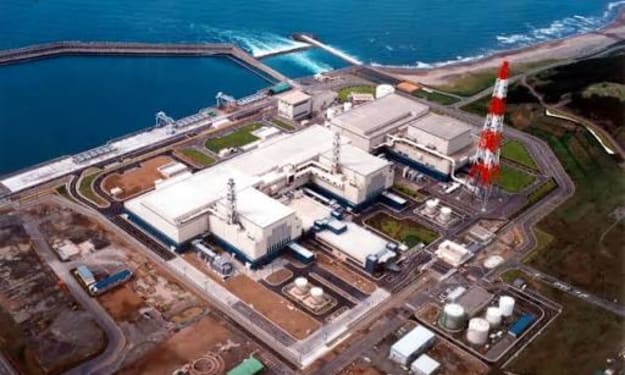
Japan is preparing to restart the world’s largest nuclear power plant, a landmark decision that signals a major shift in the country’s energy policy more than a decade after the Fukushima disaster reshaped public attitudes toward nuclear power. The Kashiwazaki-Kariwa nuclear plant, located in Niigata Prefecture on Japan’s northwest coast, is set to resume operations following regulatory approval and renewed political backing from the central government. The plant, operated by Tokyo Electric Power Company (TEPCO), has a total capacity of more than 8,000 megawatts, making it the largest nuclear facility in the world by output. It has remained offline since 2011, when Japan shut down nearly all of its nuclear reactors in the aftermath of the Fukushima Daiichi nuclear accident triggered by a massive earthquake and tsunami. Energy Security and Climate Goals Japan’s decision to restart the Kashiwazaki-Kariwa plant comes amid growing concerns over energy security and rising fuel costs. Since the nuclear shutdowns, the country has relied heavily on imported fossil fuels such as liquefied natural gas (LNG), coal, and oil to meet its electricity needs. This dependence has made Japan vulnerable to global energy price fluctuations and geopolitical tensions. Government officials argue that restarting nuclear plants is essential to ensuring a stable and affordable energy supply. “Nuclear power plays a critical role in achieving both energy security and carbon reduction targets,” said a senior official from Japan’s Ministry of Economy, Trade and Industry (METI). “Restarting Kashiwazaki-Kariwa will significantly strengthen our electricity system and reduce reliance on fossil fuels.” Japan has pledged to achieve carbon neutrality by 2050, and nuclear power is seen as a key component of that strategy. The government aims to raise the share of nuclear energy in its power mix to between 20 and 22 percent by 2030, compared with much lower levels in recent years. Safety and Regulatory Hurdles The restart of Kashiwazaki-Kariwa has not been without controversy. The plant faced serious setbacks in recent years after security breaches were discovered in 2021, including failures in access control systems and monitoring equipment. These lapses led Japan’s Nuclear Regulation Authority (NRA) to suspend operations until TEPCO could demonstrate that it had addressed the problems. Following extensive inspections and corrective measures, the NRA lifted the operational ban in late 2023, clearing the way for preparations to restart one of the plant’s seven reactors. TEPCO has since upgraded security systems, improved employee training, and implemented stricter oversight procedures. Despite regulatory approval, local consent remains a major hurdle. Under Japan’s informal rules, nuclear plants cannot resume operations without the agreement of local governments. Niigata’s governor has taken a cautious stance, insisting that public trust must be restored before giving final approval. “We must ensure that safety is fully guaranteed and that lessons from Fukushima are never forgotten,” the governor said in a recent statement. Public hearings and expert panels are expected to play a role in the final decision.Technological and Safety Upgrades TEPCO has invested billions of dollars in safety upgrades at Kashiwazaki-Kariwa. These include reinforced seawalls, improved backup power systems, upgraded control rooms, and stricter security protocols to prevent unauthorized access. The plant has also installed new equipment designed to prevent hydrogen explosions like those seen at Fukushima. Emergency drills involving local governments and first responders have been conducted to test evacuation and disaster-response plans. Regulators emphasize that Japan’s post-Fukushima safety standards are among the strictest in the world. Reactors must pass comprehensive inspections and stress tests before restarting, and utilities face heavy penalties for violations. Still, critics argue that no technological fix can fully eliminate the risks associated with nuclear power, particularly in a country prone to earthquakes and typhoons. Global Implications Japan’s move to restart the world’s largest nuclear plant will be closely watched by other nations reconsidering nuclear energy as part of their climate strategies. Countries such as Germany have moved away from nuclear power entirely, while others, including France and Britain, are investing in new reactors. If Kashiwazaki-Kariwa resumes operations successfully, it could strengthen the case for nuclear power as a low-carbon alternative to fossil fuels. A failure or new scandal, however, could reinforce fears and reignite opposition. The decision also carries symbolic weight. Kashiwazaki-Kariwa represents both the promise and peril of nuclear technology: immense power generation on one hand, and potentially catastrophic risk on the other. A High-Stakes Restart The restart is expected to occur in phases, with one reactor coming online first before others follow. TEPCO and government officials insist that caution will guide the process and that public safety remains the top priority. For Japan, the reopening of the world’s biggest nuclear plant is more than an energy policy choice. It is a test of whether the nation has learned from its past and can balance technological ambition with accountability and transparency. As the reactors prepare to hum back to life, Japan stands at a crossroads between its nuclear legacy and its future energy needs. Whether this decision proves wise will depend not only on engineering and regulation, but on rebuilding public trust in a technology that once promised prosperity and delivered disaster.
By Fiaz Ahmed about a month ago in The Swamp
UN Human Rights Agency in ‘Survival Mode’, Chief Warns. AI-Generated.
The United Nations’ top human rights body is operating in “survival mode” as financial shortfalls, political pressure, and rising global crises threaten its ability to function effectively, the agency’s chief has warned. Volker Türk, the UN High Commissioner for Human Rights, said the organization is facing one of the most difficult periods in its history as demand for its work increases while resources continue to shrink. Speaking to diplomats and journalists in Geneva, Türk described a widening gap between the expectations placed on the UN human rights office and the funding available to meet those responsibilities. “We are being asked to do more in more places with fewer resources,” he said. “At the moment, we are in survival mode.” Growing Demand, Shrinking Resources The Office of the High Commissioner for Human Rights (OHCHR) monitors abuses, supports investigations into war crimes, and assists countries in strengthening their legal and judicial systems. In recent years, it has been heavily involved in documenting violations in conflict zones such as Ukraine, Gaza, Sudan, and Myanmar, while also addressing long-standing crises in Afghanistan, Syria, and parts of Africa. Türk noted that global instability and armed conflicts have dramatically increased the need for independent human rights monitoring. Yet the agency’s core budget has not kept pace with this demand. Much of its funding relies on voluntary contributions from member states, which fluctuate depending on political priorities and economic conditions. “This is not a sustainable model,” Türk said. “Human rights cannot depend on charity. They require stable, predictable financing if we are to protect people effectively.” According to UN officials, the agency is currently facing a significant budget gap that could force staff reductions and limit its ability to carry out investigations and field operations. Offices in several regions are already operating with minimal personnel, reducing their capacity to respond quickly to emerging crises. Political Pressure and Criticism Beyond financial challenges, the UN human rights agency is also under increasing political pressure from governments that object to its scrutiny. Some states have accused the office of bias, interference in internal affairs, or exceeding its mandate. Türk acknowledged that criticism is part of the job but warned that attacks on the agency’s legitimacy threaten the broader international human rights system. “When the messenger is weakened, the message itself is weakened,” he said. Several countries have pushed back against reports documenting alleged abuses, particularly in situations involving powerful governments or sensitive conflicts. Diplomats say that disagreements over human rights have become more polarized, making it harder for the UN to build consensus and secure cooperation. Human rights groups argue that political resistance is one of the main reasons the agency’s work is so essential. “The fact that governments are uncomfortable is proof that the office is doing what it is supposed to do,” said a representative of an international rights organization. “Without it, victims would have no voice on the global stage.” Impact on Field Operations The financial and political strain is already affecting operations on the ground. UN human rights officers in conflict zones often work under dangerous conditions, documenting killings, forced displacement, and violations of international law. Reduced funding could mean fewer investigators, delayed reports, and less support for victims seeking justice. Türk warned that cuts would also undermine early warning systems designed to prevent atrocities before they escalate. “Prevention is far less costly than responding after mass violence has occurred,” he said. “But prevention requires investment.” In addition to conflict monitoring, the agency provides technical assistance to countries seeking to reform laws, improve prison conditions, and strengthen protections for women and minorities. These long-term projects are among the first to suffer when budgets tighten, despite their importance in addressing root causes of abuse. A System Under Strain The warning comes at a time when the entire UN system is under financial stress. Several agencies have reported funding shortfalls as donor countries face domestic economic pressures and competing global priorities, including climate change and humanitarian aid. The UN Secretary-General has repeatedly urged member states to increase support for human rights work, calling it one of the three pillars of the organization alongside peace and security and development. Yet human rights spending remains a small fraction of the overall UN budget. Türk emphasized that protecting human rights is not optional but central to preventing conflict and maintaining global stability. “If we allow this system to weaken, the consequences will be felt far beyond Geneva,” he said. Calls for Reform and Support To address the crisis, Türk has called for reforms to ensure more reliable funding, including increasing the share of the UN’s regular budget allocated to human rights. He also urged governments to resist politicizing the agency’s work and to respect its independence. Some diplomats have expressed support for these proposals, but progress has been slow. Negotiations over UN budgets are often contentious, with countries divided over priorities and spending levels. Civil society groups have launched campaigns urging governments to step up contributions and defend the agency from political attacks. “This is a moment of truth,” said one activist. “Either states invest in the protection of human dignity, or they accept a world where abuses go unchecked.” A Critical Juncture Türk concluded his remarks with a stark warning about the future of the global human rights system. “We are at a crossroads,” he said. “If the international community does not act now, we risk losing one of the most important mechanisms we have to uphold universal values.” As conflicts multiply and authoritarianism rises in many parts of the world, the role of the UN human rights agency has never been more crucial—or more fragile. Whether governments will respond to its plea for support may determine not only the agency’s survival but also the credibility of the international commitment to human rights itself. For victims of abuse and repression, the stakes could not be higher. The question now is whether the world’s nations will choose to strengthen the system designed to protect them, or allow it to erode under pressure.
By Fiaz Ahmed about a month ago in The Swamp
The NATO Soldiers Training to Defend Europe Against Putin. AI-Generated.
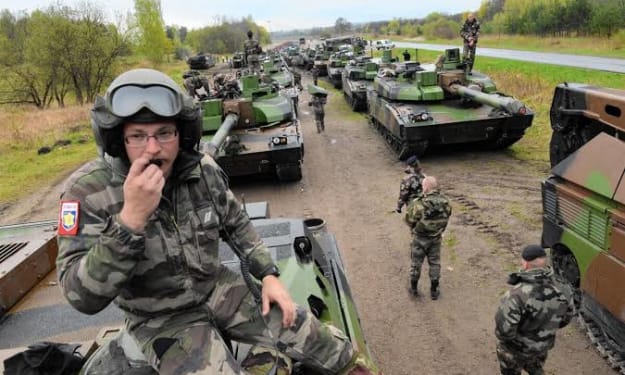
Across forests in Poland, frozen plains in the Baltics, and military bases in Germany and Romania, thousands of NATO soldiers are preparing for a scenario that until recently seemed unthinkable: a direct confrontation with Russia. Since Moscow’s invasion of Ukraine, the alliance has transformed its training programs to focus on defending Europe’s eastern flank against what it sees as a long-term and growing threat from President Vladimir Putin’s military ambitions. These exercises are no longer symbolic displays of unity. They are large-scale, realistic war games designed to test how NATO forces would respond if Russia attempted to expand the conflict beyond Ukraine. Tanks thunder across muddy fields, fighter jets practice coordinated strikes, and cyber units simulate attacks on communication networks. The message is clear: NATO is shifting from decades of crisis management to full territorial defense. A New Era of Training For years after the Cold War, NATO focused its military training on counterterrorism missions and overseas operations in places like Afghanistan and Iraq. That changed dramatically in 2022. Today, alliance planners are rebuilding skills needed for high-intensity warfare between powerful armies. In Poland, multinational battalions made up of troops from the United States, Britain, Germany, and other allies conduct joint drills near the border with Belarus. These soldiers practice rapid deployment, air defense coordination, and battlefield medicine under conditions meant to mirror real combat. Officers say the goal is to ensure that forces from different countries can fight as one unit if a crisis erupts. “This is about deterrence,” said a senior NATO commander overseeing exercises in Eastern Europe. “We want to make it absolutely clear that any attack on one ally will be met with a united and prepared response.” Learning From Ukraine Much of the training now draws lessons directly from the war in Ukraine. The widespread use of drones, electronic warfare, and long-range artillery has reshaped how soldiers prepare for combat. NATO troops are learning how to operate under constant surveillance and how to protect themselves from missile strikes and cyber disruptions. In Germany, training centers have introduced simulations that replicate urban combat similar to the battles seen in cities like Mariupol and Bakhmut. Soldiers practice moving through destroyed buildings, evacuating civilians, and coordinating with intelligence units that track enemy movements in real time. The emphasis is also on logistics. Ukraine’s war has shown that supply lines can determine the outcome of battles. NATO forces are now rehearsing how to move fuel, ammunition, and medical supplies quickly across borders, overcoming bureaucratic and infrastructure obstacles that once slowed deployments. Expanding the Eastern Front Since Russia’s invasion, NATO has increased its troop presence in Eastern Europe from about 40,000 to more than 100,000 at peak readiness. New battlegroups have been established in countries such as Slovakia, Hungary, Bulgaria, and Romania, in addition to existing deployments in the Baltic states and Poland. These units are not only defensive but also symbolic. They demonstrate that an attack on any one of these countries would immediately involve multiple NATO members. For soldiers from smaller nations, training alongside major military powers provides reassurance that they are not alone. A Lithuanian officer participating in joint exercises said the cooperation has transformed the region’s security outlook. “We used to worry about how fast help would arrive,” he said. “Now help is already here.” Psychological Readiness Beyond weapons and tactics, NATO is also focusing on the mental preparedness of its soldiers. The possibility of conflict with Russia carries enormous political and emotional weight. Commanders say troops must be ready for a long-term standoff, not just a short deployment. Many soldiers speak openly about the seriousness of their mission. A British infantryman stationed in Estonia said the training feels different from previous exercises. “You know this isn’t theoretical,” he said. “You’re training for something that could actually happen.” NATO has also increased cooperation with civilian authorities, rehearsing responses to hybrid threats such as sabotage, disinformation campaigns, and attacks on critical infrastructure like power grids and railways. Russia Watches Closely Moscow has repeatedly condemned NATO’s military buildup near its borders, calling it provocative and dangerous. Russian officials argue that the alliance’s expansion and exercises are proof that the West is preparing for confrontation. NATO leaders reject that accusation, insisting their actions are purely defensive. They point out that Russia’s invasion of Ukraine forced the alliance to reconsider its posture. Finland and Sweden’s decision to join NATO further underlines how security calculations across Europe have shifted. Military analysts warn that this new phase of deterrence carries risks. Large-scale exercises and troop movements increase the chances of misunderstandings or accidents. That makes communication channels between NATO and Russia more important than ever, even as political relations remain deeply strained. Preparing for the Long Term NATO’s training programs are expected to continue expanding in the coming years. Member states are increasing defense budgets and investing in modern equipment, including missile defense systems, advanced aircraft, and cyber capabilities. The alliance is also developing new response plans for different types of threats, from conventional invasions to cyberattacks and space-based warfare. For the soldiers on the ground, the focus remains practical: be ready, work together, and deter aggression before it starts. Exercises may end after a few weeks, but the message they send is constant. As one NATO general put it, “We train so we never have to fight. But if we must fight, we will not be unprepared.” The soldiers training across Europe today represent a continent reshaping its defenses for an uncertain future. Whether their presence prevents conflict or merely postpones it remains unknown. What is certain is that NATO is signaling its determination to defend every inch of its territory against any challenge from Moscow — and to ensure that the lessons of Ukraine are not ignored.
By Fiaz Ahmed about a month ago in The Swamp
Henrique Capriles, Venezuelan Opposition Leader: What Comes Next for Venezuela?. AI-Generated.
Henrique Capriles Radonski, one of Venezuela’s most enduring opposition figures, stands at a crossroads as the country enters an unpredictable new chapter in its political life. Decades after rising to prominence as a challenger to Hugo Chávez and Nicolás Maduro, Capriles’s role is shifting in response to seismic developments — including the arrest of Maduro, the emergence of controversial amnesty laws, and ongoing fractures within the broader opposition movement. Capriles has long been a central voice in Venezuela’s struggle for democratic governance, even as the political landscape has fractured and shifted around him. Born in Caracas in 1972, Capriles entered politics in the 1990s and quickly rose through the ranks, becoming a member of Venezuela’s Congress and later governor of Miranda state. He gained national visibility in 2012 when he ran as the unified opposition candidate against President Hugo Chávez in a landmark election. Chávez won with about 55 percent of the vote, but Capriles’s challenge marked a significant moment in the country’s political polarization. Encyclopedia Britannica A Shift from Presidency to Legislative Politics Capriles later challenged Nicolás Maduro in the 2013 presidential election following Chávez’s death. The result was extremely close — Maduro was declared the winner with just over 50 percent of the vote, while Capriles secured nearly 49 percent. Capriles rejected the results and called for full recounts, alleging irregularities. Encyclopedia Britannica For many years, Capriles remained one of the most prominent opposition voices, advocating democratic reforms and criticizing what he described as authoritarian tendencies in the Maduro government. At times, he diverged from other opposition leaders, rejecting abstentionist strategies and arguing instead for active participation in elections as a means of challenging the ruling Socialist Party’s grip on power. Peoples Dispatch In 2025, Capriles regained his political eligibility after years of being barred from office — a ban that had prevented him from running for public office — and entered the National Assembly elections. Running under the banner of a new political grouping, Unión y Cambio (UNICA), Capriles was elected as a deputy, giving him a renewed platform within Venezuela’s legislative framework. Opposition Reconfiguration and Internal Strains Capriles’s political choices have sometimes placed him at odds with larger blocs of the opposition. In 2025, he was expelled from the opposition party Primero Justicia alongside other leaders who chose to contest elections rather than following calls to boycott them as part of an abstentionist strategy. This rupture underscored deeper divisions within the opposition about how best to confront the Maduro regime. The opposition landscape has also been shaped by the rise of other figures such as María Corina Machado, whose hardline stance and international profile have at times diverged from Capriles’s more institutional approach. El País reported in early 2026 that Capriles and Machado represent rival leadership currents within the opposition as various voices emerge in a political environment that some see as more plural but also more fractious. EL PAÍS English Capriles has criticized strategies that dismiss electoral participation, stressing that abstention — or refusing to contest contested processes — ultimately weakens the opposition’s influence and cedes ground to the ruling party. This reflects his longstanding belief that democracy must be defended not only in the streets but also through electoral and legal channels. Peoples Dispatch Maduro’s Arrest and the Political Shockwave The context for Capriles’s political next steps has been fundamentally altered by extraordinary events. In early 2026, former Venezuelan President Nicolás Maduro was captured by U.S. federal authorities on narcoterrorism and drug trafficking charges, creating a political vacuum in a country long dominated by the Maduro administration. This has triggered a turbulent transitional period, with acting President Delcy Rodríguez and the National Assembly pushing forward legislative changes including an expansive amnesty law aimed at releasing political prisoners — a move that could reshape political participation and reintegration for many opposition figures. Capriles has publicly advocated for fundamental conditions for any political transition, including the release of all political prisoners and clear guarantees for free and fair elections. In video statements to the press and social media, he has stressed that a credible transition must begin with restoring basic civil liberties and dismantling systems of repression before electoral contests can be meaningful. YouTube Amnesty, Reconciliation, and Political Calculus The amnesty bill proposed by Rodríguez and advancing through the legislature could benefit many imprisoned opposition leaders and activists, but critics warn that without clear guarantees and transparency, it could also be used to shape political allegiances or shield serious abuses from accountability. Human rights groups have cautiously welcomed parts of the law as a step toward reconciliation while underscoring the need for justice and rule of law. Financial Times Capriles’s position in this evolving context is nuanced. He supports measures that genuinely promote democratic participation and protect Venezuelans’ political freedoms, yet he remains wary of superficial reforms that fail to address systemic issues. This places him in a potential kingmaker role as the opposition negotiates unity, strategy, and objectives in the face of ongoing political flux. What Comes Next for Venezuela? Looking ahead, Venezuela’s trajectory will likely be shaped by several converging dynamics: Reconfiguration of Opposition Forces: Capriles and other leaders face the challenge of uniting a fragmented opposition behind a coherent strategy, balancing participation in electoral politics with demands for democratic guarantees and accountability. Transition Politics Post-Maduro: With Maduro detained and an amnesty package unfolding, the country may enter a transitional phase that could open space for new political actors but also create uncertainty about institutional legitimacy and power sharing. International Influence and Oversight: The involvement of international bodies — from the International Criminal Court’s expanded presence in Caracas to ongoing external diplomatic pressure — adds layers of complexity to domestic politics and could shape the pace and nature of political change. infobae Public Confidence and Economic Realities: Beyond politics, Venezuela grapples with profound economic and social challenges. Any meaningful political shift will need to address people’s urgent needs while rebuilding trust between citizens and institutions. Capriles’s future role will depend on his ability to navigate these fault lines — bridging divides within the opposition, anchoring democratic demands, and articulating a vision that resonates beyond narrow partisan bases. Whether he emerges as a unifying elder statesman, a pragmatic legislator, or a polarizing figure remains to be seen, but his influence on Venezuela’s path forward remains undeniable.
By Fiaz Ahmed about a month ago in The Swamp
What Trump’s Plans for the Arctic Mean for the Global Climate Crisis. AI-Generated.
Former U.S. President Donald Trump’s renewed focus on the Arctic has revived debate over one of the world’s most fragile and strategically important regions. His proposals to expand oil and gas drilling, strengthen military presence, and assert American influence in the far north have significant implications not only for U.S. policy but for the global climate crisis. The Arctic is warming nearly four times faster than the rest of the planet, according to scientific studies. Melting ice caps, thawing permafrost, and shrinking glaciers are already transforming ecosystems and indigenous livelihoods. Any decision to intensify industrial activity in the region risks accelerating these changes and undermining international efforts to limit global warming. Energy Expansion vs Climate Commitments Trump has long argued that the Arctic represents an untapped source of economic growth and energy independence. During his presidency, his administration opened large portions of Alaska’s Arctic National Wildlife Refuge (ANWR) and other federal lands to oil and gas exploration. He framed these moves as a way to reduce reliance on foreign energy and create jobs. Critics say this approach ignores the broader climate consequences. Extracting and burning Arctic fossil fuels would add millions of tons of carbon dioxide to the atmosphere. Environmental groups argue that expanding drilling in one of the most climate-sensitive regions of the world sends the wrong signal at a time when nations are trying to transition to renewable energy. Climate scientists warn that Arctic development carries higher risks than drilling elsewhere. Oil spills are harder to clean in icy waters, and infrastructure built on melting permafrost is more likely to fail. These hazards increase the chance of long-term environmental damage. Strategic and Geopolitical Stakes Trump’s Arctic ambitions are not limited to energy. The region is becoming a new arena of geopolitical competition as melting ice opens shipping routes and access to natural resources. Russia and China have invested heavily in Arctic infrastructure, ports, and military bases. Trump repeatedly emphasized the need for the U.S. to counter these moves. His administration sought to expand the U.S. Coast Guard fleet of icebreakers and increase military readiness in Alaska and the Arctic Ocean. Supporters argue this is necessary to protect national security and maintain freedom of navigation. However, environmental advocates worry that militarization could further disrupt fragile ecosystems and divert attention from climate cooperation. The Arctic Council, an international forum that includes the U.S., Russia, Canada, and Nordic countries, was created to promote scientific collaboration and environmental protection. Trump’s more confrontational stance raised concerns that climate diplomacy in the Arctic could be sidelined by strategic rivalry. Impact on Indigenous Communities Indigenous peoples living in the Arctic, including Alaska Native communities, are among the first to experience the consequences of warming temperatures. Coastal erosion, collapsing ice roads, and declining wildlife populations threaten traditional hunting and fishing practices. Some local leaders support limited development for economic reasons, including job creation and infrastructure investment. Others strongly oppose drilling, arguing it puts their culture and environment at risk. Trump’s plans have intensified these divisions, with critics saying decisions were often made without sufficient consultation with affected communities. Human rights groups note that indigenous voices are frequently marginalized in national debates about Arctic policy. They argue that sustainable development and climate adaptation should take priority over short-term resource extraction. Global Climate Consequences What happens in the Arctic does not stay in the Arctic. The region plays a critical role in regulating the Earth’s climate. Sea ice reflects sunlight back into space; when it melts, darker ocean water absorbs more heat, accelerating warming in a process known as the albedo effect. Thawing permafrost also releases methane, a greenhouse gas far more potent than carbon dioxide in the short term. Scientists warn that large-scale Arctic industrial activity could trigger feedback loops that make it much harder to meet global climate targets set under agreements like the Paris Accord. Trump withdrew the U.S. from the Paris Agreement during his presidency, arguing it unfairly restricted American industry. Although the U.S. later rejoined under President Joe Biden, Trump has signaled skepticism toward international climate commitments, raising fears that Arctic policy could once again shift toward aggressive exploitation if he returns to power. A Dividing Line in Climate Politics Trump’s Arctic vision reflects a broader divide in global climate politics: economic growth versus environmental protection. Supporters say America should use its natural resources to strengthen its economy and security. Opponents counter that the climate crisis demands restraint, innovation, and a move away from fossil fuels altogether. European nations and environmental organizations have called for the Arctic to be treated as a protected zone rather than a new frontier for extraction. Some have proposed moratoriums on Arctic drilling, citing the region’s vulnerability and global importance. Conclusion Trump’s plans for the Arctic carry consequences far beyond U.S. borders. They affect not only energy markets and geopolitics but also the future of the global climate system. As ice continues to melt and competition intensifies, the choices made by major powers will shape whether the Arctic becomes a symbol of cooperation and conservation or a battleground for resources. The debate underscores a central question of the climate era: will the world prioritize short-term economic gains, or recognize that protecting the Arctic is essential to protecting the planet itself?
By Fiaz Ahmed about a month ago in The Swamp
US Expresses Solidarity After Balochistan Attacks, Says It Stands ‘Steadfast’ With Pakistan. AI-Generated.
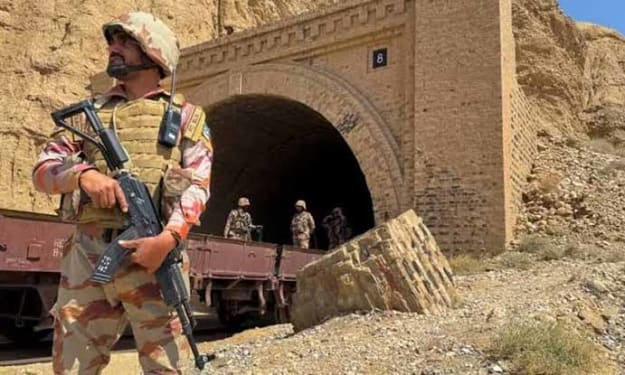
The United States has expressed strong solidarity with Pakistan following a series of deadly attacks in the southwestern province of Balochistan, reaffirming its commitment to stand “steadfast” with the country in its fight against terrorism and violent extremism. The statement comes amid heightened security concerns after coordinated assaults targeted civilians and security personnel, drawing widespread condemnation from the international community. In an official statement released by the US State Department, Washington conveyed its condolences to the families of the victims and emphasized its continued partnership with Pakistan to counter militant threats. “The United States stands steadfast with Pakistan and the Pakistani people during this difficult time,” the statement said, adding that acts of violence against innocent civilians are “unacceptable and must be confronted collectively.” Deadly Attacks in Balochistan The attacks occurred in multiple districts of Balochistan, a province that has long struggled with insurgency, separatist movements, and militant activity. According to Pakistani authorities, gunmen and suicide attackers targeted security checkpoints and public areas, killing several people and injuring dozens more. Emergency services were rushed to the scenes, while hospitals in nearby cities were placed on high alert. Security forces launched search operations to track down those responsible, sealing off affected areas and increasing patrols across major towns. Officials described the attacks as a deliberate attempt to destabilize the region and undermine development projects underway in the province. Balochistan, Pakistan’s largest province by area but least populated, has been at the center of security challenges for years. It is also a strategic region due to its mineral resources and its location along the Arabian Sea, including the Gwadar port, which is a key part of the China-Pakistan Economic Corridor (CPEC). International Condemnation The US response was among several messages of support from foreign governments and international organizations. American officials reiterated their opposition to terrorism in all its forms and stressed the importance of regional cooperation to prevent such attacks from recurring. A senior US official said Washington remains committed to working closely with Pakistan’s law enforcement and intelligence agencies. “We recognize the sacrifices Pakistan has made in combating terrorism, and we will continue to support efforts that promote peace and stability,” the official noted. The US embassy in Islamabad also issued a message of sympathy, expressing condolences to the victims’ families and wishing a swift recovery to those injured. It highlighted the long-standing security cooperation between the two countries, including joint counterterrorism initiatives and training programs. Pakistan’s Response Pakistan’s leadership strongly condemned the attacks, calling them an assault on national unity and public safety. The Prime Minister vowed that those responsible would be brought to justice and reaffirmed the government’s resolve to eliminate terrorism from the country. In a televised address, he said the violence would not deter Pakistan from pursuing economic development and regional connectivity. “Our enemies want to spread fear and chaos, but they will fail,” he stated. “The nation stands united with our security forces.” The Interior Ministry announced stricter security measures in sensitive districts of Balochistan, including increased checkpoints, intelligence-based operations, and coordination with provincial authorities. Officials also urged citizens to remain vigilant and report suspicious activity. Strategic Importance of Balochistan Analysts note that Balochistan’s security situation has broader regional implications. The province borders Iran and Afghanistan, making it vulnerable to cross-border militant movements and smuggling networks. Instability in the area also affects key infrastructure and investment projects, which are vital for Pakistan’s economic growth. The US statement of solidarity is seen as part of a broader effort to maintain stability in South Asia and prevent extremist groups from exploiting regional tensions. Washington has repeatedly emphasized that a secure and prosperous Pakistan is essential for peace in the wider region. Some observers say the renewed diplomatic support may also signal an attempt to strengthen bilateral relations after years of fluctuating ties. While cooperation between the two countries has faced challenges in the past, counterterrorism remains a shared priority. Human Cost and Community Impact Beyond the political and strategic implications, the attacks have left deep scars on local communities. Families mourned their loved ones as funeral prayers were held under heavy security. Survivors described scenes of chaos and fear, with many calling for stronger protection and justice. Human rights organizations have urged authorities to ensure that counterterrorism operations respect the rule of law and protect civilian lives. They stressed the importance of addressing not only security concerns but also the underlying social and economic grievances that fuel unrest in the province. Looking Ahead The US pledge to stand “steadfast” with Pakistan underscores the continued importance of international cooperation in addressing terrorism. Both countries have signaled that dialogue, intelligence sharing, and joint efforts will remain central to preventing future attacks. As Pakistan continues its operations in Balochistan, officials say they are determined to restore calm and ensure that development projects can proceed without disruption. For Washington, the latest statement reflects a recognition that long-term stability in Pakistan is closely linked to global security. While the investigations into the attacks continue, the message from both Islamabad and Washington is clear: violence will not be allowed to derail efforts toward peace, and those responsible will face justice.
By Fiaz Ahmed about a month ago in The Swamp
US Navy Fires Commander Due to Loss of Confidence. AI-Generated.
The United States Navy has removed a senior commander from duty, citing a “loss of confidence” in their ability to lead, a phrase commonly used by the military to describe serious concerns over performance or conduct. The decision highlights the Navy’s strict standards of leadership and accountability, particularly at a time of heightened global security challenges and operational demands. In a brief statement, Navy officials confirmed that the commander was relieved of duty following an internal review. While specific details were not immediately disclosed, the Navy emphasized that the action was taken to maintain good order and discipline within the force. “Commanders are held to the highest standards of responsibility, professionalism, and integrity,” the statement said. “When those standards are not met, decisive action is required.” Meaning of “Loss of Confidence” In military terminology, being removed for “loss of confidence” does not necessarily imply criminal wrongdoing. It can result from a range of issues, including leadership failures, poor judgment, operational mistakes, or behavior that undermines trust within the unit. The phrase allows the service to protect privacy while signaling that the individual can no longer effectively command. Defense analysts note that such removals, while not uncommon, are significant because command positions carry immense authority and responsibility. A commander is expected to ensure mission readiness, safeguard personnel, and uphold the Navy’s core values. The Navy did not release the commander’s name in initial statements, citing personnel privacy rules. An acting commander has been appointed to ensure continuity of operations, and the unit will continue its mission without disruption, officials said. Context of the Decision The firing comes at a time when the US Navy is facing increased operational pressures in multiple regions, including the Indo-Pacific, the Middle East, and Europe. Maintaining discipline and effective leadership is seen as essential as the service responds to rising tensions with rival powers and ongoing conflicts around the world. Sources familiar with the matter said the decision followed an investigation into issues related to command climate and leadership performance. While not classified, the findings reportedly raised concerns significant enough to justify removal. Military officials stressed that the move reflects the Navy’s commitment to accountability, regardless of rank. “No one is above the standards we set for leadership,” one senior official said on condition of anonymity. Impact on the Unit The affected unit, whose identity has not been fully disclosed, plays a key role in naval operations and training. The Navy said there is no immediate impact on readiness or mission execution. Sailors under the commander’s authority were informed of the decision through internal channels, and leadership transition procedures were implemented swiftly. For service members, such a change can be unsettling, but Navy leadership emphasized stability and continuity. Counseling and support services were made available to personnel who may be affected by the sudden shift in command. An acting commander with extensive experience has taken over, and a permanent replacement is expected to be announced following a formal selection process. Broader Pattern in the Military Relief of commanders for loss of confidence has occurred across all branches of the US military in recent years. The Department of Defense has increasingly emphasized ethical leadership, professional conduct, and respect in command environments. Recent cases have involved issues ranging from inappropriate relationships and misuse of resources to failures in operational judgment. In many instances, investigations reveal not a single event but a pattern of decisions that erode trust within a unit. Experts say this reflects a broader cultural shift toward transparency and accountability in the armed forces. “The military understands that leadership failures can have serious consequences for morale and mission success,” said a former Navy officer turned defense analyst. “Removing a commander is never taken lightly, but it sends a clear message about expectations.” Legal and Career Consequences Being relieved of command can have long-term consequences for an officer’s career. While not all cases result in disciplinary action or court-martial, removal often ends prospects for promotion and may lead to early retirement or reassignment to a non-command role. The Navy has not indicated whether further administrative or legal steps will follow in this case. Officials said the matter is being handled in accordance with established military procedures. Under Navy regulations, officers who are relieved of duty may be subject to performance evaluations and additional review by senior leadership. Depending on the findings, outcomes can range from counseling and retraining to formal disciplinary measures. Public and Political Reaction The announcement drew attention from defense watchers and lawmakers, who have increasingly scrutinized leadership standards in the armed forces. Some members of Congress have called for greater transparency in cases involving senior officers, particularly when public trust is at stake. However, military leaders argue that privacy protections and due process must be balanced with the public’s right to know. “We have to ensure fairness to the individual while maintaining confidence in the institution,” a Pentagon spokesperson said. Looking Ahead The Navy said it remains focused on its core mission of protecting national security and supporting allies around the world. The removal of the commander, officials stressed, should be seen as part of ongoing efforts to uphold discipline and professionalism. “This action demonstrates that leadership matters,” the Navy statement concluded. “Our sailors deserve commanders who embody our values and are fully capable of leading them in challenging times.” As investigations continue and a permanent replacement is appointed, the incident serves as a reminder of the high standards expected of those entrusted with command in the US military. While such decisions can be disruptive, they are also viewed as necessary to preserve the integrity and effectiveness of the armed forces.
By Fiaz Ahmed about a month ago in The Swamp