
UN Human Rights Agency in ‘Survival Mode’, Chief Warns
Funding shortages and political pressure threaten global rights work Volker Türk says growing crises outpace shrinking resources UN watchdog struggles to meet rising demand amid budget cuts Rights body faces critical moment as conflicts multiply worldwide Calls mount for stable financing and stronger international support

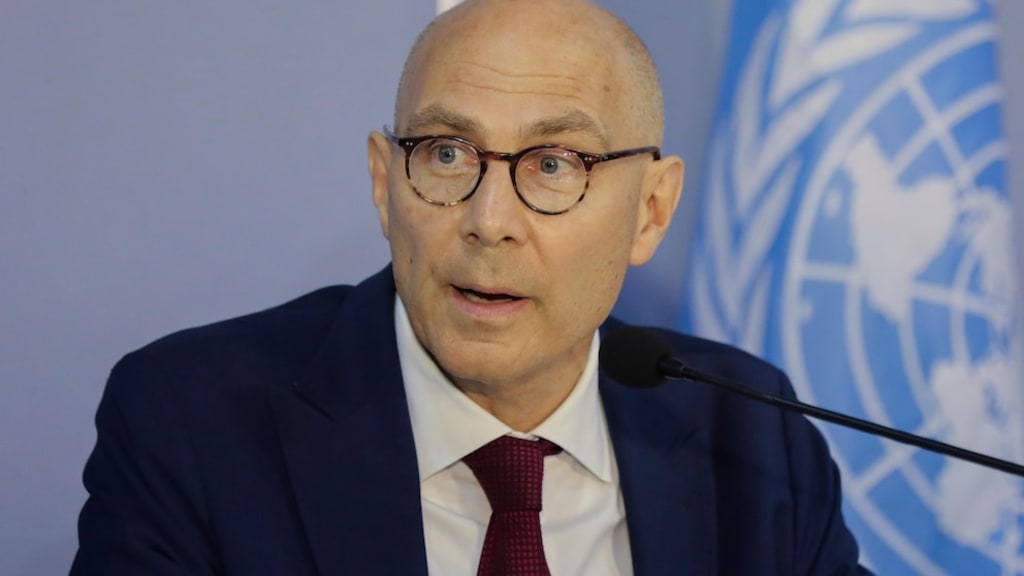
The United Nations’ top human rights body is operating in “survival mode” as financial shortfalls, political pressure, and rising global crises threaten its ability to function effectively, the agency’s chief has warned. Volker Türk, the UN High Commissioner for Human Rights, said the organization is facing one of the most difficult periods in its history as demand for its work increases while resources continue to shrink.
Speaking to diplomats and journalists in Geneva, Türk described a widening gap between the expectations placed on the UN human rights office and the funding available to meet those responsibilities. “We are being asked to do more in more places with fewer resources,” he said. “At the moment, we are in survival mode.”
Growing Demand, Shrinking Resources
The Office of the High Commissioner for Human Rights (OHCHR) monitors abuses, supports investigations into war crimes, and assists countries in strengthening their legal and judicial systems. In recent years, it has been heavily involved in documenting violations in conflict zones such as Ukraine, Gaza, Sudan, and Myanmar, while also addressing long-standing crises in Afghanistan, Syria, and parts of Africa.
Türk noted that global instability and armed conflicts have dramatically increased the need for independent human rights monitoring. Yet the agency’s core budget has not kept pace with this demand. Much of its funding relies on voluntary contributions from member states, which fluctuate depending on political priorities and economic conditions.
“This is not a sustainable model,” Türk said. “Human rights cannot depend on charity. They require stable, predictable financing if we are to protect people effectively.”
According to UN officials, the agency is currently facing a significant budget gap that could force staff reductions and limit its ability to carry out investigations and field operations. Offices in several regions are already operating with minimal personnel, reducing their capacity to respond quickly to emerging crises.
Political Pressure and Criticism
Beyond financial challenges, the UN human rights agency is also under increasing political pressure from governments that object to its scrutiny. Some states have accused the office of bias, interference in internal affairs, or exceeding its mandate.
Türk acknowledged that criticism is part of the job but warned that attacks on the agency’s legitimacy threaten the broader international human rights system. “When the messenger is weakened, the message itself is weakened,” he said.
Several countries have pushed back against reports documenting alleged abuses, particularly in situations involving powerful governments or sensitive conflicts. Diplomats say that disagreements over human rights have become more polarized, making it harder for the UN to build consensus and secure cooperation.
Human rights groups argue that political resistance is one of the main reasons the agency’s work is so essential. “The fact that governments are uncomfortable is proof that the office is doing what it is supposed to do,” said a representative of an international rights organization. “Without it, victims would have no voice on the global stage.”
Impact on Field Operations
The financial and political strain is already affecting operations on the ground. UN human rights officers in conflict zones often work under dangerous conditions, documenting killings, forced displacement, and violations of international law. Reduced funding could mean fewer investigators, delayed reports, and less support for victims seeking justice.
Türk warned that cuts would also undermine early warning systems designed to prevent atrocities before they escalate. “Prevention is far less costly than responding after mass violence has occurred,” he said. “But prevention requires investment.”
In addition to conflict monitoring, the agency provides technical assistance to countries seeking to reform laws, improve prison conditions, and strengthen protections for women and minorities. These long-term projects are among the first to suffer when budgets tighten, despite their importance in addressing root causes of abuse.
A System Under Strain
The warning comes at a time when the entire UN system is under financial stress. Several agencies have reported funding shortfalls as donor countries face domestic economic pressures and competing global priorities, including climate change and humanitarian aid.
The UN Secretary-General has repeatedly urged member states to increase support for human rights work, calling it one of the three pillars of the organization alongside peace and security and development. Yet human rights spending remains a small fraction of the overall UN budget.
Türk emphasized that protecting human rights is not optional but central to preventing conflict and maintaining global stability. “If we allow this system to weaken, the consequences will be felt far beyond Geneva,” he said.
Calls for Reform and Support
To address the crisis, Türk has called for reforms to ensure more reliable funding, including increasing the share of the UN’s regular budget allocated to human rights. He also urged governments to resist politicizing the agency’s work and to respect its independence.
Some diplomats have expressed support for these proposals, but progress has been slow. Negotiations over UN budgets are often contentious, with countries divided over priorities and spending levels.
Civil society groups have launched campaigns urging governments to step up contributions and defend the agency from political attacks. “This is a moment of truth,” said one activist. “Either states invest in the protection of human dignity, or they accept a world where abuses go unchecked.”
A Critical Juncture
Türk concluded his remarks with a stark warning about the future of the global human rights system. “We are at a crossroads,” he said. “If the international community does not act now, we risk losing one of the most important mechanisms we have to uphold universal values.”
As conflicts multiply and authoritarianism rises in many parts of the world, the role of the UN human rights agency has never been more crucial—or more fragile. Whether governments will respond to its plea for support may determine not only the agency’s survival but also the credibility of the international commitment to human rights itself.
For victims of abuse and repression, the stakes could not be higher. The question now is whether the world’s nations will choose to strengthen the system designed to protect them, or allow it to erode under pressure.
About the Creator
Fiaz Ahmed
I am Fiaz Ahmed. I am a passionate writer. I love covering trending topics and breaking news. With a sharp eye for what’s happening around the world, and crafts timely and engaging stories that keep readers informed and updated.
Keep reading
More stories from Fiaz Ahmed and writers in The Swamp and other communities.
The NATO Soldiers Training to Defend Europe Against Putin
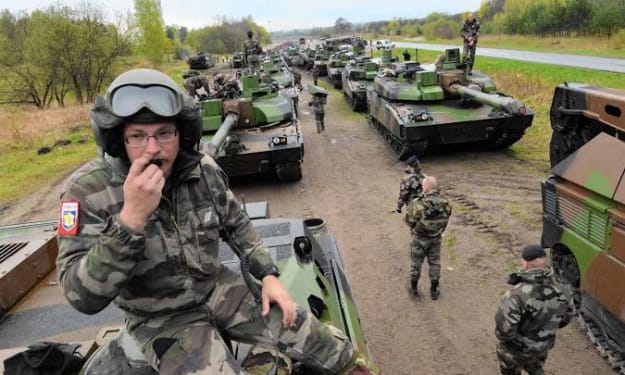
Across forests in Poland, frozen plains in the Baltics, and military bases in Germany and Romania, thousands of NATO soldiers are preparing for a scenario that until recently seemed unthinkable: a direct confrontation with Russia. Since Moscow’s invasion of Ukraine, the alliance has transformed its training programs to focus on defending Europe’s eastern flank against what it sees as a long-term and growing threat from President Vladimir Putin’s military ambitions. These exercises are no longer symbolic displays of unity. They are large-scale, realistic war games designed to test how NATO forces would respond if Russia attempted to expand the conflict beyond Ukraine. Tanks thunder across muddy fields, fighter jets practice coordinated strikes, and cyber units simulate attacks on communication networks. The message is clear: NATO is shifting from decades of crisis management to full territorial defense. A New Era of Training For years after the Cold War, NATO focused its military training on counterterrorism missions and overseas operations in places like Afghanistan and Iraq. That changed dramatically in 2022. Today, alliance planners are rebuilding skills needed for high-intensity warfare between powerful armies. In Poland, multinational battalions made up of troops from the United States, Britain, Germany, and other allies conduct joint drills near the border with Belarus. These soldiers practice rapid deployment, air defense coordination, and battlefield medicine under conditions meant to mirror real combat. Officers say the goal is to ensure that forces from different countries can fight as one unit if a crisis erupts. “This is about deterrence,” said a senior NATO commander overseeing exercises in Eastern Europe. “We want to make it absolutely clear that any attack on one ally will be met with a united and prepared response.” Learning From Ukraine Much of the training now draws lessons directly from the war in Ukraine. The widespread use of drones, electronic warfare, and long-range artillery has reshaped how soldiers prepare for combat. NATO troops are learning how to operate under constant surveillance and how to protect themselves from missile strikes and cyber disruptions. In Germany, training centers have introduced simulations that replicate urban combat similar to the battles seen in cities like Mariupol and Bakhmut. Soldiers practice moving through destroyed buildings, evacuating civilians, and coordinating with intelligence units that track enemy movements in real time. The emphasis is also on logistics. Ukraine’s war has shown that supply lines can determine the outcome of battles. NATO forces are now rehearsing how to move fuel, ammunition, and medical supplies quickly across borders, overcoming bureaucratic and infrastructure obstacles that once slowed deployments. Expanding the Eastern Front Since Russia’s invasion, NATO has increased its troop presence in Eastern Europe from about 40,000 to more than 100,000 at peak readiness. New battlegroups have been established in countries such as Slovakia, Hungary, Bulgaria, and Romania, in addition to existing deployments in the Baltic states and Poland. These units are not only defensive but also symbolic. They demonstrate that an attack on any one of these countries would immediately involve multiple NATO members. For soldiers from smaller nations, training alongside major military powers provides reassurance that they are not alone. A Lithuanian officer participating in joint exercises said the cooperation has transformed the region’s security outlook. “We used to worry about how fast help would arrive,” he said. “Now help is already here.” Psychological Readiness Beyond weapons and tactics, NATO is also focusing on the mental preparedness of its soldiers. The possibility of conflict with Russia carries enormous political and emotional weight. Commanders say troops must be ready for a long-term standoff, not just a short deployment. Many soldiers speak openly about the seriousness of their mission. A British infantryman stationed in Estonia said the training feels different from previous exercises. “You know this isn’t theoretical,” he said. “You’re training for something that could actually happen.” NATO has also increased cooperation with civilian authorities, rehearsing responses to hybrid threats such as sabotage, disinformation campaigns, and attacks on critical infrastructure like power grids and railways. Russia Watches Closely Moscow has repeatedly condemned NATO’s military buildup near its borders, calling it provocative and dangerous. Russian officials argue that the alliance’s expansion and exercises are proof that the West is preparing for confrontation. NATO leaders reject that accusation, insisting their actions are purely defensive. They point out that Russia’s invasion of Ukraine forced the alliance to reconsider its posture. Finland and Sweden’s decision to join NATO further underlines how security calculations across Europe have shifted. Military analysts warn that this new phase of deterrence carries risks. Large-scale exercises and troop movements increase the chances of misunderstandings or accidents. That makes communication channels between NATO and Russia more important than ever, even as political relations remain deeply strained. Preparing for the Long Term NATO’s training programs are expected to continue expanding in the coming years. Member states are increasing defense budgets and investing in modern equipment, including missile defense systems, advanced aircraft, and cyber capabilities. The alliance is also developing new response plans for different types of threats, from conventional invasions to cyberattacks and space-based warfare. For the soldiers on the ground, the focus remains practical: be ready, work together, and deter aggression before it starts. Exercises may end after a few weeks, but the message they send is constant. As one NATO general put it, “We train so we never have to fight. But if we must fight, we will not be unprepared.” The soldiers training across Europe today represent a continent reshaping its defenses for an uncertain future. Whether their presence prevents conflict or merely postpones it remains unknown. What is certain is that NATO is signaling its determination to defend every inch of its territory against any challenge from Moscow — and to ensure that the lessons of Ukraine are not ignored.
By Fiaz Ahmed 2 days ago in The Swamp
Why Black History Matters in America?
The United States of America is celebrating their 250th anniversary in 2026. I'm proud to be an American and as someone who was born here, I wouldn't imagine myself living anywhere else. This is a country where opportunities are possible. Where anyone can be successful in anything they desire to do. Equality, community, and togetherness are the backbones of what America is and should be about. However, we have an administration who wants to erase and disregard those who have made positive, meaningful impacts in our country, specifically Black figures, such as Martin Luther King, Jr., Rosa Parks, and Maya Angelou. President Trump and his administration have been constantly complaining and fighting against what they call the "Woke agenda". They use this excuse as a distraction from other issues they refuse to address, such as the high cost of living, climate change, and inflation. That equality is dividing America, when in reality, it's bringing us together. Being woke is not tied to a specific political party. No matter where you stand on the political spectrum, you can still care about other people and their plights. Compassion and empathy for others isn't tied to a political party, either. We were taught as children to treat others the way we want to be treated and not judge others because they're different from us. Caring about others isn't a personal attack on your beliefs. It doesn't make you any less of a person. People who are easily offended over African American figures, past or present, or anything related to it, are grasping at straws. Current and future generations need to know who people like Harriet Tubman and Shirley Chisholm were, especially in the classroom. Black History is part of American History. It should be recognized, not hidden or forgotten. Besides, you can't shield children from everything, just because your feelings are easily hurt.
By Mark Wesley Pritchard 6 days ago in The Swamp
Trump Announces India-US Trade Deal ‘Effective Immediately’ With Reduced Tariff Plans
newly announced trade agreement between the United States and India, described as “effective immediately,” has sparked global attention as it promises reduced tariffs and expanded economic cooperation between two of the world’s largest economies. The announcement, attributed to former U.S. President Donald Trump, suggests a renewed focus on strengthening trade partnerships, improving supply chains, and boosting bilateral economic growth.
By Aarif Lashari6 days ago in The Swamp
The Angry Man in Your House
"If you grow up with an angry man in your house, there will always be an angry man in your house" This statement has caused plenty of controversy online, people say its a statement that blames victims while also undermining those who break traumatic cycles to form health relationships... but if I'm honest now that I'm in my 30s it makes more sense to me than ever, and I'd argue that its not just about fathers and uncles.
By S. A. Crawfordabout 23 hours ago in Humans



Comments
There are no comments for this story
Be the first to respond and start the conversation.