Fiaz Ahmed Brohi
Bio
I am a passionate writer with a love for exploring and creating content on trending topics. Always curious, always sharing stories that engage and inspire.
Stories (633)
Filter by community
How Social Media Is Rewiring the Teenage Brain. AI-Generated.
In the last decade, social media has evolved from a simple tool for communication into an immersive ecosystem shaping how we think, feel, and interact. Among the most vulnerable to these changes are teenagers. The adolescent brain, still in its developmental phase, is especially susceptible to the effects of constant connectivity, curated content, and digital validation. Emerging research suggests that social media is not just influencing teenage behavior—it is literally rewiring their brains. The Brain in Adolescence Teenagers undergo profound neurological changes, particularly in the prefrontal cortex, which governs decision-making, impulse control, and planning. At the same time, the limbic system, responsible for emotions and reward processing, is highly active. This imbalance makes teens more prone to risk-taking, peer influence, and emotional volatility. Social media, with its instant feedback loops of likes, comments, and shares, exploits these natural developmental tendencies. Reward Systems and Dopamine Every notification, heart, or comment triggers a release of dopamine—a neurotransmitter associated with pleasure and reward. In the offline world, rewards are typically delayed or earned through effort, but social media delivers instant gratification. Over time, this creates a pattern where teens begin to seek validation from digital platforms rather than internal motivation or real-life achievements. Neuroscientists warn that this constant activation of reward pathways can make adolescents more impulsive and reduce attention spans. The Attention Economy Social media platforms are designed to capture attention. Infinite scrolling, autoplay videos, and algorithm-driven feeds keep users engaged for hours. For teens, whose executive functions are still developing, this can interfere with concentration and memory. Studies have found that teenagers who spend excessive time on social media often experience difficulties focusing on schoolwork, have shorter attention spans, and struggle with task persistence. Emotional Impact and Mental Health The impact of social media on teenage mental health is complex. On one hand, it offers community, self-expression, and connection. On the other, it exposes adolescents to cyberbullying, unrealistic comparisons, and social pressure. Constantly seeing idealized versions of peers’ lives can foster feelings of inadequacy, anxiety, and depression. Researchers have observed changes in brain regions linked to emotional regulation in teens who spend several hours daily on social media. The amygdala, for instance, shows heightened activity in response to perceived social threats, amplifying stress reactions. Social Skills and Empathy Another concern is the effect of social media on social cognition. Face-to-face interactions help teenagers develop empathy, read emotional cues, and understand complex social dynamics. Online interactions, often filtered through text, emojis, and memes, can limit these experiences. Teens who rely heavily on digital communication may find it harder to navigate real-world social situations, potentially impacting long-term relationship skills. Adaptive or Maladaptive? Not all changes induced by social media are negative. Platforms can enhance creativity, provide access to global perspectives, and facilitate learning communities. Some teens leverage social media for activism, skill-building, and self-expression in ways that strengthen their sense of identity and social connectedness. The key lies in moderation, mindful usage, and parental guidance. Toward Healthy Digital Habits Experts recommend several strategies to help teens navigate the social media landscape without compromising brain development. Setting daily time limits, encouraging offline hobbies, and promoting in-person social interactions can balance the benefits and risks. Open communication between parents and teens about online experiences is critical, as is educating adolescents on the impact of digital validation on their emotional and cognitive health. The Road Ahead As neuroscientists continue to study the long-term effects of social media on the teenage brain, one thing is clear: the digital environment is reshaping adolescent development in unprecedented ways. While social media can be a source of learning, community, and creativity, it also presents challenges that require careful navigation. Awareness, education, and proactive strategies can help ensure that teens benefit from the digital age without falling prey to its potential pitfalls. Social media is more than just a tool—it is a force capable of rewiring young minds. Understanding its influence is the first step toward harnessing its potential while safeguarding the next generation’s mental, emotional, and cognitive well-being.
By Fiaz Ahmed Brohi2 months ago in Longevity
The Finest in the World: Why the US is Buying Icebreakers from Finland. AI-Generated.
In a world increasingly defined by shifting geopolitical landscapes and extreme climates, the United States is turning to Finland for a fleet of icebreakers, widely regarded as the finest in the world. This strategic move underscores both the rising importance of the Arctic region and the growing need for advanced maritime technology capable of navigating the icy waters at the top of the globe. Finland’s Icebreaking Legacy Finland has long been a global leader in icebreaker technology. With harsh winters and a northern coastline that stretches into the Arctic Circle, the country has mastered the art of building vessels that can navigate through thick sea ice efficiently and safely. Finnish icebreakers are renowned not just for their raw power, but also for their precision, durability, and technological sophistication. They can cut through ice up to several meters thick, maintain stability in freezing conditions, and even support supply missions in the most remote and hostile environments. This expertise has made Finnish icebreakers a gold standard, sought after by nations that require reliable access to icy waters. While the United States has historically relied on a small fleet of icebreakers, many of these vessels are aging, and the current fleet cannot meet the increasing demands of Arctic operations. By partnering with Finland, the US is gaining access to vessels designed with decades of experience, cutting-edge engineering, and proven operational performance. Strategic Importance of the Arctic The Arctic has emerged as a region of growing strategic importance. Climate change has led to melting ice, opening new maritime routes that were previously impassable for most of the year. This has not only created opportunities for trade but also heightened the need for territorial defense, environmental monitoring, and search-and-rescue operations. The US sees its icebreaker fleet as a key asset in maintaining influence in this rapidly changing region. Having Finnish-built icebreakers allows the United States to expand its operational capabilities. These vessels can escort commercial ships through icy waters, conduct scientific research, and respond to emergencies in the Arctic. The decision to procure icebreakers from Finland is therefore as much about strategic positioning as it is about maritime capability. Technological Edge Finnish icebreakers are equipped with some of the most advanced maritime technology in the world. From hull designs that minimize ice resistance to propulsion systems that combine efficiency with immense power, these vessels are built to perform in conditions that would ground most ships. Many of them also include sophisticated navigation and communication systems, enabling crews to operate safely in regions where conventional navigation is challenging due to ice coverage and limited satellite connectivity. The US will benefit from these technologies, particularly as Arctic operations require not only strength but also precision. Whether escorting supply ships, conducting military exercises, or supporting scientific missions, Finnish icebreakers offer reliability that aging US vessels cannot match. Economic and Diplomatic Considerations Beyond technical superiority, the procurement of icebreakers from Finland also reflects broader economic and diplomatic considerations. By engaging Finnish shipbuilders, the US strengthens its ties with a country that is strategically positioned between the North Atlantic and the Arctic. This cooperation could pave the way for future partnerships in maritime technology, Arctic research, and regional security initiatives. Moreover, the deal highlights the United States’ willingness to invest in specialized, high-quality vessels rather than attempting to build everything domestically. While domestic shipbuilding has its merits, Finland’s decades of expertise provide a shortcut to operational readiness, ensuring that the US maintains a competitive edge in Arctic waters without the delays and costs associated with developing such vessels from scratch. Looking Ahead As the Arctic continues to transform, the importance of icebreakers will only increase. With Finland’s cutting-edge technology at their disposal, the United States is positioning itself to navigate both the literal and geopolitical ice of the north. These vessels are more than ships; they are symbols of preparedness, technological prowess, and strategic foresight. In a region where every meter of ice matters and every decision has global ramifications, having the finest icebreakers in the world is no longer a luxury—it is a necessity. By looking to Finland, the US is ensuring that it remains capable, competitive, and ready for the challenges and opportunities of the Arctic.
By Fiaz Ahmed Brohi2 months ago in The Swamp
Which City Is Called the Queen of the Arabian Sea: Discover Its History, Trade Legacy, and Multicultural Heritage. AI-Generated.
The “Queen of the Arabian Sea” is a title that evokes images of bustling harbors, golden sunsets over tranquil waters, and centuries of cultural exchange. This title belongs to Mumbai, India’s financial capital and one of the most iconic cities on the western coast of the country. From its strategic location on the Arabian Sea to its rich history and vibrant multicultural society, Mumbai’s story is as fascinating as it is complex.
By Fiaz Ahmed Brohi2 months ago in Longevity
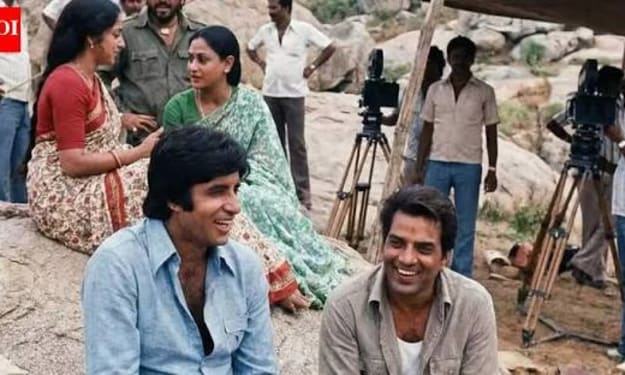
Amitabh Bachchan, Dharmendra, Shah Rukh Khan: Rare Unseen Career Pictures of Bollywood Legends That Tell Stories Beyond the Screen. AI-Generated.
Bollywood has always been more than just films; it is a universe of stories, emotions, and legacies that span generations. While the silver screen has immortalized icons like Amitabh Bachchan, Dharmendra, and Shah Rukh Khan, there exists a lesser-known archive of rare, unseen pictures that provide a glimpse into the lives behind the legendary faces. These images tell stories of ambition, struggle, and moments of joy that the cameras of the world often missed. Amitabh Bachchan: The Making of a Legend Amitabh Bachchan, widely known as the ‘Shahenshah’ of Bollywood, has been a towering figure in Indian cinema for over five decades. Fans worldwide remember him as the intense, brooding protagonist of the 1970s and 80s, but rarely do we see the young man behind the fame. A black-and-white photograph from 1969 captures Amitabh sitting pensively outside Filmistan Studios, script in hand, deep in thought. It’s a portrait of a man at the crossroads of uncertainty and determination, long before films like Zanjeer and Sholay made him a household name. Another unseen image, taken during rehearsals for Anand (1971), shows Amitabh laughing with co-stars backstage. This rare photograph strips away the towering persona audiences associate with him and offers a candid look at his early life—filled with humility, focus, and raw talent. Dharmendra: The Evergreen Action Hero Dharmendra, affectionately called the ‘He-Man’ of Bollywood, continues to be an embodiment of charm, strength, and versatility. Beyond the action-packed roles that defined his career, rare snapshots reveal his off-screen persona. One picture from the sets of Phool Aur Patthar (1966) captures him in mid-laughter, surrounded by co-stars, showing the warmth and camaraderie that often goes unnoticed amidst his on-screen heroics. Family albums and old studio photographs depict Dharmendra visiting his native village in Punjab before fame, reflecting the grounded beginnings of a man who would go on to become a cinematic icon. These unseen images emphasize the personal side of the legend—a father, son, and friend whose values shaped his journey in Bollywood. Shah Rukh Khan: From Stage to Stardom Shah Rukh Khan, known as the ‘King of Bollywood,’ is synonymous with romance and charisma. But before the glittering awards and global recognition, there were formative years that few have seen. A rare photograph from the sets of his first TV show Fauji (1988) shows a young SRK rehearsing with intense focus, casual attire hinting at the early struggles and relentless work ethic that defined his journey. Another unseen snapshot captures Shah Rukh during a train journey back to Delhi after auditions in Mumbai, looking thoughtful yet hopeful. These images reveal the grit and determination behind the iconic smile and show that even one of the most celebrated actors began with humble beginnings and endless perseverance. Why Unseen Pictures Matter These rare photographs are more than just historical records; they are windows into the human side of legends. They allow fans to connect with the icons on a personal level, understanding the struggles, laughter, and ordinary moments that preceded extraordinary fame. For aspiring actors and cinema enthusiasts, these images serve as reminders that even the most celebrated careers are built on small, unseen efforts and unwavering determination. Social media and archives have made it easier than ever for fans to access these hidden gems. Sharing and discussing these images creates a collective nostalgia, bridging the gap between reel personas and real-life journeys. It reminds audiences that while fame may be glittering, every icon’s journey starts with ambition, resilience, and countless untold moments. Conclusion Amitabh Bachchan, Dharmendra, and Shah Rukh Khan are not just stars; they are cultural institutions whose lives and careers continue to inspire millions. Rare, unseen photographs offer a unique lens into these legends’ personal journeys—moments of vulnerability, perseverance, and humanity that go beyond the glitz of the silver screen. These images tell us that behind every iconic scene, award, and applause, there was a human story. For fans, they are not merely pictures; they are glimpses into history, inspiration, and the relentless pursuit of dreams that define Bollywood’s golden legacy. As we celebrate the cinematic achievements of these legends, these rare moments remind us of the extraordinary lives that unfolded behind the cameras.
By Fiaz Ahmed Brohi2 months ago in Geeks
The Truth About AI & Jobs: Will Robots Replace Human Work?. AI-Generated.
Artificial intelligence (AI) has become one of the most transformative forces of the 21st century. From self-driving cars and automated customer support to AI-powered analytics and predictive algorithms, machines are performing tasks that were once considered exclusively human. As AI technology rapidly advances, a pressing question emerges: Will robots replace human work? 🤖 The AI Revolution in the Workplace AI is no longer just a futuristic concept—it’s reshaping industries worldwide. Machines now perform jobs ranging from routine tasks to complex decision-making: Manufacturing: Robots assemble products, paint cars, and handle heavy machinery with unmatched precision. Healthcare: AI assists in diagnosing diseases, analyzing imaging scans, and predicting patient outcomes. Customer Service: Chatbots and virtual assistants manage thousands of customer inquiries simultaneously, 24/7. Creative Fields: AI can generate music, write articles, and even create visual art. While these innovations improve efficiency, they also spark anxiety about job displacement, especially in sectors relying on repetitive, predictable work. According to a 2025 report by the World Economic Forum, automation could replace 85 million jobs worldwide by 2030, yet create 97 million new roles requiring AI management, cybersecurity, and data analysis skills. This demonstrates that AI is as much about transformation as it is about disruption. 🔍 Will AI Completely Replace Human Workers? The reality is nuanced. AI will replace certain jobs, but it will also augment human capabilities rather than eliminate them entirely. Jobs at Risk: Roles that involve routine, repetitive tasks are most vulnerable: Factory assembly line workers Data entry clerks Retail cashiers Telemarketers Jobs That Will Evolve: Rather than disappearing, many positions will change in nature, integrating AI tools to improve efficiency: Doctors using AI to analyze scans while retaining judgment and patient care Teachers employing AI for personalized learning while guiding students emotionally Marketing professionals leveraging AI insights while crafting human-centered campaigns Jobs That Are AI-Proof: Certain roles require emotional intelligence, creativity, and ethical judgment—areas where AI still lags: Counselors, social workers, and therapists Leaders and strategic decision-makers Jobs requiring complex problem-solving in unpredictable environments In essence, AI is not a replacement but a collaborator. The workforce of the future will be defined by humans working alongside intelligent systems. 🌱 The Opportunity Side of AI Technological revolutions historically create more opportunities than they eliminate. During the Industrial Revolution, manual labor jobs were replaced, yet new industries and managerial roles emerged. Similarly, the Information Age displaced typists and telephone operators but created software engineers, cybersecurity specialists, and data analysts. AI follows the same pattern. New career paths are emerging in areas like: AI training and supervision Algorithm auditing and ethics Data annotation and curation Virtual reality and immersive AI design Workers who adapt and acquire new skills are poised to thrive in an AI-powered world. ⚠️ Challenges to Navigate AI adoption brings several challenges: Economic Inequality: High-paying AI jobs often require advanced technical skills, creating a gap between skilled and low-skilled workers. Ethical Concerns: Biased data can lead AI systems to make flawed or unfair decisions. Regulatory Issues: Governments must balance innovation with workforce protection and fair labor standards. Addressing these challenges requires reskilling initiatives, inclusive policies, and responsible AI development. 🛠️ Preparing for an AI-Integrated Future Lifelong Learning: Upskilling in AI, digital literacy, and data analysis is crucial. Focus on Human Skills: Creativity, empathy, and strategic thinking remain in demand. Adaptability: Embrace jobs that AI enables rather than replaces. By combining human intuition with AI capabilities, individuals and organizations can unlock unprecedented productivity and innovation. 🔚 Conclusion The fear that AI will replace humans entirely is overstated. While some jobs may disappear, AI will also create new roles, enhance efficiency, and redefine the meaning of work. The future workplace is not humans versus machines—it’s humans collaborating with machines. Success in the AI era depends on adaptability, continuous learning, and embracing human qualities that machines cannot replicate. When approached wisely, AI is not a threat—it’s a powerful tool for human progress.
By Fiaz Ahmed Brohi2 months ago in Beat
Defence Dreams: How Nations, Innovation, and Ambition Shape the Future of Security. AI-Generated.
Defence dreams are more than visions of powerful armies or cutting-edge weapons. They are reflections of how nations imagine their future security, sovereignty, and place in the world. From advanced fighter jets and autonomous drones to cyber shields and space surveillance, defence dreams reveal a blend of fear, ambition, technology, and national identity. In an era marked by shifting alliances and unpredictable threats, these dreams are shaping global politics and redefining what it means to be secure. At their core, defence dreams begin with a simple desire: survival. Every nation, regardless of size or wealth, seeks to protect its people, borders, and values. Historically, this meant fortresses, standing armies, and naval fleets. Today, it includes satellites orbiting Earth, algorithms detecting cyberattacks, and unmanned systems patrolling skies and seas. The dream has evolved from physical strength to technological superiority. For major powers, defence dreams often revolve around dominance and deterrence. Countries like the United States, China, and Russia invest billions in next-generation systems to ensure that no rival can challenge them. Hypersonic missiles, stealth aircraft, and artificial intelligence are not just tools of war; they are symbols of prestige. Possessing them signals power, innovation, and influence. In this sense, defence dreams are as much about psychology as they are about military capability. Smaller and developing nations have different defence dreams, but they are no less significant. For them, the focus is often on self-reliance. Building indigenous defence industries reduces dependence on foreign suppliers and strengthens national pride. India’s push for domestically produced fighter jets, Turkey’s rise as a drone exporter, and Pakistan’s development of the JF-17 are all examples of countries striving to turn defence dreams into reality. These efforts are driven not only by security needs but also by economic and technological aspirations. Technology lies at the heart of modern defence dreams. Artificial intelligence is transforming how militaries plan, decide, and fight. Autonomous drones can conduct surveillance or strike targets without risking pilots’ lives. Cyber capabilities allow states to disrupt enemies without firing a single shot. Space, once the realm of science fiction, has become a contested military domain. Satellites are now essential for communication, navigation, and intelligence, making them both valuable assets and potential targets. Yet defence dreams are not without controversy. As military budgets grow, critics question whether resources could be better spent on healthcare, education, or climate resilience. The pursuit of advanced weapons also raises ethical concerns. Autonomous systems challenge traditional ideas of accountability in warfare, while cyber tools blur the line between war and peace. When does a cyberattack become an act of war? Defence dreams force societies to confront these difficult questions. There is also the risk that defence dreams can become defence illusions. History shows that overconfidence in military strength can lead to miscalculation. Believing that technology alone guarantees victory ignores the human, political, and social dimensions of conflict. Wars are rarely won by hardware alone; morale, leadership, and legitimacy matter just as much. A nation obsessed with weapons may neglect diplomacy, which remains one of the most effective tools for preventing conflict. Interestingly, defence dreams are increasingly tied to collaboration rather than confrontation. Alliances such as NATO are investing in shared capabilities, joint exercises, and interoperability. Even rivals sometimes cooperate on issues like arms control or maritime safety. These efforts suggest that some defence dreams are about stability rather than supremacy. The dream, in this case, is not to fight wars but to prevent them. Public perception also plays a powerful role. Defence dreams are often shaped by popular culture, media, and national narratives. Films, parades, and military showcases create images of strength that resonate with citizens. While this can build unity and confidence, it can also simplify complex realities. True security is not just about military might; it includes economic stability, social cohesion, and trust in institutions. Looking ahead, defence dreams will continue to evolve as the world changes. Climate change, pandemics, and resource scarcity are emerging as security challenges alongside traditional military threats. Armed forces are being asked to respond to natural disasters, humanitarian crises, and hybrid warfare. The defence dream of the future may be less about conquering enemies and more about resilience and adaptability. Ultimately, defence dreams reflect how societies view themselves and their future. They can inspire innovation, strengthen sovereignty, and deter aggression. But they also demand responsibility, restraint, and wisdom. When guided by realism and cooperation, defence dreams can contribute to a safer world. When driven by fear or ambition alone, they risk becoming nightmares. The challenge for nations today is to dream wisely—and to remember that the strongest defence is often peace itself.
By Fiaz Ahmed Brohi2 months ago in The Swamp
Holy Land: A Fifth Gospel That Begins in Jordan. AI-Generated.
For many Christians, the Holy Land is not confined to a single country or a handful of famous sites. It is a living geography of faith, stretching across modern borders and layered with centuries of memory. While the four Gospels tell the story of Jesus through words, believers often describe the land itself as a “Fifth Gospel”—a silent but powerful testimony that deepens understanding of scripture. Crucially, this unwritten Gospel does not begin in Jerusalem or Bethlehem. It begins in Jordan. Jordan: Where the Story Enters History Jordan holds a unique place in biblical history, often overlooked in favor of Israel and Palestine. Yet it is in Jordan that the Gospel story first touches the public life of Jesus. The Jordan River, flowing quietly through arid landscapes, is where Jesus was baptized by John the Baptist. This moment marked the beginning of his ministry and transformed the river into one of the most sacred waterways in Christian tradition. Standing on the riverbank today, pilgrims often describe a sense of immediacy—as if scripture has stepped off the page and into the present. The landscape does not shout; it whispers. And in that stillness, faith feels tangible. Bethany Beyond the Jordan: A Sacred Threshold At the heart of Jordan’s biblical significance lies Bethany Beyond the Jordan, also known as Al-Maghtas. Recognized as a UNESCO World Heritage Site, it is widely accepted as the authentic location of Jesus’ baptism. Archaeological discoveries—including ancient churches, baptismal pools, and pilgrim routes—support centuries of Christian tradition. This site represents a threshold moment: the transition from preparation to proclamation. In the language of the “Fifth Gospel,” Bethany Beyond the Jordan is the opening chapter—where water, wilderness, and calling converge. Mount Nebo: Seeing the Promise Jordan’s role in the biblical narrative predates Christianity. Mount Nebo, rising above the Jordan Valley, is where Moses is believed to have seen the Promised Land before his death. From its summit, visitors can look across to Jericho, Jerusalem, and the Judean hills, physically connecting Old Testament longing with New Testament fulfillment. This visual continuity reinforces the idea of the Holy Land as a single unfolding story rather than separate religious eras. Jordan becomes the bridge between covenant and incarnation. The Geography of Faith Calling the Holy Land a “Fifth Gospel” is not merely poetic. Geography shapes theology. Deserts evoke temptation and testing, rivers symbolize renewal, and mountains represent revelation. Jordan’s landscapes—its wilderness, valleys, and waterways—mirror the spiritual themes found in scripture. Jesus’ time in the wilderness, traditionally associated with the region east of the Jordan, gains new depth when experienced firsthand. The harsh terrain underscores the gravity of fasting, reflection, and moral struggle described in the Gospels. Pilgrimage Beyond Borders Modern pilgrims increasingly recognize that to understand the Gospel fully, one must look beyond political borders. Jordan offers a relatively peaceful and accessible gateway into the Holy Land experience. Sites such as Machaerus (where John the Baptist was imprisoned), Umm Qais (linked to the miracle of the Gadarene swine), and early Christian pilgrimage routes enrich the narrative. This broader pilgrimage challenges a narrow, location-centric view of faith and invites believers to see Christianity as rooted in a wider regional story. Interfaith Echoes Jordan’s sacred sites also resonate beyond Christianity. The Jordan River is significant in Judaism, and many locations revered by Christians are also important in Islamic tradition. This overlapping reverence adds another layer to the “Fifth Gospel,” reminding visitors that the land speaks in multiple spiritual languages at once. In a region often associated with conflict, Jordan’s preservation of holy sites stands as a quiet testament to coexistence and shared heritage. Why Jordan Matters Today In an age of digital faith and virtual worship, physical places still matter. Jordan’s biblical sites ground belief in reality—stone, soil, and water. They remind believers that the Gospel unfolded in real landscapes among real communities, not abstract spaces. By beginning the Holy Land story in Jordan, Christians gain a fuller, more nuanced understanding of Jesus’ life and mission. The “Fifth Gospel” becomes not an addition to scripture, but a companion to it—one that must be walked, seen, and felt. A Living Gospel Without Words Jordan does not compete with the written Gospels; it completes the context around them. From the waters of baptism to the heights of prophetic vision, the country offers an opening chapter written in earth rather than ink. In that sense, the Holy Land truly is a Fifth Gospel—and its first pages are found in Jordan, where faith steps out of prophecy and into history.
By Fiaz Ahmed Brohi2 months ago in Longevity
Trump Tests the Boundaries of His Power as Minnesota Pushes Back. AI-Generated.
The clash between federal authority and state autonomy has once again taken center stage in American politics, as former President Donald Trump’s latest assertions of power meet firm resistance from Minnesota’s leadership. The standoff highlights a deeper constitutional tension—one that goes beyond a single state or political personality and speaks to the evolving balance between Washington and the states in an era of intense polarization. At the heart of the dispute is Trump’s enduring political influence and his continued effort to shape national policy debates even outside the Oval Office. Through public statements, legal pressure, and mobilization of his political base, Trump has sought to assert a vision of executive power that stretches traditional norms. Minnesota, governed by leaders who emphasize states’ rights, civil liberties, and local control, has emerged as a prominent counterweight to that approach. Minnesota’s pushback is not merely symbolic. State officials have consistently defended their authority to interpret and implement policies in ways that reflect local values and legal frameworks. Whether the issue involves immigration enforcement, voting regulations, public health measures, or law enforcement cooperation, Minnesota’s stance underscores a broader resistance among Democratic-led states to what they view as federal overreach—or, in Trump’s case, an attempt to govern by pressure rather than constitutional process. Trump’s political style has long thrived on testing limits. During his presidency, he frequently challenged institutional guardrails, from the judiciary to Congress, arguing that decisive leadership required bold action. Supporters praised this approach as a rejection of bureaucratic inertia, while critics warned it eroded democratic norms. Even now, Trump’s rhetoric suggests a belief that executive power should be expansive, flexible, and closely tied to popular mandate rather than institutional restraint. Minnesota’s response reflects a contrasting philosophy. State leaders emphasize that the U.S. Constitution establishes a system of shared power, where states are not mere administrative units but sovereign entities with their own responsibilities and rights. By asserting legal challenges, issuing policy refusals, or reinforcing state laws, Minnesota is signaling that political popularity does not override constitutional boundaries. This confrontation resonates far beyond state lines. Other states are closely watching how Minnesota navigates the pressure, aware that precedents set today could shape future federal-state relations. If aggressive assertions of power go unchallenged, states fear a gradual weakening of their authority. Conversely, a strong and legally grounded resistance could reaffirm the importance of federalism in an increasingly centralized political environment. Public opinion remains sharply divided. Trump’s supporters argue that states like Minnesota obstruct policies aimed at national security, election integrity, or law and order. From their perspective, resistance is framed as defiance rather than defense of democratic principles. On the other hand, critics view Minnesota’s stance as a necessary safeguard against the concentration of power and the politicization of federal authority. Legal experts note that these conflicts often end up in court, where constitutional interpretation becomes the ultimate referee. The judiciary has historically played a crucial role in defining the limits of executive power, and future rulings may further clarify how far a president—or a former president with significant influence—can go in shaping state behavior. Minnesota’s willingness to challenge perceived overreach suggests confidence in the legal system as a counterbalance to political pressure. Beyond legal implications, the dispute also carries electoral significance. Minnesota’s resistance reinforces its identity as a state that values progressive governance and institutional checks. For Trump, confronting such states energizes his base and reinforces his image as a leader willing to confront opposition head-on. In this sense, the clash is as much about narrative as it is about policy. Ultimately, the struggle between Trump’s assertive political posture and Minnesota’s determined pushback reflects a defining question of modern American democracy: how power should be exercised, limited, and contested. As polarization deepens, these confrontations are likely to become more frequent, testing not only political alliances but the resilience of constitutional norms. Minnesota’s stand serves as a reminder that in the American system, power is not absolute. It is negotiated, challenged, and constrained through institutions designed to prevent dominance by any single figure or level of government. Whether this balance holds will shape the nation’s political trajectory long after the current disputes fade from the headlines.
By Fiaz Ahmed Brohi2 months ago in The Swamp
I Am Here in the Evening Light”: Finding Meaning in the Quiet Hours. AI-Generated.
There is a particular moment in the day when the world seems to pause. The sun hangs low, shadows stretch longer, and the noise of daily life softens into something gentler. “I am here in the evening light” is more than a poetic line—it is a state of being. It speaks to presence, reflection, and the quiet power of slowing down in a world that rarely allows it. In an age of constant urgency, the evening light offers something increasingly rare: space to breathe, think, and feel. The evening light has long inspired artists, writers, and thinkers. Unlike the sharp clarity of morning or the harsh glare of noon, it is forgiving. It blurs edges, warms colors, and makes even the ordinary appear meaningful. Streets look calmer, faces softer, landscapes more intimate. This daily transformation reminds us that perspective changes not because the world itself shifts, but because the light through which we view it does. A Time Between Roles Evening exists between what was and what will be. Workdays end, but night has not yet claimed the sky. In this in-between space, people often feel most themselves. The expectations of productivity loosen, and the pressure to perform eases. It is during these hours that many reflect on their choices, their relationships, and the paths they are walking. “I am here in the evening light” can be read as a quiet declaration: I have arrived at this moment, carrying the weight of the day, but I am still standing. For some, it means survival after difficulty. For others, it is gratitude for another day lived. The phrase does not shout achievement; it whispers presence. The Science of Slowing Down There is also a physiological reason why evenings feel different. As daylight fades, the body begins to prepare for rest. Cortisol levels drop, melatonin production increases, and the nervous system shifts away from fight-or-flight mode. This biological transition encourages introspection. Thoughts that were pushed aside during busy hours resurface, sometimes gently, sometimes insistently. Modern life often disrupts this natural rhythm. Artificial lighting, screens, and nonstop notifications blur the boundary between day and night. Yet many people still feel an instinctive pull toward the evening calm—watching the sky change color, taking a slow walk, or simply sitting in silence. These small rituals reconnect us with an older, more human pace of life. Evening Light as Metaphor Beyond the literal, evening light functions as a powerful metaphor. It can represent later stages of life, moments after loss, or periods of transition. Unlike dawn, which promises beginnings, evening light acknowledges what has already happened. It does not deny hardship or regret, but it frames them with gentleness. To say “I am here in the evening light” may mean: I have lived, I have endured, and I am still capable of noticing beauty. There is resilience in that awareness. Many people find that after setbacks—failed plans, broken relationships, or unmet expectations—it is not grand optimism that heals them, but quiet acceptance. Creativity and the Golden Hour Photographers call it the “golden hour” for a reason. The evening light reveals depth and texture that midday hides. Similarly, many creative minds do their best work during these hours. The mind, no longer racing, begins to wander productively. Ideas surface not through force, but through openness. Writers often describe evenings as a time when words come more honestly. Musicians speak of melodies that feel closer to emotion than technique. Even those who do not consider themselves artists may feel a creative stirring—cooking thoughtfully, journaling, or simply imagining different futures. Being Present in a Distracted Age Perhaps the most important message within “I am here in the evening light” is presence. To be “here” is not guaranteed anymore. Minds are often elsewhere—scrolling, planning, worrying. Evening light invites us back into the body, into the room, into the moment. This presence does not require meditation retreats or dramatic lifestyle changes. It can be as simple as noticing how the light falls across a wall, how the air cools, how sounds change. These moments of attention ground us. They remind us that life is not only lived in milestones, but in quiet intervals that hold just as much meaning. A Gentle Conclusion The evening light does not last long. Soon it deepens into night. That impermanence is part of its power. It teaches us that calm moments must be noticed while they are here, not postponed. “I am here in the evening light” is not a statement of arrival at perfection or certainty. It is a humble acknowledgment of being present in a fleeting, beautiful moment. In a loud and restless world, that may be one of the most meaningful declarations a person can make.
By Fiaz Ahmed Brohi2 months ago in Poets
Fighting Ends After Syrian and Kurdish Forces Agree on Ceasefire. AI-Generated.
After weeks of escalating clashes that threatened to further destabilize northern Syria, Syrian government forces and Kurdish-led groups have agreed to a ceasefire, bringing a fragile calm to areas that had seen intense fighting. The agreement, brokered through regional mediation and quiet international diplomacy, marks a significant moment in a conflict that has repeatedly shifted alliances and front lines over more than a decade. The ceasefire follows violent confrontations between Syrian Arab Army units and Kurdish forces, primarily affiliated with the Syrian Democratic Forces (SDF), in strategically sensitive مناطق near key roads, oil fields, and population centers. The clashes had raised fears of a wider conflict that could draw in external actors already deeply entangled in Syria’s complex war. Why the Fighting Broke Out Tensions between Damascus and Kurdish authorities have simmered for years. While both sides have occasionally cooperated against common threats such as extremist groups, their long-term political goals remain sharply divided. Kurdish groups seek greater autonomy and recognition of their self-administered regions, while the Syrian government insists on full territorial control and centralized authority. Recent fighting was reportedly triggered by disputes over security control, checkpoints, and access to resources, particularly oil and wheat. Local incidents quickly escalated as reinforcements were deployed and artillery exchanges followed, displacing civilians and disrupting already fragile livelihoods. The Ceasefire Agreement According to sources familiar with the talks, the ceasefire includes an immediate halt to hostilities, the withdrawal of heavy weapons from flashpoint areas, and the reopening of key roads for civilian and commercial traffic. Joint coordination mechanisms are also expected to be established to prevent misunderstandings and accidental clashes. Importantly, the agreement reportedly includes provisions for dialogue on local governance and security arrangements, signaling that both sides recognize military escalation as costly and unsustainable. While details remain limited, mediators emphasized that the ceasefire is intended as a first step rather than a comprehensive political settlement. Impact on Civilians For civilians caught in the crossfire, the ceasefire brings cautious relief. Thousands were forced to flee their homes as fighting intensified, seeking shelter with relatives or in makeshift camps. Schools closed, medical services were interrupted, and essential supplies became scarce. Humanitarian organizations have welcomed the truce but warn that conditions remain dire. Many areas affected by the clashes were already struggling with economic hardship, fuel shortages, and the aftermath of years of war. A sustained ceasefire could allow aid access, repairs to infrastructure, and the gradual return of displaced families. Regional and International Dimensions The ceasefire also has broader regional implications. Northern Syria is a geopolitical chessboard involving multiple actors, including Russia, the United States, Turkey, and Iran. Kurdish-led forces have long been supported by the US in the fight against extremist groups, while the Syrian government is backed by Russia and Iran. Any escalation between Syrian and Kurdish forces risks upsetting this delicate balance. Observers note that external actors likely played a behind-the-scenes role in encouraging restraint, as renewed conflict could undermine counterterrorism efforts and complicate regional stability. Turkey, which views Kurdish armed groups near its border as a security threat, is also closely watching developments. A breakdown of the ceasefire could prompt new cross-border operations, further complicating the situation. Challenges Ahead Despite the ceasefire, deep mistrust remains. Previous truces in Syria have often collapsed due to accusations of violations, local power struggles, or shifting external priorities. Analysts caution that without a clear political framework addressing Kurdish autonomy, resource sharing, and integration of armed forces, the current calm may prove temporary. Economic pressures add another layer of risk. Control over oil fields and agricultural land is not only a political issue but also an economic lifeline in a country devastated by sanctions, inflation, and unemployment. Disagreements over revenue sharing could easily reignite tensions. A Fragile Opportunity Still, the ceasefire offers a rare opportunity for de-escalation at a time when Syria can ill afford another front of conflict. If maintained, it could open space for confidence-building measures, local reconciliation efforts, and renewed discussions about Syria’s future governance. For now, residents in affected areas are cautiously hopeful, listening for the sounds of normal life returning instead of gunfire. Whether this ceasefire becomes a stepping stone toward lasting stability or merely a pause in a long-running struggle will depend on the willingness of all sides to prioritize dialogue over force. In a conflict marked by broken agreements and shifting loyalties, even a fragile calm is meaningful. The coming weeks will reveal whether this ceasefire can hold—and whether it can lay the groundwork for a more durable peace in northern Syria.
By Fiaz Ahmed Brohi2 months ago in The Swamp
The Plant That Thrives Without Water, Loves Heat, and Turns Any Yard Into a Butterfly Haven. AI-Generated.
As climate change reshapes weather patterns and water scarcity becomes a growing concern, gardeners around the world are rethinking what they plant. The era of thirsty lawns and delicate flowers is slowly giving way to a new generation of resilient, eco-friendly greenery. Among these standout survivors is a remarkable plant that thrives without regular watering, flourishes in intense heat, and transforms ordinary yards into vibrant butterfly sanctuaries. This plant is commonly known as butterfly weed (Asclepias tuberosa), a hardy native species that is redefining sustainable gardening. Built for Heat and Drought Butterfly weed is naturally adapted to harsh conditions. Native to dry prairies and open grasslands, it has evolved deep roots that allow it to access moisture far below the surface. Once established, it requires little to no supplemental watering, even during prolonged heatwaves. Unlike traditional garden plants that wilt under the sun, butterfly weed actually thrives in full sunlight. Temperatures that scorch lawns and stress ornamentals are exactly what this plant prefers. Its thick, narrow leaves minimize water loss, while its sturdy stems resist wind and heat damage. For homeowners living in drought-prone or arid regions, this makes butterfly weed an ideal solution—beautiful without being demanding. A Magnet for Butterflies and Pollinators What truly sets butterfly weed apart is its powerful role in supporting pollinators. Its bright orange, yellow, or red flower clusters are rich in nectar, attracting a wide range of butterflies, bees, and other beneficial insects. Most notably, butterfly weed is a critical host plant for monarch butterflies. Monarchs lay their eggs exclusively on milkweed species, and butterfly weed provides both food and shelter for their caterpillars. With monarch populations declining due to habitat loss and pesticide use, planting butterfly weed can make a real difference. Beyond monarchs, the plant also draws swallowtails, painted ladies, and native bees, turning even a small yard into a buzzing ecosystem. Low Maintenance, High Impact One of the biggest appeals of butterfly weed is how little effort it requires. After the first growing season, maintenance is minimal. It doesn’t need frequent pruning, fertilizing, or pest control. In fact, overwatering or rich soil can actually harm it. It grows well in poor, sandy, or rocky soil—conditions that many gardeners struggle with. Once planted, it establishes itself slowly but steadily, returning year after year as a reliable perennial. This makes it perfect for busy homeowners, beginners, or anyone looking to reduce water bills and gardening workload without sacrificing visual appeal. Beauty With a Purpose Butterfly weed proves that sustainable gardening doesn’t mean compromising on aesthetics. Its vivid flowers bloom for weeks during summer, creating bold color contrasts in landscapes that might otherwise look dry or dull. It pairs well with ornamental grasses, lavender, and other drought-tolerant plants, making it a favorite in modern xeriscaping designs. Whether planted in borders, wildflower gardens, or urban yards, it brings both structure and color. Unlike invasive ornamentals, butterfly weed coexists peacefully with native plants, strengthening local ecosystems rather than disrupting them. A Climate-Smart Choice As heatwaves become more frequent and water restrictions more common, plants like butterfly weed represent the future of gardening. They reduce dependence on irrigation, support wildlife, and help landscapes remain resilient under changing conditions. By choosing drought-tolerant, native species, gardeners can actively participate in climate adaptation—one plant at a time. Butterfly weed, in particular, shows how small choices can have wide-reaching environmental benefits. How to Grow It Successfully Growing butterfly weed is straightforward. It prefers full sun and well-drained soil. Seeds can be sown directly in the ground, though patience is key—the plant focuses on root development in its first year before producing abundant blooms. Once established, it requires little care. Avoid fertilizers and heavy mulching, and let nature do the rest. In return, the plant will reward you with years of color and life. Final Thoughts The plant that thrives without water, loves heat, and turns any yard into a butterfly haven is more than just a gardening trend—it’s a symbol of a smarter, more sustainable relationship with nature. Butterfly weed proves that beauty and resilience can go hand in hand. In a world facing rising temperatures and shrinking resources, it offers a hopeful reminder: sometimes, the toughest plants create the most vibrant life.
By Fiaz Ahmed Brohi2 months ago in Earth
Top 3 Indian Towns with Sub-Zero Temperatures: Experiencing the Frozen Extremes. AI-Generated.
India is a land of contrasts. From tropical beaches to arid deserts, the subcontinent boasts an incredible diversity of climates. While most think of India as a warm, sun-drenched country, it also has regions where winters are harsh, and temperatures plunge well below zero. These towns, located mainly in the Himalayas, challenge the very notion of life in extreme cold. For travelers, adventurers, and researchers, they offer a unique experience—a glimpse into a frozen, high-altitude world where survival is a skill and winter reigns supreme. Here, we explore the top three Indian towns known for sub-zero temperatures. 1. Dras, Ladakh: India’s Coldest Inhabited Town Nestled in the Kargil district of Ladakh, Dras holds the title of the coldest inhabited town in India. Sitting at approximately 3,300 meters above sea level, Dras experiences winter temperatures that often plummet to –30°C or lower, earning it the nickname "The Gateway to Ladakh." The town’s extreme cold results from its high altitude and the valley’s geography, which traps frigid winds. Winter in Dras is not just cold; it is long and harsh. Heavy snowfall can isolate the town for weeks, making access to essential supplies a challenge. Roads often close, and the local population relies heavily on stored provisions and community support. Despite the harsh climate, Dras is rich in culture and history. Its proximity to the Line of Control makes it strategically important for India, and the military presence is significant. Locals have adapted with sturdy stone houses, traditional woolen attire, and high-calorie diets to withstand the biting cold. For visitors, Dras offers breathtaking landscapes of snow-capped peaks and frozen rivers, a rare glimpse into extreme high-altitude life. 2. Leh, Ladakh: The Cold Desert Capital Leh, the capital of Ladakh, is perhaps India’s most famous cold-weather town. At 3,500 meters above sea level, Leh regularly sees winter temperatures fall below –15°C, and nights can be even colder. Despite being a major tourist hub in summer, Leh transforms into a cold desert in winter, where life slows down, and survival becomes the primary focus. Leh’s unique climate—dry, thin air combined with intense cold—creates one of the harshest living environments in the country. Snowfall is lighter than in Dras, but the cold is uncompromising. The frozen Zanskar River becomes the site of the Chadar Trek, an adventure that attracts thrill-seekers worldwide but demands careful preparation against frostbite and hypothermia. Residents of Leh have mastered the art of enduring the cold. Homes are built with thick walls and insulation, heating is often solar-assisted, and winter diets are rich in fats to sustain energy. Leh illustrates human resilience in extreme conditions, combining traditional knowledge with modern adaptations. 3. Keylong, Himachal Pradesh: The Frozen Heart of Lahaul Keylong, located in the Lahaul and Spiti district of Himachal Pradesh, is another town where winter is a formidable force. At an altitude of roughly 3,100 meters, Keylong’s temperatures can drop to –10°C to –20°C during the coldest months. Unlike Ladakh, Keylong experiences heavy snowfall, which often blocks roads and isolates the town. Life in Keylong is shaped by the winter’s harshness. Locals store essential supplies months in advance and rely on traditional wooden houses and insulated clothing to survive. The town, surrounded by snow-covered peaks and monasteries, holds cultural and administrative importance in the region. Infrastructure projects such as the Atal Tunnel have improved connectivity during winter, making Keylong more accessible. However, the town remains a challenging environment, reminding visitors of nature’s power and the endurance required to live in high-altitude cold zones. Why These Towns Are Significant These sub-zero towns highlight India’s climatic diversity and showcase human adaptation in extreme conditions. They are living examples of how culture, infrastructure, and survival strategies intertwine to sustain communities in some of the harshest environments on Earth. Furthermore, these regions offer important insights into climate change. Shifts in snowfall, glacier melt, and temperature extremes directly affect local life, agriculture, and water resources. Studying these towns helps scientists understand high-altitude ecosystems and develop strategies to mitigate climate risks. Final Thoughts India’s frozen towns challenge the perception of the country as a land of heat and humidity. Dras, Leh, and Keylong not only experience sub-zero temperatures but also demonstrate resilience, tradition, and adaptation. They are destinations for adventurers, scientists, and travelers seeking to experience life where winter dominates, nature is formidable, and survival is a daily achievement. Visiting these towns is more than sightseeing—it is an opportunity to witness human ingenuity and endurance against some of the harshest winters on the planet, offering a perspective of India that few outside the Himalayas truly understand.
By Fiaz Ahmed Brohi2 months ago in Longevity