
The Truth About AI & Jobs: Will Robots Replace Human Work?
How AI Is Redefining Jobs, Creating Opportunities, and Shaping the Future Workforce

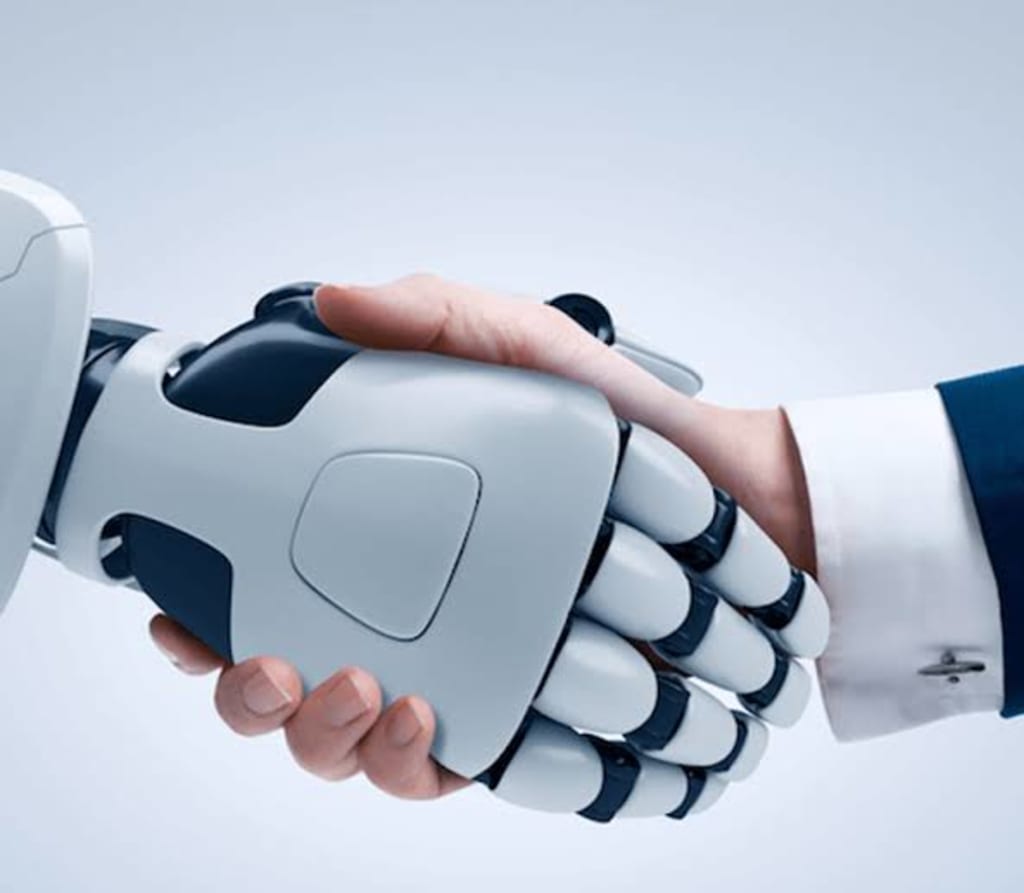
Artificial intelligence (AI) has become one of the most transformative forces of the 21st century. From self-driving cars and automated customer support to AI-powered analytics and predictive algorithms, machines are performing tasks that were once considered exclusively human. As AI technology rapidly advances, a pressing question emerges: Will robots replace human work?
🤖 The AI Revolution in the Workplace
AI is no longer just a futuristic concept—it’s reshaping industries worldwide. Machines now perform jobs ranging from routine tasks to complex decision-making:
Manufacturing: Robots assemble products, paint cars, and handle heavy machinery with unmatched precision.
Healthcare: AI assists in diagnosing diseases, analyzing imaging scans, and predicting patient outcomes.
Customer Service: Chatbots and virtual assistants manage thousands of customer inquiries simultaneously, 24/7.
Creative Fields: AI can generate music, write articles, and even create visual art.
While these innovations improve efficiency, they also spark anxiety about job displacement, especially in sectors relying on repetitive, predictable work.
According to a 2025 report by the World Economic Forum, automation could replace 85 million jobs worldwide by 2030, yet create 97 million new roles requiring AI management, cybersecurity, and data analysis skills. This demonstrates that AI is as much about transformation as it is about disruption.
🔍 Will AI Completely Replace Human Workers?
The reality is nuanced. AI will replace certain jobs, but it will also augment human capabilities rather than eliminate them entirely.
Jobs at Risk:
Roles that involve routine, repetitive tasks are most vulnerable:
Factory assembly line workers
Data entry clerks
Retail cashiers
Telemarketers
Jobs That Will Evolve:
Rather than disappearing, many positions will change in nature, integrating AI tools to improve efficiency:
Doctors using AI to analyze scans while retaining judgment and patient care
Teachers employing AI for personalized learning while guiding students emotionally
Marketing professionals leveraging AI insights while crafting human-centered campaigns
Jobs That Are AI-Proof:
Certain roles require emotional intelligence, creativity, and ethical judgment—areas where AI still lags:
Counselors, social workers, and therapists
Leaders and strategic decision-makers
Jobs requiring complex problem-solving in unpredictable environments
In essence, AI is not a replacement but a collaborator. The workforce of the future will be defined by humans working alongside intelligent systems.
🌱 The Opportunity Side of AI
Technological revolutions historically create more opportunities than they eliminate. During the Industrial Revolution, manual labor jobs were replaced, yet new industries and managerial roles emerged. Similarly, the Information Age displaced typists and telephone operators but created software engineers, cybersecurity specialists, and data analysts.
AI follows the same pattern. New career paths are emerging in areas like:
AI training and supervision
Algorithm auditing and ethics
Data annotation and curation
Virtual reality and immersive AI design
Workers who adapt and acquire new skills are poised to thrive in an AI-powered world.
⚠️ Challenges to Navigate
AI adoption brings several challenges:
Economic Inequality: High-paying AI jobs often require advanced technical skills, creating a gap between skilled and low-skilled workers.
Ethical Concerns: Biased data can lead AI systems to make flawed or unfair decisions.
Regulatory Issues: Governments must balance innovation with workforce protection and fair labor standards.
Addressing these challenges requires reskilling initiatives, inclusive policies, and responsible AI development.
🛠️ Preparing for an AI-Integrated Future
Lifelong Learning: Upskilling in AI, digital literacy, and data analysis is crucial.
Focus on Human Skills: Creativity, empathy, and strategic thinking remain in demand.
Adaptability: Embrace jobs that AI enables rather than replaces.
By combining human intuition with AI capabilities, individuals and organizations can unlock unprecedented productivity and innovation.
🔚 Conclusion
The fear that AI will replace humans entirely is overstated. While some jobs may disappear, AI will also create new roles, enhance efficiency, and redefine the meaning of work. The future workplace is not humans versus machines—it’s humans collaborating with machines.
Success in the AI era depends on adaptability, continuous learning, and embracing human qualities that machines cannot replicate. When approached wisely, AI is not a threat—it’s a powerful tool for human progress.
About the Creator
Fiaz Ahmed Brohi
I am a passionate writer with a love for exploring and creating content on trending topics. Always curious, always sharing stories that engage and inspire.
Keep reading
More stories from Fiaz Ahmed Brohi and writers in Beat and other communities.
Defence Dreams: How Nations, Innovation, and Ambition Shape the Future of Security
Defence dreams are more than visions of powerful armies or cutting-edge weapons. They are reflections of how nations imagine their future security, sovereignty, and place in the world. From advanced fighter jets and autonomous drones to cyber shields and space surveillance, defence dreams reveal a blend of fear, ambition, technology, and national identity. In an era marked by shifting alliances and unpredictable threats, these dreams are shaping global politics and redefining what it means to be secure. At their core, defence dreams begin with a simple desire: survival. Every nation, regardless of size or wealth, seeks to protect its people, borders, and values. Historically, this meant fortresses, standing armies, and naval fleets. Today, it includes satellites orbiting Earth, algorithms detecting cyberattacks, and unmanned systems patrolling skies and seas. The dream has evolved from physical strength to technological superiority. For major powers, defence dreams often revolve around dominance and deterrence. Countries like the United States, China, and Russia invest billions in next-generation systems to ensure that no rival can challenge them. Hypersonic missiles, stealth aircraft, and artificial intelligence are not just tools of war; they are symbols of prestige. Possessing them signals power, innovation, and influence. In this sense, defence dreams are as much about psychology as they are about military capability. Smaller and developing nations have different defence dreams, but they are no less significant. For them, the focus is often on self-reliance. Building indigenous defence industries reduces dependence on foreign suppliers and strengthens national pride. India’s push for domestically produced fighter jets, Turkey’s rise as a drone exporter, and Pakistan’s development of the JF-17 are all examples of countries striving to turn defence dreams into reality. These efforts are driven not only by security needs but also by economic and technological aspirations. Technology lies at the heart of modern defence dreams. Artificial intelligence is transforming how militaries plan, decide, and fight. Autonomous drones can conduct surveillance or strike targets without risking pilots’ lives. Cyber capabilities allow states to disrupt enemies without firing a single shot. Space, once the realm of science fiction, has become a contested military domain. Satellites are now essential for communication, navigation, and intelligence, making them both valuable assets and potential targets. Yet defence dreams are not without controversy. As military budgets grow, critics question whether resources could be better spent on healthcare, education, or climate resilience. The pursuit of advanced weapons also raises ethical concerns. Autonomous systems challenge traditional ideas of accountability in warfare, while cyber tools blur the line between war and peace. When does a cyberattack become an act of war? Defence dreams force societies to confront these difficult questions. There is also the risk that defence dreams can become defence illusions. History shows that overconfidence in military strength can lead to miscalculation. Believing that technology alone guarantees victory ignores the human, political, and social dimensions of conflict. Wars are rarely won by hardware alone; morale, leadership, and legitimacy matter just as much. A nation obsessed with weapons may neglect diplomacy, which remains one of the most effective tools for preventing conflict. Interestingly, defence dreams are increasingly tied to collaboration rather than confrontation. Alliances such as NATO are investing in shared capabilities, joint exercises, and interoperability. Even rivals sometimes cooperate on issues like arms control or maritime safety. These efforts suggest that some defence dreams are about stability rather than supremacy. The dream, in this case, is not to fight wars but to prevent them. Public perception also plays a powerful role. Defence dreams are often shaped by popular culture, media, and national narratives. Films, parades, and military showcases create images of strength that resonate with citizens. While this can build unity and confidence, it can also simplify complex realities. True security is not just about military might; it includes economic stability, social cohesion, and trust in institutions. Looking ahead, defence dreams will continue to evolve as the world changes. Climate change, pandemics, and resource scarcity are emerging as security challenges alongside traditional military threats. Armed forces are being asked to respond to natural disasters, humanitarian crises, and hybrid warfare. The defence dream of the future may be less about conquering enemies and more about resilience and adaptability. Ultimately, defence dreams reflect how societies view themselves and their future. They can inspire innovation, strengthen sovereignty, and deter aggression. But they also demand responsibility, restraint, and wisdom. When guided by realism and cooperation, defence dreams can contribute to a safer world. When driven by fear or ambition alone, they risk becoming nightmares. The challenge for nations today is to dream wisely—and to remember that the strongest defence is often peace itself.
By Fiaz Ahmed Brohi2 months ago in The Swamp
Review of 'Man on the Run'
My wife and I saw Man on the Run, a nearly 2-hour documentary on Amazon Prime, about Wings, Paul McCartney's group that flew around the world from shortly after The Beatles broke up in early 1970 to shortly after John Lennon was murdered at the end of 1980, making a Beatles reunion forever impossible.
By Paul Levinson14 days ago in Beat
A$AP Rocky's AWGE Teases Incoming Rollout For "Don't Be Dumb" Deluxe
A$AP Rocky is a sneaky, diabolical individual. He, like his better half, Robyn Rihanna Fenty are reluctant to drop music nowadays. It was a blessing that the world got to respond to in a so-so way Don’t be Dumb after a hiatus of eight years. Rihanna has her lover beat; she hasn’t dropped a music project in over a decade. I digress.
By Skyler Saunders5 days ago in Beat


Comments
There are no comments for this story
Be the first to respond and start the conversation.