
Top 3 Indian Towns with Sub-Zero Temperatures: Experiencing the Frozen Extremes
Exploring Dras, Leh, and Keylong: India’s Chilling Towns Where Winter Reigns Supreme"

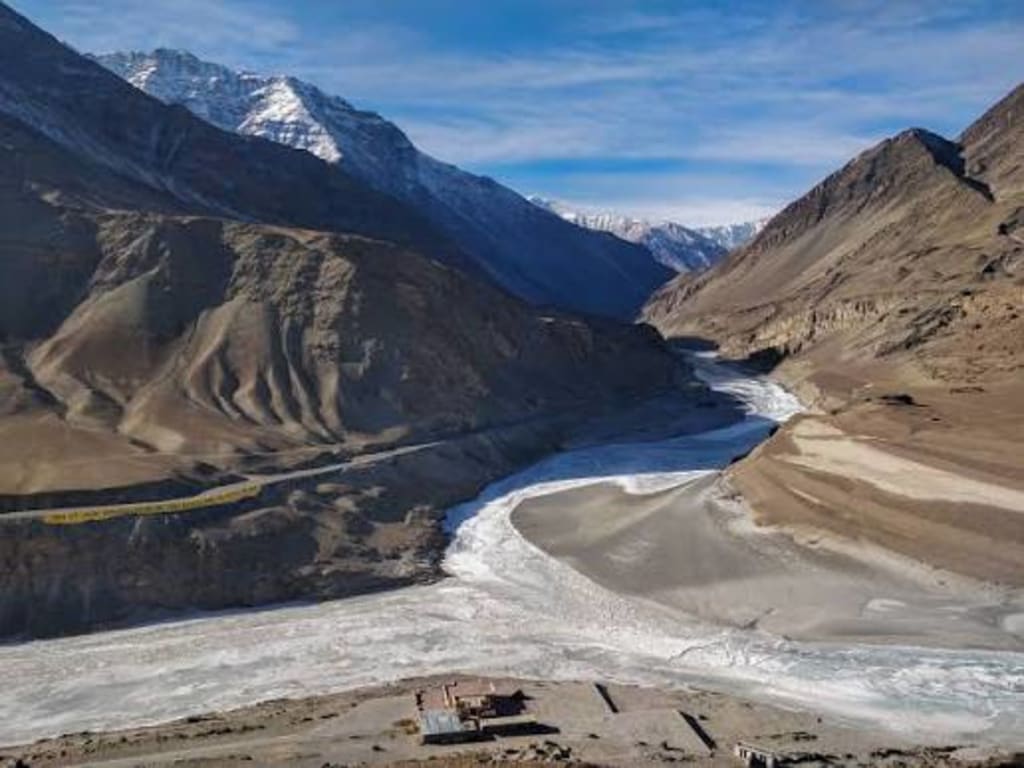
India is a land of contrasts. From tropical beaches to arid deserts, the subcontinent boasts an incredible diversity of climates. While most think of India as a warm, sun-drenched country, it also has regions where winters are harsh, and temperatures plunge well below zero. These towns, located mainly in the Himalayas, challenge the very notion of life in extreme cold. For travelers, adventurers, and researchers, they offer a unique experience—a glimpse into a frozen, high-altitude world where survival is a skill and winter reigns supreme. Here, we explore the top three Indian towns known for sub-zero temperatures.
1. Dras, Ladakh: India’s Coldest Inhabited Town
Nestled in the Kargil district of Ladakh, Dras holds the title of the coldest inhabited town in India. Sitting at approximately 3,300 meters above sea level, Dras experiences winter temperatures that often plummet to –30°C or lower, earning it the nickname "The Gateway to Ladakh."
The town’s extreme cold results from its high altitude and the valley’s geography, which traps frigid winds. Winter in Dras is not just cold; it is long and harsh. Heavy snowfall can isolate the town for weeks, making access to essential supplies a challenge. Roads often close, and the local population relies heavily on stored provisions and community support.
Despite the harsh climate, Dras is rich in culture and history. Its proximity to the Line of Control makes it strategically important for India, and the military presence is significant. Locals have adapted with sturdy stone houses, traditional woolen attire, and high-calorie diets to withstand the biting cold. For visitors, Dras offers breathtaking landscapes of snow-capped peaks and frozen rivers, a rare glimpse into extreme high-altitude life.
2. Leh, Ladakh: The Cold Desert Capital
Leh, the capital of Ladakh, is perhaps India’s most famous cold-weather town. At 3,500 meters above sea level, Leh regularly sees winter temperatures fall below –15°C, and nights can be even colder. Despite being a major tourist hub in summer, Leh transforms into a cold desert in winter, where life slows down, and survival becomes the primary focus.
Leh’s unique climate—dry, thin air combined with intense cold—creates one of the harshest living environments in the country. Snowfall is lighter than in Dras, but the cold is uncompromising. The frozen Zanskar River becomes the site of the Chadar Trek, an adventure that attracts thrill-seekers worldwide but demands careful preparation against frostbite and hypothermia.
Residents of Leh have mastered the art of enduring the cold. Homes are built with thick walls and insulation, heating is often solar-assisted, and winter diets are rich in fats to sustain energy. Leh illustrates human resilience in extreme conditions, combining traditional knowledge with modern adaptations.
3. Keylong, Himachal Pradesh: The Frozen Heart of Lahaul
Keylong, located in the Lahaul and Spiti district of Himachal Pradesh, is another town where winter is a formidable force. At an altitude of roughly 3,100 meters, Keylong’s temperatures can drop to –10°C to –20°C during the coldest months. Unlike Ladakh, Keylong experiences heavy snowfall, which often blocks roads and isolates the town.
Life in Keylong is shaped by the winter’s harshness. Locals store essential supplies months in advance and rely on traditional wooden houses and insulated clothing to survive. The town, surrounded by snow-covered peaks and monasteries, holds cultural and administrative importance in the region.
Infrastructure projects such as the Atal Tunnel have improved connectivity during winter, making Keylong more accessible. However, the town remains a challenging environment, reminding visitors of nature’s power and the endurance required to live in high-altitude cold zones.
Why These Towns Are Significant
These sub-zero towns highlight India’s climatic diversity and showcase human adaptation in extreme conditions. They are living examples of how culture, infrastructure, and survival strategies intertwine to sustain communities in some of the harshest environments on Earth.
Furthermore, these regions offer important insights into climate change. Shifts in snowfall, glacier melt, and temperature extremes directly affect local life, agriculture, and water resources. Studying these towns helps scientists understand high-altitude ecosystems and develop strategies to mitigate climate risks.
Final Thoughts
India’s frozen towns challenge the perception of the country as a land of heat and humidity. Dras, Leh, and Keylong not only experience sub-zero temperatures but also demonstrate resilience, tradition, and adaptation. They are destinations for adventurers, scientists, and travelers seeking to experience life where winter dominates, nature is formidable, and survival is a daily achievement.
Visiting these towns is more than sightseeing—it is an opportunity to witness human ingenuity and endurance against some of the harshest winters on the planet, offering a perspective of India that few outside the Himalayas truly understand.
About the Creator
Fiaz Ahmed Brohi
I am a passionate writer with a love for exploring and creating content on trending topics. Always curious, always sharing stories that engage and inspire.
Keep reading
More stories from Fiaz Ahmed Brohi and writers in Longevity and other communities.
Einstein Predicted It, and Mars Has Just Confirmed It: Why Time Flows Differently on the Red Planet and How Space Missions Must Adapt
When Albert Einstein introduced his theory of relativity more than a century ago, it radically changed humanity’s understanding of time. He proposed that time is not absolute—it slows down or speeds up depending on gravity and motion. For decades, this idea felt abstract, confined to equations and thought experiments. Today, however, Mars has turned Einstein’s prediction into a practical challenge. Scientists have confirmed that time on the Red Planet flows at a slightly different rate than on Earth, and this difference is forcing future space missions to rethink how they operate. Time Is Not the Same Everywhere Einstein’s general theory of relativity states that gravity affects time. The stronger the gravitational pull, the slower time passes. Earth, being larger and denser than Mars, has stronger gravity. As a result, clocks on Mars tick slightly faster than clocks on Earth. The difference is tiny—measured in microseconds—but in the precise world of space exploration, even such small variations matter. Mars also has a different orbital speed and rotational rhythm. A day on Mars, known as a “sol,” is about 24 hours and 39 minutes long. This mismatch alone creates challenges for mission planners on Earth who must synchronize commands, data transmissions, and rover activities across two planets operating on different clocks. How Scientists Confirmed It Modern Mars missions rely on ultra-precise atomic clocks and advanced navigation systems. Spacecraft orbiting Mars and rovers on its surface constantly exchange signals with Earth. Over time, scientists noticed consistent timing discrepancies that could not be explained by engineering errors or signal delays alone. These differences matched exactly what Einstein’s equations predicted: time on Mars flows faster due to its weaker gravitational field. This confirmation is not just theoretical validation—it has real operational consequences. Navigation, communication, and scientific measurements all depend on accurate timekeeping. If mission controllers ignore relativistic time differences, errors can accumulate, potentially causing spacecraft to drift off course or miss critical mission windows. Why Time Differences Matter for Space Missions Space missions rely on extreme precision. When a rover drills into Martian soil or a lander touches down on the surface, timing errors of even milliseconds can lead to serious problems. Over months and years, microsecond-level discrepancies can grow into navigation errors spanning meters—or worse. Mars missions already operate with communication delays ranging from 4 to 24 minutes, depending on the planets’ positions. Adding relativistic time differences into the mix makes coordination even more complex. Engineers must account for how fast clocks tick on Mars compared to Earth to ensure commands arrive at the correct moment and data is interpreted accurately. Adapting to Martian Time To solve this problem, scientists are developing Mars-specific timekeeping systems. Instead of relying solely on Earth-based clocks, future missions may use dedicated “Mars time” standards. These systems would automatically adjust for gravitational and relativistic differences, allowing spacecraft, orbiters, and surface equipment to operate in sync with the planet they are exploring. NASA engineers already experience a preview of this challenge during rover missions. When a new rover lands on Mars, mission teams often live on “Mars time,” shifting their work schedules by about 39 minutes each day to match the Martian sol. While this practice helps with daily operations, it is exhausting for humans and impractical for long-term missions—especially those involving astronauts. Implications for Human Exploration As space agencies plan crewed missions to Mars, time dilation becomes more than a technical issue—it becomes a human one. Astronauts living on Mars will age imperceptibly faster than people on Earth due to weaker gravity. While the difference is far too small to affect health, it highlights how deeply relativity will shape life beyond our planet. More importantly, mission planners must design communication systems, navigation tools, and even legal and scheduling frameworks that account for different time flows. A future Mars colony may need its own official time standard, separate from Earth’s. A Reminder of Einstein’s Lasting Legacy Einstein’s theories were once considered purely academic. Today, they guide GPS satellites orbiting Earth and now help navigate missions millions of kilometers away on Mars. The confirmation that time flows differently on the Red Planet is another reminder that the universe follows rules that defy everyday intuition. As humanity prepares to explore deeper into space, Einstein’s insights are no longer just ideas—they are essential tools. Mars has confirmed what physics predicted long ago: time itself changes across the cosmos, and if we want to become a multi-planet species, we must learn to live by more than one clock.
By Fiaz Ahmed Brohia day ago in Longevity
Day 4 of Quitting
If this is how sobriety feels, maybe it’s better to go through life a little buzzed… this, along with other hits like, I want to kill myself, I wish I was dead, and I’m going to throw myself off a bridge have been the only thoughts on rotation these past few days. I promise myself that if, in a month, I still feel like this (‘this’ meaning despondent, full of rage, and simultaneously numb) I can go back to smoking. Until mid-February though? Nicotine is off the table.
By sleepy drafts12 days ago in Longevity
Lung Cancer Diagnostics Market Size and Forecast 2025–2033
Introduction: A Market at the Center of Early Cancer Care Lung cancer remains one of the world’s most challenging public health burdens, accounting for millions of new cases and deaths each year. Yet the narrative around lung cancer is changing. Advances in imaging, molecular diagnostics, and biomarker-driven testing are moving detection earlier, improving treatment selection, and ultimately extending survival. This transformation is reflected in the expanding commercial landscape for diagnostic technologies.
By jaiklin Fanandish6 days ago in Longevity




Comments
There are no comments for this story
Be the first to respond and start the conversation.