Fiaz Ahmed Brohi
Bio
I am a passionate writer with a love for exploring and creating content on trending topics. Always curious, always sharing stories that engage and inspire.
Stories (628)
Filter by community
Salman Khan Celebrates 60th Birthday with Father Salim Khan by His Side as Family and Friends Sing for the Superstar. AI-Generated.
Bollywood superstar Salman Khan’s 60th birthday turned into an emotional and heartwarming family affair, reminding fans why the actor remains one of the most loved figures in Indian cinema. A video from the celebration, now widely shared online, shows Salman gently holding his father Salim Khan’s hand while cutting his birthday cake, a moment that resonated deeply with audiences across generations. Joining the Khan family was singer and close friend Iulia Vantur, who sang along as the room filled with warmth, nostalgia, and admiration for the man of the hour.
By Fiaz Ahmed Brohi3 months ago in Geeks
A Child Is Born: Italians Celebrate a Village’s First Baby in 30 Years. AI-Generated.
In a small Italian village long accustomed to silence, shuttered homes, and an aging population, the sound of a newborn’s cry has brought something extraordinary—hope. After three decades without a single birth, residents gathered to celebrate the arrival of a baby who has become far more than a child. For this rural community, the newborn represents renewal, survival, and the promise of a future. A Village on the Brink of Disappearance Like many villages across Italy, this small settlement has spent years battling depopulation. Young people left for cities in search of jobs, education, and modern lifestyles, leaving behind elderly residents and empty streets. Schools closed, local shops disappeared, and festivals that once defined village life became memories. For 30 years, there were no births recorded. Weddings became rare, playgrounds stood abandoned, and homes slowly fell into disrepair. Many feared the village would eventually vanish from the map, becoming another symbol of Italy’s rural decline. A Birth That Changed Everything The birth of the baby—widely celebrated by villagers—instantly altered the mood. Church bells rang, neighbors gathered, and congratulations echoed through narrow streets. Some residents admitted they never thought they would live to see another child born in the village. For locals, this wasn’t just a family milestone; it was a collective victory. People brought homemade gifts, flowers, and traditional foods to welcome the newborn. Elderly residents, some with tears in their eyes, described the moment as “a miracle” and “a sign that the village is still alive.” Why Rural Italy Is Losing Its Young Italy has one of the lowest birth rates in Europe, and rural areas are feeling the impact most strongly. Economic challenges, limited job opportunities, and lack of services have pushed generations toward urban centers like Rome, Milan, and Turin. Small villages struggle to offer: Stable employment Modern healthcare facilities Schools and childcare Digital connectivity As a result, many couples choose not to raise children in these areas, accelerating the cycle of decline. A Symbol of Hope Beyond One Village This baby’s birth has sparked national attention because it highlights a larger issue facing Italy and much of Europe: how to preserve rural communities. Demographers warn that without intervention, hundreds of villages could disappear within decades. The celebration reflects a growing realization that every birth matters, especially in places on the edge of extinction. Local officials see the event as proof that revival is possible if the right conditions exist. Government Efforts to Revive Villages In recent years, Italy has launched several initiatives to combat depopulation, including: Offering financial incentives to families who move to rural towns Selling abandoned homes for symbolic prices Supporting remote work to attract young professionals Providing child benefits and housing assistance While results have been mixed, stories like this one renew confidence that such policies can make a difference when paired with community support. The Emotional Impact on Residents For older villagers, the baby represents continuity. Many had resigned themselves to the idea that they would be the last generation to call the village home. Seeing a newborn stroller roll down familiar streets reignited memories of their own childhoods. One resident reportedly said, “Now we have someone to leave this place to.” That sentiment captures the deep emotional weight of the moment—this birth restores meaning to preservation efforts, traditions, and shared history. Can One Birth Lead to Many More? Optimism is cautiously growing. Local leaders hope the attention will encourage: Former residents to return Young families to consider relocating Investment in services like schools and healthcare The presence of a child creates new needs—and new reasons to improve infrastructure. Even one baby can justify reopening a daycare, restoring playgrounds, or expanding internet access. Why This Story Resonates Globally Beyond Italy, this story speaks to communities worldwide facing aging populations and rural decline. From Europe to Asia, small towns are searching for ways to remain relevant in a rapidly urbanizing world. The birth reminds us that demographic challenges are deeply human, not just statistical. Behind population charts are real people, real places, and real emotions. Final Thoughts The birth of a child in an Italian village after 30 years is more than a headline—it is a powerful symbol of resilience. It shows that even in places written off as dying, life can return unexpectedly. For the villagers, the baby represents laughter returning to quiet streets, festivals with future participants, and a reason to believe that their home still has a tomorrow. In a world often focused on loss and decline, this small miracle offers something rare and precious: hope reborn.
By Fiaz Ahmed Brohi3 months ago in Humans
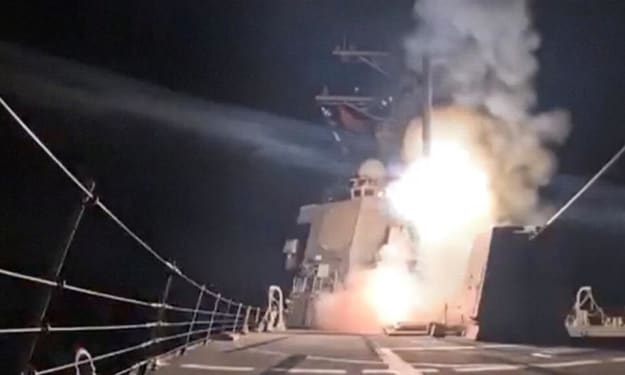
US Contemplates Sending More Resources to Forcibly Board Oil Tanker Near Venezuela. AI-Generated.
Yemen’s long-running conflict has entered yet another tense phase as southern separatist groups report Saudi-led airstrikes near their positions, raising fears of renewed instability in a country already devastated by more than a decade of war. The reports come at a delicate moment, when fragile political arrangements and regional diplomacy had offered cautious hope for de-escalation. A Conflict Within a Conflict Yemen’s war is often described as a binary struggle between the internationally recognized government, backed by a Saudi-led coalition, and the Iran-aligned Houthi movement controlling much of the north. However, the reality on the ground is far more complex. In the south, separatist forces — primarily represented by the Southern Transitional Council (STC) — seek to re-establish an independent South Yemen, which existed until unification in 1990. Although the STC has at times been allied with Saudi Arabia against the Houthis, relations have frequently been strained. The separatists accuse Riyadh of prioritizing political control over genuine southern autonomy, while Saudi Arabia views a fragmented Yemen as a strategic risk along its southern border. Reports of Saudi Airstrikes According to statements from southern separatist officials and local sources, Saudi warplanes carried out airstrikes near STC-controlled positions in recent days. The strikes reportedly targeted areas close to military installations and checkpoints, though no independent confirmation has yet verified the full scale or intent of the attacks. Southern leaders claim the strikes were meant to pressure their forces amid political disagreements, rather than targeting Houthi positions. Saudi authorities have not issued a detailed public response, fueling speculation and uncertainty among local communities. Rising Tensions in the South The alleged airstrikes have intensified mistrust between Saudi Arabia and its former southern allies. For the STC, any military action against its forces is seen as a betrayal of earlier understandings that recognized southern political aspirations under the Riyadh Agreement — a Saudi-brokered deal intended to integrate southern forces into a unified government. Analysts warn that such incidents could destabilize already fragile security arrangements, particularly in strategic southern provinces that host ports, oil infrastructure, and key maritime routes near the Bab el-Mandeb Strait — one of the world’s most important shipping lanes. Regional and Strategic Implications Saudi Arabia’s involvement in Yemen is driven by both security concerns and regional competition. Riyadh fears that instability in the south could create power vacuums exploited by extremist groups or hostile regional actors. At the same time, maintaining influence over Yemen’s political future remains a strategic priority. However, striking or pressuring southern separatists risks opening a new front in the conflict. Instead of confronting the Houthis alone, Saudi Arabia could find itself managing multiple rival forces, each with different political goals and local loyalties. For regional observers, the situation highlights how Yemen’s war has evolved from a conventional intervention into a tangled web of alliances and rivalries. Civilian Impact and Humanitarian Concerns As always, civilians bear the heaviest cost. Residents in areas near the reported airstrikes described fear, displacement, and renewed anxiety after months of relative calm. Yemen remains one of the world’s worst humanitarian crises, with millions dependent on aid for survival. Any escalation — even limited air operations — risks disrupting aid deliveries, damaging infrastructure, and worsening food insecurity. Human rights groups have repeatedly called for restraint, urging all parties to avoid actions that could endanger civilians or derail peace efforts. Diplomatic Efforts at Risk The reports of Saudi airstrikes come at a time when diplomatic efforts, including indirect talks between Saudi Arabia and the Houthis, had reduced cross-border attacks and violence in some regions. A breakdown in relations with southern separatists could undermine these fragile gains. Experts argue that a lasting solution in Yemen must address not only the north-south divide but also internal political fragmentation. Ignoring southern grievances or responding with force could push separatists toward unilateral action, further complicating peace negotiations. What Comes Next? Whether the reported airstrikes represent a temporary show of force or a shift in Saudi strategy remains unclear. Much will depend on behind-the-scenes diplomacy and whether Riyadh and the STC can repair trust. For Yemen, the episode is a reminder that peace remains elusive. Without inclusive political dialogue that accounts for all major factions — including southern separatists — the country risks slipping back into wider conflict. As the world’s attention often drifts elsewhere, Yemen’s complex war continues to evolve, demanding renewed international focus before another cycle of violence takes hold.
By Fiaz Ahmed Brohi3 months ago in The Swamp
Navy’s Fleet of 4ft Boats to Protect Britain from Putin’s Submarines. AI-Generated.
As global tensions rise and underwater warfare becomes increasingly sophisticated, Britain is turning to an unexpected but innovative line of defense: a fleet of tiny, 4-foot autonomous boats designed to protect its waters from potential threats posed by Russian submarines. At first glance, these small vessels may seem insignificant against the massive and stealthy submarines often associated with President Vladimir Putin’s navy. Yet, experts say these compact boats could play a crucial role in the future of maritime security. A New Kind of Naval Defense Traditional naval defense relies heavily on large warships, submarines, and aircraft. However, modern warfare is shifting toward technology-driven, cost-effective, and flexible solutions. The Royal Navy’s plan to deploy small, unmanned surface vessels reflects this transformation. These 4-foot boats, often described as “marine drones,” are designed to patrol coastal waters, harbors, and key maritime routes where hostile submarines or underwater drones could pose a threat. Unlike conventional ships, these vessels do not carry crews. Instead, they operate autonomously or via remote control, using advanced sensors, sonar systems, and artificial intelligence to detect unusual underwater activity. Their small size allows them to operate discreetly and in large numbers, creating a layered defense network that is difficult for adversaries to evade. Why the Focus on Russian Submarines? Russia has invested heavily in its submarine fleet over the past decade, viewing underwater dominance as a strategic advantage. Russian submarines are known for their stealth, long-range capabilities, and ability to operate close to NATO waters. British defense officials have repeatedly warned that undersea cables, energy pipelines, and naval bases could be vulnerable to covert surveillance or sabotage. Rather than responding solely with expensive, large-scale assets, Britain’s use of small autonomous boats signals a shift in thinking. The idea is not to replace traditional naval power but to complement it, filling gaps in surveillance and providing early warnings of potential threats. How These 4ft Boats Work Despite their size, these boats are packed with technology. They are equipped with: Sonar systems to detect underwater movement High-resolution cameras for surface monitoring AI-powered software to identify suspicious patterns Secure communication links to relay real-time data to naval command centers Operating in swarms, the boats can cover large areas of water simultaneously. If one unit detects something unusual—such as the acoustic signature of a submarine—it can alert nearby vessels and command units instantly. This rapid response capability is vital in modern naval defense, where minutes can make a significant difference. Cost-Effective and Scalable Security One of the biggest advantages of these small boats is cost. Building and maintaining large warships or submarines requires billions of pounds and years of development. In contrast, autonomous boats are relatively inexpensive, quick to produce, and easy to replace if damaged or lost. This affordability allows the Navy to deploy them in greater numbers, increasing coverage and resilience. Even if an adversary manages to disable a few units, the overall defense system remains intact. From a strategic standpoint, this creates a high-cost problem for the enemy and a low-cost solution for Britain. Protecting Critical Infrastructure Beyond military threats, these boats are also expected to safeguard vital civilian infrastructure. Britain relies heavily on undersea internet cables, offshore wind farms, and energy pipelines. Any disruption to these systems could have serious economic and national security consequences. By maintaining constant surveillance around sensitive areas, the Navy’s fleet of autonomous boats could deter sabotage and provide early alerts if something goes wrong. This dual-use capability—serving both military and civilian protection—makes the project even more valuable. A Glimpse into the Future of Warfare The deployment of 4-foot boats highlights a broader trend in global defense: the rise of unmanned and autonomous systems. From aerial drones to robotic submarines, future conflicts are likely to involve fewer soldiers on the front lines and more intelligent machines working behind the scenes. For Britain, embracing this technology sends a clear message. The country is adapting to new threats and is willing to innovate rather than rely solely on traditional methods. While these boats may not confront Russian submarines directly, they form an essential part of a wider surveillance and deterrence strategy. Conclusion Britain’s plan to use a fleet of small, autonomous boats to guard its waters may seem unconventional, but it reflects the realities of modern warfare. In an era where stealth, speed, and information are key, size is no longer the ultimate measure of power. These 4-foot boats represent a smart, forward-looking approach to national defense—one that could help keep Britain’s seas secure amid growing global uncertainty.
By Fiaz Ahmed Brohi3 months ago in The Swamp
The Best Poetry for Dark Winter Days: Finding Light in Words. AI-Generated.
Winter has a way of slowing the world down. The days grow shorter, the nights longer, and for many people, the cold season brings silence, solitude, and reflection. While some find winter peaceful, others feel its emotional weight — loneliness, nostalgia, or quiet sadness. This is where poetry becomes more than art. It becomes a companion. Poetry has always had the power to hold light in darkness, and winter poetry, in particular, speaks directly to the soul. On dark winter days, poems offer warmth, understanding, and a reminder that even the coldest seasons are temporary. Why Poetry Resonates More in Winter Winter strips life down to its essentials. Trees stand bare, streets are quieter, and people turn inward. This introspective atmosphere makes poetry especially powerful. Unlike long novels or fast-paced media, poetry invites stillness. A few carefully chosen words can mirror emotions we struggle to name. Many readers find themselves returning to poetry in winter because it validates their feelings. It doesn’t rush happiness or demand positivity. Instead, it allows space for melancholy, memory, and hope to exist together. Classic Poets Who Understand the Cold Some poets seem to have written with winter in their bones. Emily Dickinson, often isolated in her lifetime, understood solitude deeply. Her poems about stillness, death, and inner life feel especially relevant during winter days when the world feels paused. Robert Frost is perhaps the most famous winter poet. Poems like “Stopping by Woods on a Snowy Evening” capture the beauty and quiet danger of winter landscapes while reminding readers of responsibilities that pull us forward, even when rest feels tempting. Thomas Hardy and Christina Rossetti also explore winter as both a physical and emotional season — one marked by loss, endurance, and the faint promise of renewal. Modern Poetry for Modern Winters Contemporary poets speak directly to today’s readers, especially those navigating mental health struggles, loneliness, or burnout during winter. Mary Oliver’s poetry offers gentle reassurance. Her nature-based poems remind readers that winter is part of a larger cycle and that survival itself is a form of courage. Ocean Vuong and Louise Glück write with emotional honesty that resonates deeply during darker months. Their poems don’t offer easy comfort but instead provide truth — and sometimes, truth is the most comforting thing of all. Spoken-word and Instagram poets have also found large winter audiences. Short, emotionally direct poems are easy to return to on heavy days, offering quick moments of connection. Poetry as Emotional Warmth Reading poetry in winter is not about escaping darkness but learning how to sit with it. A poem can feel like a conversation with someone who understands your silence. Many readers develop winter rituals around poetry: reading a poem with morning tea, journaling after a few verses, or returning to a favorite poem on difficult nights. These small habits create emotional warmth when physical warmth isn’t enough. Poetry also helps reframe winter. Instead of seeing it as empty or lifeless, poets often present it as a season of rest, reflection, and quiet strength. Themes That Matter in Winter Poetry The best winter poetry often revolves around themes that feel especially relevant during colder months: Stillness and Silence – embracing quiet instead of fearing it Loss and Memory – reflecting on what has passed Endurance – surviving emotional and physical cold Hope Beneath Hardship – the promise of spring, even if distant These themes resonate because they mirror real human experiences. Winter poetry reminds readers that feeling heavy does not mean being broken. Why Poetry Still Matters Today In a fast, noisy digital world, poetry slows us down. During winter — when many feel disconnected or overwhelmed — poetry offers intimacy without demand. It doesn’t require productivity or optimism. It simply asks us to feel. Poetry also connects generations. A reader today can feel understood by a poet who lived centuries ago, proving that human emotions do not change, even when the world does. Let Poetry Be Your Winter Companion Dark winter days can feel isolating, but poetry reminds us we are never truly alone. Someone, somewhere, has felt this cold before — and they left words behind to guide us through it. Whether you turn to classic verses, modern confessions, or your own writing, poetry has the power to soften winter’s edge. In its quiet lines, readers often find not just beauty, but survival — and sometimes, the first sign of returning light.
By Fiaz Ahmed Brohi3 months ago in Poets
Southern Separatists in Yemen Report Saudi Airstrikes Near Positions. AI-Generated.
Yemen’s long-running conflict has once again taken a volatile turn as southern separatist forces reported Saudi-led airstrikes near their positions, raising fresh concerns about shifting alliances and the fragile balance of power in the war-torn country. The development underscores the complexity of Yemen’s conflict, where allies can quickly become adversaries and regional powers continue to play decisive roles. A Fractured Battlefield in Southern Yemen The reported airstrikes occurred in southern Yemen, an area largely controlled by the Southern Transitional Council (STC), a separatist group that seeks independence for the south. The STC has long been backed by the United Arab Emirates and has, at times, cooperated with Saudi Arabia against the Iran-aligned Houthi movement. However, tensions between the separatists and Yemen’s internationally recognized government — itself supported by Riyadh — have persisted for years. Southern separatist officials claimed the airstrikes targeted areas close to their military deployments, sparking fears of a direct confrontation with Saudi-backed forces. While Saudi authorities have not publicly confirmed the strikes, the reports have fueled speculation that relations between Riyadh and the STC are deteriorating. Saudi Arabia’s Delicate Role Saudi Arabia entered the Yemen war in 2015 with the stated goal of restoring the internationally recognized government after Houthi forces seized the capital, Sanaa. Since then, the conflict has evolved into a multi-layered struggle involving regional rivalries, local militias, and competing visions for Yemen’s future. The kingdom has walked a diplomatic tightrope in the south. On one hand, it has sought to keep Yemen unified under a single government. On the other, it has tolerated — and at times cooperated with — southern separatists to maintain stability and counter the Houthis. Reports of Saudi airstrikes near STC positions suggest that Riyadh may now be sending a warning or attempting to reassert control over southern dynamics. Rising Tensions Within the Anti-Houthi Camp If confirmed, the airstrikes highlight deep fractures within the anti-Houthi coalition. The STC accuses Yemen’s central government of corruption and marginalizing southern interests, while the government views separatist ambitions as a threat to national unity. These tensions have previously erupted into armed clashes, particularly in the port city of Aden. Observers note that renewed fighting between nominal allies would weaken efforts to stabilize Yemen and could benefit the Houthis, who remain firmly entrenched in the north. The Houthis have capitalized on internal divisions before, strengthening their negotiating position and military posture. Civilian Concerns and Humanitarian Risks As with much of Yemen’s conflict, civilians stand to suffer the most. Southern Yemen hosts millions of displaced people who have fled fighting elsewhere in the country. Any escalation in airstrikes or ground clashes risks worsening an already dire humanitarian situation marked by food insecurity, damaged infrastructure, and limited access to healthcare. Local residents have expressed fear that renewed hostilities could disrupt aid deliveries and push communities deeper into crisis. International humanitarian organizations have repeatedly warned that Yemen cannot withstand another major escalation without catastrophic consequences. Regional and Diplomatic Implications The reported airstrikes come at a time when Saudi Arabia has been seeking to reduce its military footprint in Yemen and pursue diplomatic solutions, including indirect talks with the Houthis. Any clash with southern separatists could complicate those efforts and draw Riyadh back into active conflict on multiple fronts. The incident also highlights the divergent approaches of Saudi Arabia and the UAE, whose differing priorities in Yemen have occasionally strained their partnership. While both oppose Houthi control, their visions for Yemen’s political future are not fully aligned, particularly regarding southern autonomy. What Comes Next? Much depends on how Saudi Arabia and the STC manage the fallout. If the airstrikes were intended as a limited show of force, backchannel diplomacy could prevent further escalation. However, if mistrust deepens, southern Yemen could become another active battlefield in an already fragmented war. Analysts warn that lasting peace in Yemen will require addressing southern grievances alongside negotiations with the Houthis. Ignoring separatist aspirations risks prolonging instability even if a broader ceasefire is achieved. A Conflict Without Simple Answers The reports of Saudi airstrikes near southern separatist positions serve as a reminder that Yemen’s war is far from a binary conflict. It is a tangled web of local ambitions, regional rivalries, and international interests. Until these competing forces are reconciled through inclusive political dialogue, Yemen’s path to peace will remain uncertain — and fragile.
By Fiaz Ahmed Brohi3 months ago in The Swamp
China Imposes Sanctions on U.S. Defense Firms Over Taiwan Arms Deal. AI-Generated.
China has imposed fresh sanctions on several United States defense companies in response to Washington’s latest arms sales to Taiwan, escalating tensions in an already fragile geopolitical relationship. The move underscores Beijing’s growing frustration with what it sees as repeated violations of its sovereignty and a challenge to its long-standing “One China” principle. As military cooperation between the U.S. and Taiwan deepens, China’s response signals that economic and diplomatic pressure will remain a central part of its strategy. The sanctions were announced shortly after the U.S. approved a new arms package for Taiwan, reportedly including advanced missile systems, radar technology, and military support services. For Beijing, such deals cross a red line. China considers Taiwan a breakaway province and has consistently opposed any form of foreign military assistance to the island. The Chinese government argues that U.S. arms sales embolden pro-independence forces in Taiwan and undermine regional stability. What the Sanctions Mean China’s sanctions target U.S. defense firms directly involved in producing or supplying weapons to Taiwan. These measures typically include bans on business operations within China, freezing of assets, and restrictions on travel for senior executives. While such penalties may not immediately cripple large U.S. defense contractors, they carry symbolic and strategic weight. Many American defense firms rely less on the Chinese market than companies in other sectors, limiting the immediate economic impact. However, analysts suggest the sanctions serve as a warning—to corporations, governments, and allies—that Beijing is prepared to respond forcefully when it perceives threats to its core interests. The move also reflects China’s broader effort to use economic leverage as a diplomatic tool. Over the past decade, Beijing has increasingly turned to sanctions, trade restrictions, and regulatory pressure to influence foreign policy behavior, especially in disputes involving sovereignty, technology, and national security. U.S. Position and Strategic Intent The United States maintains that its arms sales to Taiwan are consistent with the Taiwan Relations Act, which obliges Washington to help Taiwan maintain a sufficient self-defense capability. U.S. officials argue that these weapons are defensive in nature and are intended to deter aggression rather than provoke conflict. From Washington’s perspective, supporting Taiwan is not only about regional security but also about upholding democratic values. Taiwan is a self-governing democracy, and U.S. policymakers increasingly frame their support as part of a broader commitment to counter authoritarian influence in the Indo-Pacific region. This framing, however, further irritates Beijing, which views the issue strictly through the lens of territorial integrity rather than ideology. Rising Tensions Over Taiwan The sanctions come at a time of heightened military activity around Taiwan. China has increased air and naval patrols near the island, while Taiwan has stepped up its defense preparedness. Military exercises, diplomatic visits, and arms deals have collectively raised fears that miscalculation could trigger a wider conflict. Experts warn that sanctions and counter-sanctions, while short of military action, contribute to an atmosphere of distrust. Each side seeks to demonstrate resolve, but the risk lies in normalizing escalation. Economic and political measures may be safer than missiles, yet they can still entrench positions and reduce room for dialogue. Impact on Global Defense and Trade China’s action also has implications beyond U.S.-China relations. Defense firms worldwide are closely watching how geopolitical tensions affect supply chains, partnerships, and market access. As global defense spending rises, companies are increasingly navigating a fragmented world where political alignment matters as much as technology. The sanctions highlight a growing divide between major powers, with defense industries becoming instruments of diplomacy. Countries purchasing military equipment may also face pressure to choose sides, complicating international arms markets and alliances. What Comes Next? While China’s sanctions are unlikely to stop U.S. arms sales to Taiwan, they reinforce Beijing’s message that the issue is non-negotiable. Diplomatic channels between Washington and Beijing remain open, but trust is limited, and Taiwan remains one of the most sensitive flashpoints in global politics. For now, both sides appear determined to stand their ground. China continues to apply pressure through economic and diplomatic means, while the U.S. signals ongoing support for Taiwan’s defense. The challenge for the international community will be managing these tensions without allowing them to spiral into direct confrontation. Conclusion China’s sanctions on U.S. defense firms over Taiwan arms deals reflect a deeper struggle over power, sovereignty, and influence in the 21st century. While the immediate impact may be symbolic, the broader message is clear: Taiwan remains at the heart of U.S.-China rivalry. As sanctions replace diplomacy and deterrence replaces dialogue, the stakes continue to rise—not just for the region, but for global stability as well.
By Fiaz Ahmed Brohi3 months ago in The Swamp
‘All Brakes Are Off’: Russia’s Attempt to Rein In Illicit Market for Leaked Data Backfires. AI-Generated.
In an ironic twist, Russia’s efforts to curb the flourishing black market for leaked and stolen data appear to have backfired, according to cybersecurity analysts and investigative reports. Over the past year, Moscow has rolled out legislation aimed at regulating and restricting access to sensitive data, hoping to stem the flow of leaked information and control its spread online. Instead, the measures have unintentionally accelerated the growth of underground digital marketplaces, making illicit data trade more opaque and harder to track.
By Fiaz Ahmed Brohi3 months ago in The Swamp
US Launches Strikes Against Islamic State in Nigeria: A Strategic Blow in the Fight Against Terrorism. AI-Generated.
In a decisive move against the growing threat of the Islamic State in West Africa Province (ISWAP), the United States military has launched targeted strikes in Nigeria, signaling a renewed commitment to counterterrorism efforts in the region. These strikes, confirmed by US Africa Command (AFRICOM), are part of a broader strategy aimed at dismantling extremist networks that have plagued Nigeria and neighboring countries for years. According to official statements, the strikes targeted ISWAP camps and training facilities in the northeastern region of Nigeria, primarily in areas where the insurgents have entrenched themselves. While precise details regarding the number of casualties remain classified, intelligence sources suggest that the strikes successfully destroyed several critical militant infrastructure points, including weapons depots and command centers. The rise of ISWAP, a splinter group of Boko Haram, has posed significant security challenges in the Sahel and Lake Chad regions. Unlike its predecessor, ISWAP has demonstrated more sophisticated operational capabilities, including the use of improvised explosive devices (IEDs), coordinated attacks on military convoys, and the recruitment of both local and foreign fighters. The group’s aggressive expansion has destabilized communities, leading to mass displacement, humanitarian crises, and heightened regional insecurity. The US has maintained a long-standing role in assisting Nigeria’s counterterrorism initiatives, primarily through intelligence sharing, training, and advisory support. However, the recent strikes mark a more assertive approach, reflecting Washington’s determination to curtail the group’s operational freedom. Analysts believe that this strategy is also designed to support Nigerian forces, who have faced considerable challenges in confronting ISWAP due to the group’s mobility and deep knowledge of the local terrain. Experts highlight that while US intervention provides significant tactical advantages, it also underscores the need for a comprehensive strategy that combines military action with socio-economic and political measures. “Military strikes alone cannot eradicate extremist ideologies. To achieve lasting peace, we must address the root causes of radicalization, including poverty, lack of education, and local grievances,” says Dr. Halima Yusuf, a West African security analyst. The Nigerian government welcomed the strikes, framing them as a crucial step in safeguarding national security. President Bola Tinubu’s administration emphasized the importance of international cooperation in combating terrorism, stating that the partnership with the US and other allies would continue to focus on neutralizing threats while supporting affected communities. However, the operation also raises questions about sovereignty and the potential for civilian casualties. Human rights organizations have called for transparency in military operations to ensure compliance with international law. Historical precedents in the region highlight the risks of collateral damage, which can inadvertently fuel further radicalization if local populations perceive military actions as indiscriminate or unjust. In addition to tactical success, the strikes serve a strategic purpose: sending a strong message to extremist networks that the international community is vigilant and capable of striking where threats emerge. The US military has consistently emphasized precision and intelligence-led operations to minimize risks while maximizing impact. Such operations are often coordinated with local forces, ensuring that actionable intelligence informs every decision. The broader context of these strikes is a reminder of the interconnected nature of global security. ISWAP’s operations extend beyond Nigeria’s borders, affecting Cameroon, Chad, and Niger. Cross-border attacks, kidnappings, and smuggling networks illustrate the transnational threat posed by such groups. Consequently, US strikes are part of a regional effort to stabilize the Lake Chad Basin and reduce the operational reach of militant groups. While it is too early to gauge the long-term impact of the strikes, initial reports indicate disruptions in ISWAP’s command structure and supply chains. Analysts predict that the group may attempt retaliatory actions, making ongoing vigilance crucial. Regional forces, supported by international partners, must remain alert to prevent a resurgence or strategic repositioning of militants. In conclusion, the US strikes against ISWAP in Nigeria represent a significant tactical and symbolic step in the fight against terrorism. By targeting critical infrastructure and command centers, these operations aim to weaken militant capabilities while reinforcing international solidarity against extremist threats. However, military action must be complemented by social, economic, and political strategies to ensure lasting peace and stability in the region. As Nigeria and its partners navigate this complex security landscape, the global community watches closely, hoping that coordinated efforts can finally bring relief to communities long affected by violence and instability.
By Fiaz Ahmed Brohi3 months ago in The Swamp
Toni Morrison’s Powerful Question: What Does Real Love Truly Mean?. AI-Generated.
Toni Morrison, one of the most influential literary voices of the modern era, was never afraid to ask uncomfortable questions. Her writing consistently challenged society’s assumptions about race, identity, power, and relationships. One of her most thought-provoking reflections on love comes from this quote:
By Fiaz Ahmed Brohi3 months ago in Geeks
“‘India Cured Me’: NRI Returns After 10 Years, Criticises US Healthcare System”. AI-Generated.
After spending a decade in the United States, a Non-Resident Indian (NRI) has returned home with a powerful message: “India cured me.” His statement, which has gone viral on social media, criticises the American healthcare system while praising India’s comparatively affordable, accessible, and humane medical care. The story has reignited a global conversation about healthcare equity, cost, and patient dignity.
By Fiaz Ahmed Brohi3 months ago in The Swamp
No Negotiation, No Truce” With RSF, Says Senior Sudan Official. AI-Generated.
Sudan’s devastating civil conflict shows no signs of easing after a senior government official declared there would be “no negotiation and no truce” with the Rapid Support Forces (RSF). The statement underscores the widening rift between Sudan’s rival power centers and suggests that diplomatic efforts to end one of the world’s worst humanitarian crises may face even greater obstacles ahead. Since fighting erupted between the Sudanese Armed Forces (SAF) and the RSF, millions of civilians have been caught in the crossfire. The latest remarks indicate that the government is doubling down on a military-first strategy, even as international mediators warn of catastrophic consequences if the war continues unchecked. Why the Government Is Rejecting Talks According to senior officials, the refusal to negotiate stems from accusations that the RSF has committed widespread atrocities, including attacks on civilians, mass displacement, and the destruction of vital infrastructure. Government leaders argue that engaging in talks would legitimize an armed group they accuse of undermining Sudan’s sovereignty and stability. From the state’s perspective, negotiations without accountability could set a dangerous precedent. Officials insist that peace can only come after the RSF is militarily defeated or dismantled, not through compromise. This hardline stance reflects growing frustration within the military leadership, which believes previous ceasefires were repeatedly violated, allowing the RSF to regroup and expand its control in key regions. The RSF and the Power Struggle The RSF, originally formed from militias operating in Darfur, has evolved into a powerful paramilitary force with significant economic and territorial influence. Its rivalry with the SAF represents more than a military clash—it is a struggle over Sudan’s political future, control of resources, and the structure of the state. Analysts say the conflict is rooted in years of unresolved tensions following the ouster of longtime ruler Omar al-Bashir. Competing visions for governance, security sector reform, and civilian rule have repeatedly derailed transitions, culminating in the current war. Humanitarian Costs Continue to Mount While political leaders trade ultimatums, civilians pay the highest price. The United Nations estimates that millions have been displaced, with many fleeing to neighboring countries under dire conditions. Food insecurity, disease outbreaks, and the collapse of healthcare systems have pushed Sudan toward famine-like conditions in several regions. Aid agencies warn that continued fighting will make humanitarian access even more difficult. Roads, airports, and supply routes have been damaged or blocked, leaving vulnerable populations without assistance. The government’s rejection of negotiations raises fears that the conflict could intensify further, worsening an already catastrophic situation. International Reactions and Diplomatic Pressure Sudan’s stance has drawn mixed reactions from the international community. Some regional actors quietly sympathize with the government’s position, citing concerns over the RSF’s conduct. Others argue that refusing dialogue altogether risks prolonging the war indefinitely. The African Union, United Nations, and neighboring states have repeatedly called for ceasefires and inclusive talks. However, diplomatic efforts have struggled to gain traction, partly due to mutual distrust and fragmented mediation initiatives. Observers note that without sustained international pressure and unified mediation, the conflict may harden into a long-term war with shifting frontlines rather than a clear resolution. Risks of a Prolonged Military Approach History offers sobering lessons about conflicts resolved solely through force. Prolonged wars often weaken state institutions, fuel extremism, and create power vacuums that are difficult to fill. In Sudan’s case, a drawn-out conflict could further fracture the country along ethnic, regional, and political lines. Economically, the war has already devastated Sudan’s fragile economy. Currency depreciation, unemployment, and disrupted trade are pushing millions deeper into poverty. A military-only strategy may secure short-term gains but risks long-term instability. Voices Calling for a Political Solution Despite the government’s position, many Sudanese civil society groups continue to advocate for a negotiated political settlement. Activists argue that neither side can achieve a decisive victory without destroying what remains of the country. They emphasize that sustainable peace must include civilian leadership, accountability for abuses, and reforms to prevent future militarization of politics. These voices, however, remain largely sidelined as military leaders dominate decision-making. What Comes Next for Sudan? The declaration of “no negotiation, no truce” marks a critical moment in Sudan’s conflict. It signals that the government is prepared for a prolonged confrontation, even as humanitarian conditions worsen. Whether this strategy leads to stability or deeper chaos remains uncertain. Much will depend on battlefield developments, international pressure, and whether internal or external factors eventually force a shift toward dialogue. For now, Sudan stands at a crossroads—one where the path of uncompromising warfare risks overshadowing opportunities for peace, reconciliation, and recovery.
By Fiaz Ahmed Brohi3 months ago in The Swamp