
Toni Morrison’s Powerful Question: What Does Real Love Truly Mean?
Why Toni Morrison Challenges Us to Rethink Dependency and True Love

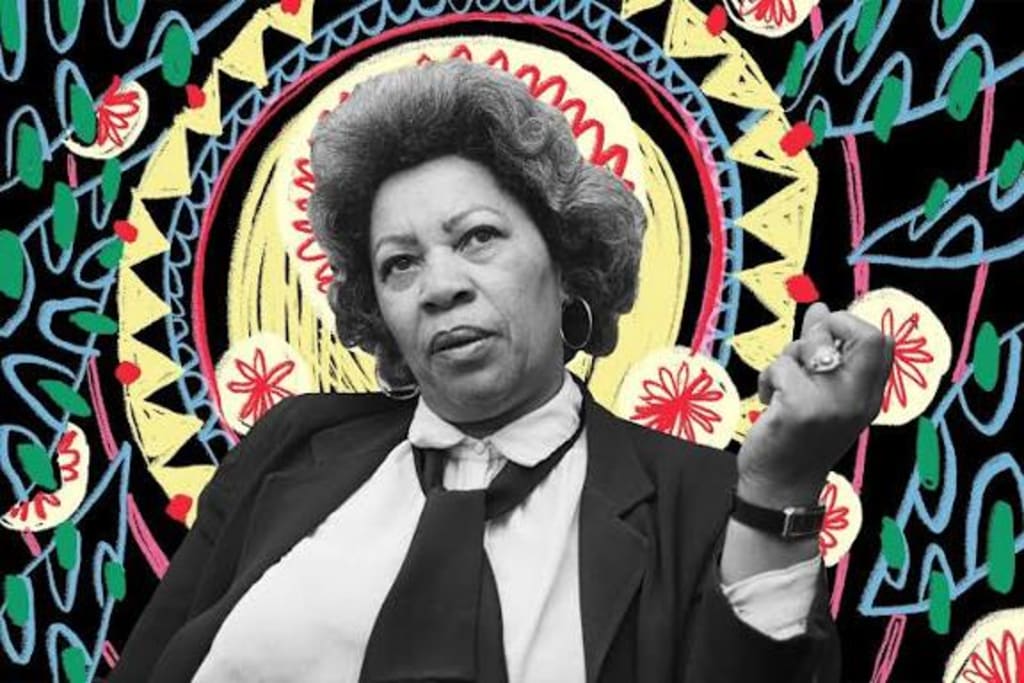
Toni Morrison, one of the most influential literary voices of the modern era, was never afraid to ask uncomfortable questions. Her writing consistently challenged society’s assumptions about race, identity, power, and relationships. One of her most thought-provoking reflections on love comes from this quote:
“Could you really love somebody who was absolutely nobody without you? You really want somebody who depends on you for their very life?”
At first glance, the quote feels confronting. Many people grow up believing that love means being needed, relied upon, or even depended on. Morrison, however, urges us to pause and reconsider: is dependency truly love, or is it something else entirely?
Love vs. Control: A Thin and Dangerous Line
Morrison’s words highlight a crucial distinction between love and control. When someone depends entirely on another person for their identity, survival, or self-worth, the relationship becomes unbalanced. Instead of two equal partners, there is a holder of power and one who is powerless.
In such dynamics, affection can easily turn into dominance. The person who is “needed” may feel important, validated, or superior, but this sense of worth comes at a cost—the erasure of the other person’s independence. Morrison challenges us to ask whether love that thrives on another person’s weakness can truly be called love at all.
The Illusion of Being Needed
Many people equate being needed with being loved. Society often romanticizes sacrifice, dependency, and emotional reliance, portraying them as signs of deep connection. Morrison disrupts this illusion by questioning whether the desire to be needed is actually rooted in insecurity rather than affection.
When someone needs us to survive emotionally or socially, it can boost our ego. But love, Morrison implies, should not be about filling a void in ourselves by keeping another person incomplete. True connection requires two people who can stand on their own yet still choose to walk together.
Independence as the Foundation of Healthy Love
Morrison’s quote advocates for relationships built on independence rather than dependency. Healthy love exists between individuals who know who they are, have their own voices, and possess the ability to leave—but stay because they want to.
This idea reframes love as a choice, not an obligation. When neither partner is trapped by fear or necessity, the bond becomes stronger, more respectful, and more authentic. Love rooted in freedom allows both people to grow rather than shrink.
Why Morrison’s Message Still Resonates Today
In today’s world, where emotional burnout, toxic relationships, and power imbalances are increasingly discussed, Morrison’s insight feels especially relevant. Many modern conversations around mental health and emotional boundaries echo the same principle: love should empower, not consume.
Social media often promotes intense attachment as romantic, but Morrison reminds us that intensity without equality can be harmful. Her words push readers to rethink what they desire from relationships—not just romantic ones, but friendships and family bonds as well.
Love as Mutual Recognition
At its core, Morrison’s quote asks us to consider whether we love people for who they are, or for how they make us feel needed. True love recognizes the full humanity of another person—their strength, autonomy, and ability to exist independently.
Loving someone who is “somebody” without you requires humility. It means accepting that you are not their savior, owner, or source of identity. Instead, you are their partner, companion, or equal.
A Timeless Lesson from a Literary Icon
Toni Morrison did not offer easy answers; she offered profound questions. This quote is not an attack on love but a challenge to deepen it. It invites readers to build relationships based on respect rather than reliance, freedom rather than fear.
In a world that often confuses possession with passion, Morrison’s words stand as a reminder that the strongest love is not the one that binds, but the one that allows both people to remain whole.
About the Creator
Fiaz Ahmed Brohi
I am a passionate writer with a love for exploring and creating content on trending topics. Always curious, always sharing stories that engage and inspire.
Keep reading
More stories from Fiaz Ahmed Brohi and writers in Geeks and other communities.
Amanda Seyfried: Hollywood’s Forgotten Female Prophet
In an industry dominated by transient fame and fleeting accolades, few actors leave a lasting imprint that transcends their on-screen roles. Amanda Seyfried, often celebrated for her beauty and versatility, is increasingly being recognized as more than just a Hollywood starlet—she is, in many ways, a prophet of female resilience and foresight in contemporary cinema.
By Fiaz Ahmed Brohi3 months ago in Geeks
A Knight of the Seven Kingdoms Series Review (Season 1)
As one of the biggest properties in fantasy, A Song of Ice and Fire remains immensely popular with audiences. After reaching far into the past with House of the Dragon, a second spin-off was on the cards. A Knight of the Seven Kingdoms serves up a bite-sized slice of action and drama, but it still claims a spot among the best small-screen titles.
By Robert Cain14 days ago in Geeks
Oscar Prognostication 2026
DONOVAN’S OSCAR PROGNOSTICATION 2026 Oooo, a fun new theme for the Oscar films this year: generational trauma. A lot of dads (and some moms) making movies in 2025, doing therapy on film and trying to work through their fears as a parent (and hoping their kids don’t end up hating them and writing a book about them). As usual, it makes for such a fun crop of movies. So get comfortable for our session, while I lay on a couch and rant about my 27th annual Academy Award predictions. (We'll both probably need therapy by the time this is over.)
By Ryan Donovan2 days ago in Geeks


Comments
There are no comments for this story
Be the first to respond and start the conversation.