
US Launches Strikes Against Islamic State in Nigeria: A Strategic Blow in the Fight Against Terrorism
US Strikes Target ISWAP in Nigeria: Precision Military Action Amid Rising Regional Threats

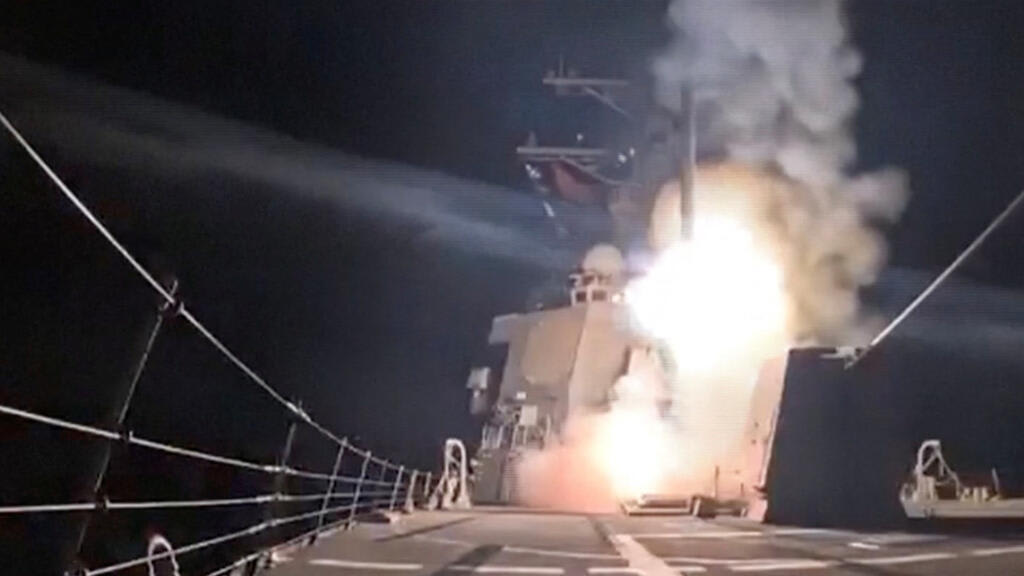
In a decisive move against the growing threat of the Islamic State in West Africa Province (ISWAP), the United States military has launched targeted strikes in Nigeria, signaling a renewed commitment to counterterrorism efforts in the region. These strikes, confirmed by US Africa Command (AFRICOM), are part of a broader strategy aimed at dismantling extremist networks that have plagued Nigeria and neighboring countries for years.
According to official statements, the strikes targeted ISWAP camps and training facilities in the northeastern region of Nigeria, primarily in areas where the insurgents have entrenched themselves. While precise details regarding the number of casualties remain classified, intelligence sources suggest that the strikes successfully destroyed several critical militant infrastructure points, including weapons depots and command centers.
The rise of ISWAP, a splinter group of Boko Haram, has posed significant security challenges in the Sahel and Lake Chad regions. Unlike its predecessor, ISWAP has demonstrated more sophisticated operational capabilities, including the use of improvised explosive devices (IEDs), coordinated attacks on military convoys, and the recruitment of both local and foreign fighters. The group’s aggressive expansion has destabilized communities, leading to mass displacement, humanitarian crises, and heightened regional insecurity.
The US has maintained a long-standing role in assisting Nigeria’s counterterrorism initiatives, primarily through intelligence sharing, training, and advisory support. However, the recent strikes mark a more assertive approach, reflecting Washington’s determination to curtail the group’s operational freedom. Analysts believe that this strategy is also designed to support Nigerian forces, who have faced considerable challenges in confronting ISWAP due to the group’s mobility and deep knowledge of the local terrain.
Experts highlight that while US intervention provides significant tactical advantages, it also underscores the need for a comprehensive strategy that combines military action with socio-economic and political measures. “Military strikes alone cannot eradicate extremist ideologies. To achieve lasting peace, we must address the root causes of radicalization, including poverty, lack of education, and local grievances,” says Dr. Halima Yusuf, a West African security analyst.
The Nigerian government welcomed the strikes, framing them as a crucial step in safeguarding national security. President Bola Tinubu’s administration emphasized the importance of international cooperation in combating terrorism, stating that the partnership with the US and other allies would continue to focus on neutralizing threats while supporting affected communities.
However, the operation also raises questions about sovereignty and the potential for civilian casualties. Human rights organizations have called for transparency in military operations to ensure compliance with international law. Historical precedents in the region highlight the risks of collateral damage, which can inadvertently fuel further radicalization if local populations perceive military actions as indiscriminate or unjust.
In addition to tactical success, the strikes serve a strategic purpose: sending a strong message to extremist networks that the international community is vigilant and capable of striking where threats emerge. The US military has consistently emphasized precision and intelligence-led operations to minimize risks while maximizing impact. Such operations are often coordinated with local forces, ensuring that actionable intelligence informs every decision.
The broader context of these strikes is a reminder of the interconnected nature of global security. ISWAP’s operations extend beyond Nigeria’s borders, affecting Cameroon, Chad, and Niger. Cross-border attacks, kidnappings, and smuggling networks illustrate the transnational threat posed by such groups. Consequently, US strikes are part of a regional effort to stabilize the Lake Chad Basin and reduce the operational reach of militant groups.
While it is too early to gauge the long-term impact of the strikes, initial reports indicate disruptions in ISWAP’s command structure and supply chains. Analysts predict that the group may attempt retaliatory actions, making ongoing vigilance crucial. Regional forces, supported by international partners, must remain alert to prevent a resurgence or strategic repositioning of militants.
In conclusion, the US strikes against ISWAP in Nigeria represent a significant tactical and symbolic step in the fight against terrorism. By targeting critical infrastructure and command centers, these operations aim to weaken militant capabilities while reinforcing international solidarity against extremist threats. However, military action must be complemented by social, economic, and political strategies to ensure lasting peace and stability in the region. As Nigeria and its partners navigate this complex security landscape, the global community watches closely, hoping that coordinated efforts can finally bring relief to communities long affected by violence and instability.
About the Creator
Fiaz Ahmed Brohi
I am a passionate writer with a love for exploring and creating content on trending topics. Always curious, always sharing stories that engage and inspire.
Keep reading
More stories from Fiaz Ahmed Brohi and writers in The Swamp and other communities.
“‘India Cured Me’: NRI Returns After 10 Years, Criticises US Healthcare System”
After spending a decade in the United States, a Non-Resident Indian (NRI) has returned home with a powerful message: “India cured me.” His statement, which has gone viral on social media, criticises the American healthcare system while praising India’s comparatively affordable, accessible, and humane medical care. The story has reignited a global conversation about healthcare equity, cost, and patient dignity.
By Fiaz Ahmed Brohi3 months ago in The Swamp
The Forsyth House Fire
Since 1851, Forsyth House has stood on the corner of Union Street and Gordon Street in the heart of Glasgow. Its iconic, or was... because on Sunday 8th of March, 2026, a fire broke out in a small, seemingly un-named shop in the building and tore all that history down. As I write, the rubble is still unsettled and the street is still blocked off. Central Station is quiet on the upper level, and around 30 small businesses have quite literally gone up in smoke.
By S. A. Crawford3 days ago in The Swamp
Cuban Protesters Ransack Communist Office as Energy Crisis Deepens
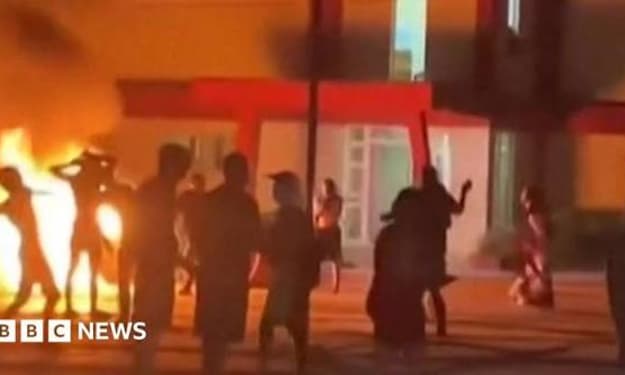
Frustration over worsening power shortages erupted into violence in parts of Cuba this week after demonstrators stormed and ransacked a local office belonging to the ruling Communist Party of Cuba. The incident reflects rising anger among ordinary Cubans struggling with long electricity outages, dwindling fuel supplies, and an economy under intense strain. According to witnesses and local reports, a group of protesters gathered outside the party building in a provincial town late in the evening after yet another day of prolonged blackouts. What began as a demonstration demanding reliable electricity and government accountability quickly escalated as some participants forced their way into the building, overturning furniture, smashing windows, and damaging official equipment. Authorities later deployed police to restore order and secure the building. While officials did not immediately release details about arrests or injuries, government sources confirmed that an investigation into the incident was underway. The unrest comes amid one of the most severe energy shortages the island has faced in years. Cuba’s fragile power grid has been struggling with aging infrastructure, limited fuel imports, and mounting economic pressure. In recent months, blackouts lasting several hours at a time have become a daily reality for many communities. Residents say the outages are disrupting every aspect of life. Food spoils quickly in homes without refrigeration, businesses are forced to close early, and hospitals and essential services must rely on backup generators. For families already coping with shortages of food and medicine, the lack of electricity has become another source of anxiety. “The lights go out for half the day,” said one resident who witnessed the protest. “We can’t cook properly, we can’t store food, and it’s extremely hot at night. People are exhausted and angry.” The government of Cuba has acknowledged the severity of the energy crisis, attributing it to multiple factors including mechanical failures at several major power plants and difficulties importing fuel. Officials have also pointed to the long-standing economic embargo imposed by the United States, which they say complicates efforts to purchase equipment and energy supplies. However, critics argue that years of underinvestment and poor management have left the country’s energy infrastructure vulnerable. Several power stations date back decades and require extensive maintenance or replacement, but financial constraints have slowed modernization efforts. The ransacking of the Communist Party of Cuba office represents a rare public challenge to the island’s one-party political system. Although small demonstrations have occurred periodically, direct attacks on government facilities remain unusual and are often quickly suppressed by security forces. Observers say the incident illustrates how economic hardship is fueling deeper dissatisfaction with the government. Since the economic downturn that intensified during the global pandemic, Cuba has experienced rising inflation, shortages of basic goods, and increasing migration as citizens seek opportunities abroad. In response to the growing unrest, officials urged calm and promised that measures are being taken to stabilize the power supply. Government representatives said repair crews are working around the clock to restore several malfunctioning power plants and that emergency fuel shipments are expected in the coming weeks. Authorities also warned against vandalism and disorder, stressing that damaging public property would only complicate recovery efforts. State media described the ransacking incident as an isolated act carried out by a small group of individuals exploiting public frustration. Despite those assurances, many residents remain skeptical about how quickly the situation will improve. The energy crisis has persisted for months, and previous government promises to reduce blackouts have brought only temporary relief. Energy experts say Cuba’s electricity sector faces structural challenges that cannot be solved quickly. The island relies heavily on aging thermal power plants and imported fuel, leaving it vulnerable to supply disruptions and price fluctuations. Renewable energy projects, including solar and wind facilities, have been proposed as part of long-term solutions but remain limited in scale. Meanwhile, the daily realities of the crisis continue to weigh heavily on ordinary citizens. During extended outages, neighborhoods often fall into darkness with little warning, forcing residents to rely on candles or battery-powered lamps. In densely populated areas, the lack of air conditioning and ventilation during hot evenings has become particularly difficult. Community leaders and local activists say people are not necessarily looking for confrontation but for practical improvements that would make daily life more manageable. Reliable electricity, stable food supplies, and economic opportunities remain among the most urgent demands voiced by residents. Whether the latest unrest signals a broader wave of protests remains unclear. In the past, demonstrations over economic conditions in Cuba have sometimes spread rapidly through social media and word of mouth before being contained by authorities. For now, the ransacked party office stands as a visible symbol of the growing frustration simmering across the island. As the energy crisis continues and blackouts persist, the government faces increasing pressure to deliver solutions that restore stability and confidence among a population grappling with daily hardship.
By Fiaz Ahmed a day ago in The Swamp

Comments
There are no comments for this story
Be the first to respond and start the conversation.