
No Negotiation, No Truce” With RSF, Says Senior Sudan Official
Sudan’s Hardline Stance Signals a Prolonged Conflict and Deepening Humanitarian Crisis

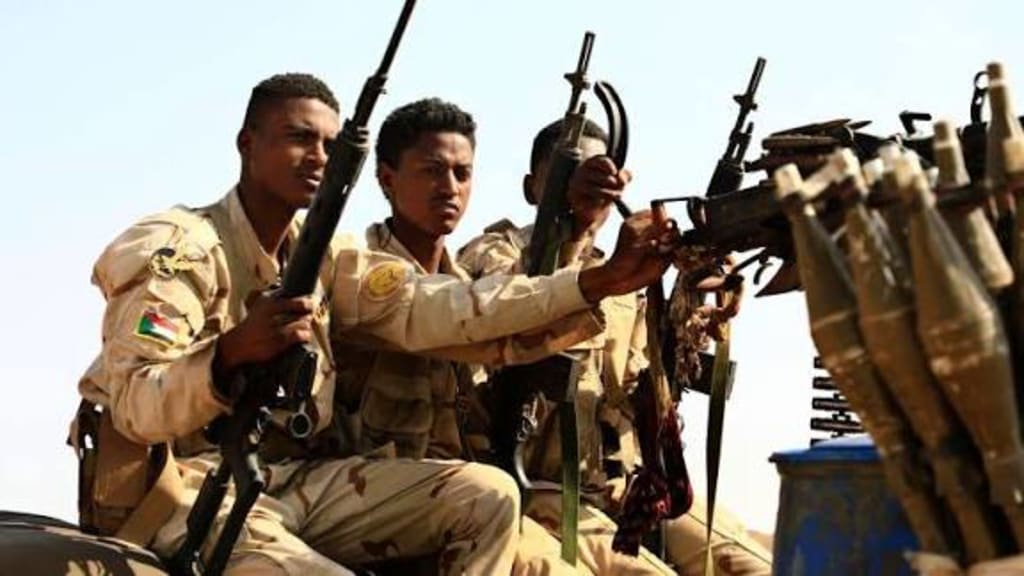
Sudan’s devastating civil conflict shows no signs of easing after a senior government official declared there would be “no negotiation and no truce” with the Rapid Support Forces (RSF). The statement underscores the widening rift between Sudan’s rival power centers and suggests that diplomatic efforts to end one of the world’s worst humanitarian crises may face even greater obstacles ahead.
Since fighting erupted between the Sudanese Armed Forces (SAF) and the RSF, millions of civilians have been caught in the crossfire. The latest remarks indicate that the government is doubling down on a military-first strategy, even as international mediators warn of catastrophic consequences if the war continues unchecked.
Why the Government Is Rejecting Talks
According to senior officials, the refusal to negotiate stems from accusations that the RSF has committed widespread atrocities, including attacks on civilians, mass displacement, and the destruction of vital infrastructure. Government leaders argue that engaging in talks would legitimize an armed group they accuse of undermining Sudan’s sovereignty and stability.
From the state’s perspective, negotiations without accountability could set a dangerous precedent. Officials insist that peace can only come after the RSF is militarily defeated or dismantled, not through compromise.
This hardline stance reflects growing frustration within the military leadership, which believes previous ceasefires were repeatedly violated, allowing the RSF to regroup and expand its control in key regions.
The RSF and the Power Struggle
The RSF, originally formed from militias operating in Darfur, has evolved into a powerful paramilitary force with significant economic and territorial influence. Its rivalry with the SAF represents more than a military clash—it is a struggle over Sudan’s political future, control of resources, and the structure of the state.
Analysts say the conflict is rooted in years of unresolved tensions following the ouster of longtime ruler Omar al-Bashir. Competing visions for governance, security sector reform, and civilian rule have repeatedly derailed transitions, culminating in the current war.
Humanitarian Costs Continue to Mount
While political leaders trade ultimatums, civilians pay the highest price. The United Nations estimates that millions have been displaced, with many fleeing to neighboring countries under dire conditions. Food insecurity, disease outbreaks, and the collapse of healthcare systems have pushed Sudan toward famine-like conditions in several regions.
Aid agencies warn that continued fighting will make humanitarian access even more difficult. Roads, airports, and supply routes have been damaged or blocked, leaving vulnerable populations without assistance.
The government’s rejection of negotiations raises fears that the conflict could intensify further, worsening an already catastrophic situation.
International Reactions and Diplomatic Pressure
Sudan’s stance has drawn mixed reactions from the international community. Some regional actors quietly sympathize with the government’s position, citing concerns over the RSF’s conduct. Others argue that refusing dialogue altogether risks prolonging the war indefinitely.
The African Union, United Nations, and neighboring states have repeatedly called for ceasefires and inclusive talks. However, diplomatic efforts have struggled to gain traction, partly due to mutual distrust and fragmented mediation initiatives.
Observers note that without sustained international pressure and unified mediation, the conflict may harden into a long-term war with shifting frontlines rather than a clear resolution.
Risks of a Prolonged Military Approach
History offers sobering lessons about conflicts resolved solely through force. Prolonged wars often weaken state institutions, fuel extremism, and create power vacuums that are difficult to fill. In Sudan’s case, a drawn-out conflict could further fracture the country along ethnic, regional, and political lines.
Economically, the war has already devastated Sudan’s fragile economy. Currency depreciation, unemployment, and disrupted trade are pushing millions deeper into poverty. A military-only strategy may secure short-term gains but risks long-term instability.
Voices Calling for a Political Solution
Despite the government’s position, many Sudanese civil society groups continue to advocate for a negotiated political settlement. Activists argue that neither side can achieve a decisive victory without destroying what remains of the country.
They emphasize that sustainable peace must include civilian leadership, accountability for abuses, and reforms to prevent future militarization of politics.
These voices, however, remain largely sidelined as military leaders dominate decision-making.
What Comes Next for Sudan?
The declaration of “no negotiation, no truce” marks a critical moment in Sudan’s conflict. It signals that the government is prepared for a prolonged confrontation, even as humanitarian conditions worsen.
Whether this strategy leads to stability or deeper chaos remains uncertain. Much will depend on battlefield developments, international pressure, and whether internal or external factors eventually force a shift toward dialogue.
For now, Sudan stands at a crossroads—one where the path of uncompromising warfare risks overshadowing opportunities for peace, reconciliation, and recovery.
About the Creator
Fiaz Ahmed Brohi
I am a passionate writer with a love for exploring and creating content on trending topics. Always curious, always sharing stories that engage and inspire.
Keep reading
More stories from Fiaz Ahmed Brohi and writers in The Swamp and other communities.
Saudi Arabia Introduces New White Land Rules, Imposes Fines Up to 100% on Undeveloped Plots
Saudi Arabia has unveiled a major overhaul of its White Land Tax regulations, introducing strict new rules that could see owners fined up to 100% of a land’s value if plots remain undeveloped. The move signals a decisive push by the Kingdom to tackle land hoarding, control soaring real estate prices, and accelerate urban development as part of Vision 2030.
By Fiaz Ahmed Brohi23 days ago in The Swamp
Taiwan Thanks Canada for Its Support Ahead of Prime Minister’s China Trip
In the often tense and closely watched world of global diplomacy, even a simple statement of thanks can carry enormous political weight. This week, Taiwan publicly expressed gratitude to Canada for its continued support, just days before the Canadian prime minister is set to travel to China. While the words may sound polite and routine, the timing tells a much deeper story—one about strategic alliances, democratic values, and the delicate balancing act Canada must perform on the world stage. This moment highlights not only Taiwan’s growing concern about its international standing, but also Canada’s evolving role in Indo-Pacific geopolitics. As Ottawa prepares to engage directly with Beijing, Taiwan’s message serves as both appreciation and a reminder of what is at stake. Why Taiwan’s Thank-You Matters Taiwan exists in a uniquely complicated diplomatic position. Claimed by China as part of its territory, the self-governed island is recognized by only a small number of countries as a sovereign state. Most nations, including Canada, officially adhere to a “One China” policy—acknowledging Beijing as the sole legal government of China—while maintaining unofficial but meaningful ties with Taipei. Against this backdrop, Canada’s vocal support for peace and stability in the Taiwan Strait has not gone unnoticed. Taiwanese officials have repeatedly welcomed Canada’s stance on democracy, human rights, and the rule of law—values that Taiwan sees as central to its identity. By thanking Canada ahead of the prime minister’s China visit, Taiwan is sending a subtle but powerful signal: its relationship with Ottawa matters, even if it exists outside formal diplomatic recognition. Canada’s Indo-Pacific Strategy and Taiwan Canada has increasingly framed its foreign policy around the Indo-Pacific, a region it views as economically vital and strategically sensitive. Taiwan plays an important role in this vision—not only as a democracy, but also as a global technology powerhouse, particularly in semiconductor manufacturing. In recent years, Canada has: Strengthened trade and investment ties with Taiwan Supported Taiwan’s meaningful participation in international organizations Joined allies in calling for peaceful resolution of cross-strait tensions While Canada stops short of recognizing Taiwan as an independent state, these actions signal a growing willingness to engage more openly with Taipei. For Taiwan, this kind of engagement provides international breathing room amid rising pressure from Beijing. The Timing: Ahead of a High-Stakes China Trip The upcoming visit of Canada’s prime minister to China adds another layer of complexity. Relations between Ottawa and Beijing have been strained in recent years over issues such as trade disputes, cybersecurity concerns, and the detention of Canadian citizens in China. China is extremely sensitive to any foreign interaction with Taiwan, often viewing it as interference in its internal affairs. Taiwan’s public show of appreciation, just before the trip, places Canada in a delicate position—caught between reaffirming its values and managing its relationship with the world’s second-largest economy. For Canada, the challenge will be to: Re-engage China diplomatically without appearing to retreat from democratic principles Maintain support for Taiwan without provoking unnecessary escalation Balance economic interests with national security and human rights concerns Taiwan’s Diplomatic Strategy: Gratitude as Soft Power Taiwan has become increasingly adept at using soft power diplomacy. Public statements of thanks, humanitarian aid, technology partnerships, and cultural exchanges are all part of Taipei’s effort to strengthen informal alliances. By thanking Canada openly, Taiwan accomplishes several goals at once: Reinforces its image as a responsible and appreciative international partner Encourages continued support from like-minded democracies Signals resilience in the face of diplomatic isolation This approach doesn’t confront China directly, but it subtly expands Taiwan’s international presence—something Beijing works hard to limit. What This Means for China-Canada Relations China will undoubtedly be watching closely. Any perceived strengthening of Canada-Taiwan ties could become a sensitive topic during diplomatic talks. However, Canada is not alone. Many Western democracies now walk the same line: recognizing China diplomatically while deepening unofficial engagement with Taiwan. For Beijing, this trend is concerning. For Ottawa, it is increasingly unavoidable. Canada’s message to China is likely to be one of engagement without endorsement—cooperation where possible, disagreement where necessary. Taiwan’s gratitude underscores that Canada’s actions resonate far beyond bilateral talks. A Broader Democratic Signal Beyond diplomacy, this episode reflects a broader global conversation about democracy and authoritarianism. Taiwan often positions itself as proof that Chinese culture and democracy are compatible—a narrative that challenges Beijing’s political model. By supporting Taiwan’s participation in global affairs, countries like Canada reinforce that message. Taiwan’s thank-you, therefore, is not just about bilateral relations—it’s about shared values and the kind of international order democracies want to uphold. Conclusion: Words That Carry Weight In international politics, timing is everything. Taiwan’s decision to thank Canada ahead of the prime minister’s China trip is no coincidence. It highlights the fragile but meaningful ties between Ottawa and Taipei, while reminding the world that Taiwan remains an active and engaged player despite diplomatic constraints. For Canada, the coming days will test its ability to balance pragmatism with principle. For Taiwan, the message is clear: every expression of support matters. And for global observers, this moment offers a glimpse into how modern diplomacy often works—not through treaties and embassies, but through carefully chosen words, strategic timing, and shared values expressed in public view.
By Muhammad Hassan5 days ago in The Swamp
Wild Card Weekend Recap: What Happens Now?
I think I figured out why I love Wild Card Weekend so much. It's because it's the first playoff anything of the calendar year. The NFL season starts in the fall, and once upon a time, the champion was crowned either on or slightly before New Year's. The evolution of the NFL schedule has resulted in the playoffs starting just into the New Year, and currently, the final week of the season falls on the first weekend of the New Year, with Wild Card Weekend coming a week after that. So yes, chronologically, the NFL's Wild Card Weekend serves as the first playoff anything of the calendar year.
By Clyde E. Dawkins6 days ago in Unbalanced




Comments
There are no comments for this story
Be the first to respond and start the conversation.