
Navy’s Fleet of 4ft Boats to Protect Britain from Putin’s Submarines
How Britain’s Smallest Naval Vessels Are Being Positioned as a New Shield Against Undersea Threats

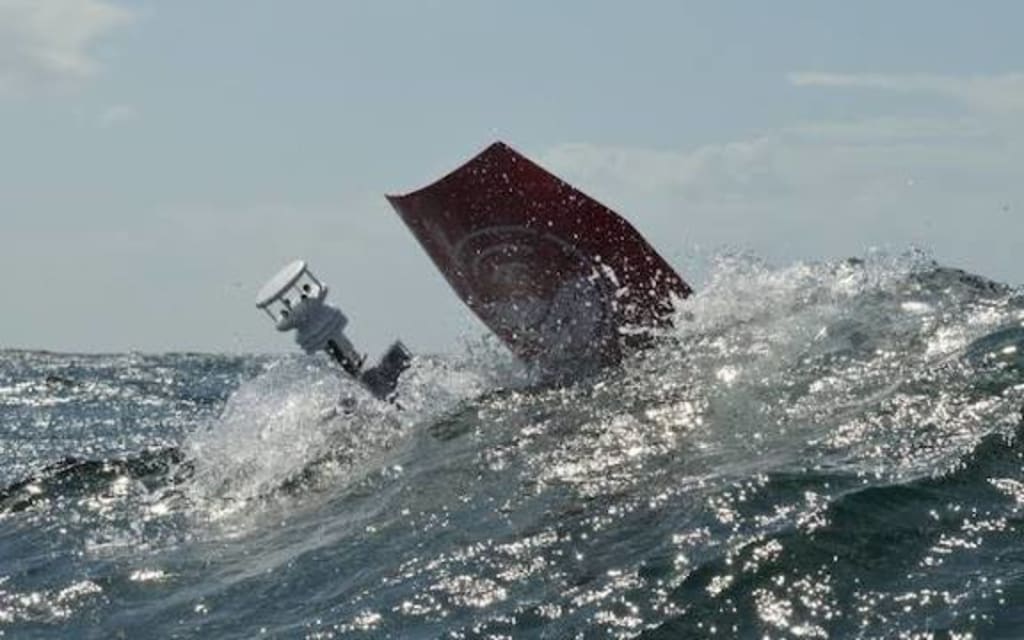
As global tensions rise and underwater warfare becomes increasingly sophisticated, Britain is turning to an unexpected but innovative line of defense: a fleet of tiny, 4-foot autonomous boats designed to protect its waters from potential threats posed by Russian submarines. At first glance, these small vessels may seem insignificant against the massive and stealthy submarines often associated with President Vladimir Putin’s navy. Yet, experts say these compact boats could play a crucial role in the future of maritime security.
A New Kind of Naval Defense
Traditional naval defense relies heavily on large warships, submarines, and aircraft. However, modern warfare is shifting toward technology-driven, cost-effective, and flexible solutions. The Royal Navy’s plan to deploy small, unmanned surface vessels reflects this transformation. These 4-foot boats, often described as “marine drones,” are designed to patrol coastal waters, harbors, and key maritime routes where hostile submarines or underwater drones could pose a threat.
Unlike conventional ships, these vessels do not carry crews. Instead, they operate autonomously or via remote control, using advanced sensors, sonar systems, and artificial intelligence to detect unusual underwater activity. Their small size allows them to operate discreetly and in large numbers, creating a layered defense network that is difficult for adversaries to evade.
Why the Focus on Russian Submarines?
Russia has invested heavily in its submarine fleet over the past decade, viewing underwater dominance as a strategic advantage. Russian submarines are known for their stealth, long-range capabilities, and ability to operate close to NATO waters. British defense officials have repeatedly warned that undersea cables, energy pipelines, and naval bases could be vulnerable to covert surveillance or sabotage.
Rather than responding solely with expensive, large-scale assets, Britain’s use of small autonomous boats signals a shift in thinking. The idea is not to replace traditional naval power but to complement it, filling gaps in surveillance and providing early warnings of potential threats.
How These 4ft Boats Work
Despite their size, these boats are packed with technology. They are equipped with:
Sonar systems to detect underwater movement
High-resolution cameras for surface monitoring
AI-powered software to identify suspicious patterns
Secure communication links to relay real-time data to naval command centers
Operating in swarms, the boats can cover large areas of water simultaneously. If one unit detects something unusual—such as the acoustic signature of a submarine—it can alert nearby vessels and command units instantly. This rapid response capability is vital in modern naval defense, where minutes can make a significant difference.
Cost-Effective and Scalable Security
One of the biggest advantages of these small boats is cost. Building and maintaining large warships or submarines requires billions of pounds and years of development. In contrast, autonomous boats are relatively inexpensive, quick to produce, and easy to replace if damaged or lost.
This affordability allows the Navy to deploy them in greater numbers, increasing coverage and resilience. Even if an adversary manages to disable a few units, the overall defense system remains intact. From a strategic standpoint, this creates a high-cost problem for the enemy and a low-cost solution for Britain.
Protecting Critical Infrastructure
Beyond military threats, these boats are also expected to safeguard vital civilian infrastructure. Britain relies heavily on undersea internet cables, offshore wind farms, and energy pipelines. Any disruption to these systems could have serious economic and national security consequences.
By maintaining constant surveillance around sensitive areas, the Navy’s fleet of autonomous boats could deter sabotage and provide early alerts if something goes wrong. This dual-use capability—serving both military and civilian protection—makes the project even more valuable.
A Glimpse into the Future of Warfare
The deployment of 4-foot boats highlights a broader trend in global defense: the rise of unmanned and autonomous systems. From aerial drones to robotic submarines, future conflicts are likely to involve fewer soldiers on the front lines and more intelligent machines working behind the scenes.
For Britain, embracing this technology sends a clear message. The country is adapting to new threats and is willing to innovate rather than rely solely on traditional methods. While these boats may not confront Russian submarines directly, they form an essential part of a wider surveillance and deterrence strategy.
Conclusion
Britain’s plan to use a fleet of small, autonomous boats to guard its waters may seem unconventional, but it reflects the realities of modern warfare. In an era where stealth, speed, and information are key, size is no longer the ultimate measure of power. These 4-foot boats represent a smart, forward-looking approach to national defense—one that could help keep Britain’s seas secure amid growing global uncertainty.
About the Creator
Fiaz Ahmed Brohi
I am a passionate writer with a love for exploring and creating content on trending topics. Always curious, always sharing stories that engage and inspire.
Keep reading
More stories from Fiaz Ahmed Brohi and writers in The Swamp and other communities.
Southern Separatists in Yemen Report Saudi Airstrikes Near Positions
Yemen’s long-running conflict has once again taken a volatile turn as southern separatist forces reported Saudi-led airstrikes near their positions, raising fresh concerns about shifting alliances and the fragile balance of power in the war-torn country. The development underscores the complexity of Yemen’s conflict, where allies can quickly become adversaries and regional powers continue to play decisive roles. A Fractured Battlefield in Southern Yemen The reported airstrikes occurred in southern Yemen, an area largely controlled by the Southern Transitional Council (STC), a separatist group that seeks independence for the south. The STC has long been backed by the United Arab Emirates and has, at times, cooperated with Saudi Arabia against the Iran-aligned Houthi movement. However, tensions between the separatists and Yemen’s internationally recognized government — itself supported by Riyadh — have persisted for years. Southern separatist officials claimed the airstrikes targeted areas close to their military deployments, sparking fears of a direct confrontation with Saudi-backed forces. While Saudi authorities have not publicly confirmed the strikes, the reports have fueled speculation that relations between Riyadh and the STC are deteriorating. Saudi Arabia’s Delicate Role Saudi Arabia entered the Yemen war in 2015 with the stated goal of restoring the internationally recognized government after Houthi forces seized the capital, Sanaa. Since then, the conflict has evolved into a multi-layered struggle involving regional rivalries, local militias, and competing visions for Yemen’s future. The kingdom has walked a diplomatic tightrope in the south. On one hand, it has sought to keep Yemen unified under a single government. On the other, it has tolerated — and at times cooperated with — southern separatists to maintain stability and counter the Houthis. Reports of Saudi airstrikes near STC positions suggest that Riyadh may now be sending a warning or attempting to reassert control over southern dynamics. Rising Tensions Within the Anti-Houthi Camp If confirmed, the airstrikes highlight deep fractures within the anti-Houthi coalition. The STC accuses Yemen’s central government of corruption and marginalizing southern interests, while the government views separatist ambitions as a threat to national unity. These tensions have previously erupted into armed clashes, particularly in the port city of Aden. Observers note that renewed fighting between nominal allies would weaken efforts to stabilize Yemen and could benefit the Houthis, who remain firmly entrenched in the north. The Houthis have capitalized on internal divisions before, strengthening their negotiating position and military posture. Civilian Concerns and Humanitarian Risks As with much of Yemen’s conflict, civilians stand to suffer the most. Southern Yemen hosts millions of displaced people who have fled fighting elsewhere in the country. Any escalation in airstrikes or ground clashes risks worsening an already dire humanitarian situation marked by food insecurity, damaged infrastructure, and limited access to healthcare. Local residents have expressed fear that renewed hostilities could disrupt aid deliveries and push communities deeper into crisis. International humanitarian organizations have repeatedly warned that Yemen cannot withstand another major escalation without catastrophic consequences. Regional and Diplomatic Implications The reported airstrikes come at a time when Saudi Arabia has been seeking to reduce its military footprint in Yemen and pursue diplomatic solutions, including indirect talks with the Houthis. Any clash with southern separatists could complicate those efforts and draw Riyadh back into active conflict on multiple fronts. The incident also highlights the divergent approaches of Saudi Arabia and the UAE, whose differing priorities in Yemen have occasionally strained their partnership. While both oppose Houthi control, their visions for Yemen’s political future are not fully aligned, particularly regarding southern autonomy. What Comes Next? Much depends on how Saudi Arabia and the STC manage the fallout. If the airstrikes were intended as a limited show of force, backchannel diplomacy could prevent further escalation. However, if mistrust deepens, southern Yemen could become another active battlefield in an already fragmented war. Analysts warn that lasting peace in Yemen will require addressing southern grievances alongside negotiations with the Houthis. Ignoring separatist aspirations risks prolonging instability even if a broader ceasefire is achieved. A Conflict Without Simple Answers The reports of Saudi airstrikes near southern separatist positions serve as a reminder that Yemen’s war is far from a binary conflict. It is a tangled web of local ambitions, regional rivalries, and international interests. Until these competing forces are reconciled through inclusive political dialogue, Yemen’s path to peace will remain uncertain — and fragile.
By Fiaz Ahmed Brohi3 months ago in The Swamp
The Forsyth House Fire
Since 1851, Forsyth House has stood on the corner of Union Street and Gordon Street in the heart of Glasgow. Its iconic, or was... because on Sunday 8th of March, 2026, a fire broke out in a small, seemingly un-named shop in the building and tore all that history down. As I write, the rubble is still unsettled and the street is still blocked off. Central Station is quiet on the upper level, and around 30 small businesses have quite literally gone up in smoke.
By S. A. Crawford3 days ago in The Swamp



Comments
There are no comments for this story
Be the first to respond and start the conversation.