Fiaz Ahmed Brohi
Bio
I am a passionate writer with a love for exploring and creating content on trending topics. Always curious, always sharing stories that engage and inspire.
Stories (602)
Filter by community
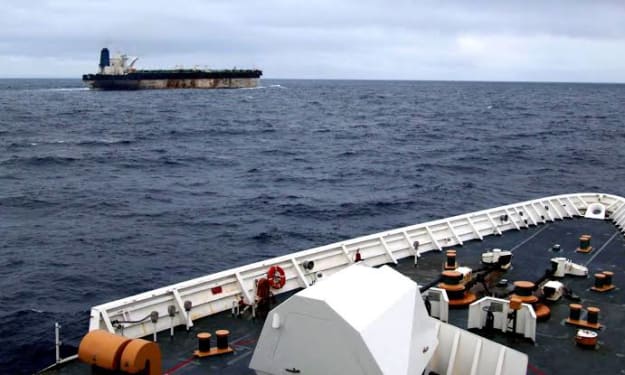
UK Can Legally Stop “Shadow Fleet” Tankers, Ministers Believe. AI-Generated.
The UK government believes it has the legal authority to stop and inspect so-called “shadow fleet” oil tankers operating in and around British waters, a move that could significantly tighten enforcement of international sanctions. These vessels, often linked to sanctioned states and opaque ownership structures, have become a growing concern for global maritime security, environmental safety, and the integrity of international law.
By Fiaz Ahmed Brohi10 days ago in The Swamp
The Return of the Aircraft Carrier Truman Is Being Seen as a Snub to the Navy in the War of the Future. AI-Generated.
The return of the U.S. aircraft carrier USS Harry S. Truman to active deployment has sparked debate far beyond naval circles. While some see it as a show of enduring American naval power, others interpret the move as a symbolic snub—particularly in the context of how modern warfare is rapidly evolving. In an era dominated by drones, cyber warfare, hypersonic missiles, and artificial intelligence, the decision to once again lean heavily on a traditional aircraft carrier has raised uncomfortable questions about whether the Navy is preparing for the wars of tomorrow or clinging to the strategies of yesterday. A Floating Symbol of 20th-Century Power For decades, aircraft carriers have been the ultimate symbol of U.S. military dominance. These massive floating airbases project power thousands of miles from American shores and allow the U.S. to strike almost anywhere in the world. The Truman, like other Nimitz-class carriers, represents this legacy—housing nearly 5,000 sailors, dozens of fighter jets, and unmatched logistical capability. However, critics argue that what once made carriers indispensable now makes them vulnerable. Their sheer size, cost, and visibility turn them into high-value targets in a battlefield increasingly defined by precision strikes and long-range weapons. The “War of the Future” Looks Very Different Modern conflict is no longer limited to sea, land, and air. Cyber attacks can cripple infrastructure without a single shot fired. Drones can swarm targets at a fraction of the cost of traditional aircraft. Hypersonic missiles can reach targets faster than current defenses can respond. In this context, sending a massive carrier strike group into contested waters can appear less like a strategic necessity and more like a risky gamble. Critics argue that the return of the Truman reflects an outdated mindset—one that prioritizes visible force projection over adaptability and technological evolution. A Snub to Naval Innovation? Many analysts and serving officers believe the Navy’s future lies in distributed lethality—smaller, more agile platforms networked together, harder to detect and cheaper to replace. Unmanned surface vessels, autonomous submarines, and land-based missile systems are increasingly viewed as the backbone of next-generation naval warfare. Against this backdrop, recommitting to a traditional carrier is seen by some as sidelining innovation. It sends a message that, despite years of discussion about transformation, the Navy still defaults to familiar tools when tensions rise. This perception has led to frustration among those advocating for faster modernization. They argue that resources devoted to maintaining and protecting carriers like the Truman could instead accelerate investment in emerging technologies that are more relevant to future conflicts. The Strategic Signal to Allies and Rivals Supporters of the decision counter that the Truman’s return is not about nostalgia—it’s about deterrence. Aircraft carriers remain powerful political tools. Their presence reassures allies, signals commitment, and demonstrates readiness in a way few other assets can. Yet even here, the message is mixed. To technologically advanced rivals, the deployment may signal predictability rather than strength. Adversaries have spent years developing strategies specifically designed to neutralize carriers, including anti-ship ballistic missiles and advanced surveillance systems. Cost Versus Capability The financial reality cannot be ignored. A single carrier strike group costs billions of dollars to build, maintain, and operate. In contrast, drone fleets and missile systems can be produced and deployed at a much lower cost, often with greater strategic flexibility. Critics argue that continuing to rely on carriers drains resources from areas where the Navy needs to grow most urgently. In a future conflict defined by speed, dispersion, and digital dominance, the cost-benefit equation of aircraft carriers looks increasingly questionable. Why the Carrier Still Matters—For Now Despite the criticism, aircraft carriers are not obsolete—yet. They remain unmatched in their ability to sustain prolonged air operations without relying on foreign bases. In regions where access is limited or politically sensitive, carriers still provide options no other platform can. The real issue, many experts say, is not the existence of carriers like the Truman, but over-reliance on them. Using them as one component of a broader, more flexible strategy may still make sense. Treating them as the centerpiece of future war planning may not. A Turning Point for Naval Strategy The return of the USS Harry S. Truman highlights a deeper tension within modern military thinking. It represents a crossroads between tradition and transformation, between proven power and emerging threats. Whether history views this moment as a wise assertion of strength or a missed opportunity for innovation will depend on what comes next. If the Navy pairs legacy platforms with bold technological change, the carrier’s return may be justified. If not, it risks becoming a powerful symbol—not of dominance, but of reluctance to adapt in a rapidly changing world.
By Fiaz Ahmed Brohi10 days ago in Longevity
Himalayas Bare and Rocky After Reduced Winter Snowfall, Scientists Warn. AI-Generated.
The Himalayas, often described as the world’s “Third Pole,” are facing a dramatic and worrying transformation. Scientists are warning that reduced winter snowfall is leaving vast stretches of the mountain range bare, rocky, and increasingly vulnerable to long-term environmental damage. Once known for their thick snow blankets and powerful glaciers, parts of the Himalayas are now showing exposed rock earlier than ever before—an alarming sign of climate stress in one of Earth’s most critical ecosystems. A Visible Change in the World’s Highest Mountains Winter snowfall plays a vital role in the Himalayan climate system. Snow acts as a protective layer, insulating glaciers and regulating the slow release of meltwater into rivers during warmer months. However, researchers monitoring satellite data and ground stations report that recent winters have brought significantly less snowfall across large areas of the range. As a result, snowlines are rising higher up the slopes, leaving lower and mid-altitude regions exposed. This has turned once-white mountain landscapes into expanses of dark rock, which absorb more heat from the sun, accelerating warming in a dangerous feedback loop. Why Reduced Snowfall Matters Snow is more than a scenic feature—it is essential to the health of Himalayan glaciers. When snowfall declines, glaciers lose their main source of replenishment. At the same time, exposed ice and rock melt faster under direct sunlight. Scientists warn that this imbalance is speeding up glacier retreat across the Himalayas. Many glaciers are now shrinking at rates not previously recorded, threatening the long-term stability of water systems that support nearly two billion people across South and Southeast Asia. Impact on Asia’s Major Rivers The Himalayas feed some of the world’s most important rivers, including the Indus, Ganges, Brahmaputra, Yangtze, and Mekong. These rivers depend on seasonal snow and ice melt to maintain consistent flow throughout the year. Reduced snowfall means less stored water for the dry season. In the short term, faster melting can cause floods and landslides. In the long term, however, shrinking glaciers could lead to water shortages, affecting agriculture, hydropower, and drinking supplies across multiple countries. A Growing Risk of Disasters Bare, rocky slopes are far more unstable than snow-covered ones. Snow helps bind loose material together, while exposed rock and soil increase the likelihood of landslides and avalanches. Scientists have already observed a rise in slope failures and glacial lake outburst floods in the region. As glaciers retreat, meltwater often accumulates in fragile lakes dammed by loose rock and ice. These lakes can burst suddenly, releasing destructive floods that threaten mountain communities and downstream infrastructure. Climate Change at the Core Researchers agree that climate change is the primary driver behind the declining snowfall. Rising global temperatures are altering weather patterns, causing more winter precipitation to fall as rain rather than snow. Even small temperature increases at high altitudes can drastically change how moisture behaves. Additionally, warming oceans and shifting atmospheric circulation are affecting the timing and intensity of winter storms that traditionally brought snow to the Himalayas. Effects on Local Communities and Wildlife Mountain communities that rely on predictable snowfall for farming, tourism, and water storage are already feeling the effects. Farmers report changes in planting cycles, while winter tourism has declined in some regions due to unreliable snow conditions. Wildlife is also under pressure. Species adapted to cold environments are losing habitat as snow cover shrinks. Plants that depend on snowmelt are struggling to survive in drier, warmer conditions, disrupting fragile alpine ecosystems. Scientists Call for Urgent Monitoring and Action Experts stress the importance of improved monitoring of snowfall, glacier health, and water flows across the Himalayan region. Better data can help governments plan for future water management challenges and disaster risks. At the same time, scientists emphasize that local adaptation alone is not enough. Reducing global greenhouse gas emissions remains critical to slowing temperature rise and preserving what remains of the Himalayan snow and ice. What the Future Holds If current trends continue, large parts of the Himalayas could see permanent changes within decades. Reduced snowfall and accelerating glacier loss may reshape landscapes, ecosystems, and human livelihoods on an unprecedented scale. The sight of bare, rocky Himalayan slopes is more than a visual change—it is a warning signal. The world’s highest mountains are responding rapidly to a warming planet, and the consequences will extend far beyond the peaks themselves.
By Fiaz Ahmed Brohi10 days ago in Earth
Severe Cold Grips the Country as Hunza Records −21°C: Pakistan Faces a Deep Winter Freeze. AI-Generated.
A powerful cold wave has swept across Pakistan, plunging temperatures to alarming lows and turning daily life into a test of endurance for millions. The northern region of Hunza has recorded a bone-chilling −21°C, marking one of the coldest temperatures of the season and drawing national attention to the intensity of this winter. As icy winds cut through valleys and plains alike, the country is experiencing a severe cold spell that is affecting health, travel, agriculture, and energy supplies. Hunza at the Center of the Freeze Hunza, known worldwide for its breathtaking landscapes and serene beauty, has transformed into a frozen world. At −21°C, rivers partially freeze, roads become slippery, and even routine activities turn risky. Residents of the valley, though accustomed to harsh winters, describe this cold as unusually intense. Water pipelines have frozen solid, livestock require special care, and heating resources are stretched to their limits. Despite the extreme conditions, life continues. Locals rely on traditional methods of insulation, wood-burning stoves, and community cooperation to survive the cold nights. However, the severity of the temperature has raised concerns about vulnerable groups, including the elderly, children, and those living in remote areas with limited access to fuel and medical facilities. Cold Wave Spreads Across Pakistan While Hunza sits at the epicenter of the cold, the effects are being felt nationwide. Gilgit-Baltistan and parts of Khyber Pakhtunkhwa are experiencing sub-zero temperatures, while major cities like Islamabad, Lahore, and Karachi are facing unusually cold mornings and dense fog. In the plains, nighttime temperatures have dropped sharply, catching many residents off guard. The Pakistan Meteorological Department has warned that the cold wave may persist, driven by continental air systems moving southward. These systems not only lower temperatures but also increase the risk of frost, fog, and icy conditions on highways, disrupting travel and trade. Impact on Daily Life and Health Severe cold brings serious health risks, particularly for those without adequate shelter or heating. Hospitals in colder regions report an increase in patients suffering from hypothermia, respiratory infections, and flu-like illnesses. Doctors advise people to stay warm, avoid unnecessary exposure to cold, and ensure proper ventilation when using indoor heaters to prevent carbon monoxide poisoning. In urban areas, gas shortages and power outages have intensified the struggle. Many households face limited gas supply during peak morning and evening hours, forcing families to rely on electric heaters or alternative fuels. This increased demand places additional pressure on the national power grid, raising the risk of load shedding. Agriculture and Livelihoods Under Threat The cold wave poses a significant threat to agriculture, particularly winter crops and orchards. Frost can damage wheat fields, vegetables, and fruit trees, potentially impacting yields and farmers’ incomes. In northern areas, livestock owners are working hard to protect animals from the cold, as freezing temperatures can lead to illness and even death among cattle and sheep. Tourism, a vital source of income for regions like Hunza, has also been affected. While some tourists are drawn by the snow-covered scenery, many trips have been canceled due to dangerous road conditions and travel advisories. Local businesses, already facing economic challenges, are feeling the strain of reduced visitor numbers. Government Response and Preparedness Authorities across Pakistan have issued cold weather alerts and advisories, urging citizens to take precautionary measures. Disaster management agencies are monitoring the situation, particularly in northern and mountainous regions where access can be cut off due to snow and ice. Emergency services have been placed on high alert, and local administrations are working to ensure the availability of fuel, food supplies, and medical assistance. However, experts stress that long-term planning is essential, as extreme weather events are becoming more frequent due to climate change. Climate Change and Extreme Winters Meteorologists and climate scientists point out that while Pakistan has always experienced cold winters, the increasing intensity and unpredictability of such cold waves may be linked to broader climate patterns. Shifts in jet streams and changing atmospheric circulation can result in extreme cold spells in regions not always prepared for them. These events highlight the need for improved infrastructure, better energy management, and stronger disaster preparedness strategies to protect vulnerable populations. Resilience in the Face of the Cold Despite the freezing temperatures, stories of resilience continue to emerge. Communities in Hunza and other cold-hit areas are supporting one another, sharing firewood, food, and shelter. Volunteers and local organizations are stepping in to help those most in need, proving once again the strength of communal bonds in times of hardship. Conclusion As severe cold grips Pakistan and Hunza records a staggering −21°C, the country faces a challenging winter marked by health risks, energy shortages, and economic strain. Yet, amid the icy conditions, resilience and solidarity shine through. This cold wave serves as a reminder of nature’s power and the importance of preparedness, cooperation, and compassion in overcoming even the harshest winters.
By Fiaz Ahmed Brohi11 days ago in Earth
Venezuela Has a Ton of Oil. It Also Has Something Else America Needs. AI-Generated.
Venezuela’s name has long been synonymous with oil — and for good reason. The South American nation holds some of the largest proven crude oil reserves in the world, estimated at more than 300 billion barrels, surpassing even Saudi Arabia. � These vast fossil fuel resources have made Venezuela a central player in global energy markets and a key focus of U.S. strategic interest, especially as Washington looks to diversify supply and reduce dependence on adversarial producers. � Wikipedia Axios But oil is only part of Venezuela’s resource story. Beyond hydrocarbons, the country also sits atop significant critical minerals and natural resources that increasingly matter to modern economies, defense industries, and emerging technologies — assets that America is watching closely for their long-term strategic value. � finance.yahoo.com 1. The Energy Giant Next Door Venezuela’s oil reserves have historically underpinned its political and economic identity. These reserves reside predominantly in the Orinoco Belt, a vast geological formation rich in extra-heavy crude. � Before sanctions and decades of mismanagement, Venezuela exported large volumes of oil to the U.S., at times reaching over a million barrels per day. Today, U.S. negotiations aim to revive access to Venezuelan crude, with recent deals potentially redirecting tens of millions of barrels for American refineries, a significant geopolitical shift. � Wikipedia nypost.com For Washington, securing reliable energy sources remains a top priority. Venezuelan oil not only offers supply diversification but also preserves influence in a region historically dominated by U.S. energy interests. This has become even more salient in light of global energy volatility and shifting alliances that challenge traditional supply chains. � marketwatch.com 2. Critical Minerals: The Hidden Strategic Prize While oil grabs headlines, critical minerals are quietly shaping the geopolitical future. These metals — including aluminum, nickel, copper, and tantalum — are essential in everything from electric vehicles and renewable energy systems to microelectronics and defense applications. � aol.com Experts believe Venezuela has unverified but potentially substantial deposits of these materials. � Among them are minerals often associated with technological manufacturing and advanced industries: finance.yahoo.com Coltan, a source of tantalum used in capacitors and high-tech devices Bauxite, a primary source of aluminum Rare earth elements essential for motors, lasers, and batteries � aol.com These resources are crucial for the U.S. because of the country’s heavy reliance on global supply chains, many of which are dominated by China. Securing alternative sources of critical minerals could help reduce that dependence and strengthen America’s technological competitiveness. However, the scale and economic viability of these deposits remain uncertain, and extraction would face significant challenges. � finance.yahoo.com 3. Natural Gas: A Strategic Energy Hedge Beyond oil and minerals, Venezuela also holds substantial natural gas reserves — ranking among the top in the hemisphere. Although gas development has lagged behind oil due to infrastructure limitations, these deposits could provide a valuable strategic energy hedge for future global energy security. � Wikipedia Natural gas plays a key role in electricity generation and industrial processes worldwide. Expanding Venezuelan natural gas production could eventually help diversify energy imports and offer alternatives to markets currently dependent on Russian or Middle Eastern supplies. � Wikipedia 4. Gold and Other Resource Wealth While not as often discussed as oil, Venezuela’s gold reserves — the largest in Latin America — and other metals like iron ore and diamonds add layers of economic potential. � Although the development of these sectors has been limited by economic instability and security concerns, they represent another dimension of Venezuela’s resource wealth that could matter in the long term. � Ventura Securities Ventura Securities 5. The Geopolitical Chessboard Venezuela’s resource profile matters not only for what lies beneath the ground but for how it shapes international competition. For decades, China was Venezuela’s top oil buyer, strengthening its influence in South America. � The recent U.S. moves to secure Venezuelan energy access and broader natural resource leverage reflect a broader strategic realignment in global geopolitics, where access to essential materials and energy resources drives security thinking as much as military power or diplomacy. � WRAL News Reuters The possibility of accessing Venezuela’s critical minerals and gas, in addition to oil, gives Washington a long-term interest in seeing these new sectors develop — provided that investment, governance, and security conditions improve. � finance.yahoo.com Conclusion: Beyond Black Gold Venezuela’s oil reserves have made it a perennial subject of global energy politics, and recent U.S. efforts to control Venezuelan oil sales underline how strategic that resource remains. � But the country’s hidden resource base — minerals, metals, natural gas, and more — offers a broader, potentially transformative strategic value that America and other global powers are now beginning to reckon with. � Axios finance.yahoo.com In a world where energy and technology supply chains increasingly define economic and military strength, Venezuela’s resource portfolio is more than just black gold — it’s a resource mosaic that could shape geopolitical relationships and industrial futures for decades to come.
By Fiaz Ahmed Brohi11 days ago in The Swamp
Germany Signs $3.1B Deal with Israel to Expand Arrow 3 Missile Defense System. AI-Generated.
Germany has taken a decisive step to strengthen its national defense capabilities by signing a $3.1 billion agreement with Israel to expand the Arrow 3 missile defense system. The deal highlights not only Germany’s commitment to safeguarding its airspace but also reflects the growing strategic collaboration between European and Middle Eastern defense industries. As global security threats evolve, nations are increasingly investing in advanced technology to protect their populations from ballistic missile attacks and other aerial threats.
By Fiaz Ahmed Brohi11 days ago in The Swamp
New 22 km Tunnel Puts China on Top of Engineering World and at the Center of Infrastructure Ethics Storm. AI-Generated.
China has once again captured global attention with the completion of a massive 22-kilometer tunnel that sets new benchmarks in engineering while also sparking debate about infrastructure ethics. Stretching under mountains and rivers, this monumental project demonstrates the nation’s unparalleled capabilities in large-scale construction, yet it also raises serious questions about environmental, social, and ethical standards in modern megaprojects. Engineering Marvel: A Tunnel Like No Other The newly completed tunnel, designed to connect two major cities across a rugged mountainous region, represents a feat few countries could attempt. At 22 kilometers, it is among the longest transportation tunnels in the world. Equipped with advanced ventilation, seismic resistance technology, and high-speed rail integration, it is intended to reduce travel times dramatically and facilitate both passenger and freight transit. Engineers describe the project as a “once-in-a-generation achievement.” Cutting-edge tunneling machines, capable of boring through hard rock while minimizing vibrations, were used alongside sophisticated monitoring systems that tracked structural integrity in real-time. The project’s completion ahead of schedule surprised international experts, solidifying China’s reputation as a global leader in infrastructure development. Economic and Strategic Implications Beyond the engineering accomplishment, the tunnel has strategic and economic significance. By linking previously isolated regions, it is expected to stimulate local economies, improve trade logistics, and enhance connectivity for millions of residents. Analysts predict increased investment opportunities, with businesses eager to capitalize on faster transportation networks. For China, the tunnel also serves as a symbol of national pride and a demonstration of soft power. The project reinforces the country’s image as a global infrastructure powerhouse capable of taking on projects that dwarf anything currently underway elsewhere in the world. Ethical Storm: Questions of Sustainability and Social Responsibility Despite the technical triumph, the tunnel has sparked an international debate over infrastructure ethics. Environmental groups have raised alarms about the ecological impact of tunneling through sensitive ecosystems. The excavation process required removing millions of tons of earth, altering waterways, and potentially affecting local wildlife habitats. Critics argue that the environmental costs may outweigh the benefits if long-term ecological damage is not addressed. Human rights organizations have also weighed in, questioning labor practices on mega-projects in China. Reports of extended shifts, high-risk working conditions, and pressure on workers to meet tight deadlines have drawn comparisons with other controversial infrastructure projects globally. While the government maintains that safety standards were upheld, the lack of independent verification fuels skepticism. Furthermore, questions about social displacement have emerged. Large infrastructure projects often necessitate the relocation of nearby communities. In this case, several villages reportedly faced relocation, prompting concerns about adequate compensation, cultural preservation, and long-term social effects. Critics argue that rapid development should not come at the cost of human dignity. Global Reactions International observers are split. Some praise China for pushing the limits of civil engineering, likening the tunnel to the feats of earlier eras when nations competed to achieve technical superiority. Others view it as a cautionary tale, highlighting the tension between technological ambition and ethical responsibility. The tunnel also puts pressure on other nations to up their infrastructure game. Countries around the world, from Europe to South America, are now evaluating their capacity to undertake projects of similar scale, raising questions about financing, governance, and sustainability. Balancing Progress with Responsibility The 22-kilometer tunnel illustrates a broader challenge faced by modern infrastructure projects: how to balance technical progress with ethical considerations. China’s achievement demonstrates what is possible with ambition, resources, and cutting-edge engineering. Yet, the surrounding controversies serve as a reminder that infrastructure development cannot be measured solely by speed, size, or cost. Environmental stewardship, worker welfare, and social accountability are equally important metrics. For engineers and policymakers worldwide, the project is a learning opportunity. It underscores the need for transparent planning, rigorous environmental assessments, and inclusive stakeholder consultation. Mega-projects of the future will increasingly be judged not just on their technical merits but on how responsibly they are executed. Conclusion China’s 22-kilometer tunnel stands as a symbol of national ingenuity, demonstrating what human engineering can achieve when resources and expertise converge. It places the country at the forefront of infrastructure innovation, showcasing a level of precision, scale, and ambition few nations can match. However, the ethical debates surrounding environmental impact, labor conditions, and social displacement cannot be ignored. The tunnel is not only a triumph of engineering but also a mirror reflecting the moral questions of modern development. As nations pursue larger and more complex infrastructure projects, the lessons from this undertaking will resonate far beyond China’s borders, shaping the global discourse on how to build a future that is not only impressive but also responsible
By Fiaz Ahmed Brohi11 days ago in The Swamp
Quote of the Day by Plato: “Do Not Train a Child to Learn by Force or Harshness, but Direct Them to It by What…”. AI-Generated.
Education has always been at the heart of societal progress, but few thinkers have captured its essence as eloquently as the ancient Greek philosopher Plato. Among his many reflections, one quote stands out for its profound insight into human development: "Do not train a child to learn by force or harshness, but direct them to it by what amuses their minds, so that you may be better able to discover with accuracy the peculiar bent of the genius of each." This quote, though centuries old, resonates as strongly today as it did in Plato’s time, offering guidance not just for parents and teachers but for anyone invested in nurturing human potential. The Philosophy Behind the Words Plato’s approach to education emphasizes guidance over coercion. He suggests that learning should never be imposed through fear, pressure, or punishment. Instead, children should be gently guided toward knowledge by appealing to their natural curiosity and interests. By doing so, their unique talents and inclinations—the “peculiar bent of the genius”—can be discovered and nurtured. This philosophy underscores a timeless truth: motivation driven by interest and joy is far more effective than learning through force. Modern psychology and educational research support this view. Studies consistently show that intrinsic motivation—when a student learns because they are genuinely interested—leads to deeper understanding, better retention, and long-term engagement. Application in Modern Education In classrooms around the world, educators are increasingly moving away from rigid, standardized approaches to teaching. Traditional methods that prioritize rote memorization and high-stakes testing often fail to engage students meaningfully. Plato’s wisdom reminds us that education should adapt to the learner, not the other way around. For instance, project-based learning, experiential activities, and creative assignments all reflect Plato’s principle of learning through engagement and curiosity. By allowing students to explore topics they are passionate about, teachers can uncover hidden talents and foster a love for learning that persists beyond the classroom. Parenting and Child Development Plato’s advice is equally relevant in the home. Parents often face the challenge of encouraging their children to learn and develop skills while avoiding the trap of overbearing control. When children are forced into activities they dislike or pressured excessively, they may develop resistance, anxiety, or a negative attitude toward learning. By contrast, guiding children toward learning experiences that intrigue and excite them can produce remarkable outcomes. For example, a child fascinated by building blocks might develop early skills in engineering or architecture, while a young reader drawn to storytelling might cultivate literary creativity. Parents who observe, nurture, and gently direct their children’s interests are more likely to see them flourish in their unique ways. The Broader Implications for Society Plato’s insight is not only about individual growth but also about the kind of society we wish to build. A culture that values curiosity, creativity, and the discovery of personal talents produces citizens who are more innovative, empathetic, and adaptable. Societies that impose rigid norms and punish deviation risk stifling potential and discouraging independent thought. By fostering environments—both in schools and at home—where learning is guided by curiosity rather than force, communities can cultivate the next generation of thinkers, problem-solvers, and leaders. Plato’s words remind us that education is not just the transmission of knowledge but a process of uncovering the unique gifts within each individual. Practical Steps for Applying Plato’s Wisdom Encourage exploration: Allow children to explore multiple subjects and activities without judgment or pressure. Observe and listen: Pay attention to what excites them, and notice where their skills naturally shine. Make learning engaging: Use games, stories, experiments, and hands-on projects to make education enjoyable. Celebrate effort, not just results: Recognize curiosity, persistence, and creativity as much as grades or achievements. Be patient and flexible: Understand that learning is a journey, not a race, and each child progresses at their own pace. Conclusion Plato’s timeless advice reminds us that the heart of education lies not in coercion, but in inspiration. Children, when guided by curiosity and joy, reveal their natural abilities and develop a lifelong love of learning. His words continue to challenge educators, parents, and policymakers to rethink rigid systems and focus instead on nurturing the genius within each child. In a world increasingly driven by metrics, exams, and performance, Plato’s wisdom offers a gentle, yet profound reminder: the true measure of education is not how much we force children to learn, but how effectively we guide them to discover, explore, and grow in ways that resonate with their unique potential.
By Fiaz Ahmed Brohi11 days ago in The Swamp
Day Will Turn to Night: Astronomers Officially Confirm the Date of the Longest Solar Eclipse of the Century. AI-Generated.
For stargazers, astronomers, and casual skywatchers alike, 2026 promises an astronomical event that will be remembered for a lifetime. Scientists have officially confirmed the date of the longest solar eclipse of the 21st century, a celestial phenomenon that will turn day into night for several minutes across parts of the globe. The announcement has sent excitement rippling through the scientific community and among enthusiasts who have long awaited a solar spectacle of this magnitude. The Science Behind the Eclipse A solar eclipse occurs when the Moon passes between the Earth and the Sun, casting a shadow on our planet and temporarily blocking the Sun’s light. While solar eclipses happen somewhere on Earth approximately every 18 months, total eclipses—where the Sun is completely obscured by the Moon—are far less common. What sets the 2026 eclipse apart is its duration. Astronomers predict that the eclipse will last for over six minutes in its longest phase, making it the longest total solar eclipse of the century. The phenomenon is a result of the precise alignment of the Sun, Moon, and Earth, as well as the Moon’s elliptical orbit, which causes slight variations in apparent size. Dr. Elena Morales, an astrophysicist at the European Southern Observatory, explains: "This eclipse is remarkable not just for its length but for its visibility. For several regions, the Sun will disappear completely, creating a surreal twilight in the middle of the day. It's an excellent opportunity to study the Sun’s corona, which is usually obscured by its brightness." Where and When to Watch The path of totality—the narrow band where the eclipse will be fully visible—stretches across several countries, including parts of the Arctic, Greenland, Iceland, and Spain. Millions of people living along this corridor will experience the full majesty of the eclipse, while a partial eclipse will be visible across much of Europe, northern Africa, and North America. Astronomers recommend planning travel in advance, as areas within the path of totality are expected to see a significant influx of visitors. Hotels, camping grounds, and viewing points are already reporting high demand, as enthusiasts from around the world seek to witness the once-in-a-lifetime event. Safety First: Protecting Your Eyes Viewing a solar eclipse can be dangerous if proper precautions are not taken. Staring directly at the Sun without specialized glasses can cause permanent eye damage. Experts emphasize the use of ISO-certified eclipse glasses or solar viewers for safe observation. Pinhole projectors, telescopes equipped with solar filters, and projection methods can also provide safe and magnified views of the eclipse. Many educational institutions and astronomical societies are planning public viewing events, combining safety with expert commentary to enhance the experience for attendees. Cultural and Scientific Significance Throughout history, solar eclipses have held deep cultural significance. Ancient civilizations often interpreted eclipses as omens or messages from the gods. Today, eclipses continue to captivate human imagination, blending scientific intrigue with awe-inspiring natural beauty. From a scientific perspective, total solar eclipses offer rare opportunities to study the Sun’s outer atmosphere, the corona, which is invisible during regular daylight. Researchers can observe solar flares, prominences, and other phenomena, gaining insights that contribute to our understanding of solar physics, space weather, and even the impact of solar activity on Earth’s climate and satellite communications. Preparing for the Experience For those planning to witness the eclipse, preparation is key. Many enthusiasts are setting up travel plans, packing eclipse glasses, cameras, and telescopes, and coordinating with local astronomy clubs for guided viewing. Timing is crucial—the totality phase, though extended in 2026, still lasts just a few minutes, making precise observation essential for both enjoyment and scientific study. Communities along the path of totality are also preparing for the influx of visitors. Local authorities are coordinating traffic management, accommodation, and public safety measures to ensure that the event remains enjoyable and safe for everyone involved. A Rare and Awe-Inspiring Event The 2026 solar eclipse is more than just a scientific event; it is a once-in-a-generation experience that reminds humanity of the vastness and beauty of the cosmos. For a brief moment, day will turn to night, and millions of people across the globe will share in the wonder of the universe’s intricate dance. Whether you are a professional astronomer or a curious skywatcher, this eclipse offers an unforgettable spectacle. It’s a moment to pause, look up, and marvel at the universe—a reminder that even in our modern, digital age, the natural world continues to inspire awe and wonder. Prepare your glasses, mark your calendars, and get ready for the longest solar eclipse of the century. For those lucky enough to witness it, it will be a memory etched in time, a celestial marvel that will be talked about for decades to come.
By Fiaz Ahmed Brohi11 days ago in Earth
‘A New Maritime Record: South America’s 2,100-Passenger, Fully Electric Giant Sets Sail’. AI-Generated.
South America has officially entered a new era in maritime travel. The continent’s first fully electric cruise ship, capable of carrying 2,100 passengers, has set sail, breaking new records and redefining what is possible for sustainable tourism. This groundbreaking vessel, hailed by experts as a technological marvel, marks a significant step forward in the global movement toward eco-friendly shipping, where efficiency, comfort, and environmental responsibility converge. A Giant on the Water Measuring an impressive length and featuring state-of-the-art amenities, the ship is not only a symbol of South America’s growing maritime industry but also a testament to innovative engineering. Unlike traditional cruise ships that rely heavily on fossil fuels, this fully electric giant operates on cutting-edge battery technology. It boasts multiple high-capacity lithium-ion battery banks, allowing for extended journeys without generating carbon emissions. The ship’s design is optimized for energy efficiency. Hydrodynamic hulls reduce drag, while solar panels and energy recovery systems maximize renewable power usage. Experts say this combination of technology allows the vessel to cruise smoothly while minimizing its environmental footprint—a critical advancement for the heavily trafficked waters of the South Atlantic and the Caribbean. Sustainable Travel Meets Luxury Despite its emphasis on sustainability, the ship does not compromise on passenger experience. It features spacious cabins, panoramic observation decks, gourmet dining, entertainment lounges, and wellness centers. The vessel can accommodate 2,100 passengers and a crew of 850, providing a seamless balance between luxury and environmental responsibility. For many travelers, the ship represents an exciting opportunity to explore South America’s breathtaking coastlines—from the pristine beaches of Brazil to the dramatic fjords of Chile—without contributing to the pollution typically associated with maritime travel. Industry analysts note that eco-conscious tourism is growing rapidly, and this vessel could set a precedent for future cruise ship development worldwide. Innovation at the Core What makes this maritime achievement particularly notable is the combination of scale and technology. Electrically powered ships have existed for smaller routes or ferries, but building a vessel of this size capable of long-range voyages has been a formidable engineering challenge. Developers overcame obstacles such as energy density, battery weight, and charging infrastructure to bring the project to life. Port authorities across South America have also invested in electric charging stations, ensuring the ship can operate efficiently while docking at major destinations. These developments create a blueprint for future ports and maritime operations, potentially accelerating the adoption of electric technology in global shipping. Environmental and Economic Impacts Beyond passenger travel, the ship represents an important environmental milestone. Maritime shipping contributes significantly to global greenhouse gas emissions, and the introduction of large electric vessels signals a shift in industry priorities. By demonstrating that large-scale, emission-free vessels are feasible, this project encourages governments, investors, and shipping companies to rethink their strategies for sustainable maritime operations. Economically, the ship is expected to boost South American tourism, attracting travelers keen on eco-friendly vacations. Its routes are designed to connect major coastal cities and scenic locales, creating opportunities for local businesses, cultural tourism, and regional development. Experts argue that sustainable tourism, combined with innovative engineering, could provide both environmental and economic dividends for decades to come. Challenges Ahead While the launch has been celebrated globally, experts caution that challenges remain. Battery technology, although advanced, still faces limitations regarding range and charging time. Additionally, large-scale implementation of electric vessels will require significant investment in port infrastructure and maintenance. Regulatory standards for electric cruise ships are also evolving, requiring collaboration between governments, industry, and environmental agencies to ensure safe and effective operations. Nevertheless, the launch of this 2,100-passenger electric cruise ship marks a historic moment for South America and the global maritime industry. It demonstrates the feasibility of combining luxury, sustainability, and large-scale maritime engineering—offering a glimpse of the future for ocean travel. A Glimpse into the Future As the ship embarks on its maiden voyage, passengers, engineers, and environmentalists alike are witnessing the beginning of a new chapter in maritime history. Its presence challenges the status quo, signaling that the era of carbon-heavy cruising may be nearing its end. The success of this vessel could inspire similar projects around the world, bringing sustainable innovation to the forefront of the global shipping industry. Ultimately, this fully electric giant is more than just a cruise ship—it is a symbol of ambition, technological ingenuity, and a growing commitment to protecting the oceans while offering unforgettable experiences to travelers. With 2,100 passengers aboard, it is setting sail not only across the seas but also into a cleaner, greener future for maritime travel.
By Fiaz Ahmed Brohi11 days ago in The Swamp
With Its 337 Meters and 100,000 Tons, the World’s Largest Aircraft Carrier Rules the Oceans. AI-Generated.
Stretching an astonishing 337 meters in length and weighing close to 100,000 tons, the world’s largest aircraft carrier is not just a ship—it is a floating symbol of modern military power, engineering excellence, and global influence. Often described as a mobile airbase at sea, this colossal vessel dominates the oceans, reshaping how naval warfare, diplomacy, and power projection are conducted in the 21st century. A Giant of the Seas To grasp the scale of this aircraft carrier, comparisons help. At 337 meters, it is longer than three football fields placed end to end. Its displacement of around 100,000 tons makes it heavier than many skyscrapers combined. Powered by advanced nuclear reactors, the carrier can operate for decades without refueling, allowing it to remain at sea for extended missions across the globe. This immense size is not for spectacle alone. The carrier is designed to support a full air wing of more than 70 aircraft, including fighter jets, early warning planes, helicopters, and unmanned aerial systems. Its flight deck is a carefully choreographed space where aircraft take off and land every few minutes, day and night, in all weather conditions. Engineering at Its Finest Building such a vessel is one of the most complex engineering challenges humanity has mastered. Thousands of engineers, technicians, and naval architects work for years to bring an aircraft carrier to life. From its reinforced steel hull to its advanced radar systems, every component is designed to withstand extreme conditions, including rough seas, combat damage, and long-term deployment. The nuclear propulsion system is a defining feature. Unlike conventional ships, this carrier does not rely on diesel or gas fuel. Its reactors generate enormous power, not only for propulsion but also for onboard systems such as radar, weapons, and aircraft launch mechanisms. This allows the ship to reach high speeds and maintain them over vast distances without logistical constraints. A Floating City Life aboard the world’s largest aircraft carrier resembles that of a small city. More than 5,000 sailors and aviators live and work on the ship during deployments. There are sleeping quarters, medical facilities, kitchens capable of serving thousands of meals a day, gyms, and even onboard shops. The crew operates around the clock, ensuring that the carrier remains combat-ready at all times. Pilots train continuously, engineers maintain critical systems, and command staff coordinate operations that may span multiple regions. Discipline, precision, and teamwork are essential, as a single mistake on such a complex platform can have serious consequences. Power Projection and Global Influence Beyond its technical marvels, the true significance of the world’s largest aircraft carrier lies in its strategic role. Wherever it sails, it sends a powerful message. An aircraft carrier strike group—typically consisting of destroyers, cruisers, submarines, and supply ships—represents one of the most formidable military forces on Earth. This capability allows its operator to respond rapidly to crises, whether through combat operations, humanitarian assistance, or deterrence. From disaster relief missions to enforcing no-fly zones, aircraft carriers offer unmatched flexibility. Their presence alone can influence diplomatic negotiations, reassure allies, or discourage potential adversaries. Changing the Nature of Warfare Modern aircraft carriers have evolved far beyond their World War II predecessors. Advanced sensors, stealth aircraft, electronic warfare systems, and missile defenses have transformed them into highly resilient platforms. The integration of unmanned systems is further expanding their reach, allowing surveillance and strike missions without putting pilots at risk. However, the rise of advanced anti-ship missiles and submarine technologies has also sparked debate. Critics argue that such massive vessels are vulnerable targets in high-intensity conflicts. Supporters counter that layered defenses, mobility, and escort fleets make aircraft carriers far more survivable than they appear. A Symbol of National Ambition Possessing the world’s largest aircraft carrier is also a matter of prestige. It reflects a nation’s industrial capacity, technological sophistication, and long-term strategic vision. Only a handful of countries have the resources and expertise to build and operate such ships, making them exclusive symbols of great-power status. For the public, these carriers often capture the imagination. Images of jets launching from their decks, crews working in synchronized precision, and the sheer scale of the vessel inspire awe and curiosity, reinforcing their status as icons of modern naval power. Conclusion At 337 meters long and weighing around 100,000 tons, the world’s largest aircraft carrier truly rules the oceans. It is a masterpiece of engineering, a floating city, and a central pillar of modern military strategy. While debates continue about the future of naval warfare, one thing remains clear: as long as nations seek to project power, protect interests, and influence global events, these colossal carriers will remain at the heart of maritime dominance.
By Fiaz Ahmed Brohi11 days ago in The Swamp
Trump Is Briefed on Options for Striking Iran as Protests Continue. AI-Generated.
As anti-government protests erupt across Iran and tensions escalate between Tehran and Washington, U.S. President Donald Trump has been officially briefed on a range of potential military options, including the possibility of striking Iranian targets if the situation worsens. The discussions reflect a dramatic moment in international relations, as unrest in Iran merges with long-standing disputes over its political system, nuclear ambitions and regional influence. �
By Fiaz Ahmed Brohi11 days ago in The Swamp