Fiaz Ahmed Brohi
Bio
I am a passionate writer with a love for exploring and creating content on trending topics. Always curious, always sharing stories that engage and inspire.
Stories (602)
Filter by community
Russian Warship Escorts Sanctioned Ship Near NATO—Days After US Seized a Similar One. AI-Generated.
A Russian warship escorting a sanctioned cargo vessel through sensitive waters near NATO territory has reignited global tensions, coming just days after the United States seized a similar ship accused of violating international sanctions. The incident underscores the growing risks at sea as global powers increasingly enforce economic pressure through naval presence, turning commercial shipping lanes into geopolitical flashpoints. A Show of Force at Sea According to defense observers, the Russian Navy deployed a surface combat vessel to accompany a merchant ship flagged for alleged sanctions violations. The escorted vessel reportedly passed close to NATO-monitored waters, triggering heightened surveillance by alliance forces. While no direct confrontation occurred, the message was unmistakable: Moscow is willing to use military power to protect its economic lifelines. The timing is critical. Only days earlier, U.S. authorities seized a ship suspected of transporting sanctioned oil, an action Washington framed as lawful enforcement of international restrictions. Moscow, however, views such seizures as economic warfare. By sending a warship to escort a sanctioned vessel, Russia appears to be signaling that it will not allow similar actions against its interests without resistance. Sanctions and the Shadow Fleet Since the escalation of the Ukraine conflict, Western nations have imposed sweeping sanctions on Russian energy exports, targeting oil tankers, shipping companies, and financial networks. In response, Russia and its partners have relied increasingly on what analysts call a “shadow fleet” — aging tankers operating under opaque ownership structures and alternative insurance arrangements to bypass restrictions. These vessels often sail through strategically vital maritime corridors, including the Baltic Sea, Black Sea, and Mediterranean routes. NATO navies closely monitor such movements, creating a tense environment where miscalculation could quickly escalate. The Russian escort suggests a new phase in this maritime standoff: sanctions enforcement backed not just by law, but by naval power on both sides. NATO’s Delicate Balancing Act For NATO, the situation presents a serious challenge. Alliance forces are tasked with monitoring suspicious shipping while avoiding direct clashes with Russian military assets. Any aggressive move against a convoy protected by a Russian warship could spark an international crisis. NATO officials have emphasized restraint, noting that international waters remain open to lawful navigation. Still, surveillance aircraft, naval patrols, and intelligence assets were reportedly deployed to track the Russian escort mission closely. “This is about deterrence without provocation,” one defense analyst noted. “Both sides are testing boundaries, but neither wants to be the one blamed for igniting a wider conflict.” Echoes of Cold War Naval Tensions The incident has drawn comparisons to Cold War-era naval brinkmanship, when U.S. and Soviet warships routinely shadowed each other across the world’s oceans. Then, as now, maritime encounters carried enormous symbolic weight. However, today’s environment is arguably more complex. Unlike Cold War standoffs, modern confrontations involve commercial vessels, sanctions law, and economic warfare intertwined with military posturing. A misstep involving a civilian ship could have legal, humanitarian, and strategic consequences. Russia’s Strategic Message By escorting a sanctioned ship so visibly, Russia is sending several messages at once. Domestically, it signals strength and defiance against Western pressure. Internationally, it warns that enforcement actions against Russian-linked shipping may face armed resistance. The move also reassures partners and buyers that Moscow is committed to keeping its trade routes open, even under sanctions. For countries still purchasing Russian energy, naval escorts may offer a form of security—albeit one that raises the stakes considerably. A Dangerous Precedent? Western analysts worry that such escorts could normalize the militarization of sanctions evasion. If more sanctioned states begin using warships to shield commercial vessels, the world’s busiest shipping lanes could become zones of permanent tension. The United States and its allies have so far avoided intercepting vessels under direct military escort, preferring legal seizures when ships are isolated. But as escorts become more common, the room for enforcement narrows. What Comes Next? While the immediate incident ended without confrontation, it highlights a troubling trend: economic disputes increasingly playing out at sea, backed by naval power. As sanctions tighten and enforcement grows bolder, similar encounters are likely to become more frequent. The challenge for global powers will be preventing these encounters from spiraling into open conflict. For now, warships shadowing sanctioned tankers serve as a stark reminder that the world’s oceans are no longer just trade routes—they are front lines in a widening geopolitical struggle.
By Fiaz Ahmed Brohi11 days ago in The Swamp
Iran Says Over 100 Officers Killed as Protesters Defy Government Crackdown. AI-Generated.
In a dramatic escalation of unrest, Iran is reporting that more than 100 security officers and personnel have been killed in clashes with demonstrators who have defied a violent government crackdown. The nationwide protests — some of the largest Iran has seen in years — have been met with intense force by state authorities, even as protesters continue to push for economic justice and political change. � Reuters +1 A Nation in Turmoil What began in late December 2025 as protests over mounting economic hardships — including soaring prices, inflation, and the collapse of the Iranian rial — quickly evolved into widespread opposition to the regime itself. Demonstrations have spread across all 31 provinces, uniting diverse segments of Iranian society in a shared display of discontent. � Le Monde.fr In response, the Iranian government has launched a harsh crackdown. Security forces, including the elite Islamic Revolutionary Guard Corps (IRGC) and police units, have deployed live ammunition, tear gas, and mass arrests to suppress dissent. A nationwide internet and communications blackout has been in effect for days, limiting independent verification of events but failing to halt the flow of information entirely. � Reuters +1 Conflicting Casualty Reports Iranian state media has highlighted fatalities among security personnel. Official reports suggest that dozens of police and security officers have been killed in clashes with protesters, describing them as casualties of violent “rioters” or coordinated attacks against state institutions. Some of these reported deaths occurred during confrontations in provinces such as Isfahan. � Al Jazeera However, independent sources paint a much broader picture of suffering. Human rights groups and activist networks estimate that the death toll — including civilian protesters — has risen significantly. According to some reports, at least 116 people have been killed overall, with thousands more arrested and hundreds wounded during the unrest. � AP News Discrepancies between state figures and those from international rights organizations make it difficult to verify the precise scale of violence. What is clear, however, is that the human cost is high — and growing. The combination of communications blackouts and state media control has made reliable reporting exceptionally challenging. � Le Monde.fr What Protesters Are Demanding The demonstrations initially centered on economic grievances, such as rising living costs and unemployment. Yet, a considerable number of protesters have shifted their focus toward political reform and even regime change. Many are calling for fundamental shifts in governance, greater freedoms, and accountability from leadership that they perceive as unresponsive and repressive. � Reddit In cities across Iran, crowds have formed in public squares, bazaars, and streets — often chanting slogans against state authorities and demanding improved living conditions. The breadth of participation demonstrates widespread frustration, cutting across age groups and social classes. � Reddit Government Response Iran’s leadership has framed the unrest as a security threat, insisting that what they term “rioters” are engaged in violent acts. Officials have issued stern warnings to foreign nations, particularly the United States and Israel, claiming external influences are at play. Some hard-line figures have even threatened retaliatory action in the event of foreign intervention. � People Daily Supreme Leader Ayatollah Ali Khamenei and other senior officials have portrayed the demonstrations as opportunistic uprisings fueled by foreign enemies intent on destabilizing Iran. Such rhetoric underscores a deepening divide between authorities and ordinary Iranians. � Financial Times The Role of Communication Blackouts One of the most significant facets of the current crisis is Iran’s near-total internet shutdown. Analysts argue this serves two purposes: obscuring the true extent of violence, and limiting the ability of protesters to organize. Groups like NetBlocks have confirmed widespread disruptions to connectivity, making independent reporting and documentation of abuses more difficult. � Reuters Despite these restrictions, videos and testimonials continue to leak online — often through VPNs, satellite connections, or foreign platforms — revealing scenes of intense street clashes, mass detentions, and military presence in urban centers. � Le Monde.fr Global Reaction International responses to the crisis have been mixed. Western nations, including the United States and members of the European Union, have condemned the violence and called for restraint. Former President Donald Trump publicly stated that the U.S. is “ready to help” Iranian protesters, a remark that was both welcomed by opposition activists and condemned by Tehran as interference. � Reuters Human rights organizations have also called for independent investigations into alleged abuses and urged Iran to lift its communication restrictions, emphasizing the need for transparency and accountability. � Le Monde.fr What Lies Ahead? With tensions continuing to escalate, Iran faces one of its most significant internal challenges in years. If protests persist and the government maintains its hard-line stance, the violence could deepen, risking a broader humanitarian crisis. Whether the state will soften its approach or double down on repression remains uncertain. As the world watches, the voices of both protesters and security personnel — their suffering, fears, and aspirations — illustrate the human toll of political unrest and the complex dynamics of power in one of the Middle East’s most influential nations.
By Fiaz Ahmed Brohi11 days ago in The Swamp
What You See Is Not a Ship: At 385 Metres Long, Havfarm Is the World’s Largest Offshore Salmon Farm. AI-Generated.
At first glance, Havfarm looks like a massive industrial ship drifting across the open sea. Stretching an astonishing 385 metres in length, it rivals some of the world’s largest oil tankers and aircraft carriers. But Havfarm is not a ship at all. It is the world’s largest offshore salmon farm, a floating giant designed to transform the future of global aquaculture.
By Fiaz Ahmed Brohi11 days ago in Longevity
UK Wants Peaceful Transition of Power in Iran, Says Minister. AI-Generated.
As Iran’s largest wave of protests in years continues, the United Kingdom has publicly urged for a peaceful transition of power in Tehran amid mounting violence and government crackdowns. British officials are emphasizing diplomacy and restraint while calling on the Iranian government to respect human rights, even as divisions within UK politics reveal differing views on how far London should go in supporting change. �
By Fiaz Ahmed Brohi11 days ago in The Swamp
Last Kurdish Forces Leave Aleppo After Ceasefire Deal Reached. AI-Generated.
In a significant development in the long-running conflict in Syria, the last remaining Kurdish forces have left the city of Aleppo, following a newly negotiated ceasefire deal. The withdrawal marks a pivotal moment in the city’s complex war history, reshaping local power dynamics and leaving many observers to wonder what comes next for Aleppo — once a symbol of the brutal devastation of the Syrian civil war.
By Fiaz Ahmed Brohi11 days ago in The Swamp
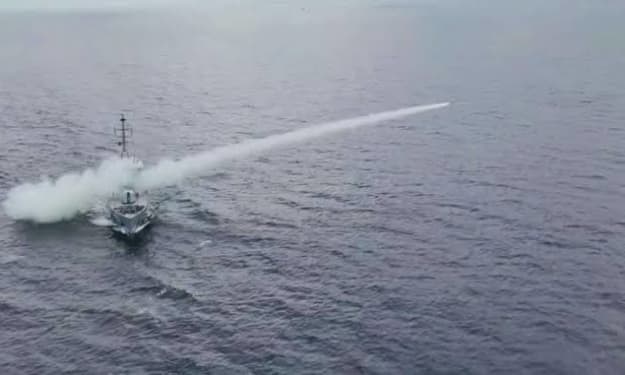
Senegalese Navy Conducted Historic First Anti-Ship Missile Launch. AI-Generated.
In a significant milestone for West African maritime security, the Senegalese Navy has successfully conducted its first ever anti-ship missile launch during a carefully planned naval exercise. The announcement — confirming that Senegal’s naval forces have now demonstrated capability to fire advanced surface-to-surface missiles — represents a landmark achievement in the nation’s military evolution and raises the profile of security cooperation across the Atlantic coast of Africa. This historic event is about far more than a single weapons test; it symbolizes a shift in how West African nations are preparing to defend their territorial waters, protect economic interests, and engage in multinational security efforts across a region increasingly challenged by piracy, criminal networks, and geopolitical competition. A Strategic Upgrade for Senegal Senegal’s coast spans some of the busiest maritime routes in the world. The country’s Exclusive Economic Zone (EEZ) — rich in fisheries, oil, gas prospects, and vital shipping lanes — has grown in economic importance over the past decade. But these riches also present security challenges. Illegal fishing, maritime smuggling, piracy, and the growing sophistication of criminal networks have put pressure on national navies in the region to modernize and expand their capabilities. The Senegalese Navy’s successful anti-ship missile launch — conducted under the supervision of high-ranking naval officers and with the support of foreign partners — reflects Dakar’s intention to play a more proactive role in the security of the Gulf of Guinea and beyond. What the Milestone Entails Anti-ship missiles are designed to engage and destroy hostile surface vessels at significant distances, giving naval forces a long-range defensive and deterrent capability. By successfully launching such a weapon, the Senegalese Navy has demonstrated that it can now respond more assertively to threats at sea, rather than relying solely on patrol boats, light armaments, or foreign military support. During the exercise, Senegalese naval crews reportedly tracked a designated sea target and launched the missile with precision, showcasing coordination between sensors, radar systems, communication networks, and the missile platform itself. While specific details about the missile system used have not been fully disclosed for security reasons, military analysts say that such systems typically require rigorous training, disciplined operational procedures, and a deep understanding of modern naval warfare principles. Regional Ramifications The Gulf of Guinea — stretching from Senegal in the west to Angola in the south — has become one of the globe’s most troubled maritime regions in recent years. According to international watchdogs, piracy, kidnapping at sea, and armed robbery against vessels surged in the early 2020s, prompting coastal states to pursue stronger defense mechanisms. By successfully demonstrating anti-ship missile capability, Senegal is sending a message to both allies and potential adversaries: it is investing in strategic defense and expanding its role in regional security. Neighboring nations, including Nigeria, Ghana, and Côte d’Ivoire, have similarly increased their naval capabilities through international cooperation and equipment modernization. Senegal’s successful launch may encourage further collaboration and shared training programs, strengthening collective security frameworks in West Africa. International Partnerships and Support Senegal’s naval achievement did not happen in isolation. Over the years, Dakar has worked closely with international partners — including France, the United States, and European Union navies — to train personnel, modernize equipment, and engage in joint naval exercises. Many Western partners view Senegal as a key security partner in Africa due to its relative political stability, strategic Atlantic location, and commitment to democratic governance. The anti-ship missile exercise, therefore, also underscores how global military cooperation can enhance the capabilities of emerging navies, enabling them to meet evolving security challenges more effectively. A Boost for National Defense For Senegal, the successful missile launch carries both symbolic and practical importance. It boosts national confidence in the navy’s role, affirms Dakar’s defense investments, and signals to citizens and global observers alike that Senegal is ready to protect its maritime interests. In a world where maritime security is increasingly interconnected — affecting trade, energy infrastructure, fisheries, and global supply chains — Senegal’s move toward modern naval deterrence reflects a broader trend among coastal nations that seek greater autonomy in defending their waters. Balancing Capability With Responsibility While the milestone is notable, experts stress the importance of responsible use of such capabilities. Senegal has emphasized that the exercise was strictly defensive, conducted in controlled conditions, and intended to enhance maritime safety rather than escalate tensions. International law, including the United Nations Convention on the Law of the Sea (UNCLOS), enshrines the right of coastal states to protect their territorial waters. Senegal’s missile launch falls within this context of sovereign defense — not offensive posture — and reinforces its commitment to lawful maritime conduct. What Comes Next Following the successful launch, analysts expect further developments in Senegal’s naval strategy, including: Expanded naval training programs Possible acquisition of additional defense platforms Increased joint exercises with regional and global partners Enhanced maritime surveillance and intelligence capacity These steps would help Senegal play a central role in regional maritime security and contribute more broadly to Atlantic and Gulf of Guinea stability. Conclusion: A New Era on the Waves Senegal’s historic anti-ship missile launch marks a watershed moment for the country’s navy and for West African maritime defense. In strengthening its deterrent capability, Senegal is responding to real and evolving threats to its waters and economic interests. As navies around the world adjust to changing security environments, Dakar’s achievement highlights how even regional forces can leverage technology, training, and international cooperation to shift the narrative — from vulnerability to capability — in the world’s oceans.
By Fiaz Ahmed Brohi11 days ago in The Swamp
Good Night and Good Luck”: Why These Four Words Still Matter in a Noisy World. AI-Generated.
Few phrases in modern media history carry as much weight as “Good night, and good luck.” Simple, calm, and almost understated, the line became famous through legendary American journalist Edward R. Murrow, who used it to sign off his television broadcasts in the 1950s. Decades later, the phrase resurfaced as the title of George Clooney’s acclaimed 2005 film, reminding audiences that its message is not locked in the past. In an age of information overload, misinformation, and shrinking trust in institutions, these four words feel more relevant than ever. The Origins of a Quiet Defiance Edward R. Murrow worked during one of the most politically charged periods in U.S. history: the era of McCarthyism, when fear of communism led to blacklists, censorship, and public intimidation. Murrow’s broadcasts did not rely on shouting or sensationalism. Instead, he practiced something radical for his time — measured truth-telling. When Murrow ended his programs with “Good night, and good luck,” it was not a throwaway farewell. It was a subtle acknowledgment of uncertainty. Viewers were navigating a world shaped by fear, propaganda, and political pressure, and Murrow knew that journalism alone could not guarantee safety or justice. What he could offer was honesty — and a wish for resilience. Journalism as a Moral Act The phrase came to symbolize journalism not as entertainment, but as a civic responsibility. Murrow believed that the press should challenge power when necessary, even when doing so carried professional or personal risk. His calm confrontation of Senator Joseph McCarthy remains one of the most studied moments in broadcast history, precisely because it relied on facts rather than theatrics. In today’s media environment, where outrage often drives clicks and algorithms reward extremes, Murrow’s approach feels almost revolutionary. “Good night, and good luck” reminds us that journalism’s strength lies not in volume, but in credibility and courage. A Film That Revived the Message George Clooney’s film Good Night, and Good Luck reintroduced Murrow’s philosophy to a new generation. Shot in stark black and white, the movie avoided modern spectacle and instead focused on newsroom debates, ethical dilemmas, and the quiet tension of speaking truth to power. The film resonated because it was not just about the 1950s. It was about any era in which fear threatens free expression. Clooney’s work suggested that the fight for honest journalism is not a single historical moment, but a recurring challenge. Why the Phrase Still Resonates Today In the digital age, information travels faster than ever — but truth often struggles to keep up. Social media has blurred the lines between opinion, fact, and performance. Deepfakes, manipulated headlines, and viral misinformation make it harder for audiences to know what to trust. Against this backdrop, “Good night, and good luck” feels like a quiet anchor. It acknowledges that certainty is rare, that truth-seeking is difficult, and that integrity matters even when outcomes are unclear. It is not a promise of victory, but a commitment to effort. Beyond Journalism: A Broader Meaning The power of the phrase has expanded beyond newsrooms. It now speaks to anyone navigating uncertainty — students questioning authority, artists pushing boundaries, activists challenging injustice, or ordinary people trying to stay informed in confusing times. At its core, the message is human. It recognizes fear without surrendering to it. It accepts risk without glorifying recklessness. And it reminds us that sometimes, all we can do is act with principle and hope for the best. The Cost of Silence Murrow once warned that television could teach, illuminate, and inspire — but only if people chose to use it that way. Otherwise, he cautioned, it would merely distract. That warning applies equally to today’s digital platforms. Silence, complacency, and passive consumption allow falsehoods to flourish. “Good night, and good luck” challenges both creators and audiences to stay engaged, skeptical, and thoughtful — even when doing so is uncomfortable. A Message for the Future As societies face political polarization, climate anxiety, technological disruption, and global instability, the phrase endures because it does not pretend to have easy answers. Instead, it offers something rarer: moral clarity without arrogance. It reminds us that truth is not guaranteed, freedom is not automatic, and courage often appears in small, quiet choices rather than dramatic gestures. Conclusion “Good night, and good luck” is more than a sign-off or a film title. It is a philosophy — one that values truth over noise, integrity over popularity, and responsibility over convenience. In a world that often rewards certainty, Murrow’s words accept uncertainty while refusing surrender. And perhaps that is why, after all these years, they still feel like advice worth carrying with us — into the night, and into whatever comes next.
By Fiaz Ahmed Brohi11 days ago in Geeks
Trump Is Briefed on Options for Striking Iran as Protests Continue. AI-Generated.
As anti-government protests erupt across Iran and tensions escalate between Tehran and Washington, U.S. President Donald Trump has been officially briefed on a range of potential military options, including the possibility of striking Iranian targets if the situation worsens. The discussions reflect a dramatic moment in international relations, as unrest in Iran merges with long-standing disputes over its political system, nuclear ambitions and regional influence. �
By Fiaz Ahmed Brohi11 days ago in The Swamp
With Its 337 Meters and 100,000 Tons, the World’s Largest Aircraft Carrier Rules the Oceans. AI-Generated.
Stretching an astonishing 337 meters in length and weighing close to 100,000 tons, the world’s largest aircraft carrier is not just a ship—it is a floating symbol of modern military power, engineering excellence, and global influence. Often described as a mobile airbase at sea, this colossal vessel dominates the oceans, reshaping how naval warfare, diplomacy, and power projection are conducted in the 21st century.
By Fiaz Ahmed Brohi11 days ago in The Swamp
By Dumping Tonnes of Sand Into the Ocean for 12 Years, China Has Created Brand-New Islands From Scratch. AI-Generated.
Over the past twelve years, China has quietly carried out one of the most ambitious and controversial engineering projects in modern history: the creation of entirely new islands by dumping millions of tonnes of sand into the ocean. What began as small-scale land reclamation has evolved into a sweeping transformation of the South China Sea, reshaping geography, geopolitics, and international relations. How Artificial Islands Are Created The process behind these artificial islands is deceptively simple but technically complex. Specialized dredging ships extract sand from the seabed and pump it onto shallow reefs and submerged rocks. Over time, layer upon layer of sand is deposited, gradually rising above sea level. Once land emerges, it is reinforced with concrete, rock barriers, and infrastructure to prevent erosion. China has used this method extensively, particularly on disputed reefs and shoals. What were once barely visible features at low tide have become full-fledged islands, complete with runways, ports, radar systems, and buildings. Why the South China Sea Matters The South China Sea is one of the world’s most strategically important waterways. An estimated one-third of global maritime trade passes through it each year, carrying trillions of dollars’ worth of goods. The region is also believed to hold vast reserves of oil, natural gas, and rich fishing grounds. Multiple countries — including Vietnam, the Philippines, Malaysia, Brunei, and Taiwan — claim parts of the sea. China, however, asserts sweeping sovereignty over most of it, marked by its controversial “nine-dash line.” The creation of artificial islands has strengthened China’s physical presence and reinforced its territorial claims. From Sandbars to Strategic Strongholds What makes China’s island-building campaign particularly significant is how quickly reclaimed land has been militarized. Satellite imagery and independent analyses show airstrips long enough to handle military aircraft, deep-water harbors capable of hosting naval vessels, and advanced surveillance systems. These installations allow China to project power far beyond its mainland coast, extending its reach across Southeast Asia. Critics argue that these islands act as unsinkable aircraft carriers, altering the balance of power in the region. Environmental Consequences Beneath the Surface While the geopolitical implications are widely debated, the environmental cost is equally alarming. The dredging process destroys coral reefs, which are among the most biodiverse ecosystems on the planet. Sediment clouds generated during sand dumping smother marine life, disrupt fish breeding grounds, and permanently alter underwater landscapes. Marine scientists warn that damage to coral reefs can take decades — if it recovers at all. For coastal communities that rely on fishing, these changes threaten livelihoods and food security. International Law and Global Pushback China’s actions have drawn sharp criticism from the international community. In 2016, an international tribunal ruled that China’s expansive claims in the South China Sea had no legal basis under international law. The ruling also stated that artificial islands do not generate territorial waters or exclusive economic zones. China rejected the decision, calling it invalid and continuing its construction activities. Meanwhile, other nations have responded with diplomatic protests and increased naval patrols, including freedom-of-navigation operations by the United States and its allies. A New Kind of Territorial Expansion Historically, empires expanded by conquering land. China’s island-building represents a new model: creating territory where none existed before. This approach blurs the line between engineering achievement and strategic maneuvering, raising difficult questions about how international law should adapt to technological capabilities. If artificial islands become widely accepted as legitimate territory, it could set a precedent for other nations to reshape oceans for strategic advantage. The Broader Global Implications Beyond Asia, China’s actions have sparked global debate about maritime governance, environmental responsibility, and the future of territorial disputes. Smaller nations fear being sidelined, while major powers worry about the erosion of established international norms. At the same time, the sheer scale of the project highlights China’s engineering capacity and long-term planning. Turning submerged reefs into permanent landmass within just over a decade is a feat few countries could replicate. Conclusion: Engineering the Future of Power By dumping tonnes of sand into the ocean for over a decade, China has not merely created islands — it has reshaped the strategic landscape of an entire region. These artificial islands stand as symbols of ambition, controversy, and a shifting world order. As technology continues to expand what is physically possible, the challenge for the global community will be ensuring that innovation does not come at the cost of environmental destruction, regional stability, and international law. The islands may be made of sand, but their impact is anything but fragile.
By Fiaz Ahmed Brohi11 days ago in The Swamp
Chilly Robins in the Garden? Put This Out Today and They’ll Start Coming Back Every Single Morning. AI-Generated.
As winter tightens its grip and frost coats the edges of your garden, you might notice that the familiar chirps of robins have become far less frequent. These charming, bright-breasted birds, often symbols of the festive season, are not disappearing; they are simply seeking food and warmth elsewhere. Yet, with a few thoughtful steps, you can turn your garden into a welcoming haven that keeps these delightful visitors returning day after day.
By Fiaz Ahmed Brohi14 days ago in Longevity
For a Moment, Only That Story Matters’: My Plan to Reignite the All-Consuming Love of Books. AI-Generated.
In an era dominated by endless notifications, social media scrolls, and instant entertainment, the art of getting lost in a book has become increasingly rare. Yet, the deep, immersive joy of reading remains unmatched—a world where, for a fleeting but precious moment, only the story matters. For those of us who grew up loving books, it’s a feeling we long to recapture. And for those who never had the chance to experience it fully, it’s a gift waiting to be discovered. This is my plan to reignite the all-consuming love of books in today’s distracted world. The Case for Reading Deeply Reading is not just about absorbing information; it is an exercise in imagination, empathy, and critical thinking. When we read, we step into someone else’s shoes, traverse distant lands, and witness lives vastly different from our own. Psychologists have long documented that deep reading fosters cognitive growth, strengthens memory, and improves emotional intelligence. Yet, despite these benefits, fewer people report reading for pleasure regularly. In a world of micro-content—tweets, reels, and five-minute videos—books demand something different: time, patience, and focus. This is exactly why they have become so precious. A book asks readers to pause, reflect, and immerse themselves in a sustained narrative. And for those who manage it, the reward is a sense of connection and clarity that is hard to find elsewhere. Creating the Right Environment My first step toward rekindling the love of books is creating an environment conducive to focused reading. Distractions are the enemy of immersion, and in our digital age, they are everywhere. For me, this means carving out a dedicated reading space—a quiet corner with comfortable seating, good lighting, and a small selection of books within reach. Phones are left out of arm’s reach, and notifications are silenced. It also means carving out intentional reading time. Whether it’s a thirty-minute morning ritual or an hour before bed, the key is consistency. Making reading a habitual part of daily life trains the mind to settle into stories more readily and fosters the feeling of losing oneself in a narrative. Choosing Stories That Demand Attention Not all books are created equal when it comes to sparking an all-consuming love of reading. While classics hold timeless value, sometimes a gripping contemporary novel, a suspenseful thriller, or a vividly imagined fantasy is exactly what reignites the flame. The secret is finding stories that pull you in immediately—books that make you lose track of time, think about characters long after you’ve put the book down, and transport you to another world entirely. I also recommend mixing genres. A rich, varied reading diet keeps curiosity alive. Historical fiction might sharpen empathy and cultural awareness, while science fiction opens doors to new concepts and imaginative possibilities. Memoirs bring real human struggles into focus, fostering reflection and personal growth. Reading With Others One overlooked method of rekindling reading passion is sharing the experience. Book clubs, online reading groups, or simply discussing books with friends can amplify the joy of literature. Conversations about characters, plot twists, or favorite passages deepen understanding and create accountability to finish the books we start. It’s not just about reading; it’s about connecting over stories, building a community of shared curiosity and wonder. Slow Reading as a Practice To truly fall back in love with reading, I’ve embraced the practice of “slow reading.” Rather than racing through pages to finish a book quickly, I allow myself to savor each paragraph, visualize scenes, and pause to reflect. This approach transforms reading from a task to a meditation. I notice nuances in language, rhythm, and emotion that might otherwise be missed. Slow reading restores the intimacy of books, reminding us that the journey is as important as the destination. The Transformative Power of Stories Ultimately, my plan to reignite love for reading is rooted in the transformative power of stories. For a moment, a book can absorb us entirely. We forget the stresses of daily life, step into another world, and emerge changed—more empathetic, thoughtful, and inspired. These moments are fleeting, but they are profoundly human. In a society that prizes speed and efficiency, reclaiming time for immersive reading is an act of self-care and resistance. By intentionally seeking out stories, creating space for deep engagement, and sharing experiences with others, we can nurture this timeless love. Because the truth is simple: no matter how fast the world moves, the magic of a book, when it grabs you completely, is unmatched. And when that moment arrives, only the story matters.
By Fiaz Ahmed Brohi14 days ago in The Swamp