
‘A New Maritime Record: South America’s 2,100-Passenger, Fully Electric Giant Sets Sail’
Revolutionizing the seas: How South America’s first fully electric cruise ship is setting new standards in sustainable maritime travel

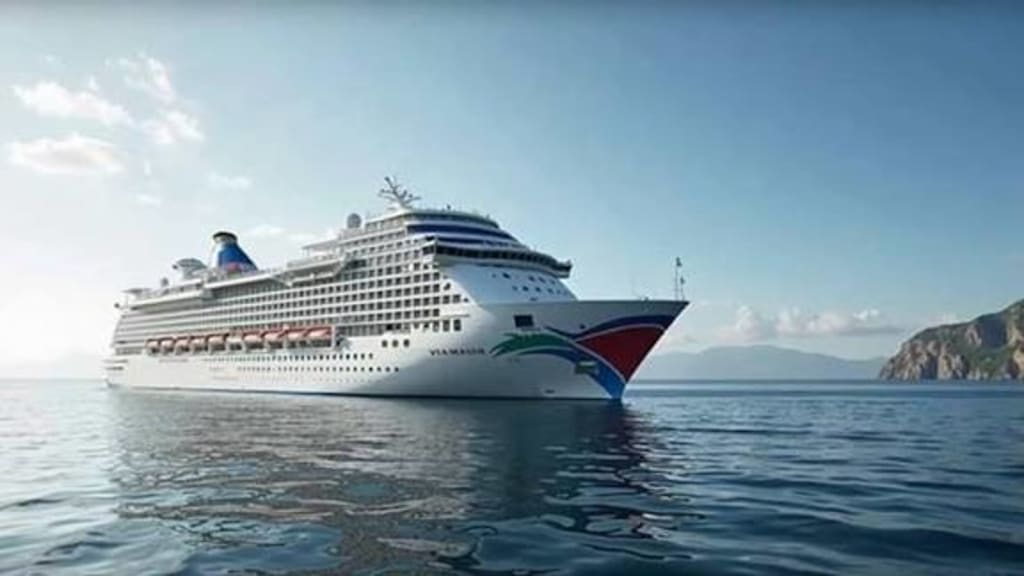
South America has officially entered a new era in maritime travel. The continent’s first fully electric cruise ship, capable of carrying 2,100 passengers, has set sail, breaking new records and redefining what is possible for sustainable tourism. This groundbreaking vessel, hailed by experts as a technological marvel, marks a significant step forward in the global movement toward eco-friendly shipping, where efficiency, comfort, and environmental responsibility converge.
A Giant on the Water
Measuring an impressive length and featuring state-of-the-art amenities, the ship is not only a symbol of South America’s growing maritime industry but also a testament to innovative engineering. Unlike traditional cruise ships that rely heavily on fossil fuels, this fully electric giant operates on cutting-edge battery technology. It boasts multiple high-capacity lithium-ion battery banks, allowing for extended journeys without generating carbon emissions.
The ship’s design is optimized for energy efficiency. Hydrodynamic hulls reduce drag, while solar panels and energy recovery systems maximize renewable power usage. Experts say this combination of technology allows the vessel to cruise smoothly while minimizing its environmental footprint—a critical advancement for the heavily trafficked waters of the South Atlantic and the Caribbean.
Sustainable Travel Meets Luxury
Despite its emphasis on sustainability, the ship does not compromise on passenger experience. It features spacious cabins, panoramic observation decks, gourmet dining, entertainment lounges, and wellness centers. The vessel can accommodate 2,100 passengers and a crew of 850, providing a seamless balance between luxury and environmental responsibility.
For many travelers, the ship represents an exciting opportunity to explore South America’s breathtaking coastlines—from the pristine beaches of Brazil to the dramatic fjords of Chile—without contributing to the pollution typically associated with maritime travel. Industry analysts note that eco-conscious tourism is growing rapidly, and this vessel could set a precedent for future cruise ship development worldwide.
Innovation at the Core
What makes this maritime achievement particularly notable is the combination of scale and technology. Electrically powered ships have existed for smaller routes or ferries, but building a vessel of this size capable of long-range voyages has been a formidable engineering challenge. Developers overcame obstacles such as energy density, battery weight, and charging infrastructure to bring the project to life.
Port authorities across South America have also invested in electric charging stations, ensuring the ship can operate efficiently while docking at major destinations. These developments create a blueprint for future ports and maritime operations, potentially accelerating the adoption of electric technology in global shipping.
Environmental and Economic Impacts
Beyond passenger travel, the ship represents an important environmental milestone. Maritime shipping contributes significantly to global greenhouse gas emissions, and the introduction of large electric vessels signals a shift in industry priorities. By demonstrating that large-scale, emission-free vessels are feasible, this project encourages governments, investors, and shipping companies to rethink their strategies for sustainable maritime operations.
Economically, the ship is expected to boost South American tourism, attracting travelers keen on eco-friendly vacations. Its routes are designed to connect major coastal cities and scenic locales, creating opportunities for local businesses, cultural tourism, and regional development. Experts argue that sustainable tourism, combined with innovative engineering, could provide both environmental and economic dividends for decades to come.
Challenges Ahead
While the launch has been celebrated globally, experts caution that challenges remain. Battery technology, although advanced, still faces limitations regarding range and charging time. Additionally, large-scale implementation of electric vessels will require significant investment in port infrastructure and maintenance. Regulatory standards for electric cruise ships are also evolving, requiring collaboration between governments, industry, and environmental agencies to ensure safe and effective operations.
Nevertheless, the launch of this 2,100-passenger electric cruise ship marks a historic moment for South America and the global maritime industry. It demonstrates the feasibility of combining luxury, sustainability, and large-scale maritime engineering—offering a glimpse of the future for ocean travel.
A Glimpse into the Future
As the ship embarks on its maiden voyage, passengers, engineers, and environmentalists alike are witnessing the beginning of a new chapter in maritime history. Its presence challenges the status quo, signaling that the era of carbon-heavy cruising may be nearing its end. The success of this vessel could inspire similar projects around the world, bringing sustainable innovation to the forefront of the global shipping industry.
Ultimately, this fully electric giant is more than just a cruise ship—it is a symbol of ambition, technological ingenuity, and a growing commitment to protecting the oceans while offering unforgettable experiences to travelers. With 2,100 passengers aboard, it is setting sail not only across the seas but also into a cleaner, greener future for maritime travel.
About the Creator
Fiaz Ahmed Brohi
I am a passionate writer with a love for exploring and creating content on trending topics. Always curious, always sharing stories that engage and inspire.
Keep reading
More stories from Fiaz Ahmed Brohi and writers in The Swamp and other communities.
With Its 337 Meters and 100,000 Tons, the World’s Largest Aircraft Carrier Rules the Oceans
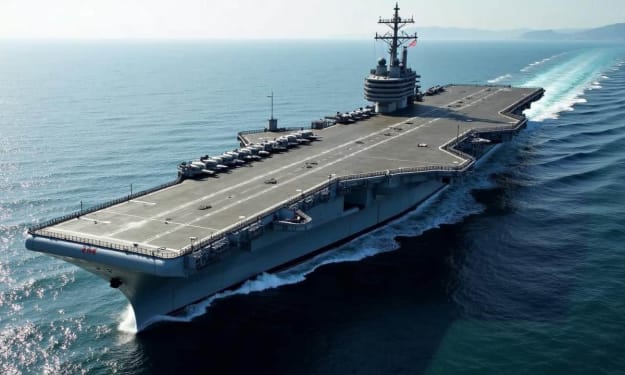
Stretching an astonishing 337 meters in length and weighing close to 100,000 tons, the world’s largest aircraft carrier is not just a ship—it is a floating symbol of modern military power, engineering excellence, and global influence. Often described as a mobile airbase at sea, this colossal vessel dominates the oceans, reshaping how naval warfare, diplomacy, and power projection are conducted in the 21st century. A Giant of the Seas To grasp the scale of this aircraft carrier, comparisons help. At 337 meters, it is longer than three football fields placed end to end. Its displacement of around 100,000 tons makes it heavier than many skyscrapers combined. Powered by advanced nuclear reactors, the carrier can operate for decades without refueling, allowing it to remain at sea for extended missions across the globe. This immense size is not for spectacle alone. The carrier is designed to support a full air wing of more than 70 aircraft, including fighter jets, early warning planes, helicopters, and unmanned aerial systems. Its flight deck is a carefully choreographed space where aircraft take off and land every few minutes, day and night, in all weather conditions. Engineering at Its Finest Building such a vessel is one of the most complex engineering challenges humanity has mastered. Thousands of engineers, technicians, and naval architects work for years to bring an aircraft carrier to life. From its reinforced steel hull to its advanced radar systems, every component is designed to withstand extreme conditions, including rough seas, combat damage, and long-term deployment. The nuclear propulsion system is a defining feature. Unlike conventional ships, this carrier does not rely on diesel or gas fuel. Its reactors generate enormous power, not only for propulsion but also for onboard systems such as radar, weapons, and aircraft launch mechanisms. This allows the ship to reach high speeds and maintain them over vast distances without logistical constraints. A Floating City Life aboard the world’s largest aircraft carrier resembles that of a small city. More than 5,000 sailors and aviators live and work on the ship during deployments. There are sleeping quarters, medical facilities, kitchens capable of serving thousands of meals a day, gyms, and even onboard shops. The crew operates around the clock, ensuring that the carrier remains combat-ready at all times. Pilots train continuously, engineers maintain critical systems, and command staff coordinate operations that may span multiple regions. Discipline, precision, and teamwork are essential, as a single mistake on such a complex platform can have serious consequences. Power Projection and Global Influence Beyond its technical marvels, the true significance of the world’s largest aircraft carrier lies in its strategic role. Wherever it sails, it sends a powerful message. An aircraft carrier strike group—typically consisting of destroyers, cruisers, submarines, and supply ships—represents one of the most formidable military forces on Earth. This capability allows its operator to respond rapidly to crises, whether through combat operations, humanitarian assistance, or deterrence. From disaster relief missions to enforcing no-fly zones, aircraft carriers offer unmatched flexibility. Their presence alone can influence diplomatic negotiations, reassure allies, or discourage potential adversaries. Changing the Nature of Warfare Modern aircraft carriers have evolved far beyond their World War II predecessors. Advanced sensors, stealth aircraft, electronic warfare systems, and missile defenses have transformed them into highly resilient platforms. The integration of unmanned systems is further expanding their reach, allowing surveillance and strike missions without putting pilots at risk. However, the rise of advanced anti-ship missiles and submarine technologies has also sparked debate. Critics argue that such massive vessels are vulnerable targets in high-intensity conflicts. Supporters counter that layered defenses, mobility, and escort fleets make aircraft carriers far more survivable than they appear. A Symbol of National Ambition Possessing the world’s largest aircraft carrier is also a matter of prestige. It reflects a nation’s industrial capacity, technological sophistication, and long-term strategic vision. Only a handful of countries have the resources and expertise to build and operate such ships, making them exclusive symbols of great-power status. For the public, these carriers often capture the imagination. Images of jets launching from their decks, crews working in synchronized precision, and the sheer scale of the vessel inspire awe and curiosity, reinforcing their status as icons of modern naval power. Conclusion At 337 meters long and weighing around 100,000 tons, the world’s largest aircraft carrier truly rules the oceans. It is a masterpiece of engineering, a floating city, and a central pillar of modern military strategy. While debates continue about the future of naval warfare, one thing remains clear: as long as nations seek to project power, protect interests, and influence global events, these colossal carriers will remain at the heart of maritime dominance.
By Fiaz Ahmed Brohi8 days ago in The Swamp


Comments
There are no comments for this story
Be the first to respond and start the conversation.