The Russian Mafia
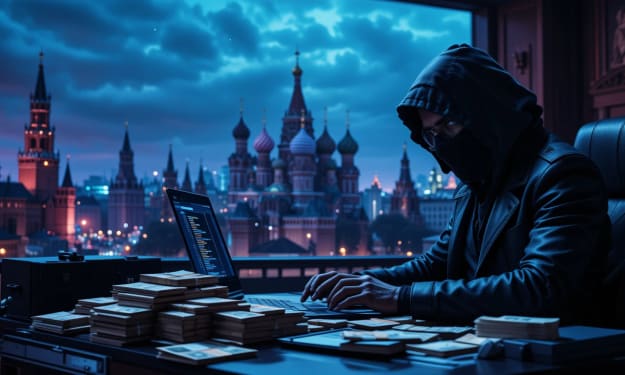
The Russian Mafia, often referred to as the "Bratva" (Russian for "brotherhood"), is a collective term for organized crime groups originating in the former Soviet Union, with deep roots in Russia. These groups, known for their sophisticated operations, global reach, and intricate ties to political and economic structures, have played a significant role in shaping Russia's underworld and, at times, its governance. This article explores the origins, structure, operations, and influence of the Russian Mafia within Russia, drawing on historical context and contemporary developments to provide a comprehensive overview.Historical Roots: From Tsarist Bandits to Soviet VoryThe origins of the Russian Mafia can be traced back to the banditry and thievery of the Russian Empire, but it was during the Soviet era that the modern mafia took shape. The "vory v zakone" (thieves-in-law), a criminal elite with a strict code of conduct, emerged in the 1930s and 1940s within Stalin’s gulags. These forced labor camps, where millions were imprisoned, became breeding grounds for a distinct criminal subculture. The vory rejected state authority, developed their own language, rituals, and hierarchies, and established a reputation for loyalty to their code over any government allegiance. Their tattoos, often elaborate and symbolic, served as a visible defiance of the state and a mark of their status within the criminal world.The collapse of the Soviet Union in 1991 marked a turning point for Russian organized crime. The ensuing political instability, economic turmoil, and rapid privatization created a fertile ground for criminal enterprises to flourish. State assets were sold off at bargain prices, often to insiders with criminal connections, giving rise to a new breed of gangster-businessmen known as "avtoritety" (authorities). These figures blurred the lines between legitimate business and organized crime, leveraging corruption and violence to amass wealth and influence. The 1990s saw brutal turf wars, particularly in Moscow and St. Petersburg, as groups like the Solntsevskaya Bratva, Tambov Gang, and Orekhovskaya Gang vied for control.Structure of the Russian MafiaUnlike the hierarchical structure of the Italian Mafia, the Russian Mafia operates with a decentralized and fluid model. While there are ranks and respected roles, power is distributed across regional groups and leaders, with influence earned through reputation, loyalty, and connections rather than fixed titles. At the apex is the "Pakhan," the supreme boss who oversees major operations, often acting as a mediator in disputes. Below the Pakhan are lieutenants, enforcers, and foot soldiers, with roles varying by region and gang. This adaptability makes the Bratva difficult for law enforcement to dismantle, as the loss of one leader rarely disrupts the broader network.Key figures in the Russian Mafia include individuals like Semion Mogilevich, described by Western agencies as the "boss of all bosses" of Russian crime syndicates. Mogilevich’s influence spans money laundering, arms trafficking, and financial fraud, with alleged ties to Russian political figures. Other notable leaders include Aslan Usoyan, who led Caucasian criminal clans until his assassination in 2013, and Tariel Oniani, head of the Kutaisi gang. Groups like the Solntsevskaya Bratva, founded in Moscow’s Solntsevo District in the 1980s, remain among the most powerful, with thousands of members and global operations.Operations in RussiaThe Russian Mafia’s operations within Russia are diverse, ranging from traditional criminal activities to sophisticated white-collar schemes. These include:Extortion and Protection Rackets: In the 1990s, businesses in Russia were routinely forced to pay for "krysha" (roof), or protection, from criminal groups. While overt street-level extortion has declined, the practice persists in subtler forms, often involving corrupt officials or security services.Drug Trafficking: The Russian Mafia has capitalized on Russia’s proximity to Afghanistan, a major heroin producer, to establish smuggling routes into Europe. Groups like the Solntsevskaya Bratva have forged alliances with Colombian cartels and other international networks to traffic narcotics.Money Laundering: The Mafia has become adept at laundering illicit funds through real estate, offshore accounts, and shell companies. In Russia, this often involves collaboration with corrupt officials and businesses, with funds funneled through complex international networks. For instance, in 2018, Spanish authorities accused 18 defendants, including former chairman of Rosgosstrakh Vladislav Reznik, of laundering over $62 million through real estate deals linked to the Tambov and Malyshev gangs.Cybercrime: The rise of the digital age has seen Russian criminal groups embrace cybercrime, employing hackers for financial fraud, data theft, and ransomware attacks. These hackers often operate as independent contractors rather than gang members, providing services to multiple organizations.Arms and Human Trafficking: The Mafia has been linked to the trade of stolen uranium from the Soviet nuclear program and the trafficking of women, particularly into prostitution networks abroad. These activities highlight the groups’ ability to exploit Russia’s post-Soviet chaos and porous borders.Corruption and State Collusion: Perhaps the most distinctive feature of the Russian Mafia is its deep entanglement with the state. The term "mafia state" has been used to describe Russia under Vladimir Putin, where organized crime and government interests often converge. Allegations of ties between figures like Mogilevich and Putin date back to the 1990s, with the Kremlin reportedly using criminal networks for geopolitical purposes, such as sanctions evasion and covert operations.The Mafia-State NexusThe relationship between the Russian Mafia and the state is complex and symbiotic. In the chaotic 1990s, criminal groups often outpowered a weakened state, dictating terms to officials. However, under Putin’s leadership, the state reasserted control, co-opting or neutralizing major criminal figures. High-profile operations, such as the 2007 arrest of Vladimir Barsukov, demonstrated the Kremlin’s ability to target even the most powerful gangsters when they became too visible or defiant.This dynamic has led to what some call a "kleptocracy," where the lines between organized crime, business, and politics blur. Criminal networks operate with state protection, as seen in the Solntsevskaya Bratva’s alleged links to the FSB, Russia’s security service. The state, in turn, uses these networks to advance its interests, such as smuggling weapons or laundering money to bypass Western sanctions. For example, following Russia’s 2022 invasion of Ukraine, the state itself managed sanctions evasion, reducing reliance on criminal networks but still leveraging their expertise.Global Influence and ChallengesWhile this article focuses on operations within Russia, the Russian Mafia’s global reach is undeniable. Groups like the Solntsevskaya Bratva have established footholds in Europe, the United States, and beyond, engaging in everything from drug trafficking to real estate scams. In Russia, however, their influence is most pronounced in the interplay with state power. The Mafia’s ability to operate with impunity often depends on its alignment with the Kremlin’s goals, creating a delicate balance where loyalty is rewarded, and disloyalty is punished.Law enforcement efforts within Russia face significant hurdles due to corruption and political interference. While Russian police and judges are committed to fighting crime, the systemic integration of criminal elements into the state apparatus complicates these efforts. High-profile cases, such as the 2017 FBI arrests of 33 Russian Mafia affiliates in the U.S., highlight the international cooperation needed to combat these groups, but within Russia, such operations are rare.ConclusionThe Russian Mafia remains a formidable force in Russia, evolving from the gulag-born vory v zakone to a sophisticated network of criminal enterprises intertwined with the state. Its operations—extortion, drug trafficking, money laundering, cybercrime, and more—reflect a blend of traditional and modern criminality. The Mafia’s influence extends beyond the streets, shaping Russia’s political and economic landscape through a complex web of corruption and collusion. While the state has tamed some aspects of organized crime, the values and practices of the vory continue to permeate Russian society, raising questions about whether the Mafia has been subdued or simply absorbed into the fabric of the state. As Russia navigates its global role, the Russian Mafia’s shadow looms large, both at home and abroad.