
The Sicilian Mafia: Cosa Nostra (Italy)
"The Sicilian Mafia: Power, Violence, and Omertà

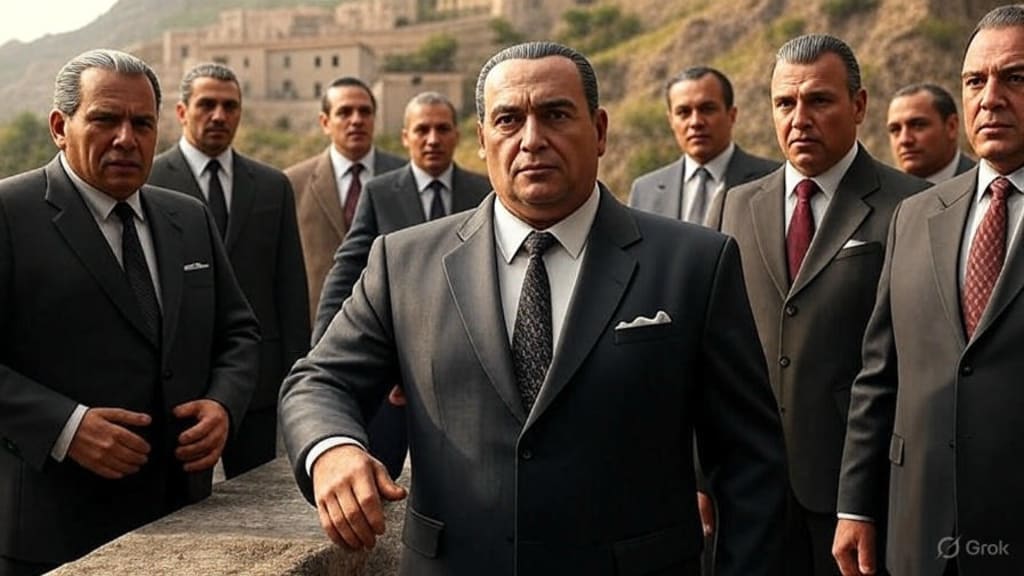
**The Sicilian Mafia: Cosa Nostra**
The Sicilian Mafia, known as Cosa Nostra ("Our Thing"), is one of the most infamous criminal organizations in history. Rooted in the island of Sicily, Italy, it has shaped the social, economic, and political fabric of the region for over a century. With a complex structure, strict codes of conduct, and a pervasive influence that has stretched globally, Cosa Nostra remains a compelling subject of study, embodying both the allure and the terror of organized crime. This article explores the origins, structure, operations, cultural impact, and ongoing efforts to combat Cosa Nostra, shedding light on its enduring legacy.
### Origins and Historical Context
The origins of Cosa Nostra trace back to the 19th century, during a period of political and social upheaval in Sicily. Following the unification of Italy in 1861, Sicily faced economic stagnation, widespread poverty, and a lack of centralized governance. The feudal system that dominated the island left large swathes of the population vulnerable to exploitation by landowners and local power brokers. In this vacuum of authority, groups of men began to organize, offering protection and mediation services to communities in exchange for loyalty and tribute. These early mafiosi were often seen as defenders of the weak, filling the gaps left by an absent or corrupt state.
By the late 19th century, these loosely organized groups coalesced into a more structured entity, adopting the name Cosa Nostra. The term, meaning "Our Thing," reflected the insular and secretive nature of the organization, which prioritized loyalty to the group over external authorities. The Mafia capitalized on Sicily’s agrarian economy, extorting landowners, controlling agricultural markets, and infiltrating local governance. Their influence grew as they established a reputation for enforcing their own brand of justice, often through violence and intimidation.
The Mafia’s early activities were deeply tied to the social structure of Sicily. They operated as a parallel authority, mediating disputes, protecting property, and even influencing elections. However, their methods were far from altruistic; they exploited the very communities they claimed to serve, cementing their power through fear and economic control.
### Structure and Organization
Cosa Nostra is renowned for its hierarchical and highly disciplined structure, which has allowed it to maintain cohesion and resilience despite internal conflicts and external pressures. At its core, the organization is divided into "families" or cosche, each controlling a specific territory, often a town or neighborhood. These families operate autonomously but are bound by a shared code of conduct and a governing body known as the "Commission," which coordinates activities and resolves disputes among families.
Each family is led by a capo or boss, who wields absolute authority. Below the boss are the underboss (sottocapo) and the consigliere, an advisor who provides counsel and mediates internal disputes. The operational backbone of the family consists of "soldiers" (soldati), who carry out orders, and "associates," who work with the Mafia but are not formally initiated members. Initiation into Cosa Nostra is a solemn ritual, often involving blood oaths, secrecy pledges, and symbolic acts like pricking a finger to signify loyalty unto death.
The code of omertà, or silence, is a cornerstone of Cosa Nostra’s operations. Members are forbidden from cooperating with law enforcement or betraying the organization, under penalty of death. This code, combined with a culture of loyalty and fear, has historically made it difficult for authorities to infiltrate or dismantle the group.
### Operations and Criminal Activities
Cosa Nostra’s activities are diverse and adaptive, reflecting its ability to exploit opportunities in both legal and illegal markets. Historically, the Mafia profited from extortion, or pizzo, demanding protection money from businesses and individuals. This practice remains a significant source of income, particularly in Sicily, where small businesses are often coerced into paying for "protection."
In the 20th century, Cosa Nostra expanded into more lucrative ventures, particularly drug trafficking. By the 1970s and 1980s, the Sicilian Mafia had become a major player in the global heroin trade, forging alliances with other criminal organizations like the American Mafia and South American cartels. The infamous "Pizza Connection" case revealed how Cosa Nostra used pizzerias in the United States as fronts for distributing heroin, generating billions in revenue.
Beyond drugs, Cosa Nostra has engaged in money laundering, arms trafficking, loan sharking, and gambling. The organization has also infiltrated legitimate sectors, including construction, waste management, and public contracts. By corrupting officials and manipulating bids, the Mafia has secured profitable contracts, further entrenching its economic power.
Violence is a hallmark of Cosa Nostra’s operations. The organization has a long history of assassinations, bombings, and turf wars, particularly during periods of internal strife. The 1980s and early 1990s, known as the Second Mafia War, saw intense conflict between rival factions, resulting in hundreds of deaths. High-profile murders, such as those of judges Giovanni Falcone and Paolo Borsellino in 1992, shocked Italy and galvanized anti-Mafia efforts.
### Cultural and Social Impact
Cosa Nostra’s influence extends beyond its criminal enterprises, permeating Sicilian culture and society. In some communities, the Mafia has historically been viewed as a legitimate authority, offering protection and services where the state failed. This perception, combined with fear and economic dependence, has allowed the Mafia to maintain a degree of social legitimacy, particularly in rural areas.
The Mafia’s cultural impact is also evident in popular media. Films like *The Godfather* trilogy, while depicting the American Mafia, draw heavily on Sicilian Mafia traditions, romanticizing and mythologizing the figure of the mafioso. In Sicily, however, the reality is far less glamorous. The Mafia’s grip has stifled economic development, deterred investment, and perpetuated a culture of fear and mistrust.
At the same time, resistance to the Mafia has become a significant cultural force. Grassroots movements like Addiopizzo ("Goodbye Pizzo") encourage businesses to refuse extortion payments, while civic organizations promote anti-Mafia education and awareness. These efforts reflect a growing rejection of the Mafia’s influence, particularly among younger generations.
### Law Enforcement and Decline
The fight against Cosa Nostra has been a long and costly battle for Italian authorities. In the early 20th century, efforts to suppress the Mafia were sporadic and often undermined by corruption. The Fascist regime under Mussolini launched a brutal campaign against the Mafia in the 1920s, led by prefect Cesare Mori. While it disrupted Mafia activities, it failed to eradicate the organization, which went underground and reemerged after World War II.
The turning point came in the 1980s and 1990s, spurred by the Maxi Trials, a series of prosecutions led by magistrates Falcone and Borsellino. Using testimony from pentiti (former mafiosi turned informants), the trials resulted in hundreds of convictions, including top bosses like Salvatore "Totò" Riina. The murders of Falcone and Borsellino in 1992, however, underscored the Mafia’s willingness to strike at the state.
Since then, sustained law enforcement efforts, improved legislation, and international cooperation have weakened Cosa Nostra. High-profile arrests, asset seizures, and the disruption of drug networks have diminished the organization’s power. However, the Mafia has proven adaptable, shifting focus to less visible crimes like money laundering and white-collar fraud.
### The Modern Cosa Nostra
Today, Cosa Nostra is a shadow of its former self but remains a persistent threat. The organization has adopted a lower profile, avoiding the spectacular violence of the past to evade scrutiny. It continues to exploit Sicily’s economic vulnerabilities, particularly in the wake of financial crises and unemployment. Globalization and technology have also allowed Cosa Nostra to expand its reach, collaborating with other criminal networks in Europe and beyond.
The fight against the Mafia remains ongoing. Italian authorities continue to target its financial networks, while civil society pushes for cultural change. The legacy of figures like Falcone and Borsellino inspires a new generation of activists, prosecutors, and citizens determined to free Sicily from the Mafia’s grip.
### Conclusion
Cosa Nostra’s history is a testament to the resilience and adaptability of organized crime. From its roots in 19th-century Sicily to its global reach in the 20th century, the Mafia has left an indelible mark on Italy and the world. While its power has waned, its influence lingers, a reminder of the complex interplay between crime, society, and governance. As Sicily continues to confront its past and build a future free from Mafia control, the story of Cosa Nostra serves as both a cautionary tale and a call to action.
About the Creator
The Shocking Case of Brian Stewart:
The Shocking Case of Brian Stewart: When a Father Injected His Own Son with HIV In 1992, the quiet city of St. Charles County, Missouri, became the backdrop for one of the most chilling and unsettling crimes in modern medical history. Brian Stewart, a trained phlebotomist, used his knowledge and access to medical resources to deliberately harm his infant son. The case is not only a tragic story of parental betrayal but also a cautionary tale about the vulnerabilities inherent in medical access, the motivations that drive horrifying decisions, and the resilience of the human spirit.
By Dakota Denise about 2 hours ago in Criminal
Michigan Synagogue Shooting: Fear, Faith, and Survival
Places of worship are meant to feel safe. People gather there to pray, reflect, and share quiet moments with their community. For many families, a synagogue is more than a building. It is where children learn traditions, where people celebrate holidays, and where comfort is found during difficult times.The michigan synagogue shooting shattered that sense of safety in an instant. What began as an ordinary day quickly turned into confusion and fear. Families inside the building suddenly faced a situation no one expects in a place meant for peace.
By Muqadas khana day ago in Criminal



Comments (1)
Fascinating read. I knew Sicily had a rough past, but didn't realize how the Mafia started as a protection racket. It's crazy how they took over.