
The King Cello: A Glimpse into the Past of Musical Mastery
Ancient Music Art

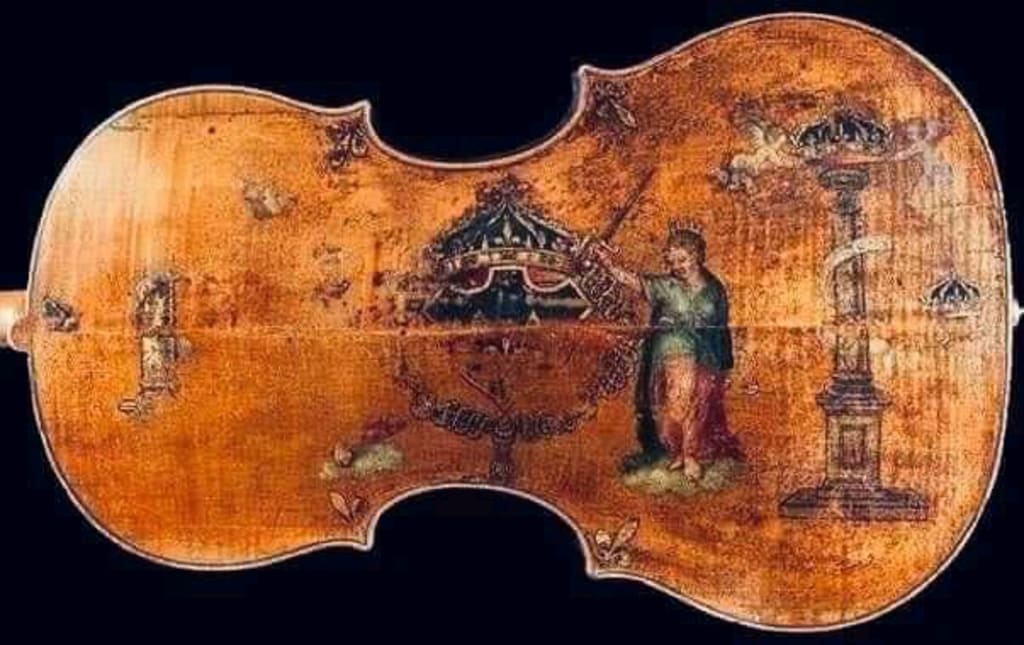
Music has always been a powerful force, capable of moving hearts and shaping cultures across generations. Some of the most magnificent instruments in the world carry stories that span centuries, connecting us to the artistry and craftsmanship of long-gone eras. Among these legendary instruments, one stands out: the King Cello. Not only is it the oldest known cello in existence, but it also carries with it a history rich in royal patronage and remarkable craftsmanship.
A Timeless Piece of History
The King Cello was crafted by Andrea Amati, one of the most renowned luthiers of the 16th century. Amati is credited with the creation of the first modern violins, cellos, and violas, marking a pivotal moment in the history of stringed instruments. His work, particularly in the town of Cremona, Italy, where he established his workshop, laid the foundation for the violin family as we know it today.
Made in the mid-16th century, the King Cello is a testament to Amati’s exceptional craftsmanship and innovative design. It was originally one of a set of 38 instruments created for the court of King Charles IX of France, a young monarch who reigned from 1560 to 1574. This set, often referred to as the “Amati set,” was crafted specifically for the royal court to provide music for the King’s entertainments and celebrations.
The King Cello earned its name because it was part of this distinguished collection, which was presented to Charles IX. The set included a variety of instruments, from violins and violas to basses and cellos, each carefully crafted by Amati to deliver unparalleled sound and beauty. However, it was the cello that would become the most famous of them all—largely because it survived the test of time.
The Transformation of the King Cello
The King Cello was initially designed as a large basso, or bass violin. This original instrument was much larger than modern cellos, which would have made it more difficult to handle and play. Over the centuries, however, the cello underwent a process of resizing and modifications to make it more practical for modern use. Without this reduction in size, it’s likely that the King Cello would have been lost to time, as many other valuable instruments from this era were.
The decision to resize the King Cello was a significant one. By reducing its size, the instrument transformed into a more manageable form that fit the evolving tastes and needs of musicians. The cello, as we know it today, is smaller, more agile, and better suited to modern performance than its ancient counterpart. This resizing ensured that the King Cello would survive for future generations to admire and enjoy. In fact, its survival in such pristine condition allows us to look back and appreciate the beauty and excellence of Andrea Amati's work.
A Rare Surviving Example
Today, the King Cello resides at the National Music Museum in Vermillion, South Dakota, part of the Witten-Rawlins Collection. It is a rare surviving example of the decorated set of instruments crafted by Amati for King Charles IX. The cello’s preservation offers a glimpse into the world of 16th-century royal courts, where music played a central role in entertainment and diplomacy.
What makes the King Cello even more remarkable is its connection to the royal court of France. The 16th century was a time of political unrest and power struggles in Europe, and the court of King Charles IX was no exception. The instruments crafted by Amati were not just musical tools; they were also symbols of royal prestige and cultural sophistication. The set of instruments, including the King Cello, was designed to reflect the grandeur of the French monarchy, showcasing the power of music to unite, entertain, and inspire.
The preservation of the King Cello also highlights the importance of historical instruments in understanding the evolution of music. It provides modern musicians, historians, and enthusiasts with a direct connection to the past, offering insight into the artistry and techniques of one of the most revered luthiers in history.
The Lasting Legacy of Andrea Amati
Andrea Amati’s influence on the development of stringed instruments cannot be overstated. His work revolutionized the construction of violins, violas, and cellos, and his instruments remain highly coveted by musicians and collectors alike. The King Cello is a direct link to Amati’s legacy, embodying the beauty, precision, and skill that defined his craftsmanship.
Amati’s violins, violas, and cellos set the standard for generations of luthiers, and his influence continues to be felt in the world of classical music. While many of his instruments have been lost to history, the King Cello stands as a symbol of his genius, enduring through centuries of change.
Conclusion
The King Cello is much more than just a musical instrument; it is a piece of living history. Its survival, transformation, and preservation have allowed us to appreciate the genius of Andrea Amati and the cultural significance of music during the 16th century. Today, the King Cello serves as a reminder of the artistry and craftsmanship that shaped the evolution of stringed instruments, and it will continue to inspire future generations of musicians, historians, and music lovers for centuries to come.
Its remarkable journey from the royal court of King Charles IX to the National Music Museum is a testament to the timeless power of music and the lasting legacy of one of the greatest luthiers in history.
About the Creator
Keep reading
More stories from Deji Akomolafe and writers in Art and other communities.
The Palais Garnier: A Masterpiece of 19th-Century Paris
Nestled in the heart of Paris, the Palais Garnier stands as one of the most iconic and opulent symbols of 19th-century French architecture and culture. Commonly known as L'Opéra Garnier, this historic opera house, with its 1,979-seat capacity, has been a centerpiece of Parisian life since its inauguration in 1875. Commissioned by Emperor Napoleon III during the Second Empire, the Palais Garnier is more than just a venue for opera and ballet; it is a testament to the artistic and architectural ambition of its era.
By Deji Akomolafeabout a year ago in Art



Comments
There are no comments for this story
Be the first to respond and start the conversation.