Latest Stories
Most recently published stories in Art.
Ken Wolverton
By Brian D’Ambrosio Along a dusty roadside of Cerrillos, connected weathered shacks lean into the landscape like a creature molded from the earth itself. Its walls are alive with color: horses rearing across mesas, dreamlike murals, and abstract forms that seem to vibrate with movement. Inside, brushes slant in jars, canvases are stacked against walls, and unfinished murals climb wooden planks. This is the world of Ken Wolverton, an 80-year-old artist whose life has been as itinerant and unconventional as the art he creates.
By Brian D'Ambrosio about 4 hours ago in Art
How to Find reliable sculpture supplier?
When sourcing fiberglass sculptures, buyers often discover that the term “supplier” can refer to different types of businesses. Understanding these categories helps clarify expectations regarding production capacity, quality control, and project management.
By Shenzhen Ruiheng Craftsabout 14 hours ago in Art
5 Ways to Trust Your Creative Ideas
When I go through creative dry spells, I tend to think that generating more ideas is what is going to get me through it. However, I've learned the hard way that this isn't the case. But, having more ideas doesn't make us more creative. In fact, it can have the opposite effect.
By Kathy Tsoukalasabout 16 hours ago in Art
Truth Is Often Rejected Because It Demands Change
There is a widespread assumption, rarely spoken but deeply believed, that truth will eventually be accepted if it is communicated clearly, patiently, and with genuine goodwill. When resistance appears, the instinct is to search for error in tone, framing, or explanation. The underlying belief is simple: if the truth were presented well enough, rejection would disappear. This belief is comforting, but it is false. History, Scripture, and lived experience all point in the same direction. Truth is often rejected not because it is unclear, but because it is costly.
By Peter Thwing - Host of the FST Podcastabout 18 hours ago in Art
Crossing Into Darkness
Bold and breathtaking, yet somehow subdued and intimate, Crossing Into Darkness is the most stunning small art show I have seen in a long time. It combines astonishing, and sometimes atypical works, from some of the most important artists you know, with equally important work from artists you have never heard of.
By Raymond G. Taylora day ago in Art
Ida Shaghoian: Painting Memory Through Atmosphere and Light. AI-Generated.
In the world of contemporary art, few painters capture the subtle interplay between memory and environment as compellingly as Ida Shaghoian. Her work stands at the crossroads of abstraction and landscape, where color becomes language and texture becomes memory. Rather than presenting straightforward depictions of nature, she offers immersive experiences that encourage viewers to slow down, reflect, and reconnect with their own emotional landscapes.
By Ida Shaghoiana day ago in Art
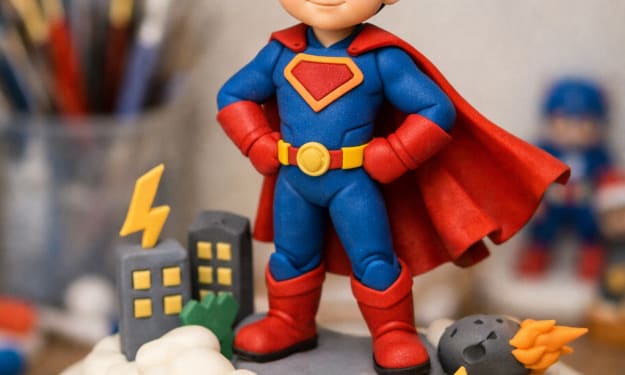
The Art Behind Superhero Cake Toppers and Why Handcrafted Details Matter
Superhero Cake Toppers sit at an interesting crossroads between pop culture, craft, and personal celebration. They may appear small and fleeting, yet they often carry outsized emotional weight. In recent years, these miniature figures have shifted from simple novelty items to thoughtfully made keepsakes that reflect storytelling, creativity, and care. Understanding why handcrafted details matter begins with recognizing that these toppers are not just decorations, but tiny sculptures shaped by cultural meaning and human skill.
By Rochelle Martineza day ago in Art
Best Artwork by Piet Mondrian
Dutch artist Piet Mondrian was a pioneer in the field of abstract art. His modern artwork was characterized by geometric shapes and primary colors. The artist is renowned for his distinctive style; his oeuvre reflects an amazing exploration of harmony, balance, and the essence of form. Mondrian not only revolutionized the visual arts but also laid the groundwork for the development of abstract expressionism and minimalist aesthetics in the 20th century.
By Rasma Raisters2 days ago in Art
Review: Children of the Whales, first 3 episodes
I grew up upon anime. “3000 Miles in Search of a Mother”, “Nils Holgersson”, “The Moomins”, studio Ghibly, etc. but nowadays Netflix anime (their original ones, or at least some) is empty artstype wise, content wise. Repetitive. Plus, there’s a theme of violence and women opression (at least in some past animes) that is unclear and unethical.
By Maya Or Tzur2 days ago in Art
Sacred Spaces: Exploring Churches Around the World
There is something special about stepping into a sacred space. It might be the soft light, the quiet air, or the way the walls seem to hold stories. Churches and sacred spaces worldwide offer a peaceful experience that speaks to people of all ages and beliefs. These places are not just for prayer. They are also windows into history, art, and culture. Exploring churches and sacred spaces worldwide helps us understand different people and their way of life.
By World Olivet Assembly2 days ago in Art