Painting
The Man from Taured – A Mystery at Tokyo Airport
In the sweltering heat of July 1954, Tokyo’s Haneda Airport buzzed with the usual crowd of businessmen, tourists, and diplomats arriving from around the globe. Among them was a sharply dressed man in his mid-40s. He appeared European, polite, and fluent in several languages, including Japanese. There was nothing remarkable about him—until he handed over his passport at customs.
By Muhammad Saeed8 months ago in Art
The "Last Da Vinci" Mysteries and the $450 Million "Salvator Mundi"
Introduction Leonardo da Vinci's Salvator Mundi, or "Savior of the World," sold for a record-breaking $450.3 million in November 2017 at Christie's New York, making it the most expensive painting ever sold at auction. The sale not only captivated the general public, but it also sparked ferocious arguments among scholars, art historians, and collectors. Was this Leonardo da Vinci's lost masterpiece, or was it a work that was overhyped and lacked authenticity?
By Silas Blackwood8 months ago in Art
What Is Contemporary Art?
Introduction Contemporary art is a dynamic and ever-evolving field that reflects the ideas, concerns, and innovations of the present time. Unlike traditional art forms, which often adhere to established techniques and styles, contemporary art pushes boundaries, challenges conventions, and engages with modern society in thought-provoking ways. But what exactly defines contemporary art? How does it differ from modern art? And why is it so diverse and sometimes controversial? This article explores the meaning of contemporary art, its key characteristics, major movements, influential artists, and its significance in today's world. Defining Contemporary Art Contemporary art refers to art created in the late 20th and early 21st centuries, roughly from the 1970s to the present day. Unlike "modern art," which generally covers the period from the 1860s to the 1970s, contemporary art is rooted in the current era and responds to today's cultural, political, and technological landscape. One of the defining features of contemporary art is its lack of a single dominant style. Instead, it embraces a wide range of mediums, including painting, sculpture, installation, digital art, performance, video, and conceptual works. This diversity reflects the globalized, interconnected world we live in, where artists draw inspiration from various cultures, histories, and disciplines. Key Characteristics of Contemporary Art Contemporary art is known for several defining traits: 1. Conceptual Focus Many contemporary artists prioritize ideas over aesthetics. The meaning behind the artwork is often more important than its visual appeal. Conceptual art, for example, challenges viewers to think critically about the message rather than just admire the craftsmanship. 2. Breaking Traditional Boundaries Contemporary artists frequently experiment with unconventional materials and techniques. They may combine digital media with traditional painting, use found objects in sculptures, or create immersive installations that transform entire spaces. 3. Engagement with Social and Political Issues A significant aspect of contemporary art is its commentary on current events, such as climate change, identity politics, migration, and technology. Artists like Ai Weiwei, Banksy, and Kara Walker use their work to critique power structures and advocate for social justice. 4. Global and Multicultural Influences With the rise of globalization, contemporary art incorporates diverse perspectives from around the world. Artists from Africa, Asia, Latin America, and the Middle East have gained prominence, enriching the art world with new narratives and traditions. 5. Use of New Technologies Digital art, virtual reality (VR), artificial intelligence (AI), and NFTs (non-fungible tokens) have become integral to contemporary art. Artists like Beeple and Refik Anadol explore how technology shapes human experience and creativity. Major Movements in Contemporary Art While contemporary art is highly diverse, several influential movements and trends have emerged: 1. Postmodernism (1970s–1990s) Postmodernism rejected the rigid rules of modernism, embracing irony, pastiche, and hybridity. Artists like Cindy Sherman and Jeff Koons played with identity, consumer culture, and media representations. 2. Street Art and Graffiti (1980s–Present) Originating from urban subcultures, street art has become a legitimate form of contemporary expression. Banksy, Shepard Fairey, and Jean-Michel Basquiat brought graffiti into galleries, blending activism with aesthetics. 3. Installation and Performance Art (1990s–Present) Artists like Yayoi Kusama and Marina Abramović create immersive environments and live performances that engage audiences physically and emotionally. 4. Digital and New Media Art (2000s–Present) With advancements in technology, artists now use software, 3D printing, and AI to create interactive and digital works. TeamLab and Rafael Lozano-Hemmer are pioneers in this field. 5. Social Practice Art (2010s–Present) This movement emphasizes collaboration and community engagement. Artists work directly with people to address social issues, blurring the line between art and activism. Influential Contemporary Artists Several artists have shaped contemporary art with their innovative approaches: Ai Weiwei – A Chinese dissident artist known for his political activism and large-scale installations. Yayoi Kusama – Famous for her infinity mirror rooms and polka-dot motifs, exploring themes of infinity and mental health. Damien Hirst – A leading figure in the Young British Artists (YBA) movement, known for controversial works like The Physical Impossibility of Death in the Mind of Someone Living (a shark in formaldehyde). Kara Walker – Explores race, gender, and history through silhouettes and provocative installations. Olafur Eliasson – Creates environmental and light-based installations that challenge perceptions of nature and space. Why Is Contemporary Art Sometimes Controversial? Contemporary art often sparks debate because it challenges norms and provokes strong reactions. Some common reasons for controversy include: Shock Value – Artists like Andres Serrano (Piss Christ) and Maurizio Cattelan (Comedian, the banana duct-taped to a wall) use provocative imagery to critique religion, consumerism, and art itself. Ambiguity – Unlike traditional art, contemporary works may not have a clear meaning, leaving viewers puzzled or frustrated. Political Statements – Art that critiques governments, corporations, or social issues can attract censorship or backlash. Despite—or perhaps because of—these controversies, contemporary art remains a powerful medium for questioning reality and inspiring change. The Role of Contemporary Art in Society Contemporary art serves multiple functions in today's world: Cultural Reflection – It mirrors societal values, conflicts, and aspirations. Innovation – Artists experiment with new forms, pushing the boundaries of creativity. Education – Museums, galleries, and public art projects foster dialogue and critical thinking. Economic Impact – The art market, including auctions and NFTs, generates billions, influencing global economies.
By Silas Blackwood8 months ago in Art
Why Have There Been No Great Women Artists?
Introduction The question "Why have there been no great women artists?" was famously posed by art historian Linda Nochlin in her groundbreaking 1971 essay of the same name. At first glance, the question seems provocative, even inflammatory. However, Nochlin’s intention was not to suggest that women are incapable of greatness in art but rather to critique the systemic barriers that have historically prevented women from achieving the same recognition as their male counterparts. This article explores the historical, social, and institutional factors that have contributed to the underrepresentation of women in the canon of "great" artists. By examining art education, societal expectations, and the structures of the art world itself, we can better understand why women artists have often been overlooked and how contemporary efforts are reshaping the narrative. 1. Historical Barriers to Women in Art A. Limited Access to Art Education For centuries, formal art training was largely inaccessible to women. During the Renaissance and Baroque periods, aspiring artists typically trained in workshops or academies, which were male-dominated spaces. Women were often excluded from life-drawing classes, which were essential for mastering human anatomy—a cornerstone of traditional Western art. Without access to these foundational skills, many women were denied the opportunity to develop their talents fully. Some exceptions existed, such as Artemisia Gentileschi (1593–1656), who trained under her father and became one of the most accomplished Baroque painters. However, her success was rare and hard-won, requiring familial connections and extraordinary persistence. B. Gendered Expectations and Domestic Roles Women were expected to prioritize marriage, child-rearing, and household duties over professional ambitions. Even women from artistic families, such as Sofonisba Anguissola (1532–1625), often had to balance their creative work with societal expectations. Many talented women artists abandoned their careers after marriage or worked in obscurity, their contributions overshadowed by male peers. C. Patronage and the Art Market Artistic success historically depended on patronage—support from wealthy individuals, the church, or the state. Since women had limited social and professional networks, they struggled to secure commissions. Male artists were often preferred for prestigious projects, reinforcing the perception that great art was inherently masculine. 2. The Myth of the "Great Artist" and Its Exclusion of Women A. The Romanticized Genius The concept of the "great artist" is deeply tied to the Romantic ideal of the solitary, tormented genius—a figure culturally coded as male. Artists like Michelangelo, Van Gogh, and Picasso are celebrated not just for their skill but for their mythologized personas. Women, confined by domestic roles and social restrictions, rarely had the freedom to cultivate such legacies. B. Biases in Art History and Criticism Art historians and critics have long perpetuated the marginalization of women artists. Until the late 20th century, most art history textbooks focused overwhelmingly on male artists, framing their work as universal while treating women’s art as niche or inferior. Even when women produced exceptional work, it was often dismissed as "craft" (e.g., textiles, ceramics) rather than "fine art." C. The Canon and Institutional Exclusion Museums, galleries, and academic institutions have historically favored male artists, reinforcing the idea that greatness in art is male-dominated. The exclusion of women from major exhibitions and permanent collections created a self-perpetuating cycle where their absence was seen as proof of their lack of greatness, rather than a result of systemic bias. 3. Women Artists Who Defied the Odds Despite these obstacles, many women achieved remarkable success, though their recognition often came posthumously or was downplayed during their lifetimes. Some notable examples include: Artemisia Gentileschi – A master of Baroque painting, known for her dramatic depictions of strong female figures. Élisabeth Vigée Le Brun (1755–1842) – A prominent portraitist in pre-revolutionary France and favorite of Marie Antoinette. Berthe Morisot (1841–1895) – A key figure in Impressionism, yet often overshadowed by male peers like Monet and Degas. Georgia O’Keeffe (1887–1986) – One of the few women to gain widespread recognition in modern art, though her work was often sexualized by critics. Frida Kahlo (1907–1954) – Now celebrated as a feminist icon, but initially overlooked in favor of her husband, Diego Rivera. These artists succeeded despite systemic barriers, yet their struggles highlight how the art world has historically sidelined women. 4. Progress and Challenges in the Contemporary Art World A. Feminist Art Movements The feminist art movement of the 1960s and 70s, led by figures like Judy Chicago, Miriam Schapiro, and the Guerrilla Girls, challenged the male-dominated art world. They demanded equal representation, critiqued institutional sexism, and created art that centered women’s experiences. B. Increasing Representation Today, more women artists are gaining recognition, with figures like Yayoi Kusama, Cindy Sherman, and Kara Walker achieving critical and commercial success. Museums are also reassessing their collections, with initiatives like the Tate Modern’s efforts to acquire more works by women. C. Persistent Inequalities Despite progress, disparities remain: Auction Prices – Works by women artists still sell for significantly less than those by men. Exhibition Opportunities – Major retrospectives and solo shows disproportionately feature male artists. Leadership Roles – Women remain underrepresented in directorial positions at major museums.
By Silas Blackwood8 months ago in Art
Colorful Artwork Prints Add Joy and Style to Your Walls
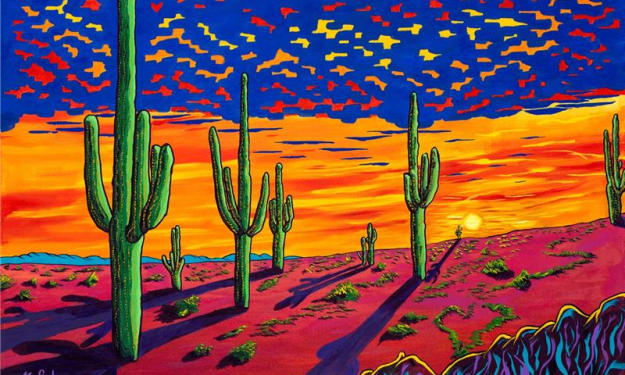
Discover the Charm of Colorful Artwork Prints Colorful artwork prints can instantly brighten any space. These vibrant pieces often come from Sedona art studios. They feature bold tones that match the beauty of bright art. Many collectors also admire their links to Arizona art prints.
By sedona art studios8 months ago in Art
Arizona Art Prints Capturing Desert Beauty in Bold Color
Discover the Magic of Arizona Art Prints Arizona art prints bring the desert to life in vivid color. They show the sunsets, mountains, and wide-open skies. Artists from Sedona art studios work hard to capture nature’s beauty. Their colorful artwork prints tell the story of Arizona’s bold spirit.
By sedona art studios8 months ago in Art
Bright Art Fill Your World with Energy, Color, and Joy
The Vibrant Magic of Bright Art Bright art lights up every space it touches. It uses bold colors and striking contrasts to create deep feelings. At Sedona art studios, artists craft pieces that shine with life. Their colorful artwork prints reflect joy, energy, and creativity.
By sedona art studios8 months ago in Art
The Purple Door: A Splash of Courage
In the little town of Maplewood, where houses wore coats of beige, white, and soft pastels, there stood a small, slightly crooked cottage at the edge of Cedar Lane. Its paint was peeling, its garden wild and untamed, and its windows looked tired. This was the home of Emma, an artist whose heart was as colorful as her paint palette, but whose surroundings had never quite matched her vibrant spirit.
By Wasif islam8 months ago in Art
Art and Success: The Journey of Creative Mastery
Art is one of humanity’s most profound forms of expression—transcending language, culture, and time. It captures emotions, challenges perceptions, and often becomes a mirror of society. But what does it mean to be successful in art? Is it fame, financial stability, critical acclaim, or something deeper? True success in art is a blend of personal fulfillment, creative authenticity, and meaningful impact. This article explores the essence of artistic success, the challenges artists face, and the steps to achieving lasting recognition.
By Niranjon Chandra Roy8 months ago in Art