
The Purple Door: A Splash of Courage
How One Color Transformed a Town and Its People
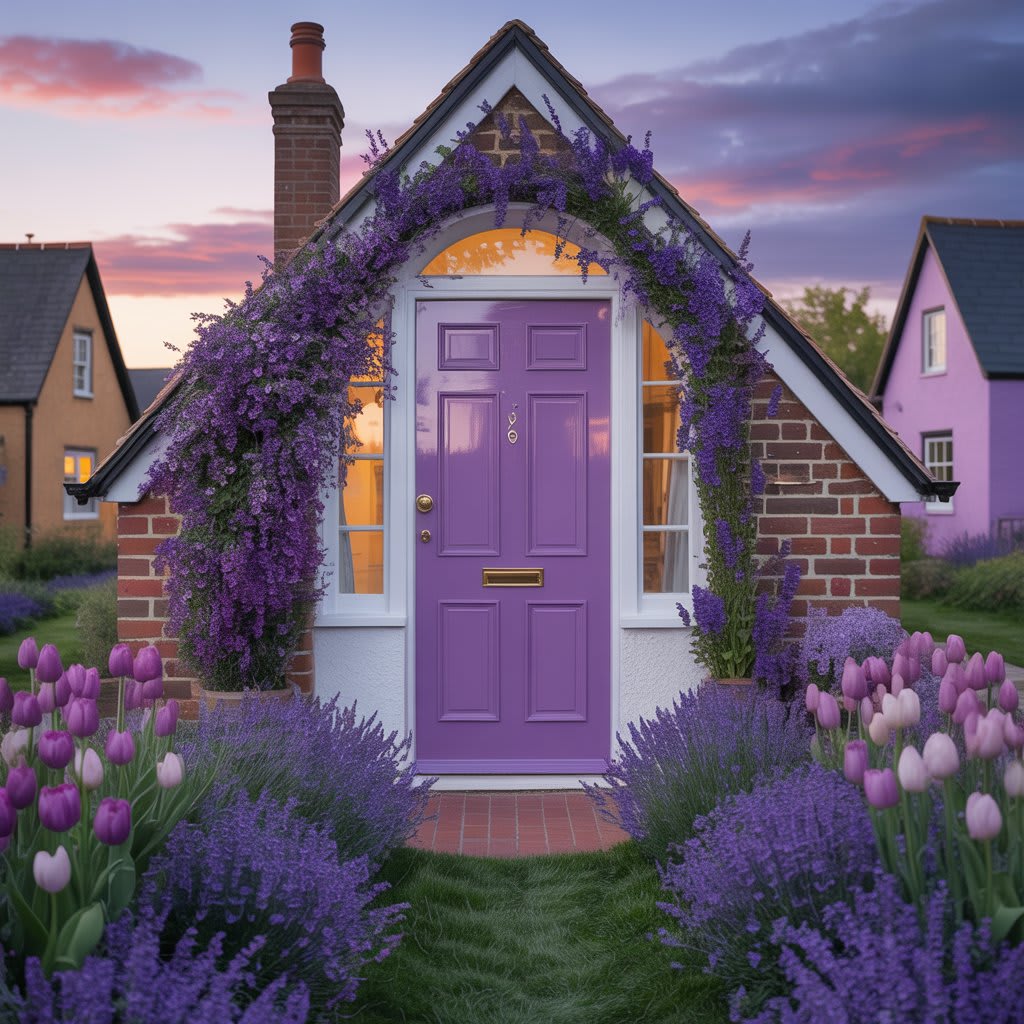
In the little town of Maplewood, where houses wore coats of beige, white, and soft pastels, there stood a small, slightly crooked cottage at the edge of Cedar Lane. Its paint was peeling, its garden wild and untamed, and its windows looked tired. This was the home of Emma, an artist whose heart was as colorful as her paint palette, but whose surroundings had never quite matched her vibrant spirit.
Emma had moved to Maplewood five years ago, seeking peace and inspiration after a bustling life in the city. She loved everything about the town—the quiet mornings, the friendly neighbors, the rustling trees—but there was one thing she wished she could change. The town’s colors, or rather, its lack of them.
Maplewood was safe and beautiful in its own way, but it was dull. The streets were filled with muted browns, grays, and whites. Even the flowers seemed to shy away from bursting in color. Emma often felt like the town was holding its breath, afraid to stand out, to be noticed.
One sunny afternoon, while sipping her tea and watching children play outside, Emma’s eyes fell on her own cottage’s front door. It was a dull, tired gray, the same color as many others on the street. Suddenly, a wild thought struck her—why not paint it purple? Not just any purple, but a deep, rich, royal purple, the kind that demands attention and whispers mystery.
Her heart raced with excitement and a hint of rebellion. It felt like a secret waiting to be told—a splash of color that would say, “Here lives someone who dares to dream.”
That very weekend, Emma went to the local hardware store and bought a can of paint—purple, of course—along with brushes and rollers. She started with the front door, eager to see how the color would transform the cottage.
As the first strokes of purple brushed against the wood, neighbors began to pause and stare. Some smiled, others frowned. Old Mr. Thompson from across the street shook his head and muttered about “kids these days ruining the charm of Maplewood.” But Emma didn’t care. She felt alive.
Days passed, and Emma didn’t stop at the door. She painted the window shutters, the porch railing, even the mailbox, all in various shades of purple—from lavender to eggplant. Each new splash of color seemed to breathe life into the house. The garden too began to change as Emma planted purple flowers—lavender, violets, and purple tulips—to match her masterpiece.
Her daily routine soon became a dance between mixing colors, deciding which shade of purple to use next, and welcoming curious neighbors who came by to watch the transformation.
One morning, a little girl named Lily knocked on Emma’s door with a hesitant smile. “Can I paint with you?” she asked, clutching a tiny brush in her hand.
Emma’s face lit up. “Of course! Purple is for everyone.”
Lily spent the afternoon painting flower pots and helping Emma care for the new garden. Her laughter echoed through the yard, and for the first time in a long while, Emma felt completely connected—not just to her art, but to her community.
Word spread quickly. Some neighbors called it bold; others called it strange. Children loved it, often stopping by to admire the bright house or ask if they could help paint a flowerpot or two.
One evening, as the sun dipped below the horizon, Emma sat on her porch, her feet dangling, watching the sky turn from blue to a soft purple hue. She realized something: by painting her house purple, she hadn’t just changed its appearance—she’d changed how she saw the world around her.
The next morning, something incredible happened. Mrs. Garcia, who lived two houses down, knocked on Emma’s door with a shy smile. In her hands was a small paintbrush and a can of turquoise paint.
“I’ve been thinking,” Mrs. Garcia said nervously, “maybe I could paint my fence… you know, a color that makes me happy. Something that feels like me.”
Emma beamed. “I’d love to help!”
Soon, a wave of color began sweeping through Maplewood. Mr. Patel painted his garage door sunny yellow, the Hendersons added a splash of teal to their porch, and the school’s front gate transformed into a rainbow mural painted by children and teachers alike.
The town, once muted and reserved, became a canvas of joy and expression. People talked more, smiled more, and looked forward to sharing their colors with one another. Purple, the first bold stroke, had inspired an entire community to find their own voice.
Emma found herself invited to help neighbors pick colors, organize painting days, and even teach art classes for kids in the community center. What started as a small rebellion became a movement—one that reminded everyone that life was meant to be colorful, bold, and unapologetically bright.
Months later, at the annual Maplewood Spring Festival, the mayor stood beside Emma on the main stage. The town was buzzing with laughter, music, and vibrant hues everywhere.
“Emma,” the mayor said, “you’ve reminded us that color isn’t just about paint. It’s about courage, creativity, and community. Maplewood shines because of you. Thank you for painting it purple.”
Emma looked around, her heart full. She realized that sometimes, the smallest change—like painting a door purple—could spark a revolution of the spirit.
And so, Maplewood’s story was forever changed by a splash of purple, a reminder that life is meant to be colorful, bold, and unapologetically bright.
About the Creator
Keep reading
More stories from Wasif islam and writers in Art and other communities.
The Day I Hit Rock Bottom
I didn’t know rock bottom had a sound until I heard it echo through my bones. It was a Tuesday. Not a particularly tragic day on the calendar—just dull, grey, and forgettable. The kind of day no one writes poetry about. The rain wasn’t the cinematic kind that brings relief or romance—it was cold, stinging, and indifferent. My coat clung to me like a heavy reminder of everything I was carrying but trying to hide.
By Wasif islam10 months ago in Confessions
'Till Death We Do Art
There would be nothing divine in this world without art. Nature may surpass the divine to all intents and purposes, but like everything it absorbs and is absorbed by, it remains here, stuck on the surface of this world, ever-present, physically bound to the universe.
By Avocado Nunzella BSc (Psych) -- M.A.P 27 days ago in Art
Leadership Behind the Experience: The Role of Brandon Cody Verran at Big Sky
In the world of hospitality and resort management, great guest experiences rarely happen by accident. Behind every smooth operation, welcoming atmosphere, and memorable stay is a team of dedicated professionals working together. At Big Sky Resort, one of the most renowned mountain destinations in North America, leadership plays a key role in ensuring that guests receive the level of service they expect. Among those helping guide operations is Brandon Cody Verran, who serves as an assistant general manager within the larger organization of Boyne Resorts.
By ORM_Specialist7 days ago in Art



Comments
There are no comments for this story
Be the first to respond and start the conversation.