
The Dancing Plague of 1518
"When an Entire Town Danced Itself to Death"

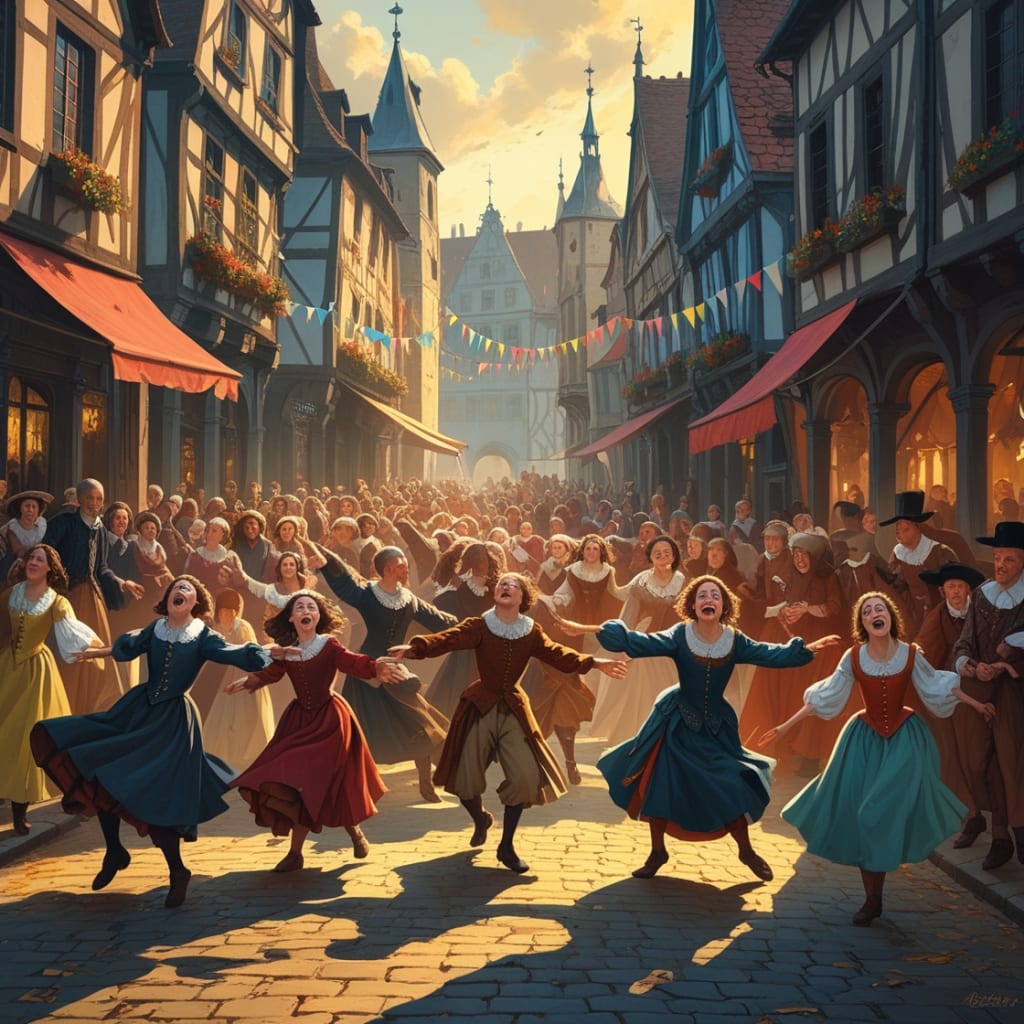
In July of 1518, a strange and terrifying phenomenon gripped the city of Strasbourg, then part of the Holy Roman Empire (modern-day France). It began with a single woman, Frau Troffea, who stepped out into the street and began to dance.
There was no music. No celebration. No festival.
She simply danced.
At first, people watched in amusement, thinking she might be drunk, mad, or perhaps possessed. But as the hours passed and she continued—sweating, twirling, collapsing, only to rise again—concern spread. By the second day, her feet were blistered, but she kept going. By the third, others had joined her.
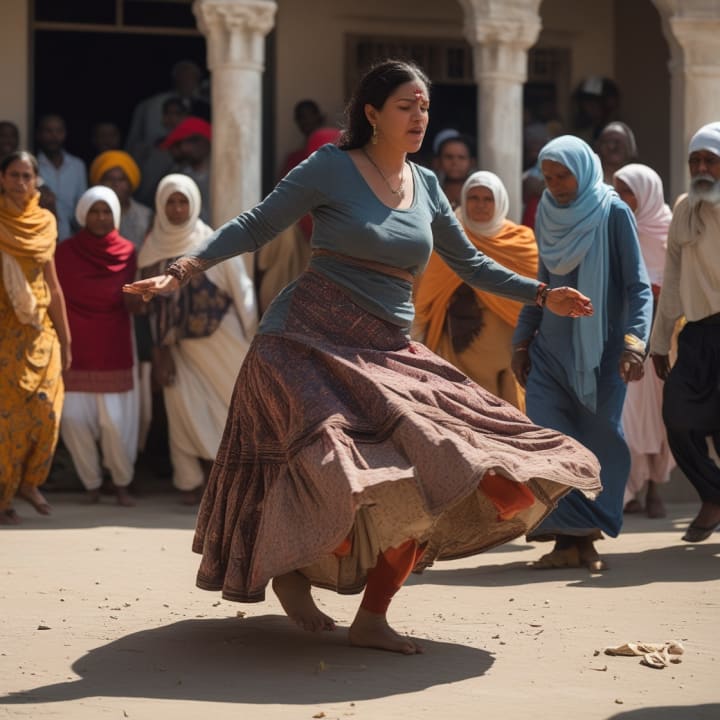
Within a week, dozens of people were dancing uncontrollably in the streets.
No one could stop them.
Doctors were called. At the time, modern medicine didn’t exist, and illnesses were often attributed to imbalances of bodily “humors” or spiritual afflictions. The city’s physicians declared it a case of “hot blood”—a condition they believed could only be cured by more dancing.
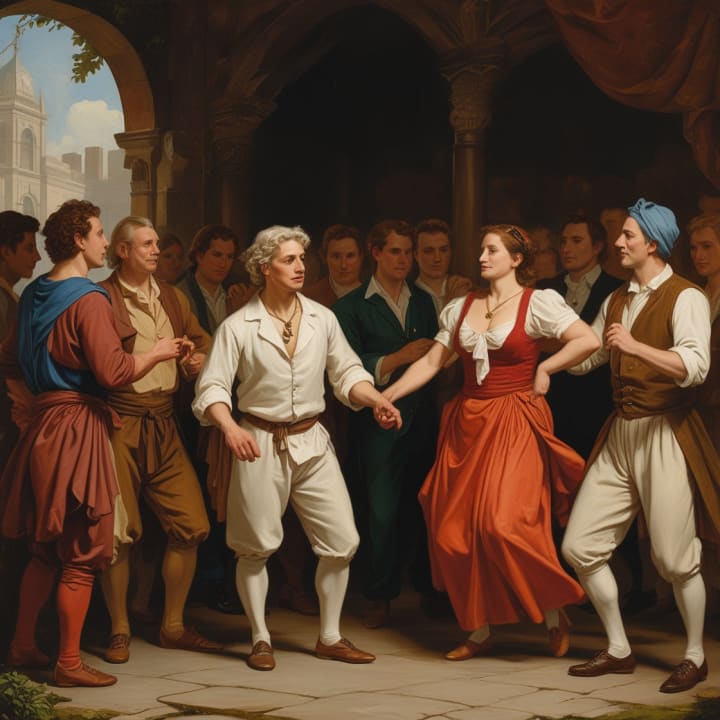
So, incredibly, officials responded by encouraging the dancers.
They cleared out guildhalls, opened up grain markets, and even hired musicians to accompany the afflicted, hoping that if they danced long enough, they would burn out the sickness. It was a horrifying mistake.
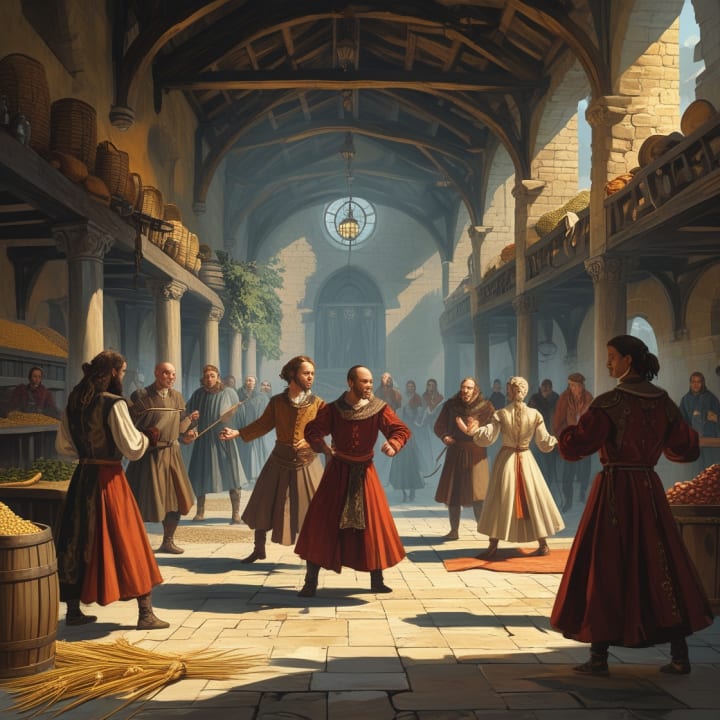
The music only made things worse.
As summer wore on, the number of afflicted rose to more than 400 people. Men, women, and even children danced day and night. They collapsed from sheer exhaustion, only to begin again. Some foamed at the mouth. Some reportedly screamed in terror. Others died.
Heart attacks, strokes, and sheer fatigue claimed lives. The exact death toll is uncertain, but eyewitnesses reported that people dropped "like flies" in the streets.
The authorities, now panicking, realized their plan had backfired. They reversed course, shutting down music and public spaces. The remaining dancers were loaded onto wagons and carted away to the shrine of Saint Vitus, a figure believed to ward off neurological and “dancing” illnesses. There, they were prayed over, exorcised, and eventually the plague began to fade.
By September, the streets of Strasbourg were quiet again.
But no one could explain what had happened.
🤔 Theories That Still Confuse Historians
Centuries later, the Dancing Plague of 1518 remains one of the strangest events in recorded history. Over time, scholars have put forward various theories, but none are definitive.
1. Mass Hysteria (Mass Psychogenic Illness)
The most widely accepted theory is that it was a case of mass hysteria, or a psychogenic illness triggered by stress, fear, or trauma. Strasbourg had recently endured famine, disease, and harsh rule, and people were mentally and physically stretched to the limit. In such conditions, psychological stress can manifest physically—possibly even spreading like a virus in a community.
2. Ergot Poisoning
Some researchers believe the townspeople may have ingested ergot, a hallucinogenic fungus that grows on damp rye. Ergot is chemically similar to LSD and could cause convulsions, hallucinations, and psychotic behavior. However, critics argue that such poisoning would likely have caused more twitching and seizures—not days of rhythmic dancing.
3. Religious or Supernatural Beliefs
In the Middle Ages, people believed in “dancing curses” and spiritual possession. The idea that one could be afflicted by a saint or demon was taken seriously. Saint Vitus, in particular, was associated with uncontrollable movement, and dancing rituals were sometimes performed in his name. Fear of divine punishment or spiritual infection could have psychologically triggered the outbreak.
🕯️ Legacy of the Plague
The Dancing Plague of 1518 is one of the best-documented cases of its kind in history. It has inspired books, plays, songs, and countless theories, but no clear explanation.
It remains a powerful reminder of how fragile the line is between body and mind—and how a community’s shared beliefs and fears can manifest in chillingly real ways.
In the end, hundreds danced not for joy, but in torment—prisoners of their own bodies in a world that could offer no answers.
And then, as mysteriously as it began, it was over.
About the Creator
Keep reading
More stories from Muhammad Saeed and writers in Art and other communities.
The Man from Taured – A Mystery at Tokyo Airport
In the sweltering heat of July 1954, Tokyo’s Haneda Airport buzzed with the usual crowd of businessmen, tourists, and diplomats arriving from around the globe. Among them was a sharply dressed man in his mid-40s. He appeared European, polite, and fluent in several languages, including Japanese. There was nothing remarkable about him—until he handed over his passport at customs.
By Muhammad Saeed10 months ago in Art
'Till Death We Do Art
There would be nothing divine in this world without art. Nature may surpass the divine to all intents and purposes, but like everything it absorbs and is absorbed by, it remains here, stuck on the surface of this world, ever-present, physically bound to the universe.
By Avocado Nunzella BSc (Psych) -- M.A.P 27 days ago in Art
Rewire Your Mind for Success
brilliant inventor and worked day and night in her small lab, filled with glowing screens and strange gadgets. Despite her talent, she struggled to find success. Her inventions were often overlooked, and her ideas remained trapped in her mind.
By Hamad Afridi 5 days ago in Art
Pandora’s Burden
“My brother warned me to not accept gifts from the one who commissioned you,” said Epimetheus to the woman clad in silvery raiments standing at the entrance to the temple. Her silver tiara and the silver rings on her fingers and toes glinted in the firelight cast by torches set on either side of the doorway. Lingering in the shadows, beyond the reach of the flames as she was, he could not tell what she held in her hands. At first what appeared to be a box was perhaps a funerary urn, or maybe merely an apple.
By J. Otis Haas2 days ago in Fiction




Comments (1)
Wonderful story