history
Major moments in the history of the stock market, from the birth of stock exchanges to catastrophic market crashes and more.
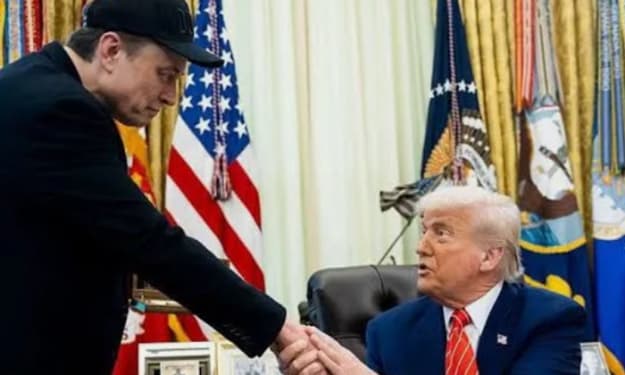
Trump Says Elon Musk Is 'Not Really Leaving' in Oval Office Farewell
**In a farewell address from the Oval Office, Trump asserts that Elon Musk is "Not Really Leaving" In a moment that blended ceremony with spectacle, former President Donald Trump delivered a characteristically theatrical farewell to Elon Musk in the Oval Office. The occasion marked Musk's official departure from his role as head of the Department of Government Efficiency (DOGE), a position he held for nearly a year. However, in true Trump fashion, the farewell was far from conventional. As Trump declared with a smirk, “Elon’s not really leaving — not really,” the atmosphere in the room shifted from somber to celebratory.
By GLOBAL NEWS8 months ago in Trader
Hard Money for a Soft Economy
In a world oversaturated with unstable crypto hype, Wall Street jargon, and fleeting digital trends, a growing number of Millennials and Gen Z are seeking refuge in something solid: precious metals. Gold and silver have outlasted empires, economic crashes, and fiat currencies. They aren’t just shiny trinkets — they’re time-tested tools of wealth preservation. Here’s a deeper dive into how to buy gold and silver smartly, securely, and strategically.
By Jacob Herr8 months ago in Trader
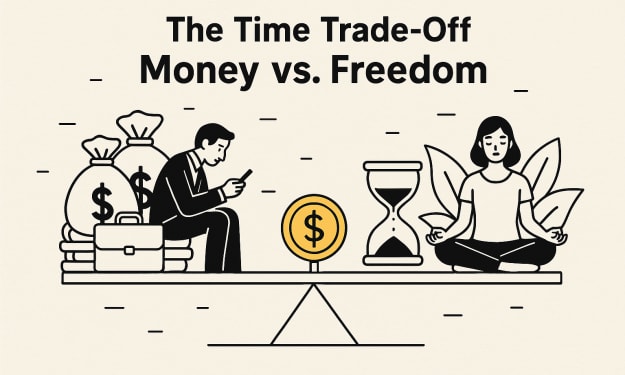
Money vs. Freedom
Time is the one resource we can never truly get back. We often sacrifice it in the pursuit of financial success, believing that more money will lead to greater freedom. But does it? Many people find themselves stuck in a cycle where their time is constantly traded for wealth, leaving little room for personal well-being. This struggle raises a crucial question: Are we using time wisely, or are we simply selling it to the highest bidder?
By Edge Alexander8 months ago in Trader
The House of Saud
If you haven’t heard of the Saudi royal family—the wealthiest family on the planet—you’re missing one of the most remarkable stories in modern history. With a jaw-dropping fortune of $1.4 trillion, the House of Saud has built an empire fueled by oil, driven by power, and defined by unmatched luxury. Let’s explore their journey from humble tribal roots to global economic dominance.
By Muhammad waqas8 months ago in Trader
"Lessons from My First Investment Experience"
Introduction I still remember the excitement that ran through me as I clicked "Buy" on my very first investment. My palms were sweaty, my heart raced, and I felt like I was taking a giant leap into the world of finance. This wasn’t just about money—it was about stepping into adulthood, independence, and opportunity.
By Shamshair Khan Hasan Zai8 months ago in Trader
Forex Brokers
Not all forex brokers are created equal. While legitimate, regulated brokers provide a fair trading environment, many operate unethically, exploiting traders—especially beginners—for profit. Here are a few reasons why trusting forex brokers without thorough research can be dangerous:
By Edge Alexander8 months ago in Trader
Trump Media Group denies it’s raising $3B for crypto buys Report
Trump Media and Technology Group has denied reports suggesting that the company is planning to raise three billion dollars for the purpose of purchasing cryptocurrency assets including Bitcoin According to a recent article published by the Financial Times unnamed sources claimed that the media company associated with former President Donald Trump was seeking to generate funding through a combination of equity sales and convertible debt offerings with the intention of investing heavily in digital currencies
By GLOBAL NEWS8 months ago in Trader
The 90-Day Rush to Get Goods Out of China
**The Rush of 90 Days to Get Things Out of China** The clock is ticking for businesses that rely on manufacturing in China in the global race for supply chain security. Over the next 90 days, businesses around the world are rushing to move goods out of China in response to growing geopolitical tensions, increasing tariffs, and the unpredictable nature of international trade policies. The urgency is a reflection of a larger change in the way multinational corporations manage sourcing, production, and distribution in a global economy that is more volatile. China has been the world's manufacturing hub for decades thanks to its low costs, enormous industrial capacity, and unparalleled logistics network. However, recent developments have accelerated efforts to diversify supply chains. Companies are reevaluating their reliance on Chinese suppliers as a result of trade wars, the COVID-19 pandemic, and now worries about rising tensions between the United States and China. As a result, inventory must be shipped out of China in a frantic 90 days before new restrictions, tariffs, or political developments impede the flow of goods. The anticipation of rising trade barriers is one of the driving forces behind this rush. Many executives are concerned about the imposition of additional export controls or tariffs in light of the escalating rhetoric about China and the approaching elections in the United States. In an effort to stock up before costs rise or supply lines are disrupted, businesses are accelerating shipments to beat potential policy changes. In order to avoid delays and shortages in the near future, some businesses are choosing to overstock right now. Logistics and shipping companies are already feeling the effects. Freight companies report a surge in demand for cargo space, especially on trans-Pacific routes. Container shortages are reemerging, and port congestion is on the rise. Despite remaining lower than their peak during the pandemic, shipping costs are currently trending upward due to the increase in outbound volume from Chinese ports. Last-mile delivery networks, customs brokers, and warehouse operators are also under pressure as a result of this rush. The urgency stems not only from the current demand but also from the strategy for the long term. This window is being utilized by businesses to relocate manufacturing capacity to other nations like Vietnam, India, and Mexico. This process—often called “China +1”—involves building secondary supply chains outside China to mitigate future risk. However, this transition is time-consuming, expensive, and complicated. For many, the 90-day window is more about buying time to implement longer-term solutions than it is about fully moving operations. The automotive, electronics, and apparel industries are among the most affected. Because of their close ties to China, these industries are particularly challenging to decouple from. For instance, China continues to be a significant supplier of semiconductors and battery components in the electronics industry. Although assembly can be moved elsewhere, Chinese factories are still frequently used to obtain advanced components and raw materials. This makes it nearly impossible to exit in the short term, making it even more important to secure goods right away while alternatives are investigated. The uncertainty of policies makes things even more complicated. Export controls, like those that focus on rare earth materials or sensitive technologies, are becoming more common. In parallel, China has enacted new laws to safeguard its own economic interests, which may make it more difficult for foreign businesses to operate or exit without restriction. Global businesses place a high priority on contingency planning as a result of these factors. Inventory management is also being rethought by some businesses. The "just-in-time" model put efficiency and minimal storage first for years. However, the current environment has prompted many to implement a "just-in-case" strategy, which involves maintaining higher inventory levels to safeguard against disruptions. Better forecasting, more warehouse space, and more money invested in logistics infrastructure are all required for this shift. Despite the rush, not all companies are able to move quickly. Particularly, smaller businesses lack the resources necessary to move production or speed up shipments. They see the next 90 days as a test of their resilience in the face of geopolitical uncertainty as well as a logistical challenge. In order to assist smaller businesses in adapting, governments and industry associations may need to intervene with assistance or direction. The frenzied movement of goods out of China may signal a turning point in global trade in the future. It indicates a shift away from an excessive reliance on a single manufacturing hub and toward a supply network that is more diverse and resilient. The current frenzy demonstrates that businesses are no longer willing to place all of their bets on a single nation, despite the fact that China will likely continue to be a significant player in global commerce. The next 90 days could shape the next decade of global supply chain strategy.
By GLOBAL NEWS8 months ago in Trader
Trump's Tariff Threat Rocks Global Financial Foundations
President Donald Trump's recent comments about imposing new tariffs if he returns to office have sent ripples through global financial markets, causing significant sell-offs on Wall Street, in European stocks, and particularly impacting Apple Inc. Trump's "rebalancing trade" rhetoric has reignited fears of a volatile trade war era, unsettling investors across multiple sectors and continents.
By X Inversiones8 months ago in Trader
The Global Economic Maze: Navigating Investments in a Volatile World
The intricately intertwined complexities of the global economy and investment decisions represent a fascinating field of study, demanding a keen understanding of macroeconomic forces, geopolitics, and human behavior. In an increasingly interconnected world, the repercussions of an event in one region can be felt across the globe, creating both risks and opportunities for investors.
By X Inversiones8 months ago in Trader