
The 90-Day Rush to Get Goods Out of China
The 90-Day Rush to Get Goods Out of China

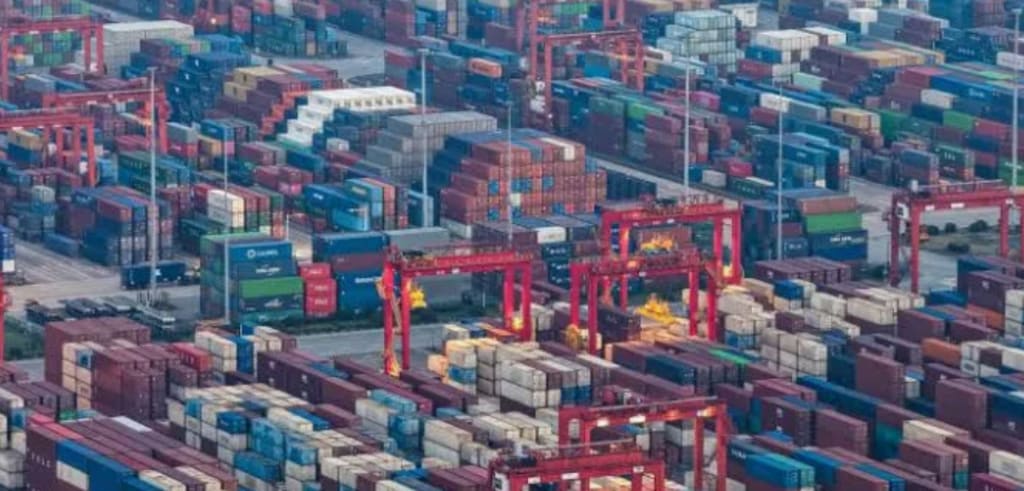
**The Rush of 90 Days to Get Things Out of China** The clock is ticking for businesses that rely on manufacturing in China in the global race for supply chain security. Over the next 90 days, businesses around the world are rushing to move goods out of China in response to growing geopolitical tensions, increasing tariffs, and the unpredictable nature of international trade policies. The urgency is a reflection of a larger change in the way multinational corporations manage sourcing, production, and distribution in a global economy that is more volatile. China has been the world's manufacturing hub for decades thanks to its low costs, enormous industrial capacity, and unparalleled logistics network. However, recent developments have accelerated efforts to diversify supply chains. Companies are reevaluating their reliance on Chinese suppliers as a result of trade wars, the COVID-19 pandemic, and now worries about rising tensions between the United States and China. As a result, inventory must be shipped out of China in a frantic 90 days before new restrictions, tariffs, or political developments impede the flow of goods. The anticipation of rising trade barriers is one of the driving forces behind this rush. Many executives are concerned about the imposition of additional export controls or tariffs in light of the escalating rhetoric about China and the approaching elections in the United States. In an effort to stock up before costs rise or supply lines are disrupted, businesses are accelerating shipments to beat potential policy changes. In order to avoid delays and shortages in the near future, some businesses are choosing to overstock right now. Logistics and shipping companies are already feeling the effects. Freight companies report a surge in demand for cargo space, especially on trans-Pacific routes. Container shortages are reemerging, and port congestion is on the rise. Despite remaining lower than their peak during the pandemic, shipping costs are currently trending upward due to the increase in outbound volume from Chinese ports. Last-mile delivery networks, customs brokers, and warehouse operators are also under pressure as a result of this rush. The urgency stems not only from the current demand but also from the strategy for the long term. This window is being utilized by businesses to relocate manufacturing capacity to other nations like Vietnam, India, and Mexico. This process—often called “China +1”—involves building secondary supply chains outside China to mitigate future risk. However, this transition is time-consuming, expensive, and complicated. For many, the 90-day window is more about buying time to implement longer-term solutions than it is about fully moving operations. The automotive, electronics, and apparel industries are among the most affected. Because of their close ties to China, these industries are particularly challenging to decouple from. For instance, China continues to be a significant supplier of semiconductors and battery components in the electronics industry. Although assembly can be moved elsewhere, Chinese factories are still frequently used to obtain advanced components and raw materials. This makes it nearly impossible to exit in the short term, making it even more important to secure goods right away while alternatives are investigated. The uncertainty of policies makes things even more complicated. Export controls, like those that focus on rare earth materials or sensitive technologies, are becoming more common. In parallel, China has enacted new laws to safeguard its own economic interests, which may make it more difficult for foreign businesses to operate or exit without restriction. Global businesses place a high priority on contingency planning as a result of these factors. Inventory management is also being rethought by some businesses. The "just-in-time" model put efficiency and minimal storage first for years. However, the current environment has prompted many to implement a "just-in-case" strategy, which involves maintaining higher inventory levels to safeguard against disruptions. Better forecasting, more warehouse space, and more money invested in logistics infrastructure are all required for this shift. Despite the rush, not all companies are able to move quickly. Particularly, smaller businesses lack the resources necessary to move production or speed up shipments. They see the next 90 days as a test of their resilience in the face of geopolitical uncertainty as well as a logistical challenge. In order to assist smaller businesses in adapting, governments and industry associations may need to intervene with assistance or direction. The frenzied movement of goods out of China may signal a turning point in global trade in the future. It indicates a shift away from an excessive reliance on a single manufacturing hub and toward a supply network that is more diverse and resilient. The current frenzy demonstrates that businesses are no longer willing to place all of their bets on a single nation, despite the fact that China will likely continue to be a significant player in global commerce. The next 90 days could shape the next decade of global supply chain strategy.
About the Creator
GLOBAL NEWS
World News Updated
Short News upload
Technology News
Keep reading
More stories from GLOBAL NEWS and writers in Trader and other communities.
Make Money While You Sleep: 7 Lazy-Friendly Ways to Earn Without Hustling 24/7
"Make Money While You Sleep: Seven Lazy-Friendly Ways to Earn Money Without Working 24 Hours A Day" Everyone hopes to earn passive income that comes in without constant effort or stress while they sleep. The good news is that you can create income streams that only require minimal daily effort, allowing you to enjoy life without having to work a 9-to-5 job. Here are seven easy ways to earn money passively without sacrificing your free time if you want to increase your earnings. **1. Consider Stocks That Pay Dividends** Investing in dividend stocks is one of the most popular and dependable methods of passive income generation. Shareholders in dividend stocks receive regular payouts, typically quarterly, just for owning the shares. You can generate a consistent income stream by making investments in reputable businesses that have a track record of paying out regular dividends. The best part is that you don't have to do anything else after you buy the shares. You will continue to receive dividends, enabling you to passively increase your wealth. **2. Create a Course Online** An online course can be a lucrative passive income source if you have expertise in a particular field. You can create and upload courses that students can purchase at any time on platforms like Udemy, Teachable, or Skillshare. Your work is done after creating the course; students will continue to enroll without you having to do anything else. An online course can generate a steady income for years with effective marketing and high-quality content. **3. Lease the Property** If managed properly, owning rental property can generate passive income. Renting real estate brings regular rent payments, whether it's a house, apartment, or even a room in your home. Utilizing rental services like Airbnb or hiring a property manager can reduce your workload, despite the fact that property management can take some effort. An excellent source of passive cash flow is rental income, which can cover mortgage payments and generate profit over time. **4. Create a YouTube channel or blog** It is possible to turn your blog or YouTube channel into a machine that generates passive income. Quality content creation and audience growth initially take time and effort. Ads, sponsored content, and affiliate marketing are all ways to monetize your blog or channel as it grows. This means that you can continue to make money from older videos or posts without constantly producing new material. It starts slowly but pays off in the end. **5. Lending from Peer to Peer** Platforms for peer-to-peer (P2P) lending connect borrowers and investors who are willing to fund loans. As borrowers repay their loans, you earn interest by lending money on these platforms. This approach is a hands-off investment because it only requires minimal ongoing work while requiring initial capital. To reduce risk, just make sure to investigate the platform's dependability and diversify your loans. **6. License Your Artwork or Photography** Licensing your artwork or photography can provide you with passive income if you are creative. You can upload images for licensing or sale on websites like Shutterstock, Adobe Stock, or Getty Images. You don't have to put in any extra effort to earn royalties each time someone downloads or uses your work. This way, even after the first upload, your creativity continues to pay off. **7. Make use of reward and cashback apps** Although cashback and reward apps aren't much of a source of income, they provide a straightforward method for passively earning money from everyday purchases. When you shop online or scan receipts, you can earn cashback, points, or discounts from apps like Rakuten, Swagbucks, or Honey. You will be rewarded without having to alter your routine if you combine this with your usual spending patterns. These insignificant amounts can add up over time. ---
By GLOBAL NEWS8 months ago in Trader
Australia Activewear Market: Fitness Culture, Athleisure Trend & Performance Apparel Growth
Australia Activewear Market Overview The Australia activewear market is experiencing robust expansion as fitness lifestyles, athleisure fashion trends and digital commerce significantly reshape how consumers shop for and wear performance apparel. Activewear — which includes sports apparel, fitness clothing, athleisure garments and performance accessories — has transitioned from niche athletic gear to mainstream wardrobe staples worn for exercise, casual outings and daily comfort. The Australia activewear market size reached USD 8.3 Billion in 2024. Looking forward, the market is projected to reach USD 12.9 Billion by 2033, exhibiting a growth rate (CAGR) of 5.02% during 2025-2033. This growth is driven by rising health consciousness, increased participation in physical activities, the influence of global fashion trends, and a sustained shift toward comfortable, versatile clothing that blends style with performance.
By Amyra Singh5 days ago in Trader



Comments (1)
This 90-day rush to get things out of China is intense. You mention trade wars and COVID-19 already disrupted supply chains. How will this new push reshape global sourcing long-term? And what about the impact on Chinese manufacturers losing these orders?