
U.S. Thinks Hamas Is Ready to Demilitarize as Gaza Deal Moves to “Phase Two”
A turning point in the Gaza conflict—or another fragile pause?
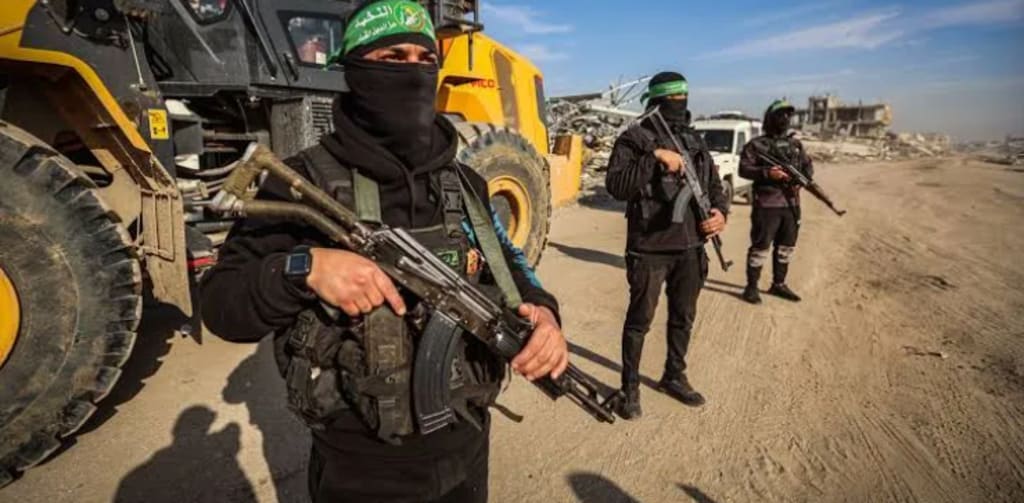
The Gaza conflict may be entering one of its most critical chapters yet. According to U.S. officials, Hamas has signaled a willingness to discuss demilitarization as the ceasefire agreement transitions into what negotiators are calling Phase Two. While skepticism remains high, the move represents a rare moment of cautious optimism in a region long defined by cycles of violence and broken agreements.
For civilians in Gaza and Israel alike, the hope is simple: that this next phase will be more than a temporary calm—and instead lay the groundwork for lasting stability.
What Is “Phase Two” of the Gaza Deal?
Phase Two marks a shift from emergency conflict management to long-term political and security restructuring. While Phase One focused on halting active fighting, exchanging hostages, and opening humanitarian corridors, Phase Two is far more ambitious.
This stage includes:
Gradual demilitarization of Hamas
Transfer of Gaza governance to a non-militant, technocratic authority
International monitoring and security assistance
Large-scale reconstruction efforts
The United States sees this phase as the real test of whether the ceasefire can evolve into a durable peace process rather than another short-lived truce.
Why the U.S. Believes Hamas Is Ready to Demilitarize
U.S. diplomats claim that behind closed doors, Hamas has shown openness to reducing its military footprint in Gaza. This reportedly includes discussions around disarming fighters, turning over heavy weapons, and stepping back from direct political control.
One reason for this shift may be pressure from multiple directions:
Severe humanitarian devastation inside Gaza
Loss of regional political support
Internal fatigue after prolonged conflict
Growing international demands for accountability
The U.S. has also floated incentive-based solutions, such as amnesty programs for fighters who surrender weapons, which could help Hamas save face while complying with demilitarization demands.
Still, American officials emphasize that these are preliminary signals, not binding commitments.
Hamas’s Dilemma: Power vs. Survival
For Hamas, demilitarization presents a deep ideological and strategic challenge. The group’s identity has long been rooted in armed resistance, and giving up weapons risks alienating its core supporters.
At the same time, refusing to engage could leave Hamas isolated, blamed for prolonging Gaza’s suffering, and potentially targeted by renewed military action. By engaging in Phase Two talks, Hamas may be attempting to reposition itself as a political actor rather than a purely militant force—a risky but possibly necessary evolution.
However, Hamas leaders have repeatedly stated that any permanent disarmament would require broader political concessions, including progress toward Palestinian statehood—an issue that remains deeply contested.
Israel’s Perspective: Trust, But Verify
Israel has responded cautiously to U.S. optimism. While Israeli leaders support demilitarization in principle, they remain unconvinced that Hamas will fully comply.
From Israel’s standpoint, Gaza must be completely demilitarized before any long-term political solution can be accepted. Partial disarmament or symbolic gestures are viewed as insufficient, especially after years of rocket attacks and cross-border violence.
As a result, Israel has pushed for:
Strict international verification mechanisms
Ongoing intelligence oversight
The ability to respond militarily if agreements collapse
This mistrust could become one of the biggest obstacles to Phase Two’s success.
The Role of a Transitional Gaza Government
One of the most significant elements of Phase Two is the proposal for a technocratic transitional government in Gaza. This body would be made up of non-partisan professionals tasked with managing daily governance, coordinating aid, and preparing the ground for future elections.
The idea is simple: remove governance from militant control while avoiding a power vacuum.
International actors—including Egypt, the United States, and the United Nations—are expected to oversee this transition, with peacekeeping or stabilization forces potentially deployed to support security and police training.
The Humanitarian Reality on the Ground
Despite diplomatic progress, conditions in Gaza remain dire. Entire neighborhoods have been destroyed, hospitals are overwhelmed, and basic services are scarce. Reconstruction is expected to cost tens of billions of dollars, and funding commitments are still uncertain.
For many Gazans, political negotiations feel distant compared to the immediate struggle for food, shelter, and safety. Without visible improvements in daily life, public support for Phase Two could erode quickly.
This is why aid delivery, infrastructure rebuilding, and employment opportunities are seen as just as important as security reforms.
Why Phase Two Matters More Than Any Ceasefire Before It
Unlike previous agreements, Phase Two attempts to address the root causes of instability, not just the symptoms. By focusing on demilitarization, governance reform, and international oversight, the plan aims to break the cycle that has defined Gaza for decades.
If successful, it could:
Reduce the likelihood of future wars
Open pathways for political dialogue
Improve regional stability
Offer Gaza a chance at recovery and self-governance
If it fails, the consequences could be severe—renewed violence, deeper humanitarian crises, and further erosion of trust among all parties involved.
Final Thoughts: Cautious Hope, Hard Reality
The U.S. belief that Hamas may be ready to demilitarize represents a rare moment of possibility in a deeply entrenched conflict. But belief alone won’t secure peace. Phase Two will demand verification, compromise, and sustained international engagement—all under the weight of decades of mistrust.
For now, the world is watching closely. Whether Phase Two becomes a breakthrough or another missed opportunity will depend on what happens next—not in press statements, but on the ground in Gaza.
About the Creator
Keep reading
More stories from Aqib Hussain and writers in The Swamp and other communities.
Iran Reopens Airspace After Temporary Closure Forced Flights to Reroute
When news broke that Iran had temporarily closed its airspace, the ripple effects were felt almost instantly across the global aviation industry. Airlines scrambled to reroute flights, passengers faced delays, and aviation authorities worldwide went on high alert. Although the closure lasted only a few hours, its impact highlighted just how interconnected — and vulnerable — international air travel can be.
By Aqib Hussain6 days ago in The Swamp
Five Graphics That Show Greenland’s Importance to Trump
Greenland, a vast Arctic island with a tiny population, rarely dominates global headlines. Yet during Donald Trump’s presidency and continuing influence on U.S. politics, Greenland emerged as a symbol of American strategic ambition. Trump’s interest was not about tourism or novelty. It reflected deeper calculations tied to security, resources, and global power competition. Through five conceptual “graphics,” we can clearly see why Greenland matters so much to Trump and to U.S. policymakers more broadly.
By Salaar Jamali3 days ago in The Swamp


Comments
There are no comments for this story
Be the first to respond and start the conversation.