
Iran Reopens Airspace After Temporary Closure Forced Flights to Reroute
How a Brief Shutdown Disrupted Global Aviation and What It Means Going Forward
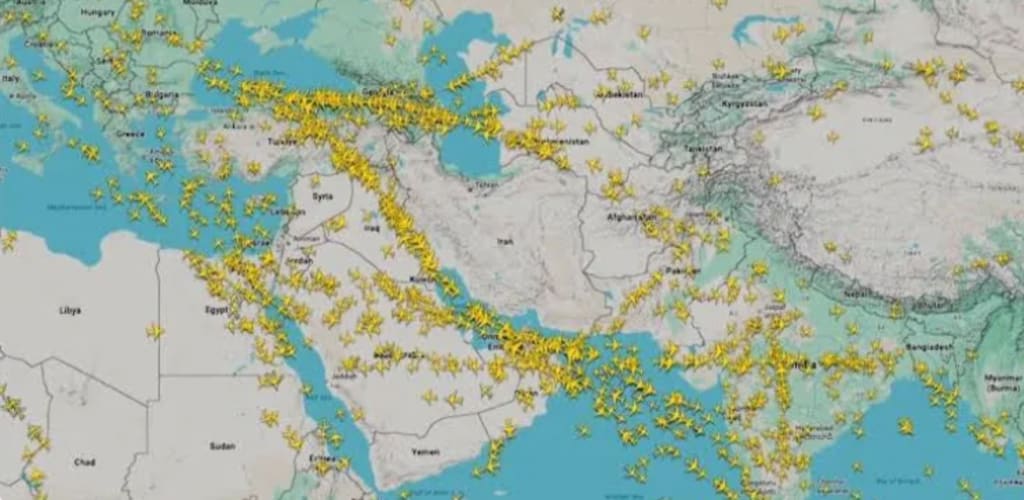
When news broke that Iran had temporarily closed its airspace, the ripple effects were felt almost instantly across the global aviation industry. Airlines scrambled to reroute flights, passengers faced delays, and aviation authorities worldwide went on high alert. Although the closure lasted only a few hours, its impact highlighted just how interconnected — and vulnerable — international air travel can be.
In this blog, we break down why Iran closed its airspace, how airlines responded, and what this incident means for the future of global aviation.
✈️ What Happened: A Sudden Airspace Closure
Iran temporarily shut down its airspace, allowing only a limited number of flights to operate with special permission. The closure was announced through an official aviation notice, leaving airlines little time to adjust.
Iran’s airspace is a key transit corridor for flights traveling between Europe, Asia, and the Middle East. When it went offline, planes that would normally cross Iranian skies were forced to take longer alternative routes, often over neighboring countries.
Within minutes, flight tracking platforms showed aircraft diverting mid-journey, returning to their origin airports, or delaying departures entirely.
🌍 Why Iran’s Airspace Matters So Much
Iran sits at a strategic crossroads of international air travel. Thousands of flights pass through its airspace each week because it offers:
Shorter, fuel-efficient routes
Reduced travel time between continents
Lower operational costs for airlines
When this corridor is closed, airlines must reroute over longer paths — often adding extra fuel costs, extended flight times, and crew scheduling challenges.
This is exactly what happened during the temporary shutdown.
🚨 What Triggered the Closure?
While Iranian officials did not release detailed public explanations, the closure occurred amid heightened regional and international tensions. Such decisions are typically driven by security assessments aimed at protecting civilian aircraft from potential risks.
Airspace closures in politically sensitive regions are not uncommon. Aviation authorities worldwide rely on real-time intelligence and diplomatic signals to determine whether skies remain safe for commercial operations.
In this case, precaution appeared to be the driving factor.
🛫 Airlines Forced to Reroute and React
The sudden closure put airlines under pressure to act quickly:
Flights between Europe and Asia were diverted around Iran, increasing journey times
Some long-haul flights faced significant delays or cancellations
Airlines issued passenger advisories explaining schedule disruptions
Carriers from Asia, Europe, and the Middle East all reported operational impacts. Aviation apps showed crowded alternative routes forming almost immediately after the closure took effect.
For passengers, this meant longer travel times, missed connections, and uncertainty — even though the situation resolved relatively quickly.
🔓 Reopening the Skies: Operations Resume
After several hours, Iran reopened its airspace, allowing flights to resume normal routing. Airlines gradually returned to standard flight paths, and traffic over the region began to normalize.
Although the disruption was short-lived, it served as a reminder of how quickly global air travel can be affected by geopolitical developments.
Flights resumed, but the industry took note.
💸 The Cost of a Few Hours Offline
Even a brief airspace closure can have financial consequences:
Increased fuel consumption due to longer routes
Additional crew duty time
Delays affecting connecting flights across airline networks
For airlines already dealing with rising fuel prices and operational challenges, sudden disruptions add another layer of complexity.
Passengers may not always see the behind-the-scenes logistics, but airlines must constantly balance safety, cost, and efficiency in moments like these.
🌐 A Bigger Picture: Aviation and Geopolitics
This incident underscores a broader reality: commercial aviation is deeply influenced by global politics.
Airspace is sovereign territory. Governments can restrict or reopen it based on security assessments, diplomatic relations, or military concerns. When that happens, airlines must adapt immediately — often with little notice.
Similar situations in the past have shown that even temporary closures can reshape flight patterns across continents.
🧭 What This Means Going Forward
While Iran’s airspace is currently open, the situation highlights several key takeaways:
Airlines must maintain flexible routing strategies
Passengers should expect occasional disruptions on long-haul routes
Aviation authorities will continue closely monitoring geopolitical hotspots
As global tensions shift, airspace availability will remain a critical variable in international travel planning.
✨ Final Thoughts
Iran reopening its airspace brought quick relief to airlines and travelers alike, but the episode left a lasting impression. It demonstrated how a few hours of restricted airspace can disrupt global flight networks and reinforce the delicate balance between aviation safety and geopolitics.
For now, the skies are open — but the aviation world remains watchful.
If you’re a frequent traveler or aviation enthusiast, this is a reminder that every flight path tells a story shaped not just by distance and weather, but by the complex world below.
About the Creator
Keep reading
More stories from Aqib Hussain and writers in The Swamp and other communities.
Tensions Are High as Vance and Rubio Prepare to Meet Danish and Greenlandic Officials
Things are heating up in the Arctic. U.S. Vice President J.D. Vance and Secretary of State Marco Rubio are preparing to meet officials from Denmark and Greenland at the White House. The talks come amid growing tension over U.S. interest in Greenland — a self-governing part of the Kingdom of Denmark. With the island’s strategic location and rich resources, this meeting is attracting global attention.
By Aqib Hussain2 days ago in The Swamp




Comments
There are no comments for this story
Be the first to respond and start the conversation.