
Five Graphics That Show Greenland’s Importance to Trump
Subtitle: Why the world’s largest island keeps appearing in U.S. strategic conversations
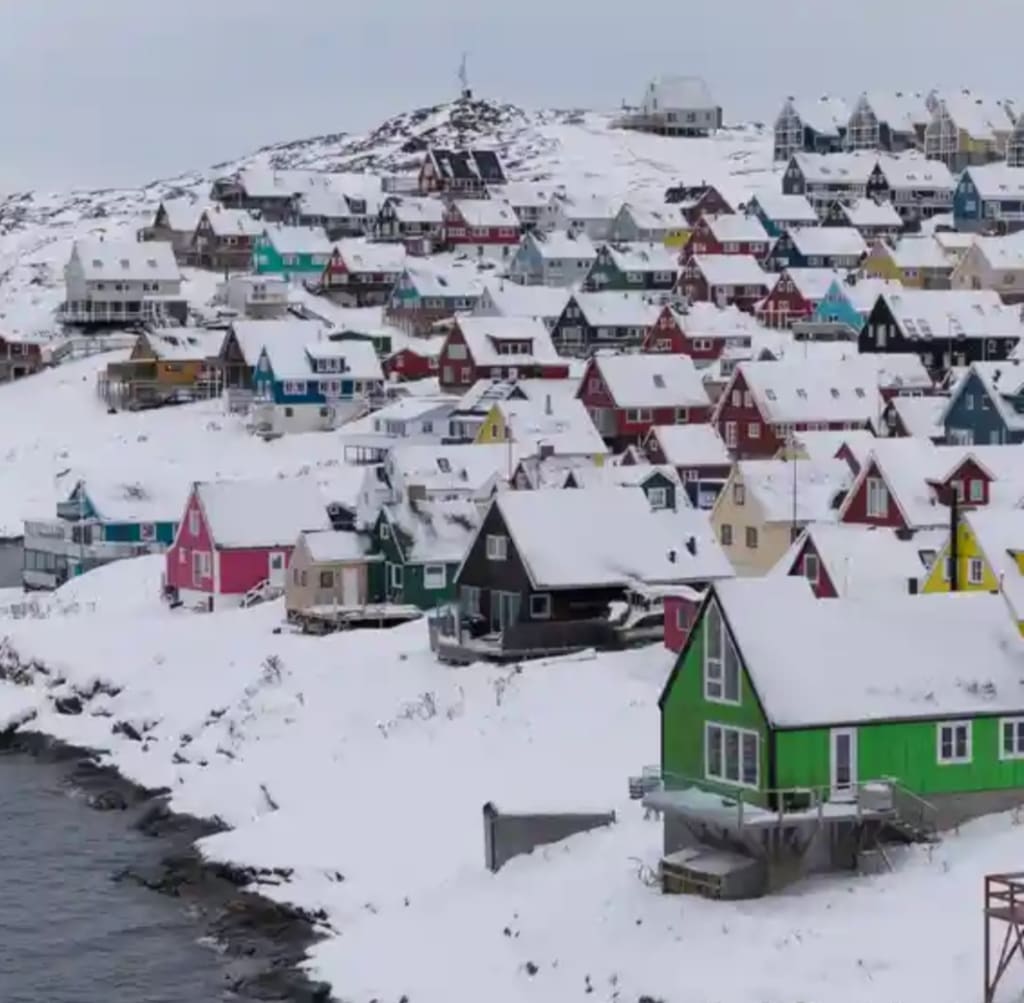
Greenland, a vast Arctic island with a tiny population, rarely dominates global headlines. Yet during Donald Trump’s presidency and continuing influence on U.S. politics, Greenland emerged as a symbol of American strategic ambition. Trump’s interest was not about tourism or novelty. It reflected deeper calculations tied to security, resources, and global power competition. Through five conceptual “graphics,” we can clearly see why Greenland matters so much to Trump and to U.S. policymakers more broadly.
---
1. Map of Strategic Location: Greenland at the Center of the Arctic
The first and most powerful graphic is a simple map. Greenland sits between North America and Europe, bordering the Arctic Ocean and overlooking key North Atlantic shipping routes. From a military standpoint, it is a natural watchtower.
Trump repeatedly emphasized national security during his presidency, and Greenland fits neatly into that worldview. As Arctic ice melts, new sea lanes are opening, shortening routes between Asia, Europe, and North America. A map showing these emerging routes highlights Greenland as a critical chokepoint. Whoever maintains influence over the island gains a strategic advantage in monitoring movement across the Arctic.
For Trump, who often framed global politics as competition between great powers, Greenland represented leverage against rivals like Russia and China, both of which have increased their Arctic presence in recent years.
---
2. Military Footprint Graphic: Thule Air Base and Missile Defense
A second graphic would zoom in on northern Greenland to spotlight Thule Air Base, the northernmost U.S. military installation. This base has long been central to American missile warning and space surveillance systems.
Trump consistently supported increased defense spending and modernization of U.S. military capabilities. A diagram of Thule’s radar coverage shows why Greenland matters in this context. The base provides early warning against potential missile threats from across the Arctic, particularly from Russia.
From Trump’s perspective, Greenland is not hypothetical real estate. It already plays a direct role in U.S. homeland defense. Expanding or securing that presence aligns with his “America First” doctrine, which prioritized military readiness and territorial security above diplomatic sensitivities.
---
3. Resource Map: Rare Earths, Minerals, and Energy Potential
Another compelling graphic would highlight Greenland’s untapped natural resources. Beneath its ice and rocky terrain lie rare earth elements, uranium, zinc, and potentially significant oil and gas reserves.
Trump frequently criticized U.S. dependence on foreign supply chains, especially for critical minerals dominated by China. A resource map of Greenland underscores its appeal as an alternative source. Control or influence over these resources could reduce U.S. reliance on geopolitical rivals.
As climate change accelerates ice melt, access to these resources becomes more feasible. For Trump, who approached international relations through economic advantage, Greenland represented long-term strategic value rather than short-term gain.
---
4. Climate Change Visualization: Melting Ice and New Opportunities
A fourth graphic would show Greenland’s ice sheet retreat over recent decades. While Trump was skeptical of climate change science, his administration still recognized the practical consequences of a warming Arctic.
This visualization reveals a paradox. As ice melts, risks to the planet increase, but geopolitical and economic opportunities also expand. New shipping routes, mining prospects, and strategic access emerge.
Trump’s interest in Greenland can be seen through this lens. Even without framing it as a climate issue, he understood that environmental changes were reshaping global power dynamics. Greenland, once remote and frozen, is becoming more accessible and therefore more valuable.
---
5. Political Status Chart: Greenland, Denmark, and U.S. Influence
The final graphic would outline Greenland’s political status. The island is an autonomous territory within the Kingdom of Denmark, with control over many domestic affairs but not defense or foreign policy.
Trump’s reported interest in “buying” Greenland, though widely criticized and mocked, was rooted in this political reality. A chart showing Greenland’s governance structure helps explain why Trump viewed it as negotiable territory rather than an untouchable sovereign state.
This approach reflects Trump’s transactional view of diplomacy. He often treated alliances and international relationships as deals to be renegotiated. Greenland, in his view, was not just land but a strategic asset whose ownership or control could be discussed.
---
Why These Graphics Matter
Taken together, these five graphics tell a clear story. Greenland’s importance to Trump was not impulsive or symbolic. It was grounded in geography, military strategy, resource security, climate-driven change, and political opportunity.
While the idea of purchasing Greenland was ultimately dismissed by Denmark and criticized globally, it succeeded in one respect. It forced the world to pay attention to the Arctic and to Greenland’s growing strategic relevance.
For Trump and future U.S. leaders alike, Greenland represents the intersection of old-fashioned geopolitics and new global realities. In an era defined by great-power competition, climate change, and resource scarcity, the island’s importance is only likely to grow.
These five graphics do more than explain Trump’s interest. They illustrate why Greenland will remain a focal point in global strategy long after the headlines fade.
About the Creator
Keep reading
More stories from Salaar Jamali and writers in The Swamp and other communities.
Here’s a comprehensive article based on the latest developments
: --- EU Ambassadors Summoned for Emergency Talks After Trump Threatens Tariffs Over Greenland – Europe Live In an extraordinary escalation of transatlantic tensions, European Union ambassadors were summoned for emergency talks as leaders scramble to respond to U.S. President Donald Trump’s unprecedented threat to impose tariffs on multiple European countries over the issue of Greenland — a semi-autonomous Danish territory in the Arctic with huge geopolitical significance.
By Salaar Jamaliabout 8 hours ago in The Swamp
U.S. Thinks Hamas Is Ready to Demilitarize as Gaza Deal Moves to “Phase Two”
The Gaza conflict may be entering one of its most critical chapters yet. According to U.S. officials, Hamas has signaled a willingness to discuss demilitarization as the ceasefire agreement transitions into what negotiators are calling Phase Two. While skepticism remains high, the move represents a rare moment of cautious optimism in a region long defined by cycles of violence and broken agreements.
By Aqib Hussain3 days ago in The Swamp


Comments
There are no comments for this story
Be the first to respond and start the conversation.