
Trump urges Republicans to 'take over' and 'nationalize' voting
A Deep Dive into a Contentious Proposal

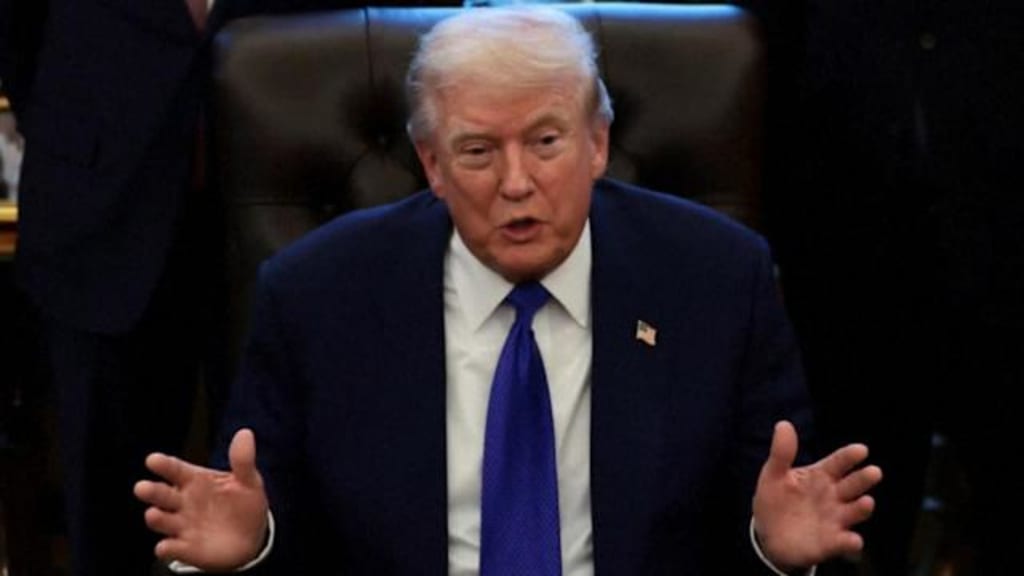
In a development that has sharpened the political debate in the United States, former President and current GOP leader Donald Trump urged Republicans to “take over” and “nationalize” voting during a recent podcast appearance — a call that has drawn significant reaction from across the political spectrum and raised fundamental questions about constitutional norms and democratic practice.
This moment comes as political tensions are intensifying ahead of the 2026 midterm elections, with control of Congress and other state and federal offices at stake. Understanding what Trump proposed, why it matters, and how various actors are responding can help clarify the broader national conversation about election administration and democratic stability.
---
What Did Trump Actually Say?
In an interview on The Dan Bongino Show, a podcast hosted by the former deputy director of the FBI, Trump called on Republicans to “take over the voting” in at least 15 states and to “nationalize” the process — a phrase suggesting federal control over aspects of election administration that traditionally fall under state authority.
Trump framed his comments around claims — widely disputed and unsupported by evidence — that elections in certain states are corrupt, with allegations of illegal voting by noncitizens. He stated that Republicans should be more forceful in addressing what he characterized as problems within the current system.
At times, such rhetoric has been linked to broader Republican proposals such as the SAVE Act, which advocates for uniform voter ID standards and restrictions on no‑excuse mail‑in voting at the federal level. Trump’s team has described such legislative ideas as ways to ensure “free and fair elections.”
---
How Does This Fit With U.S. Law?
The U.S. Constitution clearly assigns election administration primarily to state governments. Under Article I, state legislatures determine the times, places, and manner of holding elections for Congressional seats, and the 10th Amendment reinforces state authority over matters not expressly delegated to the federal government.
While Congress does have the power to legislate certain aspects of federal elections — including setting a uniform Election Day or regulating federal candidate eligibility — a wholesale takeover of voting administration by the federal government would be highly controversial and arguably constitutionally questionable. National election experts note that fundamental shifts in how the U.S. operates its elections would require clear legislative authority and, in some interpretations, constitutional amendments.
Legal scholars also point out that claims of widespread fraud have been consistently rejected by courts and state election officials, and that there is no substantial evidence that large-scale noncitizen voting has affected major election outcomes.
---
Reactions: From Lawmakers to Legal Experts
Trump’s comments have drawn sharp reactions across the political spectrum:
Democratic leaders, including Senate Minority Leader Chuck Schumer, criticized the remarks as contrary to democratic principles and the rule of law, describing the idea as “outlandishly illegal” and arguing that state control over elections is constitutionally entrenched.
Some Republicans have also expressed concern. For example, Republican Representative Don Bacon explicitly opposed federal takeover efforts, citing long‑standing party principles about limiting federal power and maintaining state autonomy over elections.
Legal and constitutional scholars warn that nationalizing elections could face serious legal challenges and push the U.S. toward a politicized and less trusted election system. They emphasize that structural changes of this magnitude cannot be achieved unilaterally by a president or party without substantial legislative groundwork and constitutional clarity.
---
Why This Matters Now
This call comes at a moment when election integrity and administration are deeply polarizing topics in American politics:
The 2026 midterm elections are approaching, with all 435 seats in the U.S. House of Representatives and 35 Senate seats up for grabs. Control of Congress will shape legislative priorities on immigration, economic policy, and more.
Republicans and Democrats alike have been debating election regulations, including issues like voter ID laws, mail‑in voting, ballot security, and redistricting. In fact, House Republicans recently proposed the Make Elections Great Again Act, which includes stricter voting requirements and heightened federal standards — though even that bill does not fully nationalize elections.
Trust in the electoral process remains a major public concern, and calls for sweeping changes can either rally certain constituencies or deepen skepticism and division.
At its core, the debate embodies a tension between state sovereignty and federal authority, public confidence and political strategy, constitutional fidelity and partisan urgency.
---
Looking Ahead: What Could Happen Next?
If Republican leaders pursue ideas like nationalizing voting, several outcomes are possible:
Congressional debate and legislative action: Any serious shift toward federal control would require robust debate and likely bipartisan support in Congress. Such discussions would have to confront constitutional boundaries and voter expectations.
Court challenges: Proposals that alter traditional election administration could face immediate legal challenges, with courts weighing constitutional interpretations and historical precedents.
Public discourse and civic engagement: The debate itself could energize voters and civil society, prompting deeper scrutiny of how elections are run and how to protect both access and integrity.
Political polarization: Continued assertions about fraud and federal intervention could further polarize the electorate, making collaborative reform more difficult.
---
Conclusion
Donald Trump’s remarks encouraging Republicans to “take over” and “nationalize” voting represent a significant intensification of conversation around election administration in the United States. While framed by supporters as protecting integrity, critics view the proposal as antithetical to constitutional norms and democratic traditions. As 2026’s midterm elections approach, this issue — along with broader debates about voting rights and election rules — will remain at the forefront of American political life, underscoring the enduring challenge of balancing fairness, legality, and public trust in democratic systems.
About the Creator
Saboor Brohi
I am a Web Contant writter, and Guest Posting providing in different sites like techbullion.com, londondaily.news, and Aijourn.com. I have Personal Author Sites did you need any site feel free to contact me on whatsapp:
+923463986212
Keep reading
More stories from Saboor Brohi and writers in The Swamp and other communities.
Trump and Colombia’s Petro: Old Rivals Testing a Diplomatic Thaw
In a development that would have seemed unlikely just a year ago, former U.S. President Donald Trump and Colombian President Gustavo Petro are set to meet on Tuesday, exploring what both sides are calling a tentative thaw in a relationship long defined by mistrust and ideological distance. The planned meeting does not signal instant friendship, but it does suggest that political rivals—once openly critical of each other—are now willing to test whether pragmatic dialogue can replace public sparring.
By Saboor Brohi about 5 hours ago in The Swamp
Gold Plunge Deepens as Traders Unwind Bets
Gold prices plunged further this week as traders rushed to unwind speculative bets, sending the precious metal to levels not seen in recent months. Analysts attribute the decline to a combination of a strengthening U.S. dollar, rising Treasury yields, and a shift in investor sentiment away from traditional safe-haven assets.
By Salaar Jamaliabout 23 hours ago in The Swamp
Why Iran’s Response to a U.S. Attack Could Be Different This Time
As tensions rise between the United States and Iran — with U.S. warnings, military buildups, and political posturing on both sides — analysts are asking a key question: If a U.S. attack were to occur, why might Iran’s response differ from past patterns? The answer lies in an unprecedented blend of internal instability, external pressures, and strategic rethinking within Iran’s leadership. 1. A More Volatile Internal Political Landscape Unlike previous confrontations, Iran is currently grappling with significant domestic unrest. Massive anti‑government protests have shaken the country and led to thousands of deaths, according to activist reports. � albaniandailynews.com Previous military responses — such as the more measured retaliation after U.S. strikes in June 2025 — were partly designed to project resolve while avoiding immediate escalation. But today’s leaders face internal pressures that could encourage a faster and more forceful response if attacked. Some officials might see rapid retaliation as a way to unify public sentiment and distract from persistent domestic challenges. � albaniandailynews.com And at times of internal strain, political leaders may feel they have less room to maneuver — making sudden retaliation appear as the only viable way to demonstrate strength. 2. More Direct and Uncompromising Rhetoric from Iran’s Top Officials Iranian military and political statements have become significantly less restrained. In contrast to past conflicts where responses were calibrated to signal only limited retaliation, current official statements emphasize that any attack — limited or otherwise — would be treated as an “all‑out war.” � trtworld.com Brigadier General Mohammad Akraminia, a spokesperson for Iran’s army, said that any assault would be met with a “decisive and swift response,” stressing that Iranian forces have been instructed to react “in real time and without delay.” � Anadolu Ajansı This shift in tone indicates that Tehran may no longer prefer delayed or symbolic retaliation, as it has at times in the past, but instead could opt for an immediate, robust military response. 3. Strengthened Military Readiness and Broader Arsenal Since the previous confrontations, Iran has invested in expanding and upgrading its military capabilities — including missile systems, drones, and naval defenses. Reports suggest that Iran’s armed forces consider their level of readiness significantly heightened compared to previous years. � A News This improved readiness means Tehran may feel capable of responding swiftly and across multiple fronts if attacked. That includes: Missile and drone strikes against U.S. forces or bases in the Middle East Targeting U.S. naval assets, including aircraft carriers Cyber and asymmetric responses that could challenge U.S. infrastructure or regional interests � Anadolu Ajansı +1 The combination of expanded capabilities and ideological resolve suggests a response could be broader and more complex than what the United States has observed during previous stand‑offs. 4. Regional Considerations and Proxy Dynamics Iran no longer faces tensions with the U.S. as a solely bilateral issue. Its regional network — including allied militias and proxy forces — increases the potential scope of any retaliation. Gulf states, Israel, and U.S. partners in the region could be drawn into response scenarios indirectly or directly, heightening the risk that conflict spreads beyond Iran itself. � Le Monde.fr This dynamic means Tehran may be preparing not just a direct reply but a multi‑layered response involving both its conventional forces and allied groups — a stark contrast to earlier, more constrained exchanges. 5. Diplomatic Shifts and External Pressures The international environment also affects Iran’s calculus. The European Union’s designation of the Iranian Revolutionary Guard Corps (IRGC) as a terrorist organization has increased diplomatic isolation and pressure on Tehran. � The Guardian At the same time, Iranian officials have expressed conditional openness to diplomacy, preferring negotiations on an equitable footing rather than talks tied to defense‑capability restrictions. � Reuters This mix of harsher international pressure and limited diplomatic avenues could push Tehran toward a more assertive defensive posture, interpreting an attack as both a national and ideological threat. 6. Lessons from Past Conflicts and “Deterrence Signals” In the 2025 U.S. strikes on Iranian nuclear facilities, Iran retaliated with a missile attack on U.S. forces the next day — a response seen as both a warning and a signal that it would retaliate without triggering full‑scale war. � WHYY But current rhetoric from Iranian leaders suggests that narrow or symbolic retaliation may no longer suffice to preserve deterrence. They have repeatedly framed any attack as potentially equal to an act of war, hinting they may escalate more quickly than before to avoid appearing weak — a legacy of missed deterrence opportunities and the perceived costs of prolonged domestic unrest. � trtworld.com 7. Risk of Rapid Escalation: What Could Change the Game Past patterns of measured, delayed, or proportionate retaliation were rooted in a desire to avoid full‑blown conflict. Now, Tehran’s leaders may feel: They must reassert deterrence immediately Internal political legitimacy depends on a strong posture Regional allies expect decisive action That means Iran’s response — if faced with a U.S. attack — is more likely to be immediate, forceful, and multifaceted, involving simultaneous military, cyber, and proxy responses. Such escalation dynamics differ fundamentally from earlier periods when Tehran carefully calibrated its responses to avoid widening wars, making today’s potential conflict far more unpredictable and dangerous. Conclusion: A Turning Point in Strategic Calculus If the United States were to strike Iran, Tehran’s response could be dramatically different than in the past. The combination of: internal instability, harder official rhetoric, enhanced military capabilities, complex regional alliances, and heightened international isolation points toward a scenario where Iran might respond swiftly, decisively, and broadly. This shift heightens the stakes for U.S. policymakers and global security. In a world where miscalculation can quickly spiral into wider conflict, understanding these evolving dynamics isn’t just strategic — it’s essential.
By Zahid Hussain4 days ago in The Swamp




Comments
There are no comments for this story
Be the first to respond and start the conversation.