
Gold Plunge Deepens as Traders Unwind Bets
Investors reassess positions as safe-haven demand weakens

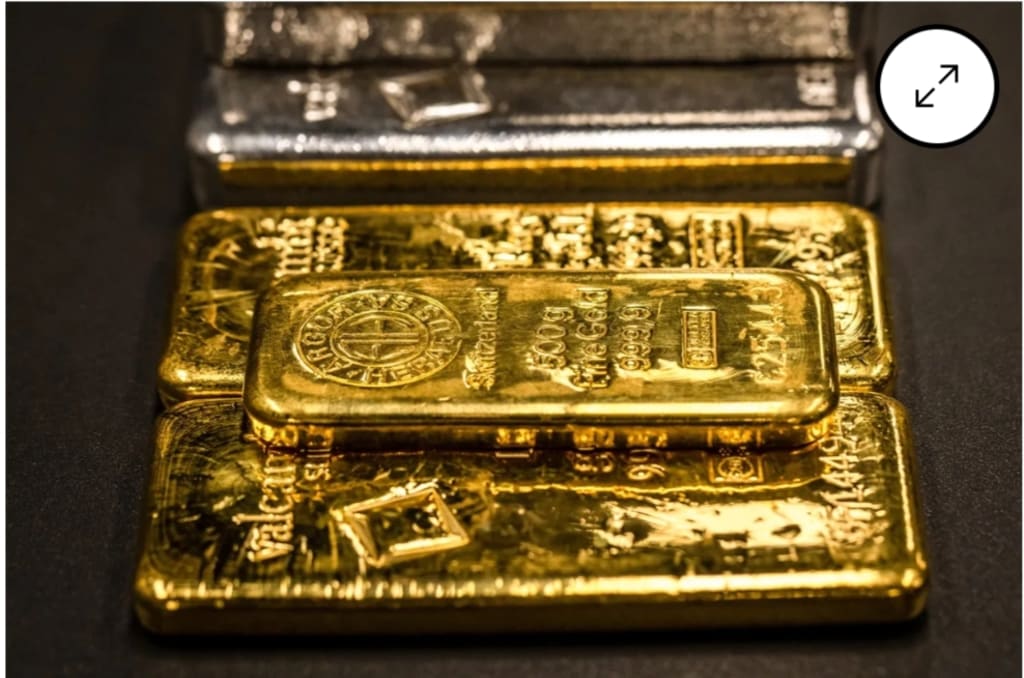
Gold prices plunged further this week as traders rushed to unwind speculative bets, sending the precious metal to levels not seen in recent months. Analysts attribute the decline to a combination of a strengthening U.S. dollar, rising Treasury yields, and a shift in investor sentiment away from traditional safe-haven assets.
The recent sell-off has stirred concerns among retail investors and market watchers alike, highlighting the volatility that can accompany periods of geopolitical uncertainty and economic data releases.
---
The Numbers Behind the Plunge
Gold futures on the COMEX fell sharply, dropping more than 3% in a single session—the largest one-day decline in over two months. Spot gold, which tracks the physical commodity, also slid below key support levels, testing investor confidence.
Analysts point out that speculative positioning in futures markets had reached a peak prior to the sell-off, creating conditions ripe for rapid unwinding. When large institutional traders adjust or liquidate positions, it can trigger cascading selling that amplifies market moves.
“Markets were highly stretched on the long side,” said a precious metals strategist at a major investment bank. “Once sentiment shifted, the unwind was swift and severe.”
---
Drivers of the Decline
Several factors have contributed to the recent downturn in gold prices:
1. Strong U.S. Dollar: Gold is priced in dollars, meaning that a stronger dollar makes it more expensive for holders of other currencies, reducing demand. Recent economic data pointed to robust U.S. growth, pushing the dollar higher.
2. Rising Yields: Treasury yields climbed as investors anticipated potential future interest rate hikes. Higher yields increase the opportunity cost of holding non-yielding assets like gold, prompting traders to reallocate capital to interest-bearing securities.
3. Reduced Safe-Haven Demand: Geopolitical tensions and economic uncertainties had previously supported gold prices. However, recent developments—including relative calm in certain regions and positive corporate earnings—have diminished the urgency for safe-haven assets.
4. Technical Selling: Gold breached several key technical support levels, triggering automated sell orders. Technical analysts warn that such breaks can accelerate declines, especially in markets dominated by short-term trading strategies.
---
Market Reactions
The gold sell-off sent ripple effects through related markets. Silver and platinum prices also dipped, while mining stocks experienced increased volatility. Exchange-traded funds (ETFs) linked to precious metals saw outflows as investors reassessed exposure.
Retail investors have voiced concerns on trading forums, highlighting the psychological impact of sudden drops. For some, the plunge represents an opportunity to buy at discounted prices, while for others, it underscores the risks of investing in volatile commodities.
“Gold is traditionally seen as a safe haven, but no asset is immune to market psychology,” commented a commodities analyst. “Price swings of this magnitude remind investors of the inherent risks in speculative positions.”
---
Implications for Traders and Investors
The deeper plunge in gold highlights several important considerations for market participants:
Volatility Management: Investors should be prepared for sharp price swings in gold and other commodities, particularly when markets are heavily positioned. Risk management strategies, including stop-loss orders and diversification, are crucial.
Hedging Strategies: Companies and investors using gold to hedge against inflation or currency fluctuations may need to reevaluate exposure and timing. Short-term volatility can affect hedging effectiveness.
Long-Term Outlook: While the immediate sell-off is significant, some analysts remain bullish on gold over the long term due to inflationary pressures and ongoing global uncertainties. For long-term investors, temporary declines can present buying opportunities.
---
Expert Insights
Commodity strategists suggest that while the current plunge is sharp, it is not necessarily indicative of a structural downturn in gold markets. Instead, it reflects the cyclical nature of commodity trading and the influence of speculative positions.
“Gold is reacting to market flows more than fundamentals right now,” said a senior analyst at a London-based investment firm. “We could see stabilization if geopolitical risks rise again or if inflation expectations remain elevated.”
Some experts also point out that central bank policies will continue to play a key role. Central banks, particularly in emerging markets, remain major buyers of gold, which can help support prices during periods of extreme volatility.
---
Looking Ahead
Traders will closely monitor upcoming U.S. economic data, Federal Reserve statements, and geopolitical developments to gauge gold’s trajectory. Key technical levels will also be watched to determine if the metal can stabilize or if further selling is likely.
For now, investors face a mixed landscape: short-term volatility is high, but the medium- to long-term outlook may still favor gold as a hedge against economic uncertainty and currency risk.
As the gold market digests these rapid moves, both seasoned traders and retail investors are reminded that patience and strategic planning are essential. Understanding market drivers and maintaining a diversified portfolio may help weather the storm in one of the world’s most closely watched commodities markets.
About the Creator
Keep reading
More stories from Salaar Jamali and writers in The Swamp and other communities.
Global Markets Crash as Everything, Including Bitcoin, Sells Off at Once, Erasing Trillions
Global financial markets were rocked by a dramatic and unusually synchronized sell-off as stocks, cryptocurrencies, commodities, and even traditionally defensive assets plunged at the same time. Trillions of dollars in market value were wiped out within days, underscoring how deeply interconnected modern financial systems have become—and how fragile investor confidence can be in times of uncertainty.
By Salaar Jamalia day ago in The Swamp
Trump urges Republicans to 'take over' and 'nationalize' voting
In a development that has sharpened the political debate in the United States, former President and current GOP leader Donald Trump urged Republicans to “take over” and “nationalize” voting during a recent podcast appearance — a call that has drawn significant reaction from across the political spectrum and raised fundamental questions about constitutional norms and democratic practice.
By Saboor Brohi about 6 hours ago in The Swamp
Man Admits Stab Murder of Former Work Colleague
A man has admitted to the fatal stabbing of his former work colleague, a crime that has sent shockwaves through the local community and reignited discussions about workplace conflict, emotional stress, and violence. The admission came during a court hearing where the accused formally pleaded guilty to murder, bringing a grim clarity to a case that has troubled investigators and the victim’s family for months.
By Ayesha Lashari8 days ago in The Swamp




Comments
There are no comments for this story
Be the first to respond and start the conversation.