
WEF: Donald Trump Set to Dominate Davos 2026
How Trump’s policies, political comeback, and global influence are set to overshadow the World Economic Forum in 2026

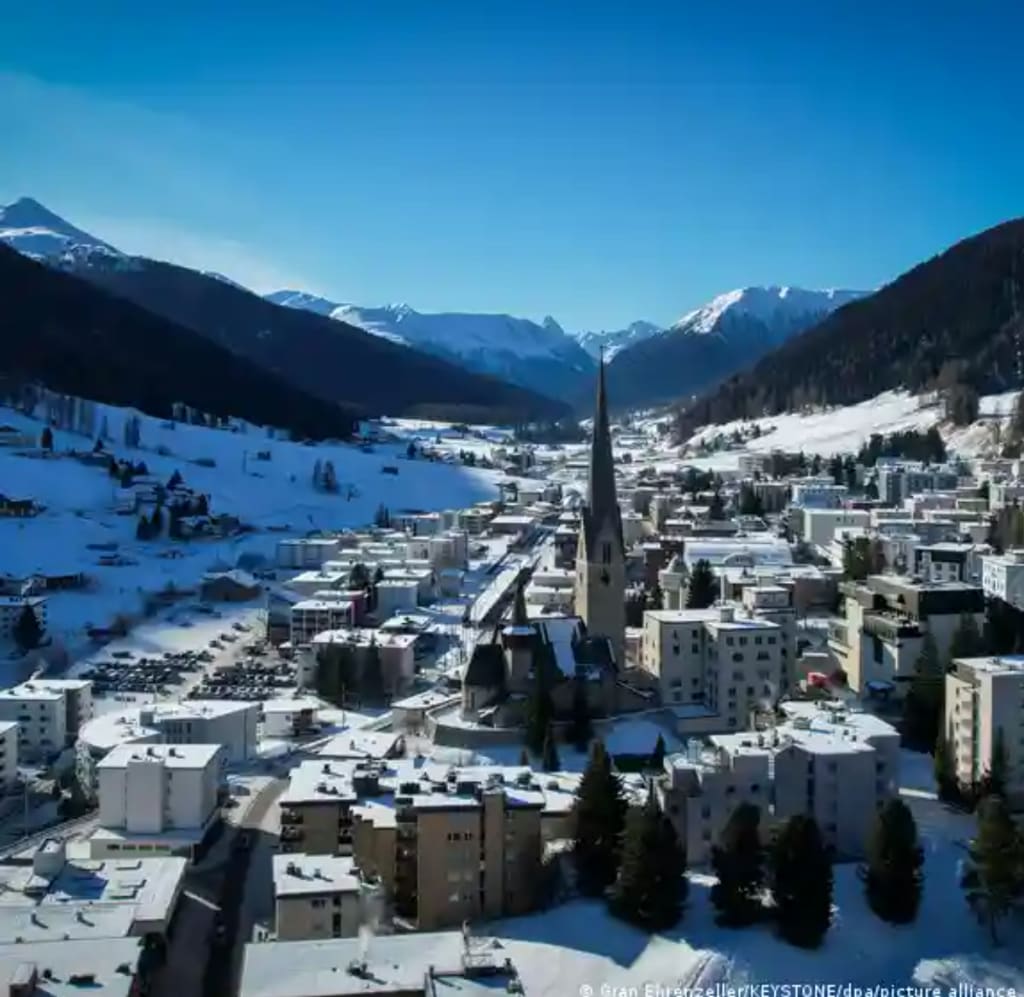
When world leaders, billionaires, CEOs, and policy architects gather in the Swiss Alps for the World Economic Forum (WEF) in Davos, they usually arrive with carefully balanced messages about cooperation, stability, and long-term planning. But in 2026, one figure is expected to overshadow all others—Donald J. Trump.
According to analysts and political observers, Trump’s influence is set to dominate Davos 2026, whether he appears in person or not. His policies, rhetoric, and potential return to the White House are already shaping conversations about trade, security, globalization, and the future of Western democracies. For an event traditionally associated with liberal internationalism, Trump’s looming presence marks a dramatic shift.
Why Trump Matters at Davos
The World Economic Forum has long been a symbol of elite global consensus—an annual meeting where governments, multinational corporations, and international institutions attempt to align their visions. Donald Trump, by contrast, has consistently positioned himself as an outsider to that system.
During his previous presidency, Trump openly criticized global institutions, questioned NATO commitments, challenged free-trade agreements, and promoted a fiercely nationalist “America First” agenda. Those policies reshaped global markets and alliances, making Trump impossible to ignore—even for the very elites he often criticized.
As Davos 2026 approaches, Trump’s political comeback has forced attendees to confront an uncomfortable reality: global decision-making may once again revolve around a leader who rejects many of the forum’s foundational ideas.
A Forum Forced to Adapt
Unlike past years, Davos 2026 is expected to focus less on long-term climate targets and more on immediate geopolitical uncertainty. Trump’s potential return to power has triggered renewed debate over tariffs, defense spending, and global supply chains.
Executives attending the forum are reportedly recalculating investment strategies in anticipation of stricter U.S. trade policies. Trump’s past willingness to impose tariffs—even on allies—has made corporations wary of overreliance on globalized production networks.
At the same time, European leaders are preparing for the possibility of reduced U.S. commitment to multilateral agreements. Trump’s skepticism toward institutions like the World Trade Organization and the Paris Climate Agreement remains a central concern at Davos.
Trade, Tariffs, and Economic Nationalism
Few topics are expected to dominate Davos discussions more than trade protectionism. Trump’s previous presidency saw aggressive tariff policies aimed at China, the European Union, and even Canada. Those moves disrupted global markets but also appealed to voters who felt left behind by globalization.
At Davos 2026, business leaders are expected to debate whether the era of unrestricted global trade is permanently over. Trump’s influence has legitimized economic nationalism in ways that many global elites once dismissed.
For emerging economies, this shift raises difficult questions. Should they continue betting on export-driven growth, or pivot toward regional self-sufficiency? Trump’s worldview has forced Davos attendees to reconsider assumptions that defined the post-Cold War global economy.
Security and NATO Back on the Agenda
Trump’s approach to security alliances is another reason his presence looms so large. His past criticism of NATO—especially his insistence that European allies increase defense spending—changed the alliance’s internal dynamics.
At Davos 2026, security experts are expected to openly discuss whether the U.S. would remain a reliable security guarantor under another Trump administration. This uncertainty has already pushed European nations to rethink military budgets and strategic autonomy.
For global investors, geopolitical instability is no longer an abstract risk. Trump’s unpredictability, supporters argue, brings leverage; critics say it introduces dangerous volatility. Either way, Davos cannot ignore the impact.
Climate Policy in Trump’s Shadow
Climate change has traditionally been a centerpiece of the World Economic Forum. However, Trump’s skepticism toward international climate agreements has complicated that narrative.
While global corporations continue to promote sustainability goals, there is growing concern that political momentum may shift away from aggressive climate regulation if Trump regains power. At Davos 2026, climate discussions are expected to reflect a more cautious tone—focused on market-driven solutions rather than binding international commitments.
This represents a significant shift for a forum that once championed ambitious global climate action as inevitable.
Why Trump Dominates Even Without Attending
What makes Trump’s influence unique is that he doesn’t need to attend Davos to dominate it. His policies, rhetoric, and political movement have reshaped the global conversation.
Panels discussing China, supply chains, AI regulation, defense spending, and even democracy itself are all framed by a single question: How would a Trump-led America respond?
In many ways, Trump has forced the World Economic Forum to confront its own limitations. The assumption that global elites can guide the world toward consensus no longer holds. Political polarization, nationalist movements, and voter backlash against globalization have changed the rules.
A Divided Reaction Among Davos Attendees
Reactions to Trump’s looming dominance are deeply divided. Some executives privately welcome his transactional approach, arguing that it brings clarity and decisive action. Others fear that his unpredictability undermines stability and long-term planning.
For policymakers, Trump represents both a challenge and a reality check. His rise exposed a disconnect between elite institutions and large segments of the global population—an issue Davos has struggled to address convincingly.
What Davos 2026 Represents
Davos 2026 may go down as a turning point—not because of any single announcement, but because of what it symbolizes. The forum is no longer setting the global agenda; it is reacting to political forces it once underestimated.
Donald Trump’s dominance of the conversation reflects a broader transformation in global politics. Power is shifting away from consensus-driven institutions toward leaders who thrive on disruption and national interest.
Whether one views Trump as a destabilizing force or a corrective to global overreach, his shadow over Davos 2026 is undeniable.
Conclusion
The World Economic Forum was designed as a place where the world’s most powerful actors could shape the future together. In 2026, that future is being shaped elsewhere—by elections, populist movements, and leaders like Donald Trump.
Davos 2026 will still host speeches, panels, and promises. But the most influential presence may be the one challenging its very foundations.
About the Creator
Muhammad Hassan
Muhammad Hassan | Content writer with 2 years of experience crafting engaging articles on world news, current affairs, and trending topics. I simplify complex stories to keep readers informed and connected.
Keep reading
More stories from Muhammad Hassan and writers in The Swamp and other communities.
Trump Accepts Nobel Medal from Venezuelan Opposition Leader Machado
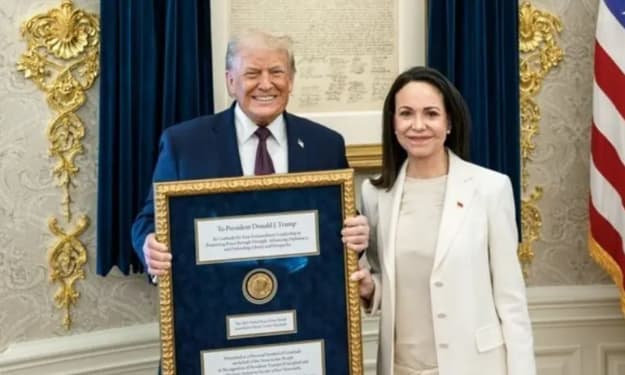
In a moment that made headlines worldwide, Venezuelan opposition leader María Corina Machado presented U.S. President Donald Trump with her Nobel Peace Prize medal at the White House on January 15, 2026. The event, described as both symbolic and political, immediately sparked discussion about the nature of international recognition, diplomatic strategy, and the role of symbolism in politics. Trump accepted the medal, describing it as a “wonderful gesture of mutual respect.” However, experts quickly clarified that the Nobel Peace Prize itself cannot be transferred, and while a physical medal can change hands, the title of Nobel Laureate remains with the original recipient. Despite this, the optics of the event immediately made it a global talking point. A Gesture Packed With Symbolism Machado, who won the 2025 Nobel Peace Prize for her efforts promoting democracy and human rights in Venezuela, explained that giving the medal to Trump was a thank-you for his support of Venezuelan freedom. The medal bore a ceremonial inscription reading: “In Gratitude for Your Extraordinary Leadership in Promoting Peace through Strength, Advancing Diplomacy, and Defending Liberty and Prosperity.” Trump, known for his longstanding desire to win a Nobel Peace Prize, posted on social media praising Machado as “a wonderful woman who has been through so much” and expressed gratitude for the symbolic gesture. The exchange was more than ceremonial—it was a political statement, emphasizing international alliances, shared ideals of governance, and the power of symbolism in modern diplomacy. Why the Medal Matters, But the Prize Doesn’t Transfer It’s important to distinguish between the physical medal and the official Nobel Peace Prize honor. The Norwegian Nobel Institute emphasizes that the title of Nobel Laureate cannot be transferred or shared, even if the medal is handed over to another person. This means that, despite public perception, Trump is not officially recognized as a Nobel Peace Prize winner. Nonetheless, the physical medal carries significant symbolic weight, especially in politics. In this case, the gesture communicated support for democratic principles in Venezuela and acknowledged Trump’s perceived role in influencing international outcomes. Venezuela’s Turbulent Political Context The backdrop of this gesture is crucial. Venezuela has experienced years of political instability under the leadership of Nicolás Maduro, whose administration was accused of corruption, human rights violations, and suppressing democratic institutions. In early January 2026, U.S. forces captured Maduro in a high-profile operation. Machado, a vocal opponent of Maduro, fled Venezuela in December and began lobbying internationally to regain influence. The Trump administration has maintained support for interim leadership under Delcy Rodríguez, a figure with ties to Maduro’s former government. In this context, Machado’s presentation of the medal was both strategic and symbolic, aiming to strengthen her political leverage while reaffirming her commitment to democratic ideals. Trump’s Response and Political Optics Trump’s acceptance of the medal was enthusiastic. He framed it as recognition of his contributions to international diplomacy and freedom movements, praising Machado and highlighting U.S. support for democratic transitions. However, critics argue that the gesture is largely symbolic, with limited direct impact on Venezuelan politics. By linking himself to Machado’s Nobel Peace Prize, Trump reinforced his image as a global influencer, while Machado sought to leverage the moment to draw renewed attention to her leadership ambitions. Global Reactions and Controversy The reaction to the event has been mixed: Some commentators hailed it as a powerful symbolic alignment between the U.S. and democratic movements in Venezuela. Others criticized the move, suggesting it undermined the prestige of the Nobel Peace Prize, using a personal award for political purposes. Observers in Norway, where the Nobel Peace Prize is administered, expressed surprise and concern, emphasizing that the prize is intended to honor peaceful achievements, not political maneuvering. International media coverage highlighted the event as unusual and unprecedented, raising broader questions about the intersection of awards, symbolism, and diplomacy. Symbolism Meets Realpolitik The medal exchange underscores how political symbolism is frequently leveraged to influence perceptions and relationships: The physical medal, while not granting the Nobel title, communicates respect and recognition. For Trump, it reinforced his international profile and provided positive imagery for supporters. For Machado, it was an opportunity to signal alignment with U.S. leadership and maintain relevance on the global stage. Analysts note that such gestures can shape public perception, media narratives, and diplomatic dialogue, even if they don’t directly alter policy outcomes. Implications for U.S.–Venezuela Relations This gesture also reflects the complexity of U.S.–Venezuela relations: The U.S. continues to back interim leadership under Rodríguez, maintaining strategic interests in the region. Symbolically, the medal presentation shows recognition of opposition leaders advocating for democracy, sending a message to both domestic and international audiences. Machado’s alignment with Trump illustrates the delicate balancing act opposition figures face when navigating global alliances while advocating for reform at home. How these symbolic acts translate into real-world political influence remains to be seen, but they are strategically valuable tools in international relations. Cultural and Historical Significance The event also sparks broader discussions about the role of awards and international recognition in politics: Can gestures like this alter public perception of leaders or movements? What is the value of symbolism in shaping global narratives? How do international institutions maintain credibility when political maneuvering intersects with honors like the Nobel Peace Prize? While there are no easy answers, the moment highlights the interplay between politics, recognition, and media attention in today’s globalized world. Final Thoughts Trump’s acceptance of a Nobel Peace Prize medal from María Corina Machado is more than a ceremonial act. It combines political symbolism, personal ambition, and international messaging in a single moment. Although the official Nobel title remains with Machado, the gesture demonstrates the power of visual symbolism in shaping narratives and influencing diplomatic perceptions. For Venezuela, it provides a renewed platform for opposition voices. For Trump, it reinforces his global visibility and reputation as a decisive actor in international politics. As the world watches, the event raises enduring questions about the intersection of recognition, diplomacy, and political strategy, offering a case study in how gestures — even symbolic ones — can resonate far beyond the room in which they occur.Start writing...
By Muhammad Hassan2 months ago in The Swamp
Parallel Protests
I haven't written for quite some time, but I have A LOT of thoughts about yesterday's protest rally against our government's involvement and complicity in America's war on Iran, on the harbourside of my home city Bristol, and I need to put them somewhere. My gorgeous girlfriend is always a loving and listening ear and sharing it all with her will always be a healthy and happy way of processing the mental and emotional weight, but getting it straight in my brain to share means writing it all down in straight lines, so, here we are and thanks for being here.
By Steph Cole10 days ago in The Swamp
King Charles invited to 150th anniversary Test
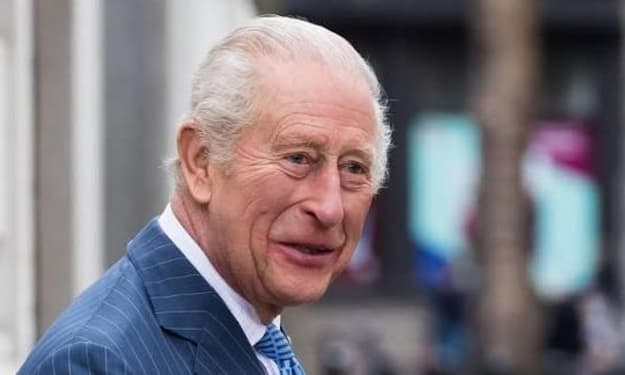
King Charles III has been officially invited to attend a landmark cricket match between Australia and England set to mark the 150th anniversary of the first Test match ever played, Cricket Australia announced this week. The invitation underscores the deep cultural and historical ties between the United Kingdom and Australia and highlights the significance of the sport in both nations. The match — scheduled for 11–15 March 2027 at the iconic Melbourne Cricket Ground (MCG) — will be a one‑off special Test fixture celebrating the inception of Test cricket in 1877, when Australia and England first contested what is now recognised as the oldest format of international cricket. While Buckingham Palace has not yet confirmed whether King Charles has accepted the invitation, Cricket Australia chief executive Todd Greenberg said the board hopes the King’s presence will enhance the celebratory atmosphere and honour the long‑standing rivalry between the two cricketing nations. Greenberg told Australia’s Channel 7 that organizers want the match to “celebrate the combat between England and Australia but more broadly celebrate Test cricket and the beauty of Test cricket.” A Historic Occasion Test cricket began at the MCG in March 1877, when an Australian side captained by Dave Gregory faced James Lillywhite’s England XI in a two‑innings match that set the foundation for what would become the pinnacle format of the sport. Today’s anniversary Test aims to honour that legacy with a modern spectacle that blends tradition with broad public appeal. The 150th‑anniversary match also carries symbolic weight because of a historical precedent: Queen Elizabeth II attended the fifth day of the Centenary Test in 1977, held at the same ground to mark 100 years since the first clash. Cricket Australia is now inviting every living captain from both countries — men’s and women’s teams alike — and surviving players who featured in that centenary event. At the time, the 1977 match was a grand celebration of cricket heritage, drawing passionate crowds and bringing together generations of cricket enthusiasts. The organizers hope the 2027 fixture will evoke similar enthusiasm and appreciation for the sport’s history and evolution. Cricket and Commonwealth Ties Cricket’s status as more than a sport — but a cultural bridge between nations — is reflected in the invitation extended to King Charles as head of state. Although Australia is an independent nation, it remains part of the Commonwealth of Nations, with enduring constitutional links to the British monarchy. Whether or not the King attends, the gesture signals respect for cricket’s shared heritage and the diplomatic dimension of sporting events. Many long‑time fans and historians view Test cricket as a living legacy of British sporting influence around the world. Over the decades, rivalries like The Ashes have captured the imagination of millions, with decades of competitive lore and tradition adding emotional depth to every England–Australia encounter. The anniversary Test, while not part of the regular Ashes cycle, taps into this rich narrative as a standalone celebration. Debate Over Format and Pitch The March 2027 match is expected to be played as a day‑night Test — a departure from the classic all‑day format that has historically defined the longest form of the game. While this has sparked discussion among traditionalists and cricket purists about preserving old‑school conditions, officials argue that staging it under lights could attract larger live and television audiences, particularly in regions where evening viewing peaks. England’s men’s team, which recently endured a challenging Ashes series in Australia, is planning a warm‑up fixture ahead of the anniversary Test. They are expected to arrive after a two‑Test tour of Bangladesh in February 2027, ensuring that both sides are in competitive form for what promises to be a marquee sporting event. Royal Engagement and Sporting Diplomacy Cricket Australia’s invitation to King Charles follows his active engagement in Commonwealth affairs and public life. While Buckingham Palace has remained measured in its public responses, the possibility of the King attending the game highlights sport’s role as a form of soft diplomacy and cultural connection. Should the monarch accept, it would reprise a tradition of royal connection to high‑profile sporting moments and reinforce the symbolic link between monarchy and national celebration. Whether at the MCG stands or presiding from a dignitary box, King Charles’s presence would add a regal dimension to a once‑in‑a‑lifetime cricket match — one that honors a century and a half of sporting history, shared cultural roots, and friendly rivalry.
By Fiaz Ahmed 7 days ago in The Swamp


Comments
There are no comments for this story
Be the first to respond and start the conversation.