
“Trump's trade rep says Greenland tariff threat could ‘set the scene’ for negotiation.”
U.S. trade officials frame tariff warnings as strategic leverage amid rising geopolitical and economic tensions

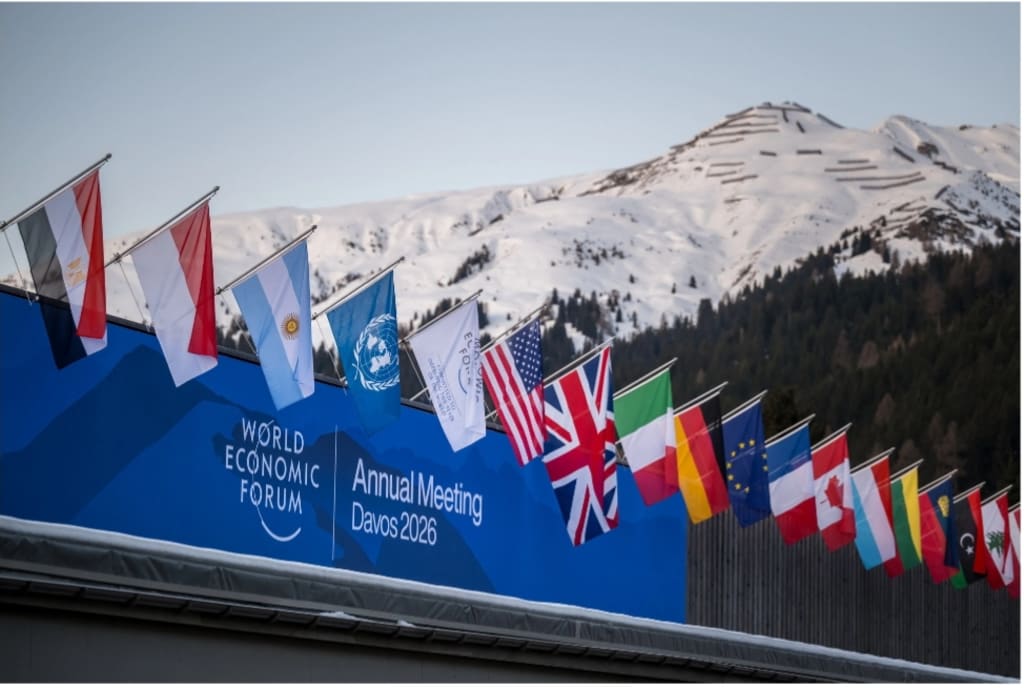
The debate surrounding Greenland, trade policy, and U.S. foreign relations took a new turn this week after President Donald Trump’s trade representative suggested that the administration’s tariff threats tied to Greenland were not meant as punishment, but rather as a strategic move to “set the scene” for negotiations. The remarks have sparked intense discussion across diplomatic, economic, and financial circles, highlighting once again how Trump’s approach blends geopolitics with economic leverage.
At the center of the controversy is Greenland, the semi-autonomous Arctic territory governed by Denmark. While Trump’s interest in Greenland is not new, the renewed emphasis on tariffs as a bargaining tool has raised questions about how far the administration is willing to go — and what the consequences could be for global trade stability.
Tariffs as Leverage, Not an Endpoint
According to the U.S. trade representative, the threat of tariffs on European imports should be viewed as a negotiation tactic rather than a fixed policy direction. The official argued that economic pressure has historically been one of the most effective ways to bring reluctant parties to the negotiating table.
In this framing, tariffs are not necessarily designed to be implemented, but to alter the balance of incentives. By raising the potential cost of inaction, the U.S. hopes to encourage dialogue on broader strategic issues — in this case, access, influence, or cooperation related to Greenland’s resources and geopolitical position.
Supporters of this approach argue that traditional diplomacy often moves too slowly and lacks enforcement power. Economic tools, they say, deliver faster results by making consequences tangible.
Why Greenland Matters Strategically
Greenland occupies a unique position in global geopolitics. Its location in the Arctic gives it growing importance as climate change opens new shipping routes and increases access to natural resources such as rare earth minerals. These minerals are essential for modern technologies, including electric vehicles, renewable energy systems, and defense equipment.
For the United States, securing influence in Greenland is not simply about territory — it is about long-term strategic positioning. Arctic competition is intensifying, with China and Russia expanding their presence in the region. From Washington’s perspective, maintaining leverage in Greenland could strengthen national security and reduce reliance on rival supply chains.
This strategic context explains why economic pressure has been introduced into what might otherwise be a purely diplomatic discussion.
Europe Pushes Back Against Economic Pressure
European leaders have reacted cautiously, if not critically, to the tariff rhetoric. Denmark and other European Union members have emphasized that Greenland is not a commodity to be negotiated under economic threat. Officials have warned that introducing tariffs into sensitive geopolitical matters risks undermining trust between allies.
The EU has also signaled that retaliatory measures could be considered if tariffs were enacted. Such a response would widen the dispute beyond Greenland and potentially ignite a broader transatlantic trade confrontation.
For European policymakers, the concern is not just the immediate issue, but the precedent it sets. If tariffs become a standard tool for geopolitical negotiation, future disputes could escalate more quickly and become harder to resolve.
Markets React to Mixed Signals
Financial markets have closely monitored the situation, responding to both the tariff threats and subsequent clarification from the U.S. trade representative. Initial reports of potential tariffs triggered volatility, with investors moving away from risk-sensitive assets.
The later suggestion that tariffs were merely a negotiating signal helped stabilize sentiment somewhat, but uncertainty remains. Markets tend to dislike ambiguity, and Trump-era trade policy has often been characterized by sudden shifts from confrontation to conciliation.
This uncertainty affects corporate planning as well. Companies with exposure to U.S.–EU trade are forced to consider multiple scenarios, ranging from rapid de-escalation to prolonged dispute.
Negotiation Through Pressure: A Familiar Trump Strategy
The Greenland tariff threat fits a broader pattern seen throughout Trump’s political career. From trade talks with China to renegotiations of international agreements, Trump has consistently favored maximum pressure as a way to force engagement.
In some cases, this approach has yielded concessions or accelerated talks. In others, it has resulted in prolonged standoffs and retaliatory measures. The effectiveness of the strategy often depends on the willingness of the opposing side to absorb short-term economic pain.
The trade representative’s comments suggest that the administration believes Europe will ultimately choose negotiation over confrontation. Whether that assumption holds remains uncertain.
Risks of Escalation
While the strategy may be designed to encourage dialogue, it carries inherent risks. Economic threats can harden positions, especially when national sovereignty or public opinion is involved. European leaders face domestic pressure to resist what may be perceived as coercion.
There is also the danger of miscalculation. If one side believes the other is bluffing, escalation can occur quickly. Once tariffs are implemented, reversing them becomes politically difficult, even if negotiations resume.
Moreover, repeated use of economic pressure can erode confidence in global trade rules, encouraging countries to seek alternative alliances and reduce dependence on U.S. markets.
What Comes Next
The immediate future depends on whether informal discussions evolve into formal negotiations. Diplomatic channels remain open, and both sides have incentives to avoid a full-scale trade conflict. For the U.S., maintaining strong alliances is crucial in a competitive global environment. For Europe, preserving stable access to the U.S. market remains economically vital.
If talks proceed, the tariff threat may indeed serve its intended purpose: setting the stage for negotiation. If not, the situation could become another flashpoint in an increasingly fragmented global trade system.
Conclusion: Negotiation or Brinkmanship?
Trump’s trade representative has framed the Greenland tariff threat as a calculated move, not a hostile act. Whether it proves to be a catalyst for constructive dialogue or a step toward deeper conflict will depend on how both sides respond.
What is clear is that under Trump’s influence, trade policy is no longer confined to economics. It has become a central instrument of geopolitics — one that can open doors to negotiation, but also carries the risk of closing them just as quickly.
About the Creator
Keep reading
More stories from Salaar Jamali and writers in The Swamp and other communities.
Trump’s Era of Volatility Returns
For global markets, policymakers, and diplomatic allies, a familiar feeling has resurfaced: uncertainty driven by the words and actions of one man. With Donald Trump once again shaping the political and economic narrative, many observers say Trump’s era of volatility has returned, reviving the turbulence that defined his previous presidency. From markets swinging on policy hints to allies bracing for sudden shifts in U.S. strategy, the sense of instability is no longer theoretical — it is being actively priced into decisions worldwide.
By Salaar Jamaliabout 9 hours ago in The Swamp
Under Fire from the Sea, Families in Odesa Try to Escape Russian Barrage
As dawn breaks over the Black Sea, the port city of Odesa wakes not to the sound of waves, but to sirens. For months, Russian naval and missile attacks have turned Ukraine’s historic coastal hub into a frontline city, forcing families to make impossible choices: stay and endure, or flee under fire. The barrage from the sea has transformed everyday life into a test of survival, reshaping Odesa’s streets, homes, and hopes. Odesa has long been known for its cosmopolitan spirit, grand architecture, and strategic importance as Ukraine’s gateway to global trade. Today, that same geography makes it vulnerable. Russian warships positioned in the Black Sea have launched cruise missiles and drones toward the city, targeting ports, energy infrastructure, and residential neighborhoods. Unlike attacks from land, strikes from the sea arrive with little warning, amplifying fear among civilians who never know when the next explosion will come. For families, the danger is not abstract. It is measured in shattered windows, damaged schools, and nights spent in basements. Parents describe the constant challenge of keeping children calm as air raid sirens interrupt meals, homework, and sleep. “You learn to live with a bag packed,” one mother says, referring to emergency essentials kept by the door. “Documents, water, a few clothes — everything else can be replaced.” Escaping Odesa is no simple task. The city’s roads are congested with civilians trying to leave and military convoys heading toward defensive positions. Train stations, once symbols of travel and leisure, now serve as evacuation points. Families queue for hours, unsure whether trains will run on schedule or be delayed by security threats. Some choose to drive west toward Moldova or deeper into Ukraine, while others head north to stay with relatives in comparatively safer regions. The emotional toll of leaving is profound. Many residents have lived in Odesa for generations, their identities tied to the sea and the city’s unique culture. Abandoning homes, businesses, and memories feels like a second loss on top of the war itself. Elderly residents, in particular, struggle with the idea of starting over elsewhere. As a result, some families split up — women and children leave, while older relatives or men stay behind to guard property or contribute to local defense efforts. Those who remain face daily uncertainty. Coastal defenses and air defense systems intercept many incoming threats, but not all. Each successful interception is celebrated quietly, while each impact deepens anxiety. Schools operate intermittently, often shifting to online classes or shelter-based learning. Hospitals continue to function under strain, adapting emergency rooms to handle potential mass casualty events while dealing with routine medical needs. Humanitarian organizations have stepped in to provide support, offering temporary housing, psychological counseling, and basic supplies for displaced families. Local volunteers play a crucial role, organizing evacuation assistance and checking on vulnerable neighbors. In Odesa, community solidarity has become a lifeline. People share information through messaging apps, warn each other of incoming threats, and help strangers reach shelters during attacks. The Russian barrage has also affected Odesa’s economy. The port, vital for grain exports and trade, has faced repeated strikes, disrupting shipping and threatening global food supply chains. For families, this translates into lost jobs and rising prices. Shop owners close early or operate irregularly, while workers in tourism, shipping, and hospitality face prolonged uncertainty about their livelihoods. Yet even under fire, resilience defines Odesa. Murals appear on damaged walls, musicians perform in shelters, and small acts of normalcy persist. Parents try to preserve routines for their children — reading bedtime stories during blackouts or celebrating birthdays underground. These moments do not erase fear, but they assert humanity in the face of violence. Internationally, Odesa’s plight highlights the broader civilian cost of naval warfare. Attacks launched from the sea blur the line between military targets and civilian spaces, especially in port cities. For residents, the sea — once a source of beauty and economic opportunity — has become a direction of danger. The horizon itself feels threatening. As families continue to flee, return, or endure, Odesa stands as a symbol of civilian resilience amid modern conflict. The city’s future remains uncertain, shaped by diplomatic developments, military outcomes, and the will of its people. For now, every family that escapes safely is a small victory, and every night survived is an act of quiet defiance. Under fire from the sea, Odesa’s families are not just victims of war — they are witnesses to its human cost, carrying their stories with them wherever they find refuge.
By Fiaz Ahmed Brohi4 days ago in The Swamp



Comments
There are no comments for this story
Be the first to respond and start the conversation.