
Trump’s Era of Volatility Returns
From markets to diplomacy, renewed uncertainty reshapes global economics and political decision-making

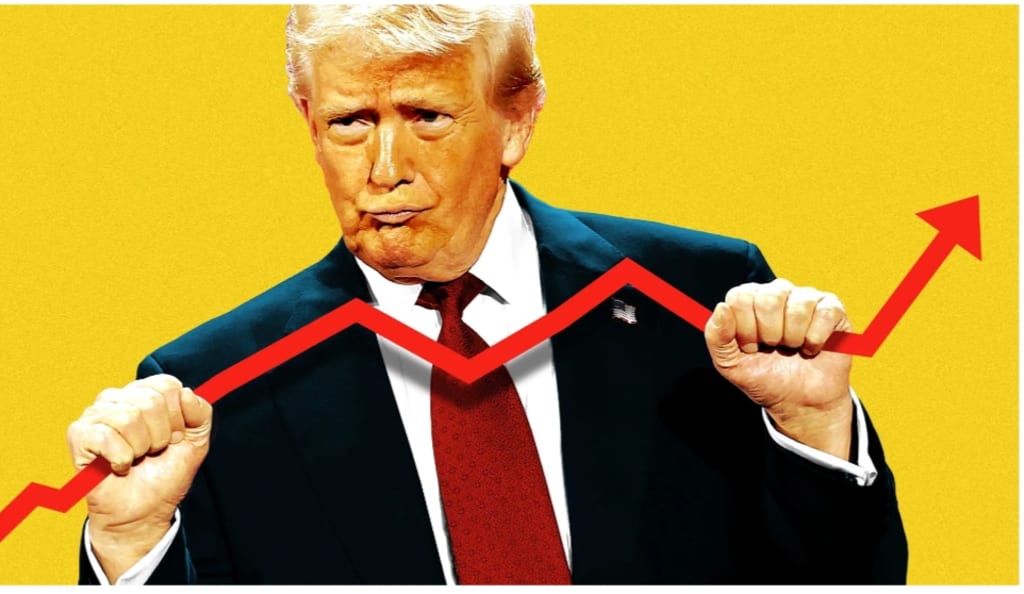
For global markets, policymakers, and diplomatic allies, a familiar feeling has resurfaced: uncertainty driven by the words and actions of one man. With Donald Trump once again shaping the political and economic narrative, many observers say Trump’s era of volatility has returned, reviving the turbulence that defined his previous presidency. From markets swinging on policy hints to allies bracing for sudden shifts in U.S. strategy, the sense of instability is no longer theoretical — it is being actively priced into decisions worldwide.
A Leadership Style Built on Disruption
Trump’s leadership has always been unconventional. Unlike traditional presidents who rely on measured diplomacy and predictable economic messaging, Trump governs through disruption. Sudden announcements, aggressive negotiation tactics, and public pressure campaigns are not side effects of his strategy — they are central to it.
During his earlier presidency, markets learned to react instantly to Trump’s statements on trade, interest rates, defense commitments, and alliances. A single comment could send stocks tumbling, boost safe-haven assets, or weaken currencies. Today, that same dynamic is re-emerging. Investors, governments, and corporations are once again forced to prepare not just for policy outcomes, but for policy surprises.
Markets Remember the Playbook
Financial markets have long memories. Traders and institutional investors vividly recall the trade wars, tariff escalations, and abrupt reversals that marked Trump’s first term. As his influence returns, volatility indicators have begun creeping higher, signaling renewed caution.
The reason is simple: Trump’s policy style compresses decision-making timelines. Businesses struggle to plan when trade rules, regulatory frameworks, or foreign relations can change overnight. Markets, which thrive on predictability, respond by demanding higher risk premiums — leading to sharper swings in stocks, bonds, and currencies.
This renewed volatility does not necessarily signal economic weakness, but it does reflect uncertainty, the most destabilizing force in modern finance.
Trade Wars as a Policy Tool
One of the defining features of Trump’s previous era was the weaponization of trade. Tariffs were not just economic instruments but bargaining chips used to extract political concessions. Allies and rivals alike were targeted, blurring traditional distinctions between friend and foe.
Now, similar rhetoric has resurfaced. The threat of new tariffs, renegotiated trade terms, or punitive economic measures has once again placed global supply chains on edge. Companies that rely on cross-border manufacturing or international sourcing are revisiting contingency plans, diversifying suppliers, and reassessing investment strategies.
The fear is not just higher costs — it is fragmentation. A world divided into competing trade blocs would slow growth, reduce efficiency, and increase inflationary pressure.
Geopolitics Enters the Economic Arena
Trump’s return to prominence has also reignited concerns about geopolitical unpredictability. His approach to alliances is transactional, often questioning long-standing defense and economic partnerships unless immediate benefits are visible.
This has implications far beyond diplomacy. Defense commitments affect energy markets, currency stability, and investor confidence in entire regions. When alliances appear uncertain, capital becomes cautious. Emerging markets, in particular, tend to suffer as investors retreat toward perceived safety.
The overlap between geopolitics and economics has grown tighter, and Trump’s style amplifies that connection. Every diplomatic dispute carries economic consequences, and every economic move carries geopolitical signals.
Central Banks Face a Tougher Environment
Trump’s volatile era also complicates life for central banks. Monetary policymakers rely on stable conditions to manage inflation, growth, and employment. Sudden trade shocks or political interventions can derail carefully calibrated strategies.
In the past, Trump publicly criticized central banks, pressured interest-rate decisions, and challenged institutional independence. A return to such behavior could undermine confidence in monetary stability, particularly if inflation resurfaces alongside geopolitical tension.
For central banks, the challenge is balancing economic fundamentals against politically driven market reactions — a difficult task in an already fragile global environment.
Businesses Shift From Growth to Resilience
Corporate strategy is evolving in response to renewed volatility. During stable periods, companies focus on efficiency and expansion. During volatile periods, resilience becomes the priority.
Executives are now emphasizing cash reserves, flexible supply chains, and geographic diversification. Capital expenditure decisions are being delayed or restructured to reduce exposure to sudden policy shifts. Mergers and acquisitions face increased scrutiny as regulatory and political risk rises.
While innovation continues, it does so more cautiously. The cost of uncertainty is slower decision-making, even in otherwise favorable economic conditions.
Voters and Consumers Feel the Impact
Volatility is not confined to boardrooms and trading floors. Consumers experience it through fluctuating prices, job insecurity, and rising borrowing costs. Trade tensions can raise the cost of everyday goods, while market instability affects pensions, retirement savings, and housing affordability.
Politically, volatility can energize supporters who view disruption as strength, while alienating those who value stability. This divide deepens polarization, making consensus harder to achieve and policy swings more extreme.
Is Volatility the New Normal?
The return of Trump’s era raises a critical question: is volatility now a permanent feature of the global system? Some analysts argue that markets will eventually adapt, learning to absorb shocks more efficiently. Others warn that repeated disruptions erode trust in institutions, weakening the foundations of economic cooperation.
What is clear is that predictability is no longer guaranteed. Governments, investors, and citizens must operate in an environment where policy is fluid, alliances are conditional, and economic signals can change rapidly.
Conclusion: Navigating the Uncertain Road Ahead
Trump’s era of volatility is not just a political phenomenon — it is an economic condition. It reshapes how decisions are made, how risks are priced, and how nations interact. While volatility can create opportunities for those prepared to manage it, it also raises the stakes for mistakes.
As the world adjusts once again, the defining challenge will be resilience. Those who can adapt quickly, diversify wisely, and think strategically may weather the storm. For everyone else, the return of volatility serves as a reminder that in today’s global system, stability can never be taken for granted.
About the Creator
Keep reading
More stories from Salaar Jamali and writers in The Swamp and other communities.
Dow Drops 600 Points as Trump’s Greenland Scheme Sparks U.S. Capital Flight, Fear of Global Trade War: Live Updates
On Tuesday, January 20, 2026, U.S. equity markets experienced a dramatic sell-off as investors grappled with renewed geopolitical and trade tensions triggered by President Donald Trump’s controversial push related to Greenland. The Dow Jones Industrial Average plunged more than 600 points, while broader market indices suffered sharp declines, igniting fears of capital flight, global trade disruption, and heightened investor risk aversion.
By Salaar Jamaliabout 13 hours ago in The Swamp
Voice Commerce Market Size and Forecast 2025–2033: The Rise of Hands-Free Shopping in a Conversational Economy
Introduction: Shopping Enters the Age of Voice The way consumers shop is undergoing a profound transformation. Typing, scrolling, and tapping are gradually giving way to a more natural and intuitive interface — the human voice. As artificial intelligence, smart devices, and speech recognition technologies become more sophisticated, voice commerce is emerging as one of the most disruptive forces in the global retail ecosystem.
By Renub Researcha day ago in The Swamp
Trump’s Tariff Threats Hit European Markets
Global markets thrive on stability, predictability, and trust. When any of those pillars wobble, investors react fast — and often harshly. That’s exactly what’s happening across Europe as former U.S. President Donald Trump’s renewed tariff threats send shockwaves through financial markets, corporate boardrooms, and diplomatic circles alike.
By Aqib Hussain2 days ago in The Swamp



Comments
There are no comments for this story
Be the first to respond and start the conversation.