history
Past politicians, legislation and political movements have changed the course of history in ways both big and small. Welcome to our blast to the past.
Viola Desmond: The Story of "Canada's Rosa Parks" and How I Had No Idea Who She Was Until 2018
There are certain key historical moments one can point to when discussing the injustices countless faced during the fight for Civil Rights in the early 20th Century. The Tulsa race massacre, Emmett Till's grotesque murder, the Selma to Montgomery marches and Dr. King assassination are a few examples of these pivotal events.
By Ghezal Amiri6 years ago in The Swamp
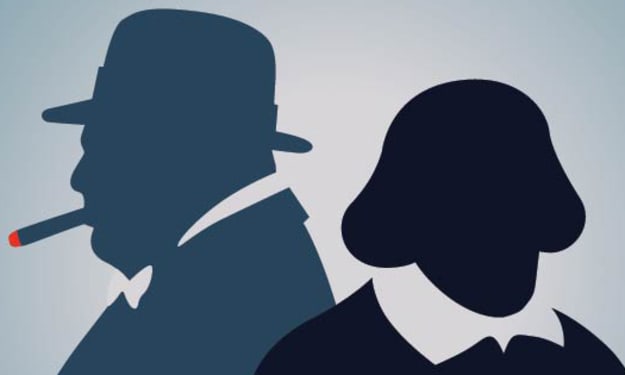
Uneasy Lies the Head that Wears the Homburg Hat
People say that the works of William Shakespeare are analyses and reflections of our human condition; whether of the story is about doomed love, political ambition turned to bloodshed, or situational humor which turned the simplistic things of life into the funniest of material. Yet, very rarely can people see such reflections of life in Shakespeare, which can also be made in real history. After all, Shakespeare himself was not a historian. He was a starving playwright who wrote propaganda pieces to entertain and (partially) educate the plebeians and royals of Elizabethan England. However, such characters such as Richard III, Marc Antony, and Prince Hal (King Henry V) can be reflected in terms of their styles of personality and leader ship in numerous figures throughout our history, whether if such people brandished a sword and crown or a cigar and glass of whiskey. The purpose of this essay is to examine how the leadership theory of how leaders are made, not born, can be seen in the works of British literature (The Henriad: Henry IV Part 1, Henry IV Part 2, & Henry V) and can also transcend into real figures of England’s history (Sir. Winston Churchill).
By Jacob Herr6 years ago in The Swamp
Memories (Public & Private) of America’s Infancy
To say that the American Revolution was a radical experiment to implicate democracy to the agitated populations of Britain’s colonies, is certainly a sensible statement. Yet, it cannot be shared by the private memories of those who participated in it. In Alfred Young’s book The Shoemaker and the Tea Party, the story of the Bostonian cobbler and patriot partisan, George Hewes, is one of how the ideals of what one may call the American Hypocrisy Story (land of the free, home of the brave, all are created equal, justice is blind, your vote counts, business is honest, the good guys win, law enforcement is on your side, your standard of living will never decline, etc.) emerged from this treasonous, ironic, and metaphorical middle finger to the world’s strongest superpower at the time. Alfred Young’s words apply to the memory of the Boston Tea Party and the experiences of George Hewes, in a manner which allows the reader to create their own understanding and conclusions about how the events leading up to and defining the American Revolution, ought to be remembered by current and future generations.
By Jacob Herr6 years ago in The Swamp
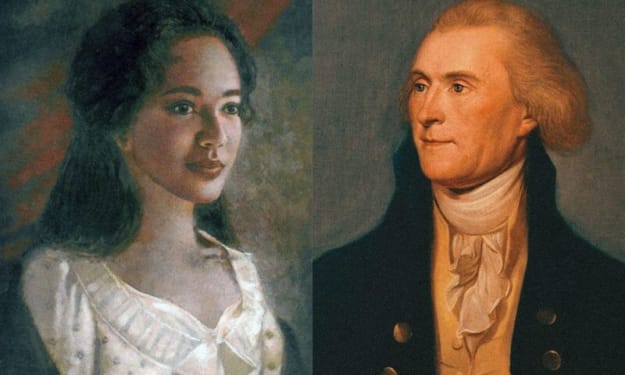
Thomas Jefferson Did More To Promote Domestic Slavery And Slave Breeding Than Any Other President And Got Rich Doing It
While the current trade war between Donald Trump and China keeps making the news. There’s another trade war guided by Thomas Jefferson we never heard about. That one led to protectionist pricing and massive exportation of what became Virginia’s greatest export, not tobacco but slaves.
By William Spivey6 years ago in The Swamp
Slave Deaths History Doesn't Talk About
There is a story told about Ella Sheppard, the matriarch of the Fisk University Jubilee Singers, where her mother, distraught that her owner wouldn’t allow Ella to be sold to her father; was ready to drown 3-year-old Ella that she might know freedom of another kind. In some stories, it was “Mammy Vinny” who cried out and stopped Sarah from killing her child; in another version, “Aunt Cherry” intervened, saying; “God’s got great work for this baby to do. She’s going to stand before Kings and Queens.”
By William Spivey6 years ago in The Swamp
America's Breeding Farms: What History Books Never Told You
In 1808, America banned the import of slaves from Africa and the West Indies. The impact on actual slavery in America was almost non-existent. There was still some limited smuggling of slaves but the majority of new slaves in America came from what Professor Eric Foner called, “natural increase.” One could reasonably ask, “Why ban slave imports and not slavery itself?” The answer is because, for many of the proponents of the prohibition including Thomas Jefferson, the reason was not based on humanitarian concerns but on economics. The South was producing and selling enough slaves internally that the slave trade was reducing prices for slaves and cutting into profits.
By William Spivey6 years ago in The Swamp
Wars that started for idiotic reasons
"War, war never changes", a quote from the famous video game series Fallout. While the tactics, technologies and mentality of war has changed over centuries, the idea of it never changes. Ever since man has roamed the Earth, conflict with our own species isn't a far fetched idea. From kingdoms, countries, empires, and tribes have gone to war with one of another due to ideology, religion, resources, and/or hatred for one of another. No war is worth it unless it threatens the citizen of their countries like WWII. However, there are wars that is a exaggerated response to an event that really motivated a country to get to that point. Heck not even because its their own species but animals as well. These are some the wars I know that fit in that category.
By Joshua Herrera6 years ago in The Swamp
King Henry III and Simon De Montfort: The accidental forefathers of Parliament in English Legal Systems
Imagine this: Your name is King Henry III. The year is 1216 and, at the age of nine years old, you have just been coronated as King of England. You are the fourth successive king directly from the House of Plantagenet which would one day become the greatest, and bloodiest, dynasty to ever rule England.
By Josh Firmin6 years ago in The Swamp
How Apartheid Almost Didn’t Happen
Someone once said that hindsight is a privilege. Nowhere is this more poignant than when looking into the past, and reflecting on the historical events that have shaped the world we live in today. From our present position we get to analyse and judge these events while at the same time theorizing on alternative worlds in the wake of even the slightest change in circumstances. The ‘what ifs’ abound with varying implications, but it can be safely said that in many instances, even the slightest change in events at any point in time, could have put us all on a different course to the one we currently navigate.
By Darren Ryan6 years ago in The Swamp
Coronavirus, the "prophecy" of Dean Koontz
The Chinese Coronavirus? Already conceived and written in a novel of forty years ago. We haven't talked about anything else on the web for hours, and even with some inaccuracies. The thriller book in question is The eyes of darkness and was published in 1981 by Dean Koontz, the American author of numerous bestsellers. The original pages of several hard copies are circulating online in photos with the underlines on page 333. "Wuhan-400 is a lethal weapon (...) around 2020 a serious pneumonia will spread all over the world (...) able to resist to all known treatments, ”it says. A few paragraphs above and here is the origin of the Wuhan-400 which frighteningly recalls what seems to have happened recently in China: "A Chinese scientist named Li Chen fled to the United States, carrying a diskette copy of the most important Chinese biological weapon. and dangerous of the decade. They call it 'Wuhan-400' because it was developed in their RDNA laboratories near the city of Wuhan and was the 400th viable strain of microorganisms created at that research center. "
By Buyer Fatin6 years ago in The Swamp
How to See a Soul
Frederick II, Holy Roman Emperor, was a strange chap who was given to doing strange things. Born in 1194, he became Holy Roman Emperor (a very odd institution that was neither holy nor Roman, and hardly an empire either) in 1220. He was already the King of Sicily (since 1198) and King of Germany (since 1212). He would also gain the title of King of Jerusalem in 1225, as part of a deal to get him to go on a crusade to the Holy Land – he eventually set sail on the Sixth Crusade in 1228 but soon turned back on claiming to be unwell.
By John Welford6 years ago in The Swamp