history
Past politicians, legislation and political movements have changed the course of history in ways both big and small. Welcome to our blast to the past.
The Running Mate Who Changed History
Politics create history. History creates politics. Then there are men and women who helped shape both. Some shaped history in ways that are obvious and easily provable. Others molded society in ways that are more subtle and requires more research than is typical.
By Edward Anderson6 years ago in The Swamp
Juneteenth Facts You Might Not Know
Juneteenth has a purpose You may be about to take part in Juneteenth, but are you familiar with the details surrounding this yearly summer event? There are many fascinating layers to this special occasion that probably are not widely known. Juneteenth is an annual African American celebration that is also referred to as Emancipation Day, Jubilee Day, Cel-liberation Day or Freedom Day.
By Cheryl E Preston6 years ago in The Swamp
Lest We Forget
Lest we forget… From 1933 to 1945 Nazi Germany, led by Adolf Hitler, carried out the systemic persecution and extermination of the European Jewry. Jews were enslaved. Dehumanized. Put to work for their captors. Indiscriminately slaughtered and exploited. The reason? Because they were of the wrong ethnicity and they had no means of protecting themselves. 6 million jews were murdered or died as a result of their captivity.
By Jordan Long6 years ago in The Swamp
Juneteenth: 12 Things You Might Not Know . Top Story - June 2020.
Listed below are 12 things to know about Juneteenth. 1. The Name The holiday gets its name by combining the month "June" and the date "nineteenth." It was the month and the date when Major General Gordon Granger announced in Galveston, Texas that slaves were free.
By Margaret Minnicks6 years ago in The Swamp
The Baltimore Conventions
The First in a 20 party series on the history of the Democratic Convention The first six Democratic national conventions were held in Baltimore. Given that much of the population of the US still lived on the east coast, it was convenient, especially for Washington politicians. Here is a rundown of the first conventions.
By John Heckenlively6 years ago in The Swamp
Statues and the Distillation of History
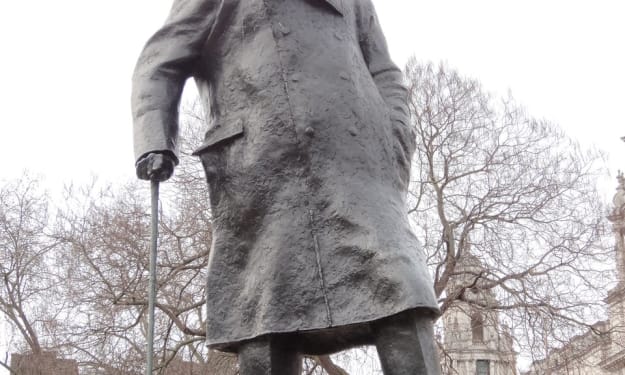
So, the past week has been a real eye-opener for the current discourse of history in Britain. From protests and counter-protests to the statue of slave trader Edward Colston going for a swim, it has provided an extraordinary opportunity for a nation to search its soul and to accept its past. That is if only more people were willing to.
By C. Raymond Martin6 years ago in The Swamp
What's In A Name
Most of us were given our names. Before the age of understanding, your parents or guardians and anybody else who was old enough to utilise language would address you by your given name. Some people change their name when they reach a legal age and have the power to do so. Some do it for personal reasons - they never liked their name - others for business reasons.
By Q-ell Betton6 years ago in The Swamp
The Forgotten who Helped Forge a Nation
The living experiment of democracy known as the United States of America and it's baptism of fire, known as the "American Revolution", contines to live on in the minds and hearts of millions acorss America and the world. However, the historical narratives of the revolution and subsequent infancy of a nation are only beggining to transform as new generations are given the responsibility from the old to carry on the legacy of such notable people as George Washington, Thomas Jefferson, Samuel Adams, Benjamin Franklin, and Alexander Hamilton. Yet this select few of people are, in reality, only the surface of much greater narratives which encompasses the story of America's creation. Stories and participants of the revolution, which have lived under the collossus-esc shadows of the "Founders". What of the African Americans which fought alongside their white bretheren on the field of battle? What of the women and native tribespeople? what did they stand to gain or lose through this conflict?
By Jacob Herr6 years ago in The Swamp
That April Day
It was a spring day in April, a Thursday and I was in first grade. My younger sister was four years old her birthday having taken place the previous month. My youngest brother was two years old. I was six years old, and the only one going to school. Suddenly I looked up to see my mother, who was in her mid-thirties then, walk into the class. She and my teacher huddled in a corner talking. The teacher gave me a look, and my heart sank. I thought I was in trouble – again. I was a good student, but my math grades kept bringing me down. The teacher gave Ma some papers, it was homework I learned later, to take home. Ma told me to get my coat. I was going home early that day.
By Hillari Hunter6 years ago in The Swamp