history
Past politicians, legislation and political movements have changed the course of history in ways both big and small. Welcome to our blast to the past.
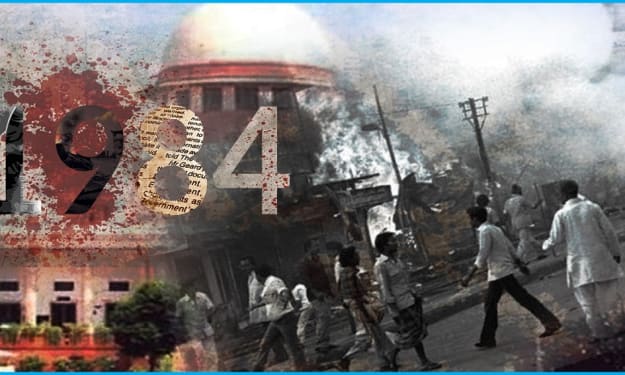
Anti-Sikh Riots 1984
All through the period from October 31 to November 5, 1984, large mobs largely formed by hooligans loyal to the ruling Indian Congress Party from many part of the country attacked Sikh community. The mobsters swarmed into Sikh neighborhoods, arbitrarily killing any Sikh men they could find. these events should not be called riots, but be described as one sided pogrom or a crime against humanity. This was a black spot on India history .
By baljeet singh5 years ago in The Swamp
Abraham Lincoln's Emancipation Proclamation
The American Civil War is often regarded as the culmination of Abraham Lincoln’s campaign to end slavery, but that is an over-simplification of his motives. His Emancipation Proclamation can be seen as having had an ulterior motive.
By John Welford5 years ago in The Swamp
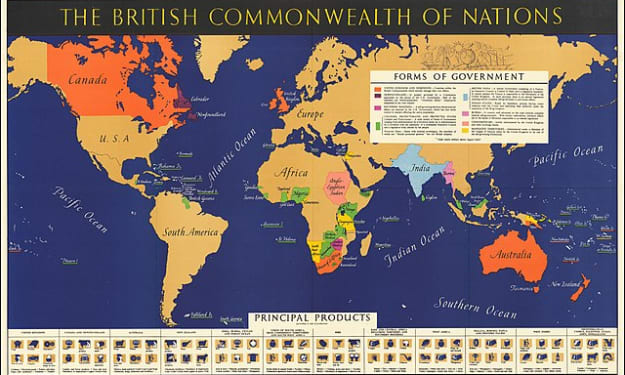
The Commonwealth Has Never Been Fit For Purpose, Why will It Be Different In The Age Of Brexit?
The commonwealth of nations, known in common parlance, as the commonwealth, is a political union of fifty four countries - mostly former nation states colonized by Britain during the time of the empire. These fifty four countries include the likes of Singapore, Malaysia, India, Nigeria, Ghana, Uganda, South Africa, Jamaica, Barbados, New Zealand and Australia.
By Adebayo Adeniran5 years ago in The Swamp
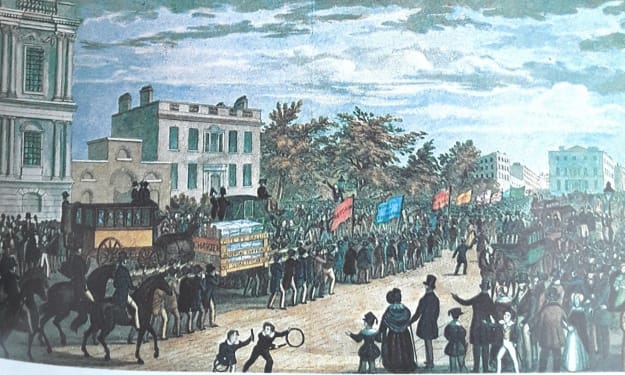
Chartism: a 19th century British political movement
Chartism was a working-class protest movement that was active in Great Britain during the 1830s and 1840s, with varying degrees of intensity. Its focus was on political reform as a way of addressing economic grievances, its premise being that with a fairer political system the victims of rampant capitalism would be able to escape their grinding poverty.
By John Welford5 years ago in The Swamp
Adolf Hitler History
The German dictator Adolf Hitler led the extreme nationalist and racist Nazi party and served as chancellor-president of Germany from 1933 to 1945. Arguably one of the most effective and powerful leaders of the twentieth century, his leadership led to the deaths of nearly six million early life.Adolf Hitler was born on April 20, 1889, in the small Austrian town of Braunau on the Inn River along the Bavarian-German border. The son of an extremely strong-willed Austrian customs official, his early youth seems to have been controlled by his father until his death in 1903. Adolf soon became rebellious and began failing at school. He finally left formal education altogether in 1905 and began his long years of aimless existence, reading, painting, wandering in the woods, and dreaming of becoming a famous artist. In 1907, when his mother died, he moved to Vienna in an attempt to enroll in the famed Academy of Fine Arts. His failure to gain admission that year and the next led him into a period of deep depression as he drifted away from his friends.It was during this time of feeling rootless that Hitler first became fascinated by the immense potential of mass political manipulation (control). He was particularly impressed by the successes of the anti-Semitic, or anti-Jewish, nationalist Christian-Socialist party of Vienna Mayor Karl Lueger (1844–1910). Lueger's party efficiently used propaganda (spreading a message through literature and the media) and mass organization. Hitler began to develop the extreme anti-Semitism and racial mythology that were to remain central to his own "ideology" and that of the Nazi party.In May 1913, Hitler returned to Munich, and after the outbreak of World War I (1914–18) a year later, he volunteered for action in the German army in their war against other European powers and America. During the war he fought on Germany's Western front with distinction but gained no promotion (advancement) beyond the rank of corporal (a low-ranking military officer). Injured twice, he won several awards for bravery, among them the highly respected Iron Cross First Class.Early Nazi years.The end of the war left Hitler without a place or goal and drove him to join the many veterans who continued to fight in the streets of Germany. In the spring of 1919, he found employment as a political officer in the army in Munich with the help of an adventurer-soldier by the name of Ernst Roehm (1887–1934)—later head of Hitler's elite soldiers, the storm troopers (SA). In this capacity Hitler attended a meeting of the so-called German Workers' party, a nationalist, anti-Semitic, and socialist group, in September 1919. He quickly distinguished himself as this party's most popular and impressive speaker and propagandist, and he helped to increase its membership dramatically to some six thousand by 1921. In April of that year he became Führer (leader) of the renamed National Socialist German Workers' party (NSDAP), the official name of the Nazi party.The poor economic conditions of the following years contributed to the rapid growth of the party. By the end of 1923, Hitler could count on a following of some fifty-six thousand members and many more sympathizers, and regarded himself as a strong force in Bavarian and German politics. Hitler hoped to use the crisis conditions to stage his own overthrow of the Berlin government. For this purpose he staged the Nazi Beer Hall Putsch of November 8–9, 1923, by which he hoped to force the conservative-nationalist Bavarian government to cooperate with him in a "March on Berlin." The attempt failed, however. Hitler was tried for treason (high crimes against one's country) and given the rather mild sentence of a year's imprisonment in the old fort of Landsberg.It was during this prison term that many of Hitler's basic ideas of political strategy and tactics matured. Here he outlined his major plans and beliefs in Mein Kampf , which he dictated to his loyal confidant Rudolf Hess (1894–1987). He planned the reorganization of his party, which had been outlawed and had lost much of its appeal. After his release, Hitler reconstituted the party around a group of loyal followers who were to remain the center of the Nazi movement and state.Rise to power.With the outbreak of world depression in the 1930s, the fortunes of Hitler's movement rose rapidly. In the elections of September 1930, the Nazis polled almost 6.5 million votes, and the party had gained undeniable popularity in Germany. In November 1932, President Hindenburg (1847–1934) reluctantly called Hitler to the chancellorship to head a coalition government of Nazis, conservative German nationalists, and several prominent independents.The first two years in office were almost wholly dedicated to balancing power. With several important Nazis in key positions and Hitler's military ally Werner von Blomberg in the Defense Ministry, he quickly gained practical control.Hitler rapidly eliminated his political rivals and brought all levels of government and major political institutions under his control. The death of President Hindenburg in August 1934 cleared the way for Hitler to remove the title of president. By doing this, Hitler officially became Führer (all-powerful ruler) of Germany and thereby head of state, as well as commander in chief of the armed forces. Joseph Goebbels's (1897–1945) extensive propaganda machine and Heinrich Himmler's (1900–1945) police system perfected the complete control of Germany. Likewise, Hitler's rule was demonstrated most impressively in the great Nazi mass rally of 1934 in Nuremberg, Germany, where millions marched in unison and saluted Hitler's theatrical appeals.Preparation for war.Once internal control was assured, Hitler began mobilizing Germany's resources for military conquest and racial domination of central and eastern Europe. He put Germany's six million unemployed to work to prepare the nation for war. Hitler's propaganda mercilessly attacked the Jews, whom Hitler associated with all internal and external problems in Germany. Most horrifying was Hitler's installment of the "final solution" of imprisoning and eventually destroying all Jewish men, women, and children in Himmler's concentration camps.Foreign relations were similarly directed toward preparation for war. The improvement of Germany's military position and the acquisition of strong allies set the stage for world war. To Germany he annexed, or, Austria and the German-speaking Sudetenland of Czechoslovakia, only to occupy all of Czechoslovakia early in 1939. Finally, through threats and promises of territory, Hitler was able to gain the neutrality of the Soviet Union, the former nation that was made up of Russia and other smaller states. Alliances with Italy and Japan followed.The war.On September 1, 1939, Hitler began World War II with his quest to control Europe. The sudden invasion of Poland was immediately followed by the destroying of Jews and the Polish elite, and the beginnings of German colonization. Following the declaration of war by France and England, Hitler temporarily turned his military machine west, where the light, mobile attacks of the German forces quickly triumphed. In April 1940, Denmark surrendered, soon followed by Norway. In May and June the rapidly advancing tank forces defeated France and the Low Countries. In the Air Battle of Britain, England sustained heavy damage, but held out after German naval operations collapsed.The major goal of Hitler's conquest lay in the East. On June 22, 1941, the German army advanced on Russia in the so-called Operation Barbarossa, which Hitler regarded as Germany's final struggle for existence and "living space" ( Lebensraum ) and for the creation of the "new order" of German racial domination. However, after initial rapid advances, the German troops were stopped by the severe Russian winter and failed to reach any of their three major goals: Leningrad, Moscow, and Stalingrad. The following year's advances were again slower than expected, and with the first major setback at Stalingrad (1943), the long retreat from Russia began. A year later, the Western Allied forces of America, England, and Russia started advancing on Germany.German defeat.
By Zarinabanu Zarinabanu5 years ago in The Swamp
The British Empire
Every year, in September, the series of Promenade Concerts at London’s Royal Albert Hall reaches its last night and Britain suddenly rediscovers its patriotism. These days, we Brits are not much given to flag waving, but on the Last Night of the Proms (which is now extended to simultaneous events around the country and is broadcast live on TV and radio) there are flags a-plenty and enthusiastic renditions of patriotic songs including these lines from “Land of Hope and Glory”:
By John Welford5 years ago in The Swamp
American history
Chapter Two - The British Colonies Grow Strong 1620-1750 This is another chapter in the text 'Rise of the American Nation' that I used as a student. As I did for chapter one these lectures/lessons will be broken down into smaller chunks, as I learned in my graduate education.
By Mark Graham5 years ago in The Swamp
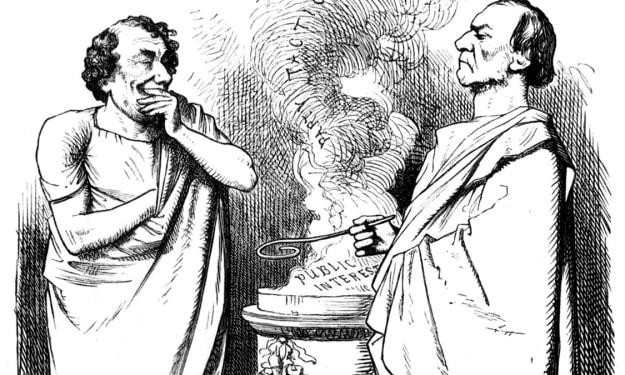
The rivalry between Benjamin Disraeli and William Gladstone
William Ewart Gladstone (1809-98) and Benjamin Disraeli (1804-81) are generally thought of as the two greatest British Prime Ministers of the 19th century. They were both statesmen and politicians of the highest rank who made enormous contributions to the well-being of their country. And they absolutely loathed each other. It could be said that the greatness of both men was largely due to that loathing, as each was determined to outdo the other over a period of at least thirty years.
By John Welford5 years ago in The Swamp
Gandhi's visit to Great Britain in 1931
Mohandas Karamchand Gandhi (1869-1948) is generally known to history by his honorific title of “Mahatma”, which means “venerable”. It was a well-deserved title, given that he was surely one of the most remarkable figures of the 20th century.
By John Welford5 years ago in The Swamp