history
Past politicians, legislation and political movements have changed the course of history in ways both big and small. Welcome to our blast to the past.
Domesday Book
Domesday Book (pronounced “Doomsday”) is one of the most remarkable documents ever compiled. It is a detailed survey of a conquered land, namely England after the Norman Conquest of 1066. No other country in the world, at this point in history or for centuries afterwards, had been described as fully. Domesday Book therefore offers a unique portrait of a medieval society and economy.
By John Welford5 years ago in The Swamp
The Dangers of Conspiracy Theories
I firmly believe that conspiracy theories have been around since the dawn of time. Since humans were capable of thinking of ways to get the upper hand against their most challenging and ominous opponents in politics, military, domestics, and social standing, conspiracy theories led the charge to discredit, weaken, neutralize or even kill its victims in the end. Call it survival, intense competition, malice, psychological disruption or just plain evil. It doesn't matter how you look at it. Conspiracy theories are there to bring people down. That's its sole purpose and nowadays you see it occur again and again in a frightening and mind-boggling pace.
By Kevin Tennert5 years ago in The Swamp
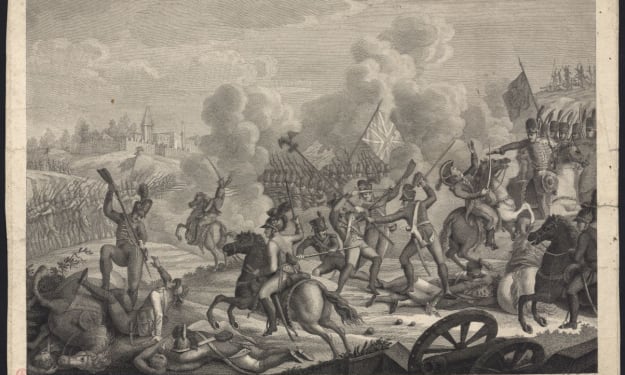
The Convention of Cintra, 1808
The story of the 1808 Convention of Cintra is an excellent example of why incompetent people should never be allowed to be in charge of anything as important as an army. However, the lessons are not always learned, and lack of ability did not cease to be a bar to promotion for many years after the affair in question.
By John Welford5 years ago in The Swamp
Common land in England and Wales
There are still surprisingly large areas of land in England and Wales, both in cities and rural areas, that are classed as common land in that certain rights to its use have been laid down as being for the benefit of the people in general and not for the private profit of an individual.
By John Welford5 years ago in The Swamp
Cardinal Mazarin
Cardinal Mazarin was a fascinating figure from the history of France in the 17th century. Despite not being French, he was that country’s most powerful politician for 19 years, and the fact that he became a cardinal was itself bizarre given that he was never ordained as a priest!
By John Welford5 years ago in The Swamp
Caratacus: The King who Lost Britain to the Roman Empire
Caratacus (sometimes spelled Caractacus) was a Celtic British king at the time of the invasion of Britain by the Romans under Emperor Claudius. Caratacus’s defeat and capture marked the true beginning of Rome’s occupation of Britain that was to last for nearly 400 years.
By John Welford5 years ago in The Swamp
Meaning Will Follow
In his book, If the South Had Won the Civil War, MacKinlay Kantor makes three major historical changes that ensure a Confederate victory: Lincoln is not assassinated, Ulysses S. Grant and General Sherman are killed in the war, and the Union Army is defeated at Gettysburg.
By Paul Murphy5 years ago in The Swamp
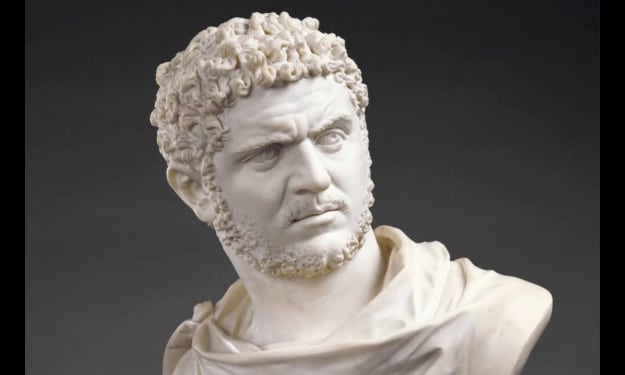
Emperor Caracalla of Rome
The history of the Roman Empire contains several instances of worthy emperors producing far less worthy sons. One notable example was Commodus, who succeeded Marcus Aurelius in 180. Only 31 years later history repeated itself when Caracalla became emperor on the death of his father, Septimius Severus.
By John Welford5 years ago in The Swamp
The Birds Have Flown
King Charles I came to the throne in 1625, utterly convinced that he had been put there by God and that his governance must therefore be beyond question. The newly created United Kingdom of England and Scotland had a Parliament that sat at Westminster but its sole function – as Charles saw things – was to enact his policies and raise the necessary funds for any wars or other forays that incurred expense.
By John Welford5 years ago in The Swamp