history
Past politicians, legislation and political movements have changed the course of history in ways both big and small. Welcome to our blast to the past.
Biography of Adolf Hitler
In 1933 the Reichstag passed the Unifying Act, which began the process of transforming the Weimar Republic into Nazi Germany, a one-party dictatorship based on the Nazi dictatorship. On March 23 the German Bundestag passed the "Unifying Act", which gave Hitler full power and celebrated the merger of the country's capitalists with the old German institution under Hindenburg. In July, the government passed a law declaring that the Nazi party would be the only political party in Germany, and within months all non-Nazi parties, unions, and other organizations withdrew.
By saurab sharma5 years ago in The Swamp
Then and Now – How US Presidents have Handled Public Health Crises Through History
Almost every POTUS has been called upon to combat a crisis – political scandal, economic catastrophe, natural disaster, or terrorist attack – during their tenure. Few, however, have had to deal with a long-drawn out pandemic of worldwide significance. The COVID-19 pandemic has sorely tested America’s preparedness for an outbreak of infectious diseases and has posed a serious threat to public health and economy.
By Aileen Brent5 years ago in The Swamp
House on the Hill
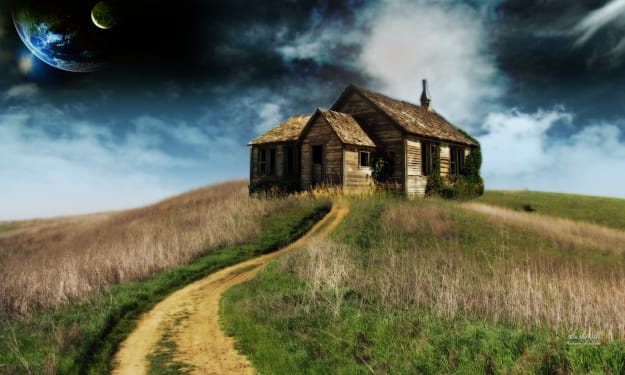
There was a house built high up on a hill. This house was fashioned to be a shining beacon of freedom and a mansion for every man. Those that built this house reaped the resources around them by cutting down the trees, sawing the wood, laying down the foundation and positioning the corner stone perfectly. The architects truly had a master plan in mind when they erected this edifice. They carved and cut out the windows and furnished the house with the finest furniture making it a place of comfort and protection from the elements. Once the builders and the architects finished, they looked upon it and said “this truly is a fine house, spacious and comfortable with many rooms and enough beds for everyone and for all whom built it. Every hand that laid bricks for this house should have a say in how it is furnished and should have a room in it, a bed and should be able to eat from its kitchen—all who worked shall eat.” Upon hearing this, the architects and the builders all agreed and immediately began preparations to move into this new mansion built by the many. But, while some were making their preparations, others looked inside the house, looked at its many rooms and though it were a spacious house, abundant in every way, inside of these men was nothing but a spirit of lack. That lack, they projected onto the house and its rooms. “If Everyone gets a room, the less rooms we get” they said to themselves. “Why should we share with them, when we can have more?” they thought to themselves. Suddenly, the abundance of rooms appeared to them as not enough, the space suddenly shrank before their eyes and the hallways didn’t seem as long. So, the architects dichotomized the builders into groups: their group and the other group, the superior and the inferior, the worthy and the unworthy, the old and the young, the citizen and the foreigner, the majority and the minority.
By Robert Burton5 years ago in The Swamp
Freedom is NOT Free!
Freedom is not Free. As told by a fighter in the 60’s Civil Rights Movement Freedom is not free. Many decades ago, I sat my seventeen-year-old body in the streets in front of my college campus. Praying that the moving cars would indeed halt and not crush my young body, I knew I was fighting for freedom. I also knew that there was a risk I had to take to gain this freedom.
By Saja Bo Storm5 years ago in The Swamp
Pocket boroughs
The term “pocket borough” was used by 19th-century reformers in Great Britain to describe the situation whereby democracy was held to ransom by the rich and powerful, such that the election of some Members of Parliament was “in the pocket” of certain people. Perhaps the concept still applies today.
By John Welford5 years ago in The Swamp
Why the Tulsa Race Massacre Matters
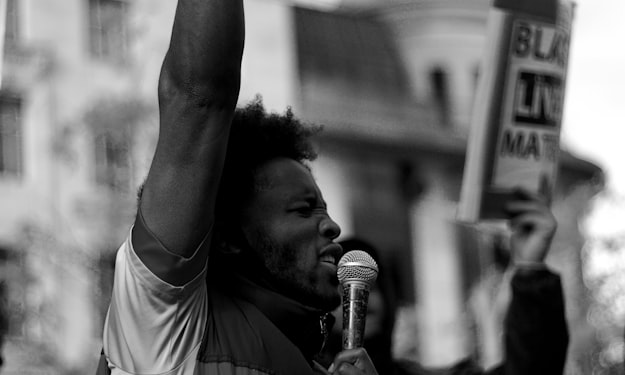
I had a hard time with Black Lives Matter when the movement first started. All my life, I was taught to trust cops. I had no reason not to trust cops. Suddenly, people were telling me that they gun down innocent people just because they’re black?
By Teralyn Pilgrim5 years ago in The Swamp
Child Labour
Child labor is a term that you may have heard in the news or in movies. It means crime when children are forced to work at a very young age. It is like expecting children to do tasks like working and fighting for themselves. There are certain policies that set limits and restrictions on working children.
By Sumesh Bhaila5 years ago in The Swamp
How Corruption Affects The Economy Of the Country
Corruption refers to a type of crime or dishonesty. It means an evil act committed by an individual or a group. Most importantly, this act endangers the rights and rights of others. In addition, corruption involves activities such as bribery and fraud. However, corruption can take many forms. Likely, people in positions of authority are at risk of Corruption. Corruption reflects greed and selfishness.
By Sumesh Bhaila5 years ago in The Swamp
The Navigation Act of 1651
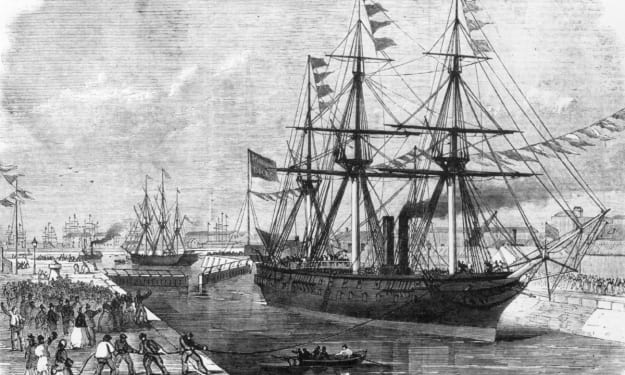
Empires of the Ancient and Early Medieval world were primarily continental in nature, in that a powerful nation pushed its borders ever wider by conquering its neighbours. However, from the mid-16th century onwards, as European explorers discovered lands across the sea that offered massive opportunities for trade or plunder, empires became trans-oceanic and intensely competitive, so that nations such as Britain, Holland, Spain and France found themselves in conflict over pieces of land across the world, as well as the sea routes that were essential for their trade and defence.
By John Welford5 years ago in The Swamp
First Nation Groups in North and South America
Millions of indigenous people have called the entire continents of North and South America their home for tens of thousands of years. They were the first ones to have arrived to the continents via the Bering Strait bridge that was existent during the last ice age. Since then, they have developed into numerous tribes and confederacies that implemented unique agricultural, cultural, culinary, hunting, foraging, spiritual, and linguistic practices that were mirrored by their way of life and construction outlook. Naturally, some of them were at war with each other. Others worked and lived together in peace and harmony. Each piece of the land they had, had distinct characteristics. I find that aboriginals knew the lands better than anyone else. They knew exactly how to tame it without harming it. They knew how much should be taken without causing grave disturbances to the ecosystem. Indigenous groups bonded with the land culturally and spiritually and respected it. They knew what they were doing and they were masters. But a gargantuan turning point for millions of aboriginals arrived during the era of navigation instigated by European quest for exploration, discovery, trade, and of course, power. Many European kingdoms at the time were competing with each other to dominate swaths of lands on different continents all over the world. They were on a quest to outmaneuver and overpower the other, to become wealthy and strong. Sadly, many aboriginals were caught in between and perished over the centuries due to the bloodlust and conquest-obsession of European powers.
By Kevin Tennert5 years ago in The Swamp
The People's Republic of China
China is one of the oldest and culturally richest countries in human history. In fact, its influence and power have been felt across continental Asia for millennia. During the middle ages and age of enlightenment in Europe, China was seen as a global power. It was arguably the most powerful kingdom in the world until its antagonistic attitude towards change and reformation led to its demise in the hands of the British.
By Kevin Tennert5 years ago in The Swamp